
Two New Local Businesses Highlight Growing Demand for Native Plants
October 29, 2025
Share


The names of two local native nurseries, both named after insects, that opened in the past few years send a pertinent message, even if one of the bugs is a hunter rather than a pollinator. The connection is obvious, or at least it should be. There are of course exemptions, but the vast majority of insects are beneficial to human survival.
If we were to take a step back from the popular bumper sticker “No Farms No Food,” “No Bugs No Food” would be the result. Another step back would give us “No Native Plants No Native Bugs.”
At that stage, we would be very hungry, or, as Emily Dutra, owner of one of those new nurseries, noted, dead. She shared that a native oak tree can “host, like, over 750 types of caterpillars. And you know what baby birds love more than anything? Nice, soft, juicy caterpillars.”
This circle of native life feeds us, sustains us, and entertains us.
Two years ago, in 2023, in Westport, Mass., a few steps from her house and minutes from Horseneck Beach, Dutra opened Butterfly Effect Farm. It features some 100 native species, primarily New England ecotypes grown from seed. The retail nursery sells perennials, grasses, ferns, shrubs, and trees.
Dutra believes the significance of native vegetation transcends their visual appeal and extends into their profound ecological virtues. She said native species are ecologically superior in every way, noting that once they are established, they can consume up to 80% less water than nonnative plants.

More importantly, she said, native plants attract native pollinators, such as insects and birds, and other wildlife, helping to support biodiversity and protect environmental health and human well-being.
“You know, I loved it when I was working and there was bees around me,” Dutra said.
Fifty miles, as an inebriated crow flies, to the southwest in the South Kingstown, R.I., village of Wakefield, Meghan Gallagher shares the same passion for native plants. The owner of the fine gardening and horticulture business Wild & Scenic recently opened Dragonfly Nurseries.
Her new business, which opened this summer, provides regionally sourced and ecotypic native plants to “meet the growing demand for environmentally conscious landscaping across New England.”
Like Dutra, Gallagher possesses a wealth of experience in gardening, ecological stewardship, and habitat restoration. The result of her two decades of working in the industry led to this wholesale nursery, which offers “plants with purpose” that are “grown with ecosystem services in mind” for pollinator support and coastal-habitat enhancement.
“I’ve always just loved growing, and I’ve always been really into native plants,” said Gallagher, who has degrees in horticulture and conservation biology from the University of Rhode Island. “I just love growing plants. It’s a good problem, but it’s a problem.”
Her nursery’s plants are grown for professional landscapers, environmental organizations, nonprofits, and municipalities. Gallagher partners with regional seed providers, such as East Greenwich-based Plant Community LLC, to provide an ever-changing collection of native species.
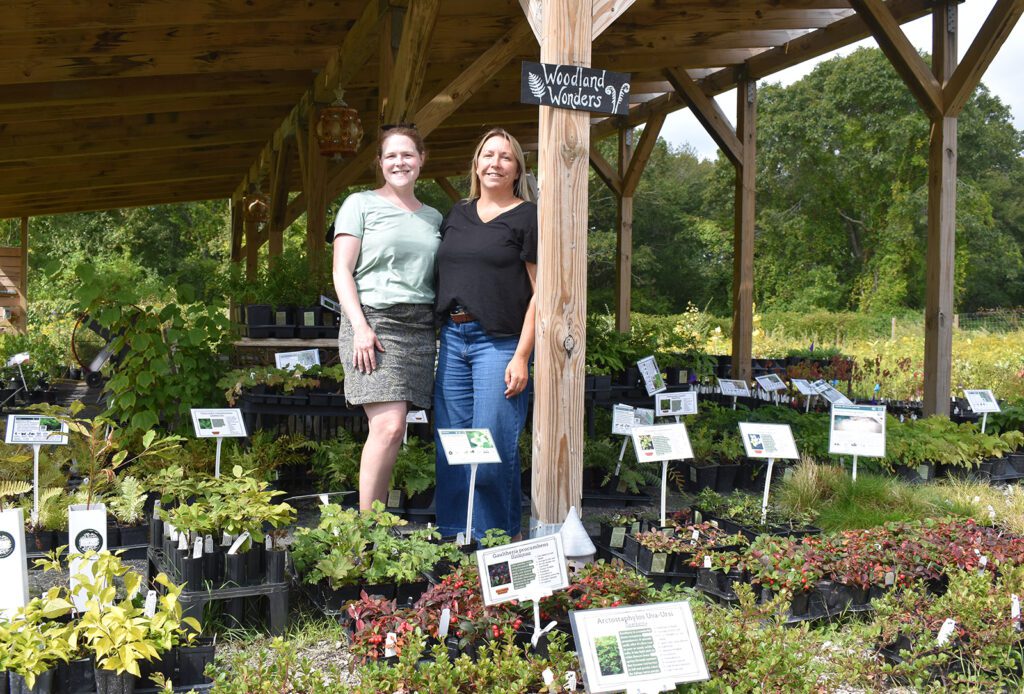
Dutra spent much of 2022 envisioning her future farm and writing a business plan. It took her “months and months” before she landed on the right name for her Drift Road business.
“One day I came across, not for the first time, but there was a moment where I just came across butterfly effect,” she recalled as we sat beneath a wooden structure that shades some of the farm’s collection of native flora and its handful of employees. “And it was just that moment where it just made sense. And I was like, ‘That’s it, like the butterfly effect. This makes sense, exactly what I’m doing.’”
Dutra, 45, has been working in the landscape business on Cape Cod and along the South Coast for three decades. She got her start in the business as a 15-year-old raking leaves for a Westport-based landscaping company, but her appreciation for and respect of the natural world began at an early age. She grew up in a family that revered its natural surroundings and liked to get its collective hands dirty.
“This vision started when I was fairly young, in my late teens, early 20s, of having a functional plant nursery someday. I could just feel the pulse of native plants in the world,” Dutra said. “As a teenager, really, I loved growing. That was always my favorite part of the landscaping field.”
While she began her career as a teenager raking leaves and digging holes, she eventually ended up running a landscape design and maintenance company on Nantucket with her brother, Jesse.
As the call for a career change, kind of anyway, grew louder — she and her husband, Chris Leonard, have two children ages 4 and 6 — Dutra embraced the idea of staying closer to home, introducing more local plants to her native Westport and the surrounding area, and educating people about their importance.
As the owners of gardening/landscaping businesses founded on a desire to steward landscapes with environmental thoughtfulness and intention, both women had struggled to source the native species essential to their work.
Independently, they decided to do something to fill this southern New England void.
“I was having such a hard time finding native plants,” Dutra said. “I had been using native plants all along and it was so difficult to find them. I saw the need was strong, getting stronger, but the supply wasn’t there.”
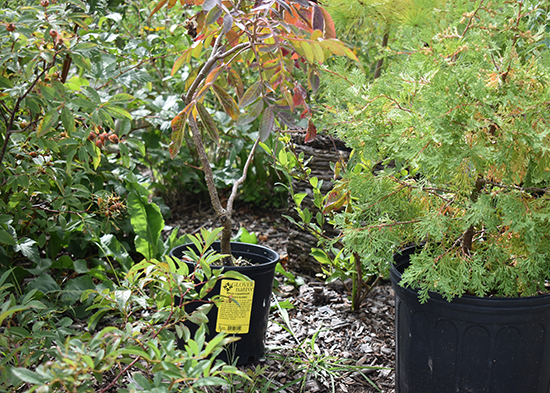
Today, 75% of the plants Butterfly Effect Farm sells are grown on-site from plugs obtained from small growers Dutra knows and trusts. Another 20%, mostly shrubs and trees that arrive at the farm in a more mature state of growth, come from Van Berkum Nursery in New Hampshire and a few other area nurseries.
The owner of Van Berkum Nursery, like Dutra, lives on the farm where he works. She purposely keeps her supply circle small.
“Keeping it small companies, small network, keeping my circle small so I know what we’re growing,” Dutra said. “We can talk about where that seed came from. We can talk about what did you use in the soil mix? I like to have a more intimate connection with the growers I’m working with.”
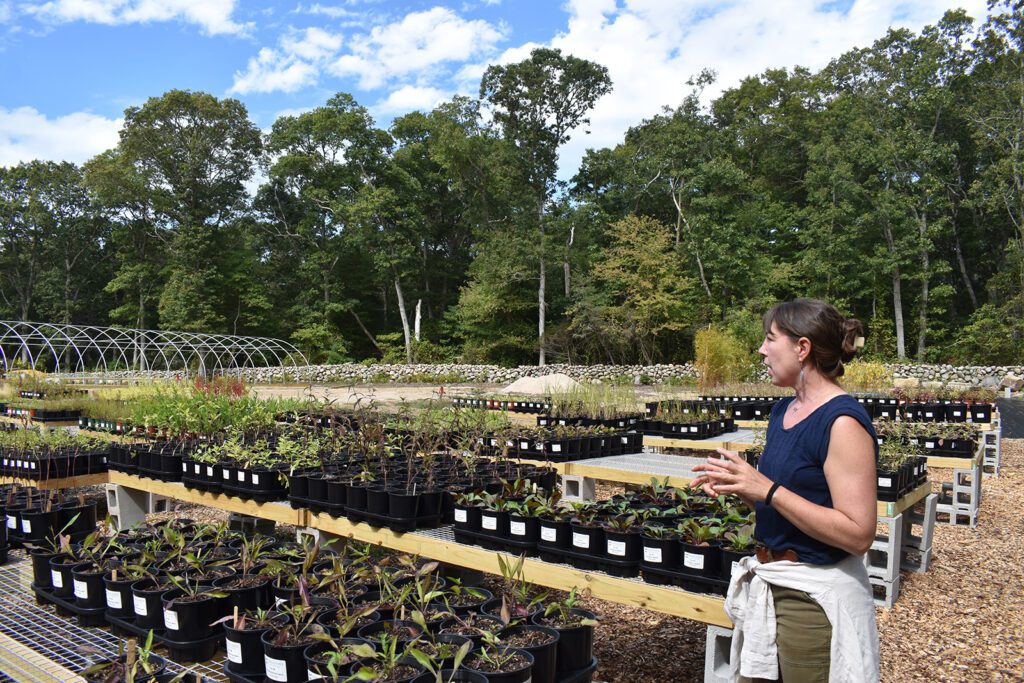
Gallagher’s passion for protecting Rhode Island’s native habitats, especially its coastal ecosystems, led her to open Dragonfly Nurseries on Ministerial Road, to complement her Wild & Scenic business, which she launched in 2013 from her South Kingstown home down the street. Three years ago she moved the Wild & Scenic operation to Ministerial Road, which now shares space with Dragonfly Nurseries pollinator plugs.
Besides addressing her needs for native plants, Gallagher’s new nursery will help meet the growing demand for native plantings.
“I started just by growing for Wild & Scenic because we were using a lot of natives in our plantings,” Gallagher said. “I work with a couple different landscape architects that recognize the need for native plants and incorporate them into their design.”
She explained the difference between cultivars — plant varieties that have been produced by selective breeding — and ecotypes, a distinct race of a plant species occupying a particular habitat.
“Depending on the various cultivars of native species, they’re not as beneficial to pollinators or wildlife, because something has changed about it, and insects and plants have evolved over millions of years together,” Gallagher said. “So when you just put a clone of one cultivar out there, it might not feed an entire population of insects. It doesn’t support the way a native, an actual ecotypic native plant, would.”
Gallagher, 43, noted she frequently uses cultivars when doing residential gardening, to meet the wants of homeowners.
“Humans cultivate them to be what we want them to be,” she said. “It could be disease resistance, variation in color of leaf or flower size, all sorts of things. And, a lot of times, those cultivars are a lot easier to work with because they’re more predictable, and therefore we can use them in design, and people can appreciate them more.”
When it comes to restoration landscaping, however, Gallagher noted cultivars should be ignored.
“With restoration and things like that, you really want straight species grown from ecotypic seed,” she said. “And what I mean by that is someone goes out and collects seed from the wild and grows it, and that is really important for restorations because the seed will carry genetic diversity, which helps to create resilience within the plant and the plant population.”
While her Wild & Scenic operation isn’t totally ecotype native and uses plenty of cultivars, the plants she sells at Dragonfly Nurseries are all grown from seed collected in the wild, often by Lizzie Hunt at Plant Community.
“I think it’s important to incorporate all sorts of plants,” said Gallagher, who grew up in Ridgefield, Conn. “I mean beauty and esthetic is very important. I think that is just as important a lot of times as environmental resilience and things like that.”
As for the nursery’s name, it’s because she thinks dragonflies are cool. The logo for Wild & Scenic is a dragonfly. She admitted, though, that her friends and co-workers tease her about how many pollinators these aerial predators dine on.
“Dragonflies are one of the most amazing hunters in the animal kingdom. They’re really incredible,” Gallagher said. “They eat mosquitoes, but they’re also killing the insects that your native plants are supporting.”
In their defense, dragonflies are accidental pollinators. In Gallagher’s defense, she was wearing a silver butterfly necklace the day we spoke.
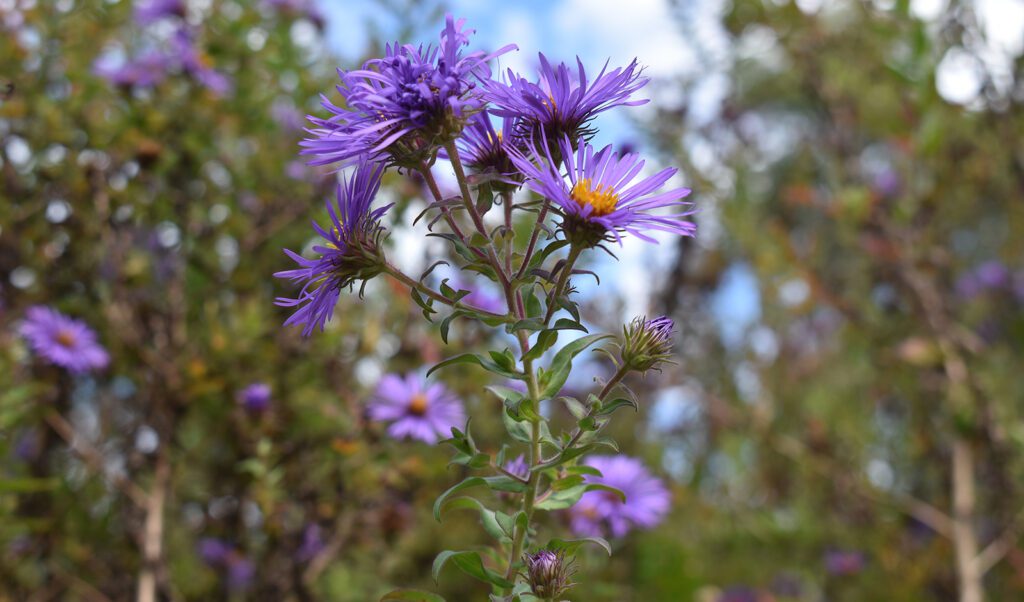
Native plants are generally understood as those whose ancestors had roots in this region before the arrival of Europeans. These species and native wildlife adapted over the millennia to live and work in harmony. The movements of pollinators allow plants to become fertilized and to produce fruits, seeds, and young plants. In turn, native plants feed native pollinators and provide habitat.
The National Wildlife Federation defines a plant as native if it has “occurred naturally for thousands of years in a region, ecosystem, or habitat without human introduction.” The organization has noted these “plants have formed symbiotic relationships with native wildlife over thousands of years, meaning that many native animals are dependent on these particular species to survive.”
The health of native plants, shrubs, and trees, however, is in decline. Nonnative invasive species, both plant and animal; development; human-made poisons; and the climate crisis are conspiring to shred the native web of life and reduce biodiversity.
The National Audubon Society says restoring native plant habitat is vital to preserving biodiversity. The push to bring back native species starts in your back, front, and/or side yard.
Many of southern New England’s native insects, such as butterflies, bees, and moths, would benefit from residents and businesses planting more native vegetation, removing invasive species, ripping up lawns to create meadows and gardens, eliminating pesticide use, and leaving the leaves for overwintering bugs and for adding organic matter back into the soil.
Even as a teenager, Dutra questioned the purpose of raking leaves into a pile and then removing them from the property.
“I remember raking leaves at 15 and wondering why,” she said. “I just remember being like, after school and on the weekends, why are we raking the leaves. I couldn’t understand why we would, why someone would do that.”
I live & garden on Ministerial Road, SK. I had never heard of Wild & Scenic or Butterfly Effect Nursery until this article! You need more publicity.
On the east bay, we have Prickly Ed’s in Barrington which is also a native plants nursery.
What about Blue Moon? On Saugatucket Rd in Wakefield. She’s been selling natives for years