Prudence Island Estuarine Reserve Responsible for Decades of Valuable Research
June 9, 2025
Share


PORTSMOUTH, R.I. — On Roger Greene’s first trip to the naval base on Prudence Island several decades ago, the military’s infrastructure was already falling into disrepair.
Few people still worked on the base, aside from a couple of caretakers. One stopped Roger and his wife, Gail, both of whom worked at the Department of Environmental Management at the time, and asked them why they were there.
“You really shouldn’t be on federal property,” Greene recalled a caretaker telling them. But after putting in a call to then-DEM director Bob Bendick, the pair was able to convince the naval base employee that they had official business.
Bendick had asked the Greenes to scope out the place for a prospective research reserve as part of a relatively new network of federal programs created by the Coastal Zone Management Act of 1972.
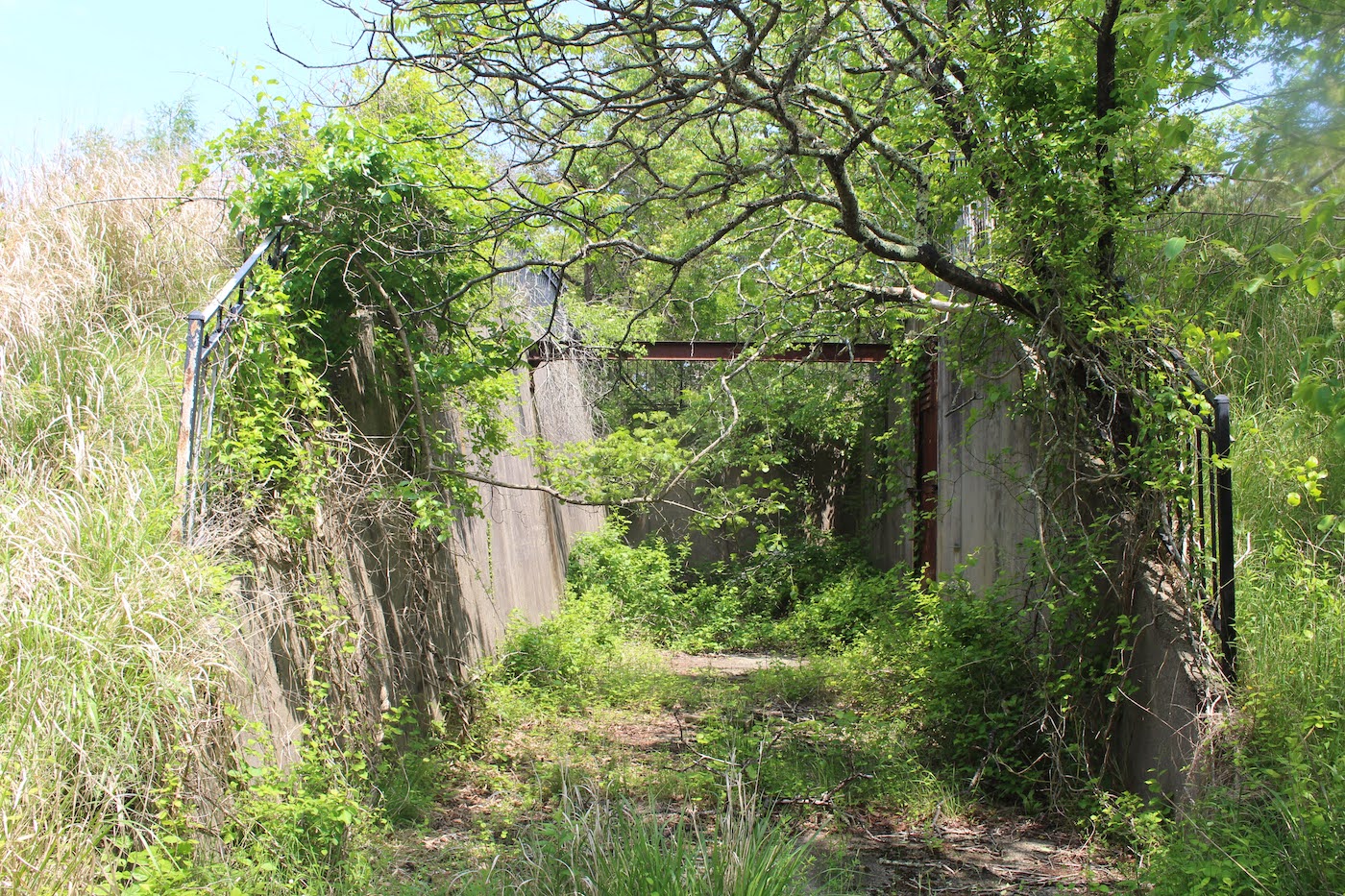
Despite the abandoned bunkers, dilapidated naval buildings, and frosty welcome, Greene thought it was the perfect place for such a reserve.
Between the acres of open space and a few naval buildings still in good shape, which could be used as lab space and bunks, Greene, who would later in his career manage the reserve, said, “it had it all.”
The Narragansett Bay National Estuarine Research Reserve was established in 1980, and in the years since its creation, it has hosted hundreds of academics, educators, and students, resulting in decades of learning and data.
But more than 40 years later, that work is at risk.
Funding for the reserve, and a network of 29 other estuarine reserves nationwide, remains uncertain as the Trump administration threatens and slashes federal science research spending across departments and disciplines.
‘We’ve got it all’
Reserve chief Caitlin Chaffee explained the program’s work while she sat in her Prudence Island office, lined with filing cabinets labeled “deer herd survey,” “Lyme disease,” and “grants,” among others.

To get to the island, she and several other reserve employees who live in the West Bay take a state boat over. (Ever since the westbound side of the Washington Bridge failed, driving all the way to Bristol to catch the ferry has been a monumental task.)
Chaffee is proud of her team and the work that they do on the island — work she said is important to Rhode Islanders and the world.
The reserve’s mission has four main tenets, she explained: training and engagement; education; stewardship; and research.
The research the island has produced over decades is the centerpiece of the work, often the subject of their engagement with and education of stakeholders and students, and it goes hand in hand with the stewardship they are charged with.
More than 60% of the island’s land and waters, some 4,000 acres total, sit within the reserve’s boundaries. It includes significant portions of the south and north end of Prudence Island, as well as Patience, Dyer, and Hope islands off its coast.
Chaffee described the reserve as hourglass shaped, with big pockets of land at the top and bottom of the island mostly connected by narrower space in the middle, where the Prudence Island Conservancy, which the reserve works closely with, owns and protects more acreage.
On the reservation, “We’ve got it all,” Chaffee said. “We’ve got pine barrens. We have forests, coastal forests. We have eelgrass beds, you know, salt marshes.”
Research on salt marshes in particular has been happening on the island for decades and has opened a window through which scientists and the world have seen how climate change is shaping the planet, quickly.
“The fact that we have these long-term data sets has really helped us get our minds around what is happening and how it’s impacting habitats,” Chaffee said. “If we just started looking at it 10 years ago, we would not have the full picture.”
It’s the diversity of habitat and the promise that it will remain preserved in perpetuity that Chaffee’s predecessor Roger Greene said has drawn academics to Prudence, helping to make Rhode Island the popular and important research state it has become.
Greene said people need to prevent intrusion on and maintain those habitats, otherwise “the specialness disappears.”
From retirement, he’s said he’s recently been wondering what will happen to the reserve amid federal funding woes.
“You can’t have a break,” he warned.
Future funding unclear
Driving around the island’s largely gravel roads, Chaffee pointed out the signs letting the visitors know they’ve entered the reserve.
“We just replaced all these,” she said. “Oh, it looks so good.”
Under the reserve’s name, the sign noted the program is a state-federal partnership. Chaffee said about 70% of their funding comes from the federal government while the rest comes from the state.
The federal funding supports both operational spending and larger projects focused on resilience planning and land acquisition, and often that second pot of federal funding can vary depending on the projects they submit to the National Oceanic and Atmospheric Administration.
But for the upcoming fiscal year, “it’s all unclear,” Chaffee said.
“This time around, we’re dealing with this weird continuing resolution language, which normally would mean we get flat funding,” she said. “This CR had language in it that meant that that’s not the case. And so basically, we’re waiting.”
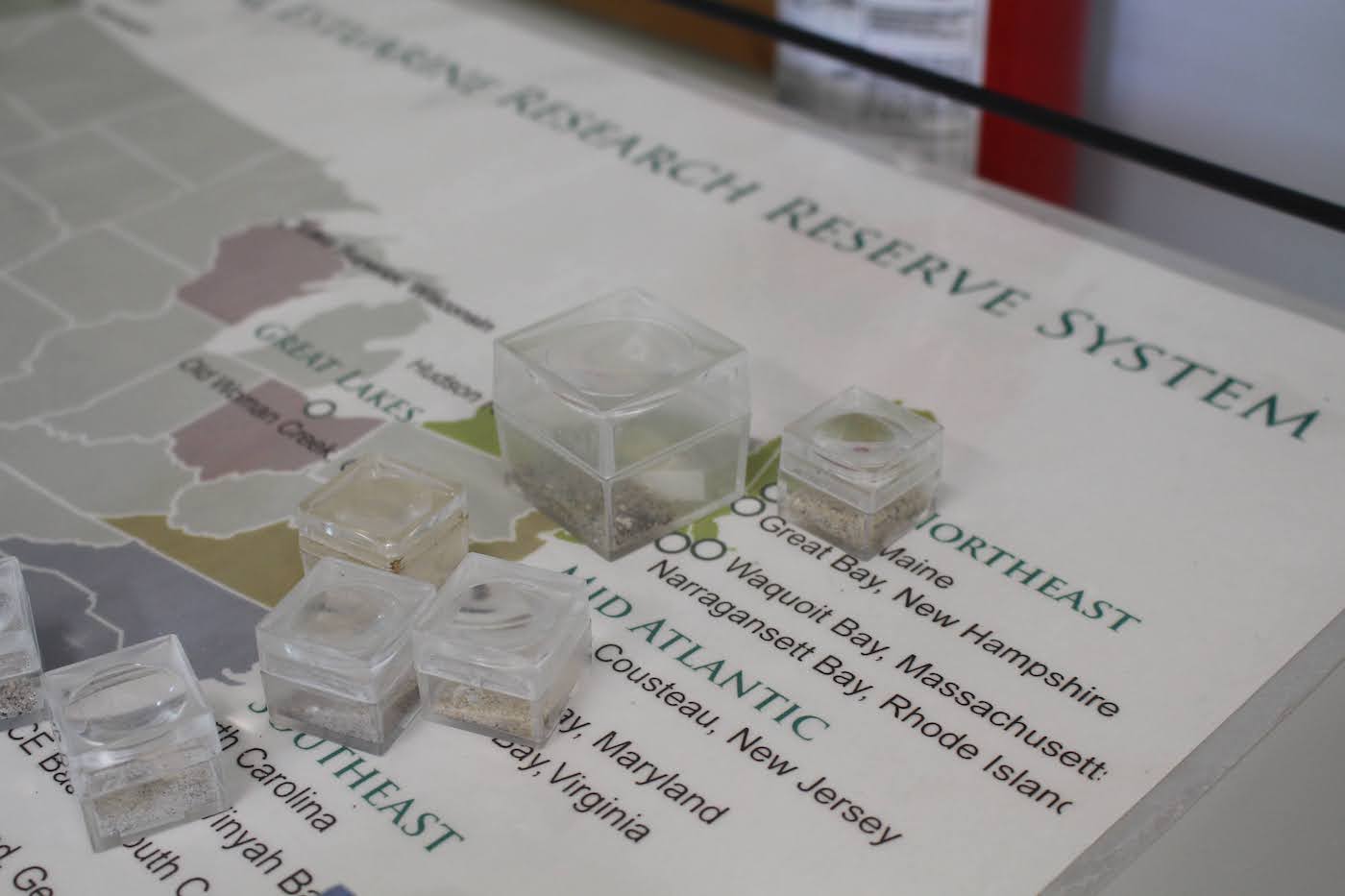
The reserve is working with DEM director Terry Gray’s office and Rhode Island’s Congressional delegation to try to get as much information as possible.
“The National Estuary Program was created by a Republican — Rhode Island’s own Senator John Chafee,” U.S. Sen. Sheldon Whitehouse noted in a statement to ecoRI News. “I’m working hard to ensure this traditionally bipartisan priority stays that way. It’s so important for the Ocean State because the health of Narragansett Bay is directly related to the health of Rhode Island’s economy.”
“We don’t know if it’ll be a 10% reduction, a 50% reduction, or if we’ll just get no funding at all,” Chaffee said. “We can plan for scenarios, but you have no idea what it’ll be, no idea. So we’re hoping for the best, preparing for the worst.”
Even if the reserve system is allocated money from the federal government, Chaffee said there could still be issues receiving that funding in a timely manner. Under current orders from the Trump administration, the secretary of commerce, the cabinet member who oversees NOAA, has to sign off on all contracts that are more than $100,000.
Chaffee said the reserve has “a little bit of a cushion to spend down,” if it doesn’t receive funding in fiscal 2026, but if it also doesn’t get funding the following year, it will mean downsizing and even moving the program completely within the state’s wheelhouse.
“They all have NOAA on them,” Chaffee said about the signs, “Hopefully, that doesn’t change … we could always put tape over them.”
The day after the tour, Chaffee sent an email to ecoRI News that said “I wanted to follow up briefly.
“We received an email from NOAA [Office for Coastal Management] with the encouraging news that we should submit our FY2025 funding applications based on level funding (same as FY2024 levels),” she continued. “This is no guarantee that we’ll get the funds before they expire, or that we’ll be funded again in FY2026, but we are cautiously optimistic about this year.”
The email was hopeful, especially for Chaffee who said she would only stop doing the work if forced to.
“I’m not leaving until they kick me out of the building,” she had said the day before.
‘Nothing about this is normal’
A salt marsh sparrow, an increasingly rare species, flitted through the grass at the northern end of the island just as Chaffee walked up to the marsh’s edge on the day of the tour.
“That was like right on cue,” she said, laughing. Chaffee often sees the island and reserve perform like this for visitors.
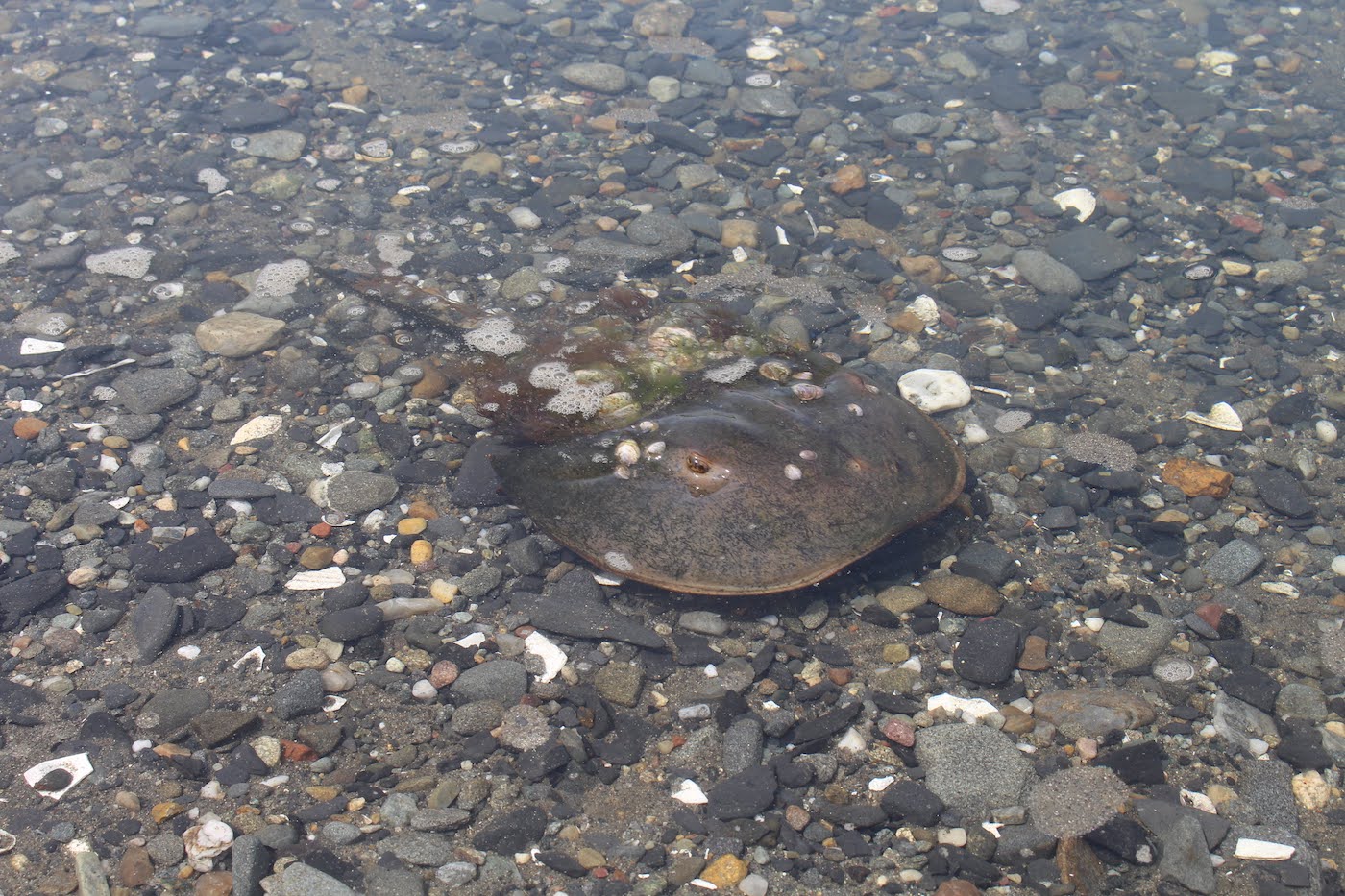
During a visit to the island from Chaffee’s sister, a pair of bald eagles swooped down, right in front of them, before forming their famous death spiral, linking talons and seemingly spinning down to their dooms, a behavior associated with mating.
(Roger Greene said he remembers equally special moments, like the oystercatchers off the coast, egrets galore, and killdeer that would roost on an old grass airstrip on the island.)
During Chaffee’s tour with ecoRI News, other spontaneous wildlife encounters peppered the day, from the appearance of osprey hatchlings in a high nest near an old pier to a relatively fast turtle shuffling across the road.
At the marsh, fiddler crabs performed too, peeking in and out of tiny holes in the sand, farther back from the water.
“As the marsh gets more flooded, it gets softer, and so the crabs take advantage of that, and they move farther and farther inland,” Chaffee said.
The creek has become wider, and wider over time, she added. “It’s gorgeous, right? I mean, you come out to a site like this, and even in a kayak, you’d be like, ‘Oh, wow. This is healthy and thriving.’”
But it’s not. And we only know that, Chaffee said, because of the researchers who have studied the marsh for decades now, like the reserve’s research coordinator Kenny Raposa.
They’ve known that climate change is threatening the reserve and its inhabitants for a while, Chaffee said, but now it’s science, in general, that she feels worried about.
“Nothing about this is normal,” she said. Not just environmental science research but the whole research field is under huge strain and with all the cuts and uncertainty, “would you look at [science] as a viable career option?”
She described the situation as heartbreaking and potentially long-lasting.
“You don’t fully recover from something like that,” Chaffee said.