
Taxpayers Fund Solutions But Lawmakers Largely Ignore Reports That Offer Them
September 10, 2025
Share


While RhodeMap RI maybe the only state initiative to be condemned as part of a global conspiracy and purged, it certainly isn’t the only plan to be ignored.
Special interests and their embedded lobbyists don’t allow for the implementation of significant, or even moderate, climate solutions and environmental protections. To delay any meaningful action, Rhode Island’s Statehouse powerbrokers have long created subcommittees, commissions, and task forces to study an issue that pertains to the climate crisis, public and environmental health, and the protection of open space.
Hearings are held, testimony is gathered, data are collected, taxpayer money is spent, and reports are authored. Their recommendations are typically ignored, eventually forgotten, and then the cycle begins anew.
The latest example of this running-to-standstill governing comes courtesy of another proposed bottle bill. The creation of yet another study commission awaits. That will mean three final reports in less than a decade about the state’s plastic problem. This pattern also routinely plays out when it comes to forest protection, climate change mitigation, and other environment-related issues.
The following is a look at a handful of reports that have been commissioned during the past two decades and what became of their recommendations:
Land Use 2025 (2006)
This 156-page document commissioned under the Gov. Donald Carcieri administration encouraged transit-oriented development, affordable housing, and open space protection.
Nearly two decades since the report was published and in the year its ideas were supposed to make a difference, Rhode Island finds itself in a massive housing crisis. Year after year, Statehouse leaders and most local elected officials have ignored the report’s recommendations, as development sprawls, poor land-use management becomes embedded like a deer tick, and smart-growth principals for housing and transit are dismissed and even mocked.
A 1999 study commissioned by Grow Smart Rhode Island, a Providence-based nonprofit, took a look at the state’s sprawling development patterns. It projected the costs of continuing to allow for sprawl and the costs of a smart-growth alternative. The study found that smart-growth development would save the state some $240 million, or about 40%, on infrastructure over 20 years.
That study was an inspiration for Land Use 2025, a plan that illustrated the urgency of directing “growth to areas that are equipped to handle it, based on location and infrastructure.”
The central premise of the plan was that Rhode Island’s current rate of land consumption was a “major departure from our historic pattern of dense urban centers, and is not sustainable in the long and short term.”
“It reflects the growing realization of the urgency for Rhode Island to plan, develop, and conserve more intelligently as our very small State adjusts to the pace of the dynamic Northeast urbanized corridor and its strategic position between the regional hubs of New York City and Boston,” according to Land Use 2025. “The Plan is intended to connect the planning visions and goals ‘to the ground’ in Rhode Island communities, to upgrade the planning capacity of public officials and citizen planners, and to share land use information publicly through the best available technology.”
The plan promoted a regional approach “through stronger, interconnected, statewide systems of greenspace and natural resources, public highways, and utility infrastructure.” It advocated for a network of well-designed communities composed of centers of various sizes and types.
Key recommendation: Permanent green space throughout the state’s rural, urban, and waterfront areas. What has happened since: Rhode Island continues to use open space and/or shoreline to build renewable energy, unaffordable housing, oversized second homes, a corporate office park, parking, and an illegal seawall.
For example, on Aquidneck Island, which has seen its population remain flat for the past four-plus decades, some 6,200 new housing units have been built since 1980. Most of this new housing has arrived in the form of suburban sprawl and vacation homes that have replaced green space, including farmland.
Key recommendation: Diverse and affordable housing stock. What has happened since: Rhode Island has a deficit of 24,679 affordable housing units. Only eight of Rhode Island’s 39 municipalities reach the state mandate of 10%. Most of the housing being built is unaffordable single-family homes, many of which are getaway homes that sit unused for months.
Key recommendation: Public infrastructure maximized and coordinated with development. What has happened since: Little of the new housing being constructed in Rhode Island has public transit in mind, and much of it isn’t connected to municipal water and/or sewer. A broken bridge, widened highways, and pushback against urban bike paths highlight much of the public infrastructure action that has been witnessed since 2006.
Resilient Rhody (2018)
The 44-page document was touted as Rhode Island’s first comprehensive climate preparedness strategy. Those behind the effort noted Rhode Island faced increasing risks from sea level rise, extreme weather, and other impacts of climate change. They said this plan would guide how the state adapts and responds to these challenges.
The goal of the strategy is to identify actions — projects, policies, legislation, funding, and financing opportunities — that the state can take to better prepare for the changing crisis.
The plan’s recommendations are extensive.
INFRASTRUCTURE
Surface water reservoirs supply about 85% of the public water in Rhode Island, while other parts of the state rely primarily on surface reservoirs or combined surface and groundwater supplied by public and private wells.
Rhode Island is home to 19 major wastewater treatment facilities that treat about 120 million gallons of residential, commercial, and industrial wastewater daily. About 250 pumping stations are in place to transport sewage across hilly terrain to these treatment systems. Most of these wastewater systems are in floodplains to take advantage of gravity-fed flows.
Stormwater runoff is a widespread source of water quality degradation. Stormwater impacts include pathogen contamination resulting in the closure of beaches and shellfishing areas, nutrient enrichment of waterbodies resulting in toxic algal blooms, elevated levels of other pollutants such as metals and hydrocarbons, erosion, aquatic habitat alterations, and sediment deposits.
Five of Rhode Island’s six fuel terminals are in Providence and East Providence, at the mouth of the Providence River. These terminals comprise about 90% of the state’s petroleum infrastructure. Severe weather events could adversely impact these marine terminals.
Key recommendation: Encourage the use of green infrastructure. What has happened since: Many municipalities, including Bristol, Newport, Providence, and Warren, with significant help from the state promote, support, and build nature-based solutions to deal with stormwater runoff, coastal erosion, and flooding. But plenty more still needs to be done.
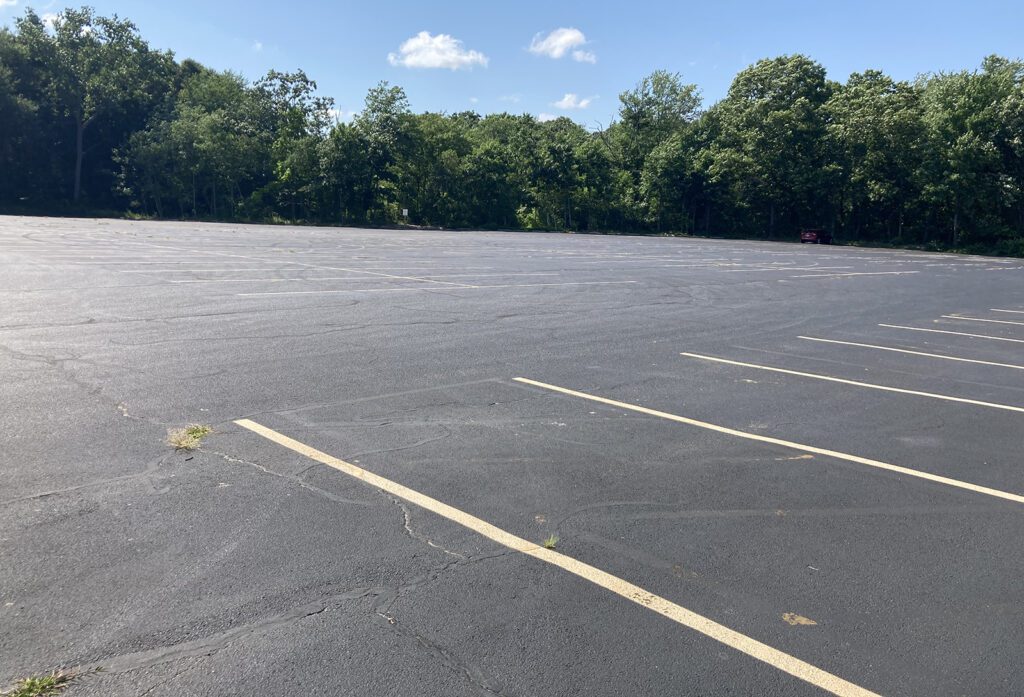
Key recommendation: Identify areas of existing impervious surface that can be removed. What has happened since: A smattering of such projects have been completed or have been planned, mostly by municipalities, universities, and/or nonprofits, but a sea of underused or unnecessary asphalt still covers much of the state.
Key recommendation: Establish a new partnership between the state and the Port of Providence and its surrounding neighborhoods to understand the economic implications of severe weather events and benefits of storm resilience planning and ensure fuel terminals have undertaken all appropriate hardening and resilience measures. What has happened since: Several projects that would have added more pollution to an already heavily polluted area have been rejected, while a few were approved, including liquefied natural gas expansion. The Fox Point Hurricane Barrier doesn’t protect ProvPort or the larger Port of Providence from storm surge or rising marine waters. A Conservation Law Foundation lawsuit alleges that Shell Oil Products U.S. has failed to prepare a bulk storage and fuel terminal in the Port of Providence for the impacts of climate change.
NATURAL SYSTEMS
Coastal wetlands are essential ecosystems that provide a range of valuable services to coastal communities. Vegetated coastal wetlands have been shown to reduce storm surge duration and height by providing storage area for water. For example, areas that contained wetlands had an average of 10% reduction in damages from Superstorm Sandy when compared to those without wetlands. Coastal wetlands were also predicted to have reduced wave heights during the storm across 80% of the northeastern coastal floodplain.
Coastal beaches and barriers are dynamic systems that define much of the Ocean State’s south-facing shore and are popular recreational destinations for residents and visitors. These habitats also provide a suite of other functions and values, such as the interception and treatment of upland stormwater runoff, aesthetic enhancement, and habitat for fish and wildlife.
Rhode Island’s forests provide numerous economic, recreational, ecological, and human health benefits. About 55% of the state is forested, some 360,000 acres. These forests provide free ecological services, such as carbon sequestration and and improved air quality.
Key recommendation: Identify opportunities for retreat and infrastructure removal on state-owned properties. What has happened since: A lot of talk about retreating from the coast and flood-prone riverine areas but little action or support from the state. Nineteen homeowners in Johnston and Cranston who live in the Pocasset River watershed are interested in a voluntary buyback program being run by the Natural Resources Conservation Service and the Northern Rhode Island Conservation District. Eighteen East Providence residents who live near the Runnins River accepted a federal buyout in 2022 because of repeated flooding. The town of Warren is working to buyout and/or relocate structures in flood zones, but it hasn’t been an easy sell.
Key recommendation: Create beach and barrier migration pathways through property acquisition and relocation of structures. What has happened since: With the exception of a smattering of significant projects and other smaller ones, the natural world along the Ocean State’s coastline still has little room to move or breathe as sea level rises and development continues. Few structures have been relocated further from the shore. What constitutes public access to the shore has become a controversial subject.
Key recommendation: Encourage protection of significant portions of the remaining intact forest cover in Rhode Island and conserve the landscape values of larger, unbroken tracts of land. What has happened since: Acres and acres of forestland have been lost to development that could have been built in the state’s bountiful collection of already-developed areas. For instance, a wooded wetland in Tiverton was leveled to build a new casino while an existing casino in Newport with a massive parking lot has sat vacant for years.
COMMUNITY HEALTH and RESILIENCE
Affordable, healthy, and stable housing is a cornerstone of community prosperity. Communities both coastal and inland are at risk for flooding and other extreme weather impacts. As the climate continues to change, it becomes more difficult for residents to assess their flood- or storm-related risks.
Key recommendation: Increase outreach to current and prospective homeowners and renters about property-related climate risks and how to reduce them. What has happened since: A few state education initiatives have been started and then stopped. Many landlords still fail to educate or even warn their tenants about the dangers of lead paint; having them care about climate risks is a tough sell.
Key recommendation: Expand K-12 education on environmental literacy, including climate-related emergency preparedness, by developing resources for school use and identifying how these concepts can be incorporated into existing state standards. What has happened since: Most municipalities continue to struggle to adequately fund public education and pay teachers, so climate preparedness and literacy often get lost in this day-to-day struggle. The state spends more time fighting with the city of Providence over school department control. A few municipalities and their school boards are too busy trying to ban books and marginalize transgender students to even consider talking about the climate crisis.
Key recommendation: Expand the Low Income Home Assistance Program to include cooling assistance for eligible low-income residents. What has happened since: It doesn’t appear the program offers cooling assistance.
Transit Master Plan (2020)
The 70-page document was developed to determine how public transit can best serve Rhode Island in the future. The plan envisions how a passenger transit network should look and operate and how it should be enhanced and further developed to best meet the travel needs of the state’s residents, workers, and visitors.
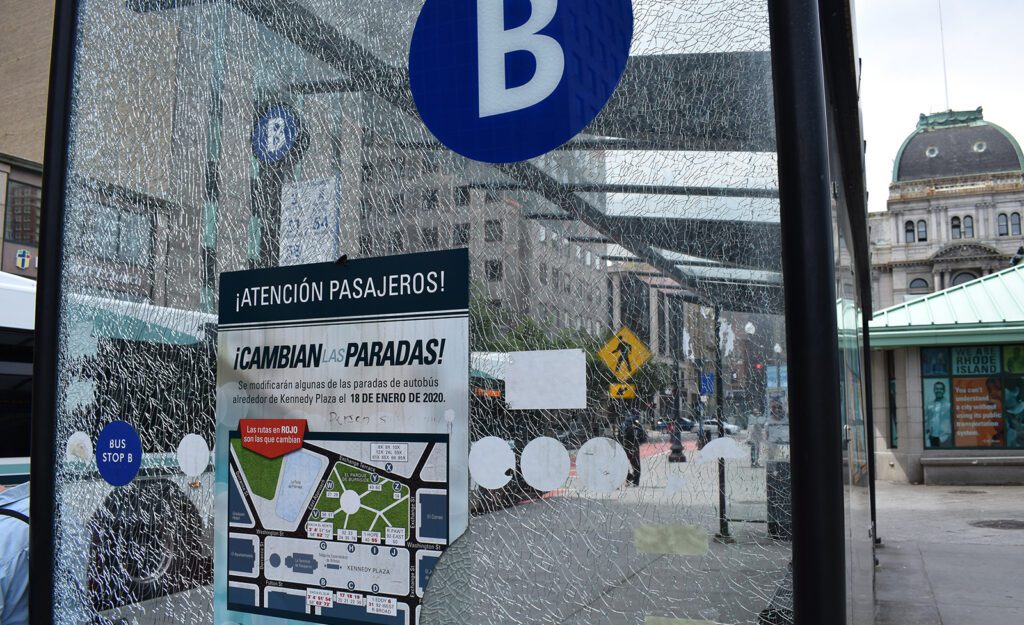
Peter Alviti, the director of the Rhode Island Department of Transportation and chair of the Rhode Island Public Transit Authority board, has called the plan a “wish list.” The General Assembly and governor have provided little to no funding for any of the document’s wishes. Millions, however, have been spent looking to move Kennedy Plaza to a far-flung area, such as Dyer Street or Atwells Avenue.
Key recommendation: Improve existing services. What has happened since: RIPTA riders and transit advocates have to storm the Statehouse every year just to keep the inadequate services that exist.
Key recommendation: Expand services to new areas. What has happened since: In 2023, RIPTA service returned to Foster for the first time in more than a decade, but the route is again on the chopping block. It’s difficult to attract riders when they know a new route or expanded service could soon be gone. RIPTA is planning on reducing service again — by cutting some buses, reducing schedule spans, decreasing frequency, and getting rid of segments — on 46 different lines.
Key recommendation: Develop high-capacity transit. What has happened since: No real progress. State leadership doesn’t take public transit seriously. It’s more concerned with widening highways.
Bicycle Mobility Plan (2020)
The 115-page plan “seeks to safely and efficiently connect people and places so that bicycling in the Ocean State becomes safe and fun for all ages.”
The document — part of Moving Forward RI 2050 — lists eight goals: connect and expand the state’s bicycling network; integrate bicycling with transit and other modes of transportation; develop stronger statewide bicycling policies; promote equity in bicycle planning and funding; increase bicycle safety with policies and programs; leverage bicycling to promote economic development; improve public health through bicycling; and promote bicycle transit for Rhode Island employees.
The General Assembly and governor have provided little to no funding for any of the plan’s recommendations.
Key recommendation: Separated bicycle lane route across Providence’s East Side and through downtown. What as happened since: Mayor Brett Smiley wants to dismantle bicycle infrastructure on South Water Street.
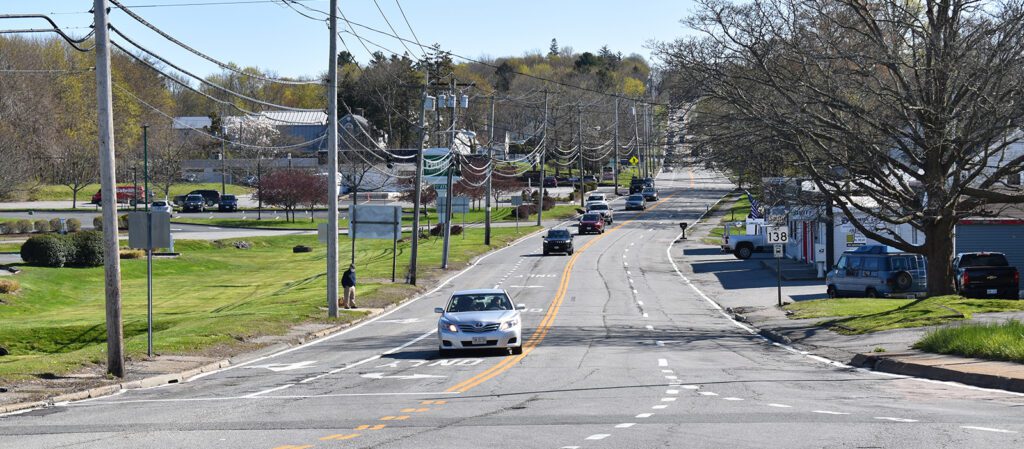
Key recommendation: East Main Road bikeway on Aquidneck Island. What has happened since: A Portsmouth supermarket has threatened to sue if a roundabout is built where Turnpike Avenue meets East Main Road (Route 138). This intersection (above photo) has long been unsafe, there is little safe room to walk or wait for the bus, and no safe space to ride a bicycle.
Special Joint Legislative Commission to Study and Provide Recommendations to Protect our Environment and Natural Resources from Plastic Bottle Waste (2025)
The 2023 commission, which included members of the beverage industry, met 13 times in a year and a half and reviewed hundreds of pieces of testimony, evidence, and presentations. It’s final report, an 18-page document, was released in April.
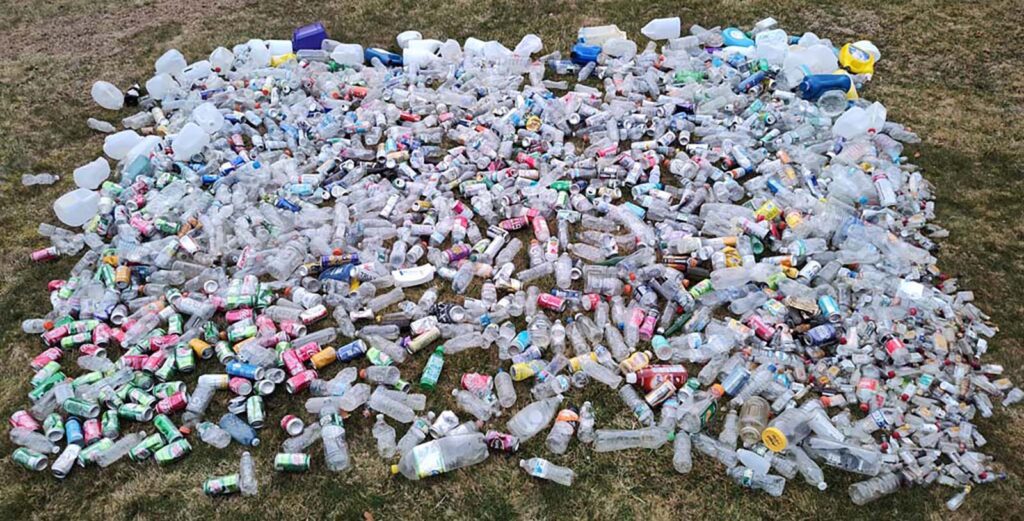
Key recommendation: General Assembly pass a joint bottle bill/extended producer responsibility program or pass one of the programs on its own. What has happened since: Less than three months after the report was released, Statehouse leadership pulled the plug on a bottle bill and/or extended producer responsibility legislation and decided the issue needed to be studied again — for the third time in less than a decade.
Thanks Frank for two excellent accumulations of knowledge. We need to stop building any new Fossil Fuel Infrastructure whatsoever. It is evben more true now than when I first started writing about it and saying it out loud in 2015.