
Sensible Path for Rhode Island’s Future Paved Over by Conspiracy Theories
In decade since comprehensive RhodeMap RI project was erased, homelessness has increased, public transit ignored, and the natural world trampled. The lack of a blueprint for building the state’s future has allowed social inequity to swell.
September 10, 2025
Share


Rhode Island, a dozen years ago, created a road map that offered a chance for a better and more just future. The initiative, which a legion of people poured countless hours into developing, was set aflame by unhinged allegations and conspiracy theories.
The effort began in 2011, with a $1.9 million grant from the U.S. Department of Housing and Urban Development. Two years later, in 2013, the General Assembly passed a law requiring state officials to craft a plan to help guide Rhode Island’s future. They did just that. Then the opponents swarmed, frightened of a pragmatic statewide plan Rhode Island could follow into a future that would undoubtedly present increased stresses on the environment and human well-being.
In the decade since the initiative was officially adopted and then unofficially scrapped, the state’s 39 cities and towns have been left to largely tackle housing, social justice, the climate crisis, open space protection, renewable energy, and many other important issues on their own.
Without a central plan to guide renewable energy development, for example, municipalities were caught flat-footed when developers rushed to clear-cut forests and cover farmland to make room for ground-mounted solar arrays.
The lack of a blueprint to follow and coordinated state support for part-time municipal planners and volunteer boards to draw guidance from resulted in irresponsibly sited renewable energy projects in rural communities that felled thousands of trees and took hundreds of agricultural acres out of production.
Misguided development hasn’t been limited to solar installations. For instance, woodland was cleared to build a 20th-century office park in Johnston. The 1950s-era Citizens Bank project rebranded as a “corporate campus” required new on- and off-ramps to Route 295. Taxpayers paid for half, some $3 million.
Along the East Passage of Narragansett Bay in Portsmouth, oversized, unaffordable, single-family homes with no access to municipal sewer are being relentlessly built. Each of the three expanding but separate gated estates will generate a growing amount of polluted stormwater runoff, even when they sit vacant as their part-time inhabitants return to Florida, New York, and elsewhere.
The Rhode Island Public Transit Authority is again being forced to cut services. This time, the proposed cuts would be the largest in the agency’s six-decade history. In the meantime, taxpayers have spent $6.8 million — more than triple the original budget, according to WPRI reporting — to keep tow trucks on standby near the decrepit Washington Bridge.
Public education remains underfunded and under attack. Community nonprofits and volunteers try to fill the gaps in social services Statehouse leaders watch widen year after year.
The ambitious and foresightful RhodeMap RI initiative, which sought to increase public transit, better protect open space, increase affordable housing, and expand education and job opportunities, was designed to give municipalities and the state a well-thought-out path forward.
It was left to wither on the vine.
“A shrinking middle class and uneven wage growth, coupled with wide racial gaps in income, health, and opportunity, require that the State adopt new strategies for growing good jobs, connecting unemployed and low-wage workers to job training and career opportunities, and increasing access to economic opportunity for all,” according to the final report that came out of the multiyear effort.
In a November 2013 ecoRI News podcast, Kevin Flynn, then the associate director for the Rhode Island Division of Statewide Planning, spoke about the initiative.
“The plans that we’re working on, which are economic development, housing, and growth centers … combines both economic development issues and housing and social equity issues. Those are sort of building on a foundation that we already have in the state,” Flynn said. “So the work that we’re doing now is to really try to pull all these together. And these are huge issues, as you can imagine, individually, they’re huge issues. They’re even more huge when you try to integrate them together.”
The initiative’s recommendations, however, were viewed as too progressive by many lawmakers. They and the opponents who spread manure over the initiative were determined to bulldoze the Ocean State into a future that locked in more of the same: sprawl, poor land use, infrastructure decay, public transit collapse, and rising rents and home prices.
Mission accomplished.
A 2020 American Society of Civil Engineers report gave Rhode Island’s infrastructure an overall grade of C-. The report noted “Rhode Island is home to the highest percentage [22.3%] of structurally deficient bridges in the country.” The condition of the state’s bridges was given a grade of D-. Rhode Island’s roads were given a slightly better grade, D. The state’s drinking water infrastructure received a C+ and its wastewater infrastructure a C.
Last year U.S. News & World Report ranked Rhode Island last when it came to transportation, and that ranking, like the American Society of Civil Engineers report, was based on data that predated the Washington Bridge failure. Rankings were based on four factors: commute times; road quality; bridge quality; and public transit use.
In CNBC’s recent rankings of top states in business, Rhode Island finished 46 out of 50. The rankings looked at 10 categories, and in six of them, the Ocean State — the lowest-ranked state in New England — received D grades. The state received a D- for economy, cost of living, access to capital, and cost of doing business. It got a D for business friendliness and a D+ for workforce.
The annual Out of Reach report released in July by the Washington, D.C.-based National Low Income Housing Coalition found Rhode Island renters must earn at least $31.71 an hour, or $65,954 a year, to afford a $1,650-a-month apartment.
Some of the report’s other findings included: Rhode Islanders making the state’s minimum wage ($15 an hour) must work at least 12 hours a day, seven days a week, to afford a two-bedroom apartment; an 85-hour workweek is what it takes for a low-wage worker (the federal minimum wage is $7.25 an hour) to find housing, which makes Rhode Island the 18th-most expensive place to rent in the country; the average Rhode Island worker earns $18.22 an hour and that wage can only support a monthly rent of up to $950.
(The woman who had cut this reporter’s hair for the past few years recently moved with her 9-month-old son and partner to Michigan, just outside Detroit, where they bought a three-bedroom home for $700 less a month than they were paying in rent for a small apartment in Providence.)
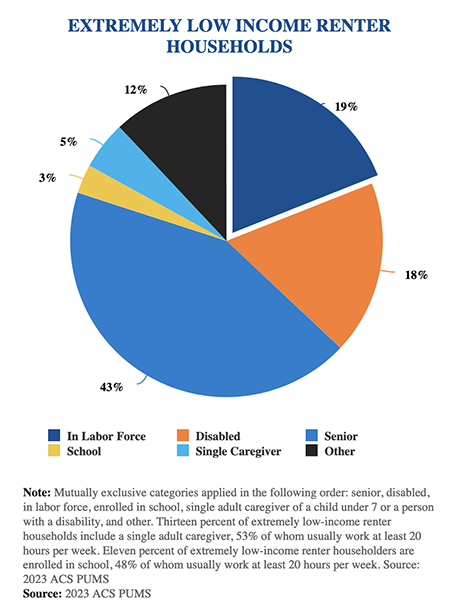
When it comes to affordable housing, Rhode Island has a deficit of 24,679 units, according to the National Low Income Housing Coalition. Nine of the state’s 39 municipalities feature an affordable housing stock of less than 4%. Only eight reach the state mandate of 10%.
In May, the Rhode Island Association of Realtors reported that the single-family home median price of $512,750 eclipsed the $460,000 price of May 2024 and was $47,750 more than at the beginning of this year. The median sales price of multifamily homes also reached a new high of $590,000, “marking the first time that the price in both sectors topped $500,000.”
Rhode Island’s unemployment rate rose again last quarter, to 4.9% percent. The state’s unemployment rate has either risen or remained unchanged for two years, according to Boston Globe reporting. For six consecutive quarters, unemployment in Rhode Island has remained higher than the New England and national rates.
About 11% of the state’s population lives in poverty. The average Rhode Island electricity rate is 27.58 cents per kilowatt-hour — the national average is 16.15 cents.
Rhode Island has some of the highest commercial health care premiums paid by families and employers in the country. Findings from a Rhode Island Business Group on Health report found that between 2012 and 2022 health insurance premium costs in the state increased from 23% to 28% of median household income, leading to the state having the 13th-most expensive premiums in the country.
RhodeMap wasn’t some sort of panacea that would have solved all of the state’s problems, addressed all of its challenges, and bathed the future in prosperity, but it was never given a chance because Rhode Island, like the rest of the country, bows to corporate-manufactured propaganda. The nonbinding Green New Deal was also demonized by the same fear-mongering forces.
Scott Wolf, executive director of Grow Smart Rhode Island, noted at the time that connecting RhodeMap to socialism was “simplistic, opportunistic, and manipulative, part of a national movement to raise money and motivate activists on behalf of conservative causes.”
Flynn had described the initiative as simply “a road map of how we move forward in the state.” He explained that the adoption of smart-growth concepts would be decided at the local level.
“We can enable them, but we can’t make a community make decisions,” Flynn said at the time. He noted it was about providing municipalities with tools that would “enable them to make better decisions on their own.”
Flynn’s overriding memory of the plan now is who funded it, the federal government, and “the completely bogus narrative that the acceptance of HUD funding opened the door to essentially allow them to take over local government.”
As a result, the current vice chair of the Warwick Planning Board noted numerous municipalities declined to apply for HUD funding. “I suppose leaving those competitive funds available for communities that weren’t buying this nonsense,” he wrote in a recent email to ecoRI News.
“RhodeMap RI: Building a Better Rhode Island” was a state-led effort to create strategies for housing, growth, and economic development in a just and thoughtful manner. Leading the effort was the Division of Statewide Planning, in collaboration with the local business community and residents from across the state.
“RhodeMap RI is built on the concept that place matters,” said Jared Rhodes, who was then chief of the Division of Statewide Planning. “Where development happens is just as important as what development happens.”
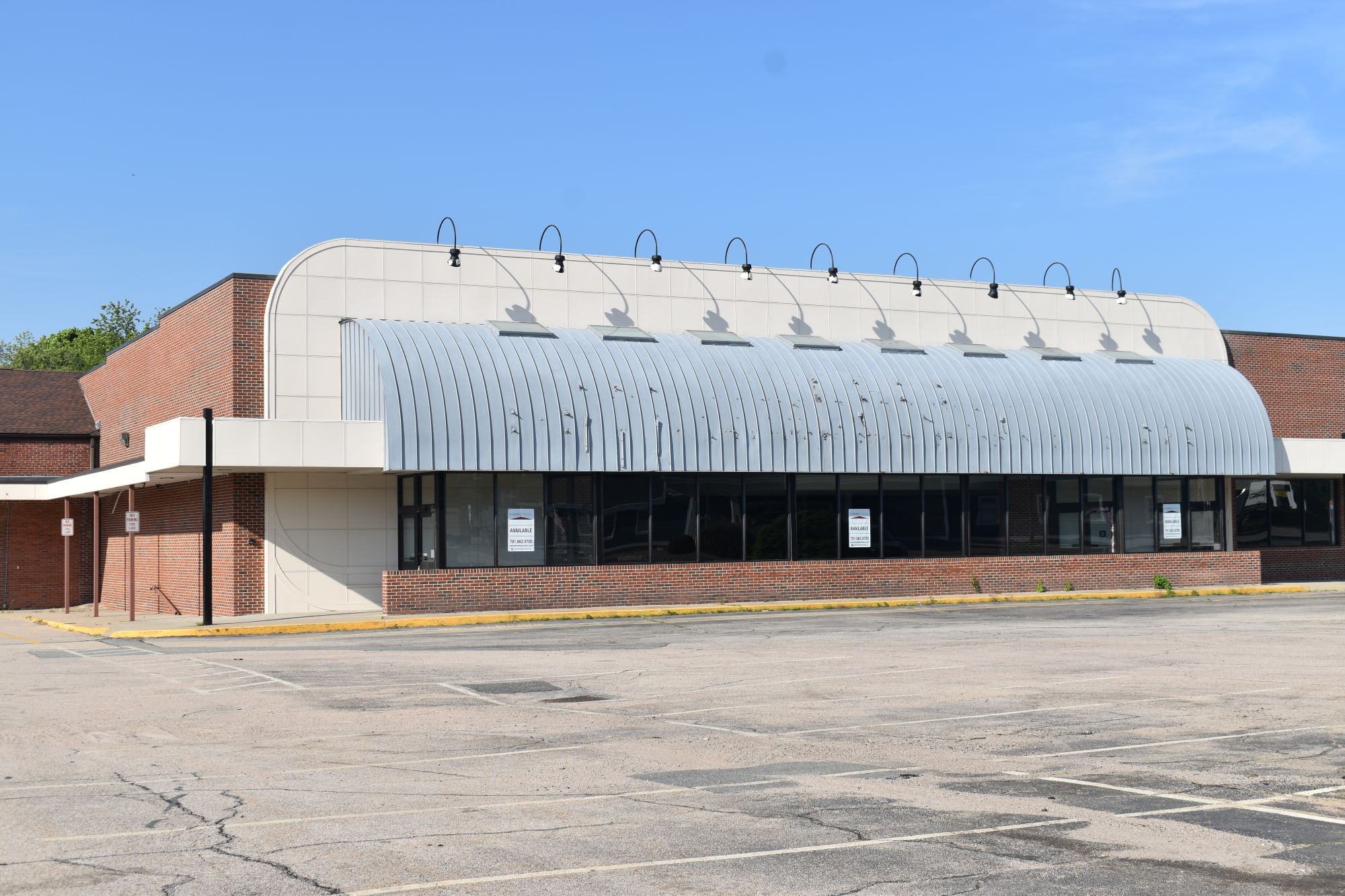
Rhodes, Flynn, and the others behind the effort believed it was time for Rhode Island to change the way it planned. For instance, vacant commercial strip developments with massive parking lots were identified as having a particularly negative impact on communities. The plan outlined these areas for potential investment and redevelopment that would create a better sense of place.
“It’s critical that we educate the public about the impacts of the sort of development we’re pursuing,” Rhodes said at the time. “But there is also a need for planners to educate themselves on the needs of the public, so as to provide a real vehicle for communities to help influence the process.”
Good luck finding any mention of RhodeMap RI on any state website. The initiative was quickly scrubbed by the Gov. Gina Raimondo administration.
In late 2014, Flynn told ecoRI News that instead of addressing questions relating to the plan’s 100 or so recommendations, he had been beating back accusations that RhodeMap was an assault on personal freedoms and a coordinated effort with Agenda 21, a favorite conspiracy theory about the United Nations scheming to impose global mandates. He said then that he had never seen a planning process generate such controversy.
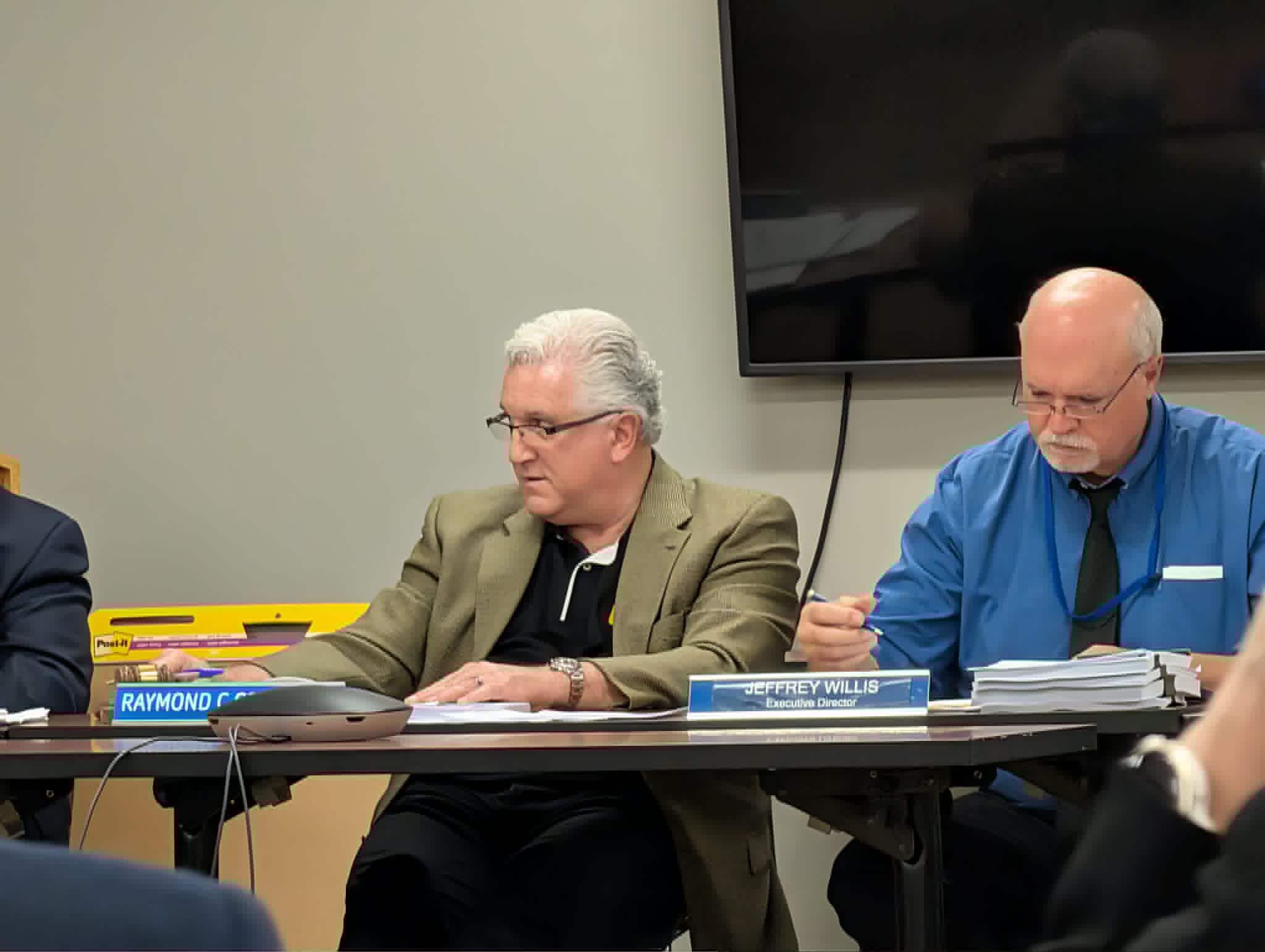
During a December 2014 State Planning Council meeting, where the nonbinding RhodeMap plan was unanimously approved, opponents of the initiative shouted “socialism,” one guy gave Nazi salutes, and another greeted the 26-member council in Russian.
The council members were called “cowards” and accused of treason, as they explained the plan was based on sound research and public input and didn’t authorize land seizures or set the stage for some kind of federal government takeover.
After the plan was approved, then-House Speaker Nicholas Mattiello quickly undermined the process and the work. He released a statement that read, in part:
“With the amount of controversy involved and opposition expressed, I am disappointed that RhodeMap RI was approved. If this plan intends to set the direction for our state, it really needs the support of Rhode Islanders. … RhodeMap RI has diverted attention away from the goal of improving our state’s economy. … I prefer to focus my attention on making sure that Rhode Island develops a stronger, better and more vibrant economy that creates new jobs. This plan goes far beyond the scope of economic development strategy.”
Mattiello — like many of the Statehouse’s inhabitants, both then and now — failed to appreciate the fairness of social and economic justice, ignored the importance of access to affordable health care and reliable public transit, overlooked the need to repair and maintain infrastructure, and dismissed the need for more affordable housing. All those issues are directly connected to a “stronger, better and more vibrant economy that creates new jobs.”
When the Raimondo administration took office about a month after RhodeMap was adopted, the initiative’s final report was rebranded “Rhode Island Rising.”
“We had two major problems — a very well organized local group, for whom this became their major focus and rallying cry, and a change in administration which showed little interest in something that had been developed before them,” Flynn wrote in an email. “The Raimondo administration subsequently hired the Brookings Institute to produce their own plan, which did not involve statewide planning, and which I believe was basically a restatement of the RI Rising document, but at considerable expense.”
Both Flynn and Millar noted the conspiracy theories that opponents were so concerned about never happened. Millar noted, however, that the opponents’ baseless claims and the elected officials who were scared of them continue to hinder the state’s ability to plan effectively.
“There were a lot of other consequences to what happened, and namely that I think the public really lost confidence in government,” he said. “Not that the public always trusted the state, but I think the role of the whole RhodeMap debacle really undermined planning, and specifically the role of Statewide Planning in the eyes of many members of the public and even the Raimondo administration that came in shortly thereafter.
“At the time, Statewide Planning had a great staff. I know a lot of young, really smart, energetic people after RhodeMap they all saw the light and they all bailed out and left and went someplace else. At one time the Raimondo administration was thinking about literally abolishing Statewide Planning. It had become sort of a liability in their eyes, because probably on the campaign trail she was hearing a lot of negative things about RhodeMap.”
Millar noted it was “incredibly frustrating that the plan was attacked and discredited for reasons that were not accurate.”
RhodeMap outlined how Rhode Island, its demographics, and its economy were changing. It encouraged the Ocean State to take advantage of its assets, such as some 400 miles of coastline, its fisheries, ports, and marine industries, its location along the Northeast corridor, its small farms, its tourism industry, and its respected collection of colleges and universities.
Sandra Cano, then the business and community development officer for Navigant Credit Union, appeared on the 2013 ecoRI News podcast with Flynn, which also featured Melanie Army, then the supervising planner for the Division of Statewide Planning. Cano noted that at the time three out of four students in Providence, Pawtucket, and Central Falls were Latino.
“That means the future of Rhode Island is ahead of us with where we need to be inclusive for these minority populations, and that means workforce development,” Cano said. “That is part of what this plan is all about. To just think about a strategic plan for the future, and we need to be conscious that economic development for the state in years ahead is going to be with these kids that are sitting in our classrooms right now. So education is totally key as part of economic development.”
The initiative, based on research conducted by experienced professionals, such as Nathan Kelly, president of the Horsley Witten Group, also highlighted Rhode Island’s many challenges, such as high unemployment, the high cost of doing business, high per capita health care costs, gaps in private and public funding for business expansion, crumbling infrastructure, a lack of affordable housing, and gaps in child care and public transit.
In the past 10 years, Rhode Island has further regressed in those indicators that measure collective prosperity.
Kelly recently told ecoRI News some of the people behind the initiative saw the backlash coming. He noted the initiative unleashed a wave of protest that eventually derailed much of the process.
“RhodeMap RI was an unintentional ‘canary in the coal mine’ for what was emerging on a national scale. Those of us who had a front row seat to what happened with this project were among the few people in New England who were not surprised by the results of the 2016 Presidential election,” he wrote in an email. “We saw it coming. We saw the anger and mistrust boil over when policy issues were framed with phrases like ‘social equity.’ A well-funded and well-organized campaign of misinformation and fearmongering had been deployed, and RhodeMap RI stepped squarely into the hornets’ nest.”
The Blackstone River Valley National Heritage Corridor noted that RhodeMap was an attempt “to strengthen our economy, meet current and future housing needs, and plan for future growth through the development of integrated plans and guidance consistent with existing strategies for transportation, land use and environmental protection.”
The nonprofit assisted with the planning by “helping to facilitate the most extensive public outreach ever conducted by a Statewide Planning Program.”
Flynn noted more than 1,000 people and numerous municipal governments, state agencies, nonprofits, and chambers of commerce participated in the initiative.
None of that mattered to most of the Statehouse’s elected officials.
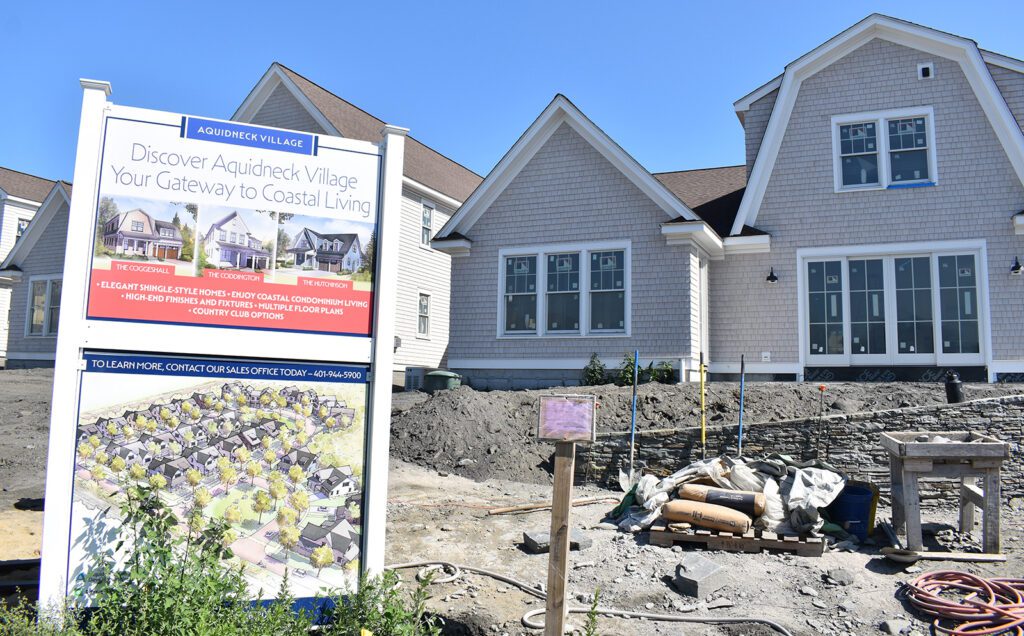
HUD, which funded the two-year planning for RhodeMap, would have been the primary funder for programs that would have addressed housing needs, business development, and environmental stewardship, including initiatives that would ensure inclusion of people of color and low-wealth families.
“At times the state has been criticized in general for not doing a good job of public outreach, but this plan was probably the best public outreach effort I had ever seen,” said former DEM staffer and now retired land use planner Millar. “They made a major attempt to reach populations that typically no one sought their opinions. They hired people to actually go into neighborhoods and get people’s feedback, and they couldn’t have done, in my opinion, a better job.”
When the effort was unveiled, then-Gov. Lincoln Chafee said RhodeMap took a broad look at economic development. He noted that it addressed issues such as public education, energy, climate change, public health, transportation, and social equity.
Cano said she became involved with the effort “because I really wanted to have a voice for the underserved communities.” She noted the mission of RhodeMap RI “was to hear from these underserved communities.”
Kelly noted the RhodeMap project included pilot studies for Middletown, Pawtucket/Central Falls, Richmond, Smithfield, and West Warwick.
“These reports looked at creating growth centers at a variety of scales and intensities,” he wrote. “Each share the same overarching goals: create walkable, vibrant communities, develop a diversity of housing for a range of incomes, provide opportunities for residents to access basic services without driving, concentrate development in a way that uses infrastructure more efficiently, and build a more resilient local economy by focusing on placemaking.”
He said full drafts of these reports were developed, “but unfortunately they never saw the light of day in the wake of the controversy the project created.”
Millar said social media played an enormous role in the opposition’s spread of misinformation.
“What caught me by surprise and it was really the first time I think any of us had ever experienced sort of a social media attack with false information, and the state just isn’t really set up to refute that,” he said. “When you write a story, it’s hard work, you have to do a lot of research, fact-checking, but on social media people can just put out false information and, if they have credibility with their audience, people will believe that.
“I think that’s what happened with this. They attacked it brutally, and there was nothing there. I think we sort of thought, ‘Well, this will blow over. No one’s really going to believe this conspiracy theory that they were pedaling.’ But the public did, and it spread.”
Opponents, such as the Rhode Island Tea Party, Citizens Against RhodeMap RI, The Gaspee Project, and the Rhode Island Center for Freedom & Prosperity, alleged RhodeMap RI would strip away municipal authority.
The latter is a Cranston-based nonprofit led by Mike Stenhouse that is supported, at least in part, with money from corporate interests, some of which with ties to Koch Industries.
SourceWatch has outlined the Center for Freedom & Prosperity’s strong ties to Koch-funded entities such as the State Policy Network — a group of free-market think tanks that support the work of many of the most vocal organizations when it comes to promoting societal misinformation, including the Cato Institute, the Heartland Institute, the Heritage Foundation, and the American Legislative Exchange Council.
Stenhouse’s organization routinely parrots talking points shared by the American Petroleum Institute, a powerful lobbying group for the fossil fuel industry.
He concluded that RhodeMap, with its “big government and anti-enterprise approach,” would negatively impact the free-market capitalist system that “has raised the standard of living of more people across the world than any other system ever devised by man.”
During a Statehouse hearing in May 2015, Stenhouse leveled a race-related remark as he questioned the motives behind the plan. “Who are these people that seek to mandate skin color and income level mixes in our own neighborhood?” he asked.
Stenhouse also called the initiative a “Trojan horse for an agenda out of Washington, D.C.” He described the plan’s livability principals and growth centers as plans for “utopian villages” and “just fuzzy talk of green, walkable neighborhoods.” He claimed the plan would create a “constitutional crisis” for the state by affording the Division of Statewide Planning unchecked authority over municipalities. He noted that in his view “HUD is trying to rewrite the American dream out of a central location in Washington, D.C.”
At a Center for Freedom & Prosperity rally in 2014, Stenhouse promised to make conditions “politically toxic” for politicians who supported RhodeMap.
Opponents singled out HUD in their opposition, alleging the federal agency was propagating a top-down, big-government agenda. They called the effort a “social-engineering plan in disguise.” They argued that government shouldn’t attempt to promote social equity or focus on improving urban areas.
HUD does, or at least it did, provide federal money to Rhode Island municipalities to fund such things as road repair, infrastructure, and police vehicles. The state received HUD funding to help repair the damage caused by extensive flooding in March 2010 and Superstorm Sandy two years later.
The opponents’ conspiracy campaign — a precursor to the MAGA movement — linked RhodeMap to an international planning guideline published by the United Nations in 1992.
“In recent years, Agenda 21 has become an effective rallying cry, organizing tool and bludgeon that right-wing groups have been using to beat back local sustainable growth and anti-sprawl initiatives, including … bike paths,” according to a 2014 report by the Southern Poverty Law Center. “The attacks have caught city councils, planning commissions and smart-growth advocates across the country off guard, leaving them scrambling to mount a defense.”
Conservative groups and their supporters also directed much of their scorn at RhodeMap’s Social Equity Advisory Committee, a subcommittee that called for greater inclusion of minority groups in the state workforce and more affordable housing.
“Social equity is a big steaming lie,” Dan Tirado of Cumberland said at one meeting. “Let’s not forget that Obamacare [Affordable Care Act] was shoved down our throats for the same reason.”
At the same meeting, North Kingstown resident Diane Slater received applause for attacking low-income families and affordable housing.
“The people who live in government-subsidized housing don’t contribute to the tax base,” she said. “And yet [it is] their children who we educate in our school systems.”
(People who live in government-subsidized housing aren’t exempt from paying income taxes, sales taxes, or other taxes based on their income and spending. Taxpayers without children help fund public education.)
Opponents alleged the goal of the many community meetings wasn’t to inform as much as it was to be able to claim the public was widely supportive of such an “intrusive and invasive agenda,” as Stenhouse called it. They also took exception to RhodeMap RI’s call for the enhanced preservation of open space.
General Assembly members embraced the opponents’ prattle, declaring RhodeMap posed a grave threat because of its connection to, among other things, affordable housing mandates. (The state’s mandated municipality threshold of 10% affordable housing has been on the books since the 1990s, but is mostly ignored and seldom if ever enforced.)
Then-Rep. Justin Price, R-Exeter, sponsored a 2015 bill that allowed municipalities to reject RhodeMap suggestions. He noted his legislation would keep “the power in the state” and “doesn’t let the federal government decide what we are going to do as far as our statewide planning and housing.”
Sen. Leonidas Raptakis, D-Coventry, said he planned to introduce legislation exempting his district from RhodeMap recommendations. Rep. Brian Newberry, R-North Smithfield, said he was concerned about “dictates from Washington, D.C.”
RhodeMap’s recommendations embraced such ideas as increasing public transit options, protecting the environment, building affordable housing, supporting energy efficiency, expanding education opportunities, embracing social justice, and better planning for future growth that emphasized renewable energy. It called for English language education, access to job training, and programs that would foster ethnic and racial diversity in the workforce.
It didn’t mandate, suggest, or even encourage the outsourcing of governance to federal authorities, or the United Nations. Its recommendations were designed to be adopted locally.
But most Rhode Island legislators showed little interest in the initiative’s goals or its substance. For instance, then-Rep. Karen MacBeth, R-Cumberland, said public perception is that “somebody on the federal level is going to be able to come in and dictate what they do with their property.”
That perception only existed because lawmakers such as Rep. Michael Chippendale, R-Foster, then-Rep. Patricia Morgan, R-West Warwick, Newberry, Price, Mattiello, and Raptakis and opponents such as Stenhouse worked so hard to stoke baseless fears. And Raimondo was too afraid to defend the work of state employees.
In a July 2, 2015 press release from the Minority Caucus touting the House passing a bill that “protects local communities from any interpretation … that covers low and moderate income housing,” Chippendale, then the senior deputy minority leader, called RhodeMap RI “perhaps one of the most dangerous pieces of policy to come out of the previous gubernatorial administration.”
A decade after claiming RhodeMap would strip away municipal authority, especially when it came to building affordable housing, Millar finds it interesting that the Rhode Island Center for Freedom & Prosperity has been largely quiet the past several General Assembly sessions when it comes new state housing laws.
“It’s funny, the same people that were making a big deal about RhodeMap were silent about that,” he said. “That group and those followers didn’t say anything about the 50-plus housing laws that were adopted over the last several years that really strip away municipal authority and strip away the public’s right to come to a hearing and express concerns about development that might be happening in their neighborhood … a lot of that is gone, and those people have said nothing.
“If they were genuinely concerned about that issue, they had plenty of opportunity to speak up just over the last several years and they haven’t.”
The former Exeter Planning Board member noted the state’s docket of newly adopted housing laws give exclusive priority to development at the expense of everything else. He has said the “outcome will be a haphazard development pattern that will encourage housing where it does not belong.”
Millar and others believe the need for affordable housing provided cover for the state to take away municipal oversight. He supports and recognizes the need for more unattainable housing in Rhode Island, but said how the state gets there is what matters.
He said the state is slowly chipping away at development projects that used to be subject to public hearings and are now just done by administrative approval. “So somebody in the planning department and in rural towns, you’ve got one individual making a decision on a multimillion-dollar development project, which is just horrible policy.”
Kelly agreed with Flynn’s assessment that RhodeMap provided a better path than the one the state is currently on.
“Perhaps most notable for me, the RhodeMap RI housing plan placed a much stronger focus on smart growth principles than the work being done today, which can sometimes stray into policy proposals that want to increase housing production without much consideration of ‘where’ and ‘at what scale,’” Kelly wrote. “While the Legislature has done considerable work recently to try to mitigate the impacts of the housing crisis, proposals (and successful legislation) often feel piecemeal in nature. The housing strategies emerging from RhodeMap RI had a truly integrated and strategic approach.”
Rupert Friday, the first executive director of the Rhode Island Land Trust Council who retired in 2021 after two decades in the position, wasn’t involved in the RhodeMap initiative beyond attending a few public workshops. But he was long involved in Rhode Island land-use policy and still remains engaged.
He recently told ecoRI News he believes municipalities’ ability to manage local development declined around the same time RhodeMap was being developed.
It was the 2013 General Assembly session and 14 bills were introduced by developers and their legislative sponsors to ease building regulations. A few of the most significant became law.
H5703A, better known as the “slopes bill,” prohibits cities and towns from excluding sloped land when calculating a buildable lot. It was passed despite being opposed by environmental groups, land trusts, and municipalities. Opponents noted the legislation imposed a statewide standard on communities with diverse land issues.
More than a dozen municipalities relied on that calculation to maximize open space to protect water quality and wetlands. Of Rhode Island’s 39 municipalities, 15 — Charlestown, Coventry, Cranston, Cumberland, Glocester, Hopkinton, Johnston, Lincoln, North Kingstown, North Smithfield, Richmond, Tiverton, Warren, West Greenwich and Westerly — subtracted slope when determining land for development.
Today, this single state standard can impede local efforts to implement long-term plans to manage growth with concepts such as village centers and transportation-oriented development — both of which RhodeMap championed.
The “dry lands” bill was strongly opposed by planners, environmental groups, and land trusts because of its shifting of wetlands and septic setbacks from local oversight to the Department of Environmental Management. They were concerned such a shift would dilute more stringent, local regulations and allow development of protected open space.
Another 2013 bill — H6167, sponsored by Rep. K. Joseph Shekarchi, D-Warwick — prevented planning boards from requesting additional documents than those required at the outset of the building application process.
Opponents included planners from Charlestown, Foster, and Newport, the Rhode Island League of Cities and Towns, the Rhode Island Chapter of the American Planning Association, and the Division of Statewide Planning.
The Rhode Island League of Cities and Towns in its opposition noted preventing planning boards from seeking additional documents was part of the mantra from builders to dial back rules in the name of business.
“What about giving the cities and towns the flexibility they need, so when an underground storage tank appears they can do something about it?” the organization asked.
The real estate/development industry and its supporters, such as Shekarchi, argued that planners were burdening development by asking for too many permits and too much information in the application process. They claimed it was a detriment to the economy and slowed down development.
Shekarchi, the speaker of the House since 2021 and whose law firm focuses on zoning and land-use permitting, played an instrumental role in getting development-friendly laws passed.
As for the dozens of development-related bills that have been approved in the past 12 years, Friday noted “they really are rewriting Rhode Island’s planning and zoning and dramatically changing local government authority.”
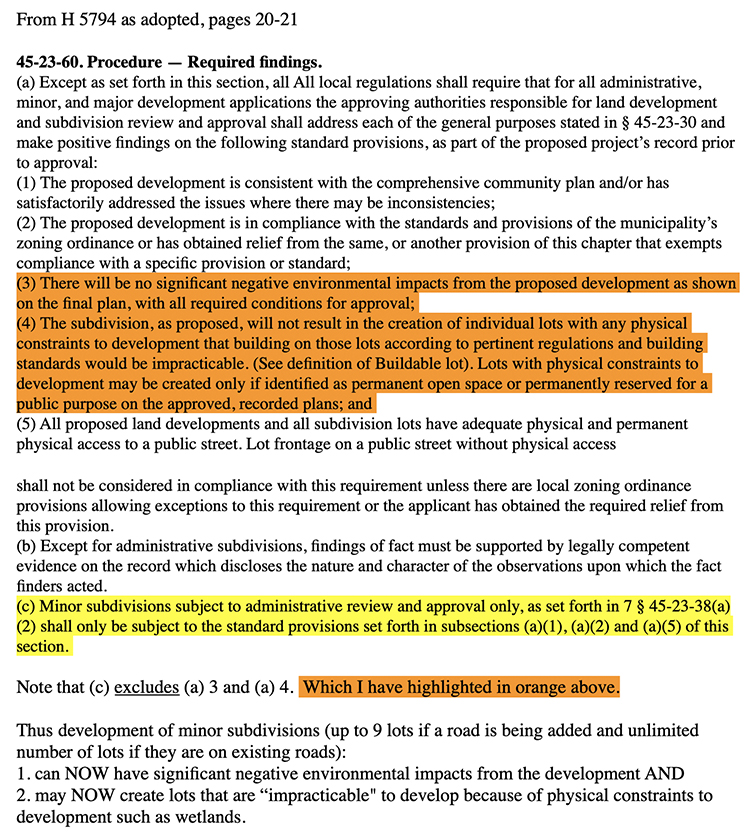
“If you look at the trend, they’ve been really chipping away at local government’s ability to protect the environment for really quite a long number of years now,” he said. “They’re expanding the number of subdivisions that are considered minor subdivisions, so fewer subdivisions go before the planning board and then the most recent bill, they eliminated the ability for minor subdivisions to consider environmental issues.”
A July 31 memorandum written by attorneys Amy Goins and Andrew Teitz took issue with land-use legislation that was approved and proposed this year, noting the “general thrust of the changes is to make more development, especially housing, permitted by right or with only administrative approval, reducing requirements for public notice and public hearings.”
Miller noted his role in the RhodeMap process was identifying areas in Rhode Island that “were the most sensitive and we should be guiding development away from those areas.”
“We weren’t telling towns, ‘No, you can’t develop there,’ but just give them a map that was peer reviewed so they could say, ‘OK, if I build in this area, it’s a core forest, or it’s important habitat, or it’s a groundwater aquifer. Yeah, we need to be careful here,’” Millar said. “At the same time, we were saying these are the areas that have fewer constraints. Some could be served by public water or sewer. So if you’re thinking about growth in the future, these are the areas that might be a good place to think about having more development. But all of that mapping got buried as soon as this plan became controversial, and it never saw the light of day.”
During an April 2015 House Committee on Oversight hearing, several lawmakers berated Flynn about RhodeMap’s wickedness. They expressed deep concern about an improbable scenario: HUD forcibly requiring municipalities and/or property owners to forfeit their rights.
Flynn shortly thereafter left his state position, and state leaders acquiesced to tinfoil conspiracies trotted out by those backed by special interests.

Lawmakers ignored years of professional planning work because of a manufactured dystopian story about U.N. blue hats storming the Statehouse and city/town halls throughout Rhode Island to make residents ride bicycles and grow vegetables and to force municipalities to provide affordable housing and protect green space.
The creation of the final report, a 179-page document, included numerous public forums — in Cranston, East Providence, Harrisville, Narragansett, Newport, Providence, Woonsocket, and elsewhere — to find out what was and wasn’t working in Rhode Island’s 39 cities and towns.
During the yearlong outreach process (2013 to 2014), Rhode Islanders and out-of-state commuters shared their experiences living and working in Rhode Island, both the opportunities and challenges. Discussions were held about how and where Rhode Island should grow, and how growth and preservation differ in urban, suburban, and rural communities.
The idea behind the public workshops was to build community consensus on issues such as education, the environment, energy, housing, and tourism.
Those who worked on RhodeMap spoke with people with different backgrounds and perspectives and who lived in different places and under different circumstances. They heard a lot of the same things:
The need for clear and open standards in economic decision-making and accountability in government.
Streamlined, coordinated, and consistently enforced regulations that continue to protect public health and community well-being.
Equitable opportunities for all Rhode Islanders to fully engage in the economy, regardless of race, ethnicity, age, gender, or neighborhood of residence.
Many people in this state are struggling to get by, and don’t have sufficient access to basic needs such as food and housing.
More targeted workforce education and training to match current and future workforce needs and to ensure job success.
A public education system that consistently prepares students throughout the state for success.
More opportunities to live in walkable communities with access to public transit, services, employment, and a range of housing options.
Of these seven common public comments, it would be difficult to make the argument Rhode Island has improved on any of them in the past decade.
A central objective of RhodeMap was to refocus population centers into multiuse village centers. The idea was to make the nation’s second-most densely populated state, after New Jersey, more walkable, bikeable, and less centered on cars and sprawl.
The idea was to combine apartments, retail, and business space in village centers that would have access to public transit. In rural areas, the initiative aimed to preserve local character and open space. Zoning changes would have been sought to allow for combined development and to protect land for recreation and agriculture use.
“Smart growth” wasn’t a new concept when the RhodeMap initiative was introduced. Grow Smart Rhode Island has been around since the late 1990s. The concept had already been embraced in popular tourist destinations such as Vail, Colo., and Disney World, in post-industrial cities and towns such as Northampton and Lawrence, Mass., and on Hope Street in Providence and in Wickford Village in North Kingstown.
The initiative’s focal point was to stop development that stressed natural resources, such as single-family housing that eats up swaths of open space and often lacks water and/or sewer infrastructure.
Flynn noted in late 2013 that “one of the most daunting challenges is to be able to come up with a program that will have political support, that will have public support, which those hopefully follow each other.”
Rhode Island is off course and searching for answers. The swift dismissal of RhodeMap was a lost opportunity, according to those ecoRI News spoke with for this story.
“Perhaps the biggest thing we lost is the coordinated, strategic approach to issues of housing, transportation, economic development, land preservation, infrastructure investment, and community revitalization,” wrote Kelly, who has two decades of experience in planning, zoning, and community engagement. “There are smart people working on each of these issues in Rhode Island, but the efforts are fragmented and sometimes at odds. There is no need for this. Plans like RhodeMap RI show how to integrate these perspectives in a way that creates amazing efficiencies and benefits that are experienced at higher levels and by the largest groups of residents and businesses.”
He said current legislative efforts around housing show the fragmented, piecemeal approach to solving the crisis.
“The bills that pass are designed to overcome barriers to housing and increase supply [and] this is a good thing. But too often, because of a lack of integrated thinking, these bills are immediately amended to correct the unforeseen consequences. The is an example of ‘what could have been different,’” Kelly wrote. “We lost valuable time addressing the housing crisis. The current policy goal is basically ‘build more housing.’ That’s not necessarily a bad policy, just incomplete. RhodeMap RI could have answered the obvious next questions: Where do we build more housing? How much housing? What types of housing? Housing for whom? What is the role of the State and what is the role of municipalities in the development of housing?”
He noted “another huge loss, and the nation is experiencing this everywhere, is embracing the idea that helping vulnerable populations will benefit everyone. These are not abstract ‘feel good’ benefits but tangible economic and public health benefits that build our workforce, grow our economy, reduce cost burdens, and protect our resources.”
Note: Former and longtime ecoRI News reporter Tim Faulkner contributed to this story. To read some of ecoRI News’ RhodeMap RI coverage, click here, here, here, here, and here. To read a related story, click here. The Horsley Witten Group is a sponsor of ecoRI News coverage of land-use issues.
Glad you singled out Mike Stenhouse for disgust in this article. I testified at lots of hearings on RThode map, wrote some critiques of it as well because it was not perfect. But it at lest demonstrated a clue. Since Frank already told us where Stenhouse gets his funding, I will say that sometime after Rhode Map died I debated Stenhouse on State of the State. I brought documentation and ripped him and got him to admit he lies about many of the issues of the day because it is good politics. Rile the people up on phony claims of democracy etc. ( this despite the right wing being the people who do not want you to vote) so that you can lie about the economy and feed your handlers/funders, the koch brothers. A truly despicable human bneng, who’s only good deeed is that he admits he lies for political gain. And we do have it on the web if he complains about being called out.
“RhodeMap’s recommendations embraced such ideas as increasing public transit options, protecting the environment, building affordable housing, supporting energy efficiency, expanding education opportunities, embracing social justice, and better planning for future growth that emphasized renewable energy. It called for English language education, access to job training, and programs that would foster ethnic and racial diversity in the workforce.” All of those things seem pretty positive to me, and something that everyone would at least partially benefit from. In Rhode Island though (and the country at-large), thoughts and ideas like that are too radical from what we are accustomed to, so here we are ten years later and arguably worse off than we were. I suppose in Rhode Island, that is recognized as progress.
Wow, the RhodeMap really was the canary in the mine shaft for the decade to come! It really goes to show what happened when the climate movement tried to pull the DNC establishment to the left. You get a non-binding plan loaded with pandering buzzwords that will be abandoned at the first sign of pushback, while everything gets systemically worse. It’s a real gut punch to think about how years of work by dozens of optimists were undone by one guy from Cranston with juice from a billionaire.
Any town or city that wanted to implement any of the Rhode Map RI recommendations could do so even today. I am not aware of any that have done so.
I’m curious about how and why our big environmental organizations, particularly the Land Trust Council with its local organizations in some 32 municipalities, could not mobilize grassroots support for Rhode Map while a group of amateurs, largely in Burrillville, were able to do exactly that to snuff Governor Raimondo’s cherished Clear River Energy Center power plant?
That might be a valuable, instructive story about how to engineer a bi-partisan grassroots coalition to support a cause. Contemporary Burrillville, as with all of western Rhode Island, I’d venture, definitely does not support this State usurpation of local planning authority engineered by Shekarchi & friends.
This is an outstanding article, providing a thorough and accurate history of this shameful episode in RI politics, including a lot of ridiculous but also vicious rhetoric, and a lot of cowardly behavior by people who should know better. Not unlike what we currently experience on a national scale. Rhode Map RI provided the guidance to, and advocated for support of, local government to do what was and still is simply in its own interest and that of its citizens. I wish we could pick up where we left off. But if we could, we should also do a better job on that part of Rhode Map that called for better (i.e. actual) coordination, integration and streamlining of government processes, which still too often complicate and frustrate progress unnecessarily. This is not just an “us vs them” problem.
PS: Kevin and Scott, we miss you.