
Neighbors of Jamestown Beach Outraged by Town’s Removal of Vegetation
April 13, 2026
Share


JAMESTOWN, R.I. — For some residents, it’s a case of spring cleanup gone too far.
Head’s Beach, a neighborhood hangout, is a 1.7-acre stretch of shoreline; a small beach by Rhode Island standards, it’s used by residents and out-of-state tourists alike during the warmer months.
But waters along the beach have been less than calm since March 27, when town workers completely mowed almost all of the vegetation, including partially mowing a tree, in a bid to remove invasive phragmites. Town workers have trimmed phragmites before, but this time they continued until they removed almost all vegetation from the beach.
Some nearby residents were shocked and complained; the vegetation, including the phragmites, provided a natural privacy screen for homeowners between their property and the beach. At least one resident, who told ecoRI News they wish to remain anonymous, called the Coastal Resources Management Council, the state agency that oversees coastal permits and development, who came out to the beach to admonish town workers for exceeding their permit.
“It ruined the integrity of the beach,” the resident said.
Laura Dwyer, CRMC’s public information coordinator, confirmed representatives of the agency visited the beach site the same day they learned about the mowing. Agency staff met with the DPW, town officials, and the town’s arborist.
“The town is going to restore and manage the area they cut down that was outside the scope of the permit,” Dwyer told ecoRI News.
“That’s the main reason everyone is outraged, I think; they ruined the integrity of the beach,” the resident said.
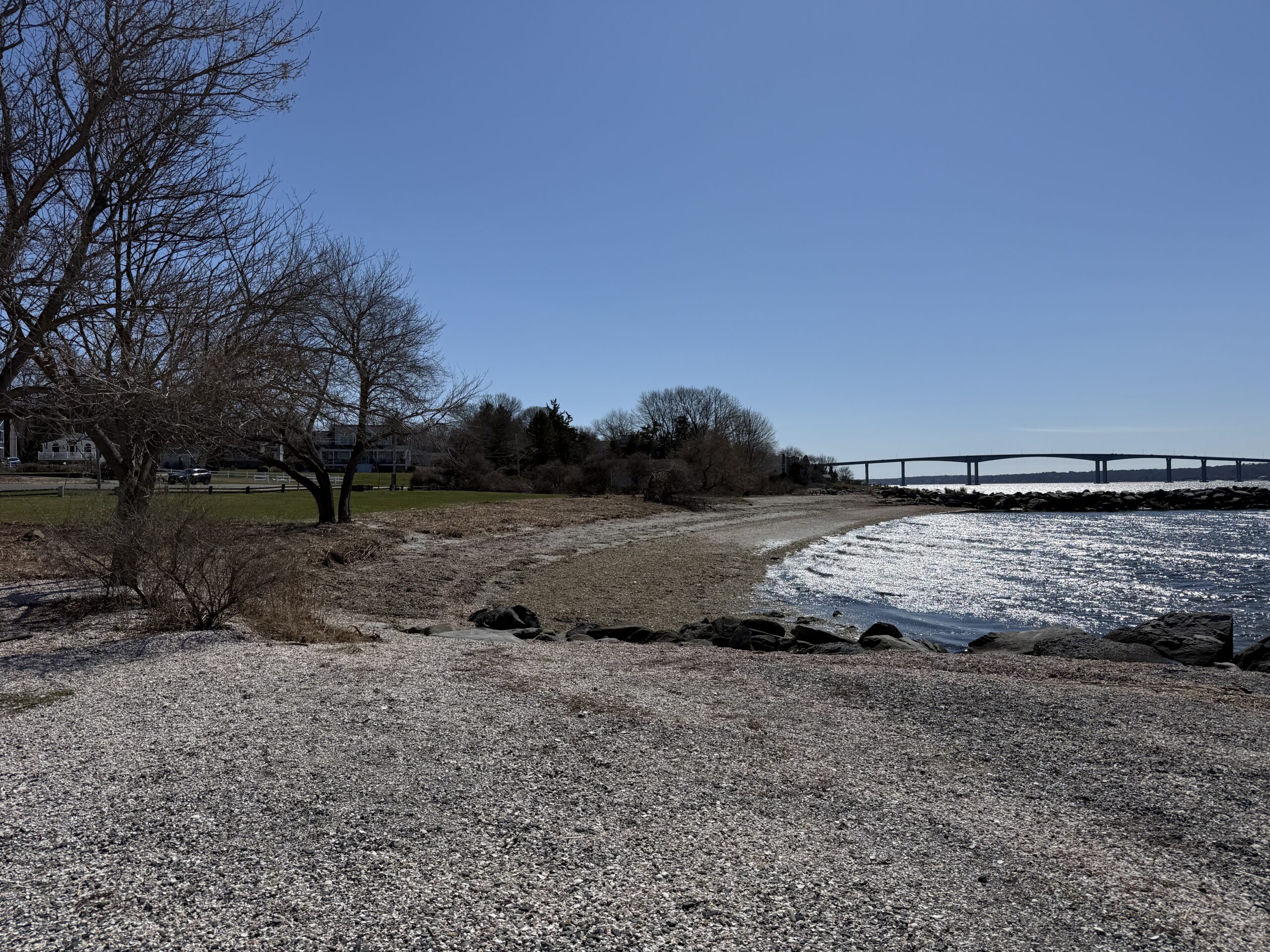
Town administrator Edward Mello told ecoRI News that characterizations that the town had removed all the vegetation from the beach were inaccurate. The phragmites, he said, had “completely invaded” the entire beach.
“It’s not been reported to me or my staff that there’s anything that needs to be done,” Mello said. “We were within the limits of the permit, and we mowed the phragmites as allowed.”
Mello also said public speculation the town had used herbicide was inaccurate. The bulk of what was mowed was phragmites, according to Mello, as well as some other plants around the perimeter.
“There were very limited other plants along the beach, other than the phragmites,” he said.
When it comes to vegetation management on the shoreline, CRMC has jurisdiction. Municipalities or homeowners looking to manage even just invasive plant species along their shoreline have to go to the coastal agency for a permit.
CRMC’s permit database showed the town filed an application to remove phragmites Feb. 18; it was assigned permit number 2026-02-066. Records showed CRMC accepted the application March 2, and approved the permit four days later. The project description for the permit specifies the town will remove phragmites by mowing only, no herbicides were authorized, and the project also included sand replenishment.
It was a project requested by the Jamestown Shores Association, a conservation group made up of residents living in the neighborhood of the same name, according to a report last month by the Jamestown Press.
Phragmites, also known as the common reed, are some of Rhode Island’s most successful invasive plants. They grow quickly, and particularly thrive along the state’s coastal wetlands, out-competing native species and forming dense growths.
There’s no long-term fix for phragmites, and state policy is to bio-control infestations as best as possible, typically by removing them from wetlands. Left unchecked, phragmites can take away habit for other species that rely on coastal wetlands vegetation.
Native plant life is part of the living shoreline. One of the most important ecological benefits is the stabilization of shorelines and preventing erosion. Beach plant roots stabilize the soil and sand dunes located on the beach.
It’s why communities like Jamestown are investing in dune grass. In recent years, the town conservation commission has been growing its own dune grass at the Jamestown Community Farm, and transplanting it onto Mackerel Cove Beach.
But with Memorial Day less than two months away, Jamestown’s summer season is rapidly approaching, and it’s going to look a lot different at Head’s Beach this year.
“It’s just sad to see the beach the way it is right now,” the concerned resident said. “If they plant more grass, that’s great, but everyone’s wondering, what’s next?”
While the town may have cut valuable vegetation as well as the phragmites, the phragmites will grow back this season, hence it’s invasive nature.