
Homeowners Near North Kingstown Lake Form Nonprofit to Fight Aquatic Invasives
October 27, 2025
Share


NORTH KINGSTOWN, R.I. — Peter Duquette remembers when Secret Lake used to be a great place to catch some fish.
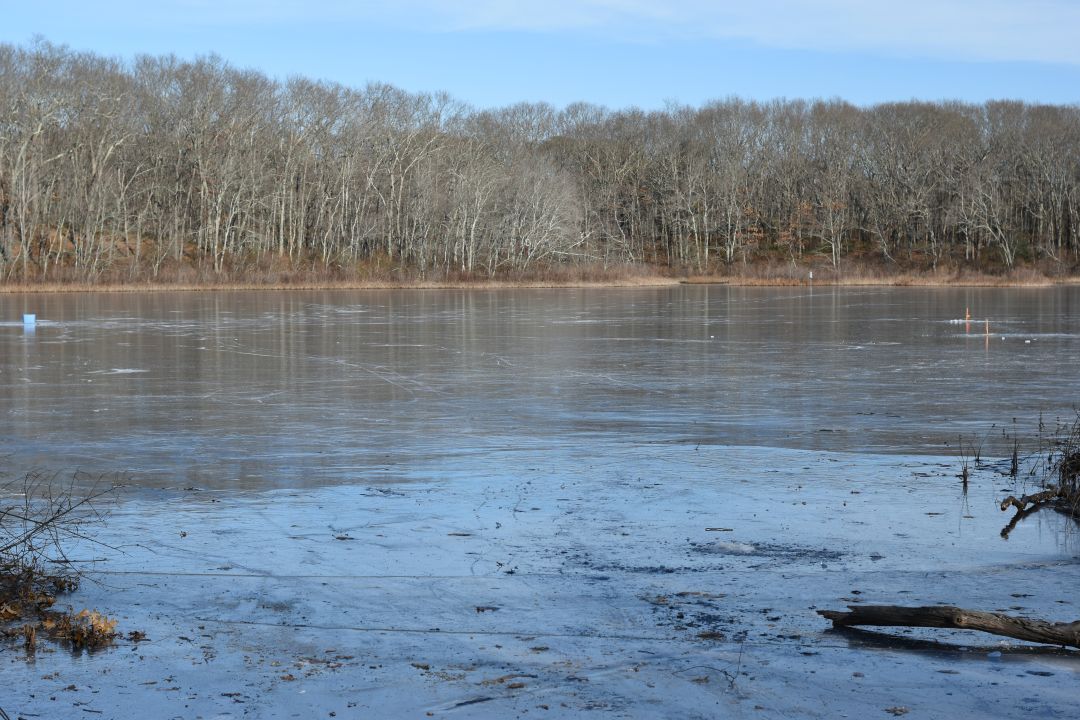
The 47-acre pond across the street from Ryan Park on Oak Hill Road has always been something of a forgotten gem. It’s more of a pond than a lake, said Duquette, since its maximum depth is just 8 feet. But in the past he has caught largemouth bass, pickerel, and, if he’s unlucky, a snapping turtle.
“It’s still a great place to fish, if you can clear yourself an area to get the fish out of the water,” Duquette said. “You have to go out now in the early spring, when the lily pads are dying, but even then it’s just ridiculous how much some of these invasive plants have taken over.”
Duquette, who has lived in North Kingstown for more than half his life, first moved to his home on Secret Lake 25 years ago. Memorably, he said, his first night was the dawn of the 2000s, New Year’s Eve 1999. In the years since, he said, he’s seen more and more invasives take over Secret lake, edging out aquatic species and wildlife, and making it nearly unusable for anyone who wants to swim, fish, or kayak.
“It was very open 25 years ago, the part of the lake I live on was probably more congested, but there was always access all the way along the pond,” Duquette recalled. “I could get out of my area and go anywhere else in the pond. Now in the summertime, I can’t even get out of my area, the lily pads are so thick.”
“If you look at it from far away, you’d say this looks fine,” said Lisa Sussman, who has lived on Secret Lake for five years. “But when you get closer and look into the pond, you can see it’s clogged with weeds.”
Of the nine aquatic plant species in Secret Lake, four of them — fanwort, variable milfoil, Eurasian milfoil, and common reed — are invasive. The lily pads are actually a native species, but thanks to the ecological situation created by the spread of invasives, the lily pads have had an extremely favorable environment in which to grow and spread.
Duquette and Sussman both worry if left untreated Secret Lake could build up sediment and become less of a pond and more of a shallow wetland.
Aquatic invasives are a growing problem in Rhode Island’s freshwater bodies. According to the Rhode Island Department of Environmental Management, which permits the treatments for invasives to private companies, 112 ponds and lakes and 29 river segments in Rhode Island contain at least one species of invasive plant. Many waterbodies host more than one species.
The state’s most successful aquatic invader is one that’s omnipresent in Secret Lake: variable milfoil. It’s an underwater weed with fine, densely packed leaves that almost resemble feathers, whorled around a main stem. In waterbodies like Secret Lake, the milfoil stems can poke above the waterline between 3 and 6 inches. By itself, milfoil is found in 61 lakes and ponds and 20 river and stream segments across the state.
Its native habitat is the Midwest and southeastern United States, where it’s a vital food for insects and fish, which feed on the plant and provide a natural control on its growth. But those same predators of milfoil don’t exist in southern New England, where it can grow rapidly, up to an inch a day.
“I really had enough from the minute I moved in,” Sussman said. “I moved in, and knew the lakes were compromised, people had been making noise. But nothing was really getting done and I’m a get-things-done person.”
Sussman was the chief organizing force behind a new kind of nonprofit centered around Secret Lake and Belleville Pond. It’s called the Belleville Ponds Complex Association, and its mission is to raise money to pay for remediation and treatment of the waterbodies to remove the invasives entirely.
Sussman, who now leads the nonprofit, and Duquette, who is the group’s treasurer, both say they tried going through both The town of North Kingstown and DEM for help with the invasives, but were rebuffed.
“DEM was all ears, they were listening, but they just don’t have the funding to do anything for it, end of story, because we’re not a stocked lake,” Sussman said. “The town was responsive and listened to us but didn’t give us any funding.”
State or local money for fighting invasives is slim to nonexistent. Treatment for lakes, rivers, and ponds can start to rack up excessive costs quickly. Complete eradication of aquatic invasives can be difficult to achieve without costly, repeated treatments over a number of years.
DEM estimated last year it would need between $3.8 million and $7.6 million annually to actively manage the infestations in Rhode Island’s ponds, lakes, and rivers. In recent budget years, where the state has been running up deficits, DEM help isn’t manifesting anytime soon.
Lawmakers are slowly recognizing the mammoth invasive problem impacting the state’s waterbodies. Last year, after much pushing from conservation groups such as Save the Lakes, legislators passed a bill creating a Freshwater Lake Management Program but failed to give DEM any funding to fulfill it.
“DEM did not receive additional state funding to implement the lake management program which was formally established by the law,” Evan LaCross, a DEM public affairs officer, said. “This year’s state budget provided continued support for a DEM staff member who focuses on issues involving the state’s freshwater bodies, including aquatic invasive plants.”
Sussman said originally an estimate for treating Secret Lake for milfoil and fanwort would cost about $1,000 per acre. Water & Wetland, the South Grafton, Mass.-based company that performed the survey and gave the Belleville Ponds Complex Association its quote for treatment, said it would lock in the nonprofit at $400 per acre for future spot treatments.
The chosen treatment for Secret Lake is an aquatic herbicide called fluridone, which inhibits the photosynthesis process by stopping chlorophyll from breaking down in sunlight. It’s a chemical that has been approved for use by the Environmental Protection Agency and DEM and is, in fact, the same herbicide being used in the state’s battle against hydrilla.
With no state or local help coming to pay for the treatment, Sussman, Duquette, and their neighbors began fundraising the money themselves. To date, after two years, they have raised nearly $50,000, just $5,000 shy of their fundraising goal.
Duquette said the Belleville Ponds Complex Association could be a model for other Rhode Island communities looking to clean up their own ponds and lakes. “There’s advantages to having a nonprofit: it gives you credibility, and there’s a lot of tax advantages to it since we’re going to be spending the money anyway.”
Another upside, said Sussman, is that the biological survey and initial treatment of the pond will be cheaper than they budgeted for. The survey cost less than $2,000 and the pond’s first treatment will cost $38,000.
“We’ll have some wriggle room for the future, it’s fantastic,” Sussman said. “I always think you should raise more than you need.”
While they hit their goal, the nonprofit is still accepting donations for future treatments at their dedicated Venmo.
“I love this area here, and I hate what the invasive plants are doing to it,” Duquette said. “I think it’d be a shame if it turned into some wetlands.”
Silly question, but is there any opportunity to manually remove the invasives before applying chemicals? This could be something that volunteers could get behind.
Good question. I tried doing it in front of my house when I first moved here but it is too labor intensive and the problem with these weeds is that the more you break them up, the more weeds you have. The only initial way to deal with them is herbicide. I think hand raking could be an option once we get the situation under control.