
Forested Ghost Town Haunted by Development Pressures
Proposed data center latest threat to Colonial-era village
April 30, 2026
Share


SMITHFIELD, R.I. — The clues are weathered from centuries of rain, snow, ice, heat, and humidity, but not terribly difficult to find if you enjoy hiking. Scattered throughout the woods behind Fidelity Investment’s corporate office park off Douglas Pike are traces of an old school, a small cemetery, cellar holes, abandoned wells, remnants of an old quarry, a threshing rock, and a maze of stone walls all slowly being reabsorbed by the wild.
Hanton City, which holds the remains of a Colonial-era village or hamlet, fits the ghost town description quite nicely, which is one reason why it’s also known as “Ghost City” and “Haunted City.” The community was deserted long ago, and has been uninhabited ever since, at least by humans.
The village is fairly spread out, with some structures being a quarter-mile to a half-mile away from each other. The Hanton City Trail provides access to the long-ago community. The village is off the former ox-cart road, on both sides, and land ownership is today a mix of privately owned (Fidelity and vague limited liability companies), conservation land (Audubon Society of Rhode Island and the Smithfield Land Trust), and publicly owned.
The hamlet is bordered by a ground-mounted solar array and the 380-acre Fidelity campus, built in 2008, that includes a 550,000-square-foot office building and parking garage. The state provided much of the land on which the Fidelity campus was built
While the area’s remaining forest is healthy, with wetlands, eastern white pines, and patches of birch trees, the main attraction is the lore of Hanton City. Most of the village’s population has been estimated to have disappeared sometime before the Great Depression.
The village’s mysterious history has produced legends and folklore, such as the village being looked after by a friendly ghost, or haunted by less-friendly phantoms.
The creator and voice of the Weird Island podcast, Providence College graduate Sara Corben, devoted an episode to Hanton City, aptly titled Ghost Town.
Woonsocket native and Providence-based filmmaker Jason Allard, in a video titled The Lost City, featured Hanton City in his web series Abandoned From Above.
Local paranormal researcher and ghost hunter Tom D’Agostino told The Valley Breeze he has visited the area a hundred times. He said he and others have taken electronic voice phenomena recordings at Hanton City. D’Agostino claimed that in one recording they heard a voice saying “help” and in another a voice saying “go to the barn.” He said there have been people who claim to hear babies crying, although he mentioned a fisher cat could be responsible for such a noise.
During the Halloween season, D’Agostino leads haunted tours of the three-century-old hamlet. D’Agostino believes the village was settled around 1658 by the Hanton family. In the 1880s, he said the Wilcox and Daniels families lived in Hanton City. He has claimed the village was occupied until the 1970s by the Daniels, who had no running water or electricity in their home.
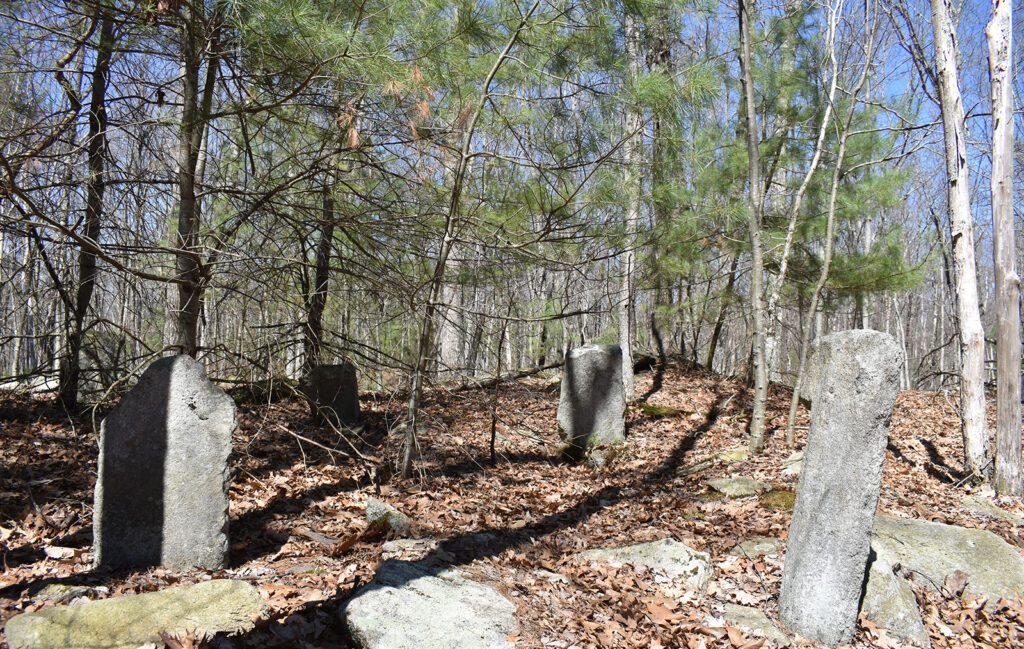
A dearth of documentation has led to speculation about who actually lived in Hanton City. Indigenous people and former slaves living in exile, British soldiers who deserted the Revolutionary War, residents of a poorhouse, and Quakers have all been been mentioned.
There’s no consensus about how the village got its name. The leading speculation is that it was named after a well-known family that once inhabited the hamlet.
An 1889 Providence Journal article headlined “A Buried City” quotes an 80-year-old Tom Hanton, who still lived on the edge of Hanton City with his sister, as being “the last of the Hantons.” He says the area “was a lively and enterprising place when he was young.”
When asked about where all of the village’s residents had gone, Hanton says, “They had all got poor, and sold out to anybody, and died off.”
The story claims the settlement was developed in the 1730s and was home mainly to tanners and boot-makers whose primary income was derived from the sale of goods in Providence markets.
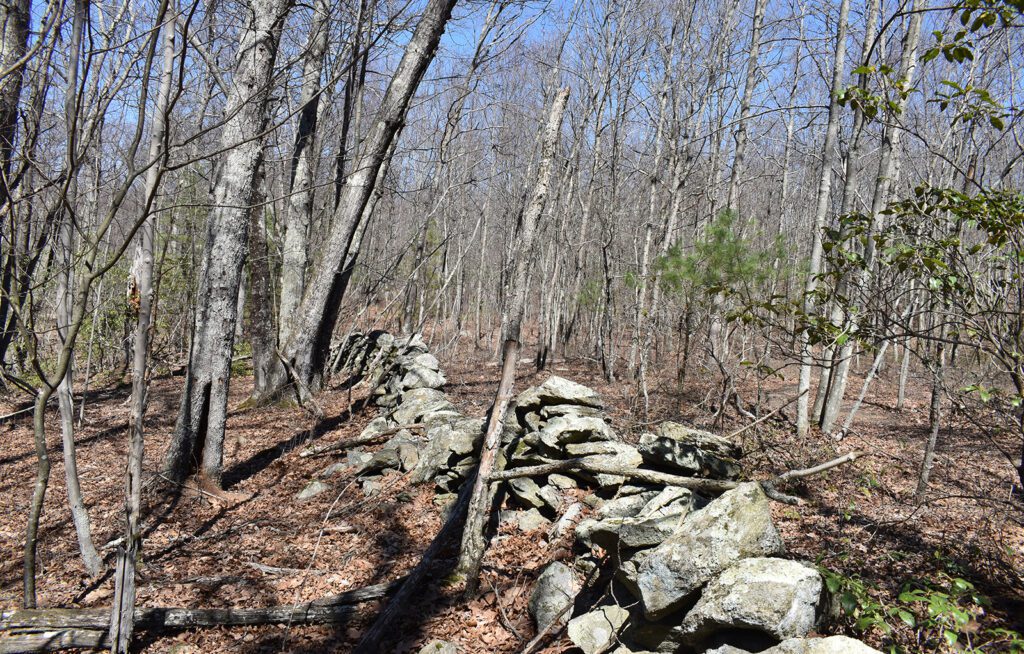
Today, while Hanton City maybe haunted or visited by ghosts, it’s continued existence, as well as the woods that house it, are threatened by a proposal to build an energy- and water-intensive data center.
“This old hamlet, cellar holes, amazing stone walls will be lost. Obliterated under a data center,” said Andy Grover, an avid Rhode Island hiker. “It’s an area of cultural importance. Nobody gives a [expletive] because it wasn’t visited by George Washington and it isn’t a battlefield.”
The retired public high school science teacher first visited Hanton City 25 years ago, and has hiked the area some two dozen times.
“It’s a precious area. Many people, including myself, find it to be a fascinating place of intense cultural interest. I would be one of these people that says our history shouldn’t just be historic events. It shouldn’t just be the house where George Washington stayed. It shouldn’t just be when we burned the Gaspee,” Grover said. “These more kind of personal, cultural, way-of-life histories about Rhode Island need to be preserved so we can wrap our mind around what life was like here.”
On a sunny Saturday afternoon in April, with a temperature near 60 degrees, Grover took this reporter on a 6-mile hike of the village and the forest that surrounds it.
“There’s plenty of people who have kind of done amateur archeology here,” the Providence resident said. “They found that old quarry, a crude little cemetery that had been lost for a while, but it was kind of rediscovered, several foundations.”
For Grover, a spot of interest is the village’s old threshing rock. “I think it’s kind of cool. It’s where these folks threshed their grain,” he said.
The hike was also kind of cool, as is the remaining forest with its small human footprint of past life.
Note: This Tuesday, May 5, at Smithfield Town Hall, 64 Farnum Pike, at 7 p.m. the Town Council is scheduled to vote on a two-year moratorium for all data centers.



a map of just where this is could have been useful.
I hope they pass the moratorium so we have time to understand the possible impacts.
I also note hw RI is squandering its natural areas for development that could go to already disturbed areas including in the metro area – think Fidelity, Citizens Bank, Tiverton casino, CVS, solar “farms,” and so much more – all in locations where employees and visitors have to drive as carpooling transit, bike access nearly impossible
The moratorium on data centers should be permanenent and statewide