East Providence School Shows Students How Small Actions Protect Big Ecosystems
June 15, 2026
Share


EAST PROVIDENCE, R.I. — From their first days in the nursery to their final years before high school, Gordon School students develop a connection with life’s most fundamental element: water.
The 12-acre campus near Watchemoket Cove is one place where 340 young minds from Rhode Island and Massachusetts are taught, through the private school’s science curriculum, that the outdoors is more than a “special treat,” but a classroom worth caring for.
The school’s curriculum is built on the belief that nature belongs to everyone, regardless of their background, and so does the responsibility to steward it.
“Even our youngest kids already have language about Leave No Trace and what it means to respect nature and what their responsibility is if they’re playing or learning,” Alethea Dunham-Carson, assistant head of school for teaching and learning, said.
Dunham-Carson added that the curriculum blends environmental justice with social-emotional learning, including the understanding that being outdoors helps regulate the nervous system.
The school has long understood that nature supports well-being.
Dr. Helen West Cooke founded it in 1910 as an open-air school, meaning the windows were kept open year-round. The state’s first coeducational independent school relocated from West Cooke’s home on Providence’s East Side to a site on Maxfield Avenue that is defined by open space, a stream, and a pond in 1963.
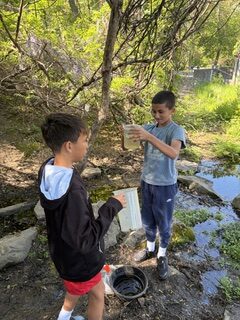
As activity increased around the pond and stream during the COVID-19 pandemic, third-graders were assigned to help with the rehabilitation.
Each year, their research projects are presented to the school’s buildings and grounds committee to guide efforts to improve the pond’s health, ranging from the effects of cattails to road salt, Geoff Griffin, the communication director, said.
One of the students told administrators they could add dirt and rocks to help the pond and stream, but students would need to stay off it so it could “heal,” Gordon officials wrote in a blog post. The student added: “It’s kind of like a scab. If you keep scratching at it and don’t let it be, it will never heal and there will be a scar.”
Efforts to restore and rehabilitate the pond and stream start in second grade, Griffin said, adding that by then the students have already come to see it as a central part of their school life.
The students get to learn that water, which they have played alongside since nursery and kindergarten, isn’t an isolated ecosystem but part of a much larger one.
That’s what happened in May when the second-graders hiked the wetlands of Kettle Point to trace the campus stream that they’re studying from its erosion on campus to the Narragansett Bay.
Gordon is working on an ongoing project to reduce erosion along the streambanks, keep water away from buildings, and improve habitat, biodiversity and water quality.
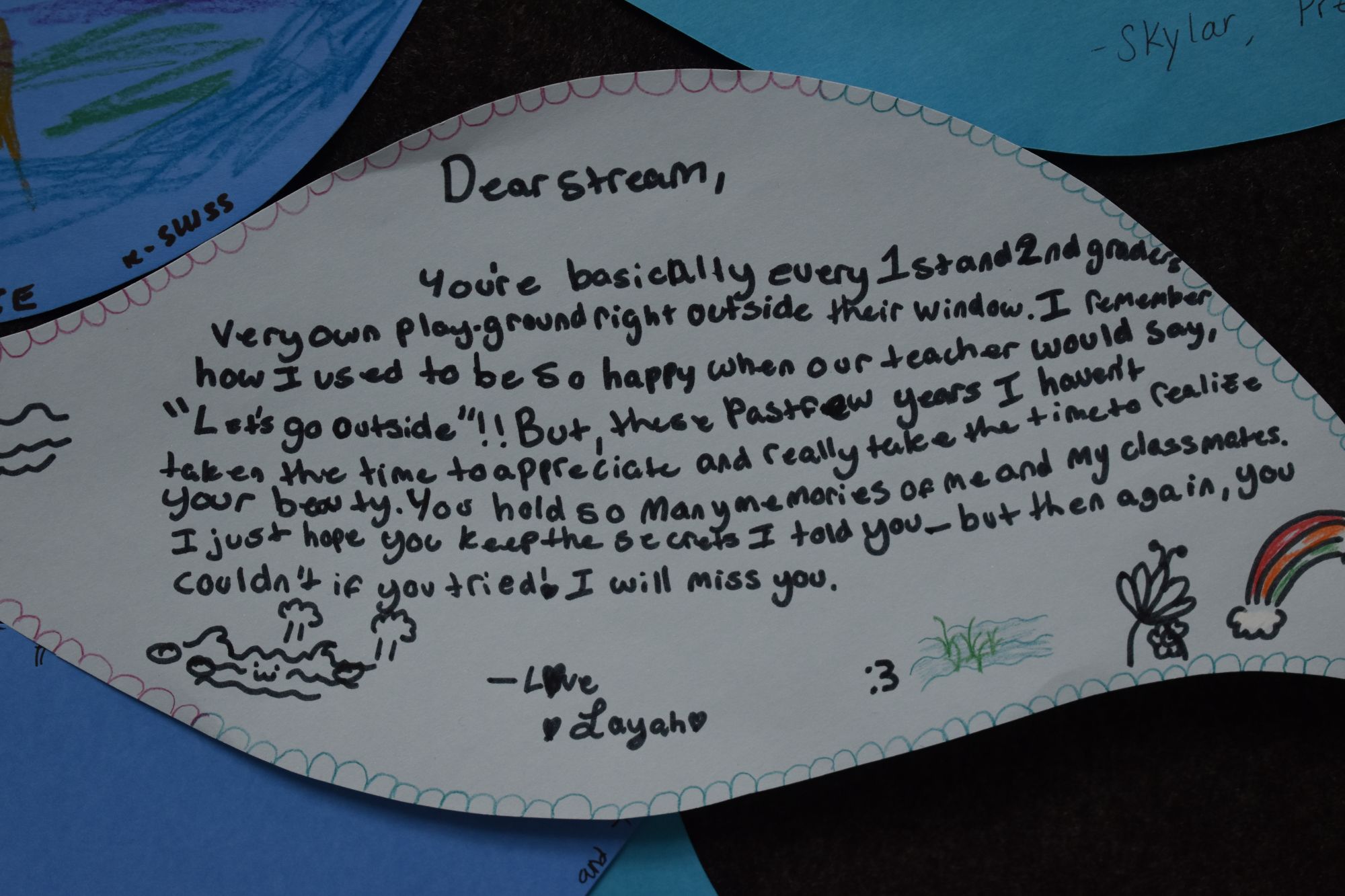
The effort started with students writing a love letter to the stream on Earth Day in April.
By the sixth grade, students are studying global water issues through the lens of U.N. Sustainable Development Goals.
This school year, teacher Susan Trencansky taught students to test water-capture systems, including fog nets, solar stills, dew traps, and rain barrels, to explore how water can be sourced in water-insecure countries.
Their solar stills initially produced little water until students moved them from the pond to the garden, where increased transpiration of vegetation around the stills improved results. They also found that even three days of rain did not fully fill their rain barrels, Trencansky said.
Students brought their findings to the Model United Nations to discuss which environments in each system would work best around the world.
Gordon leaders hope these lessons in water scarcity and stewardship will help students become “better global citizens,” Trencansky said.