1 Seal, 2 Seals … 755 Seals Counted Across Rhode Island’s Marine Waters
April 1, 2025
Share


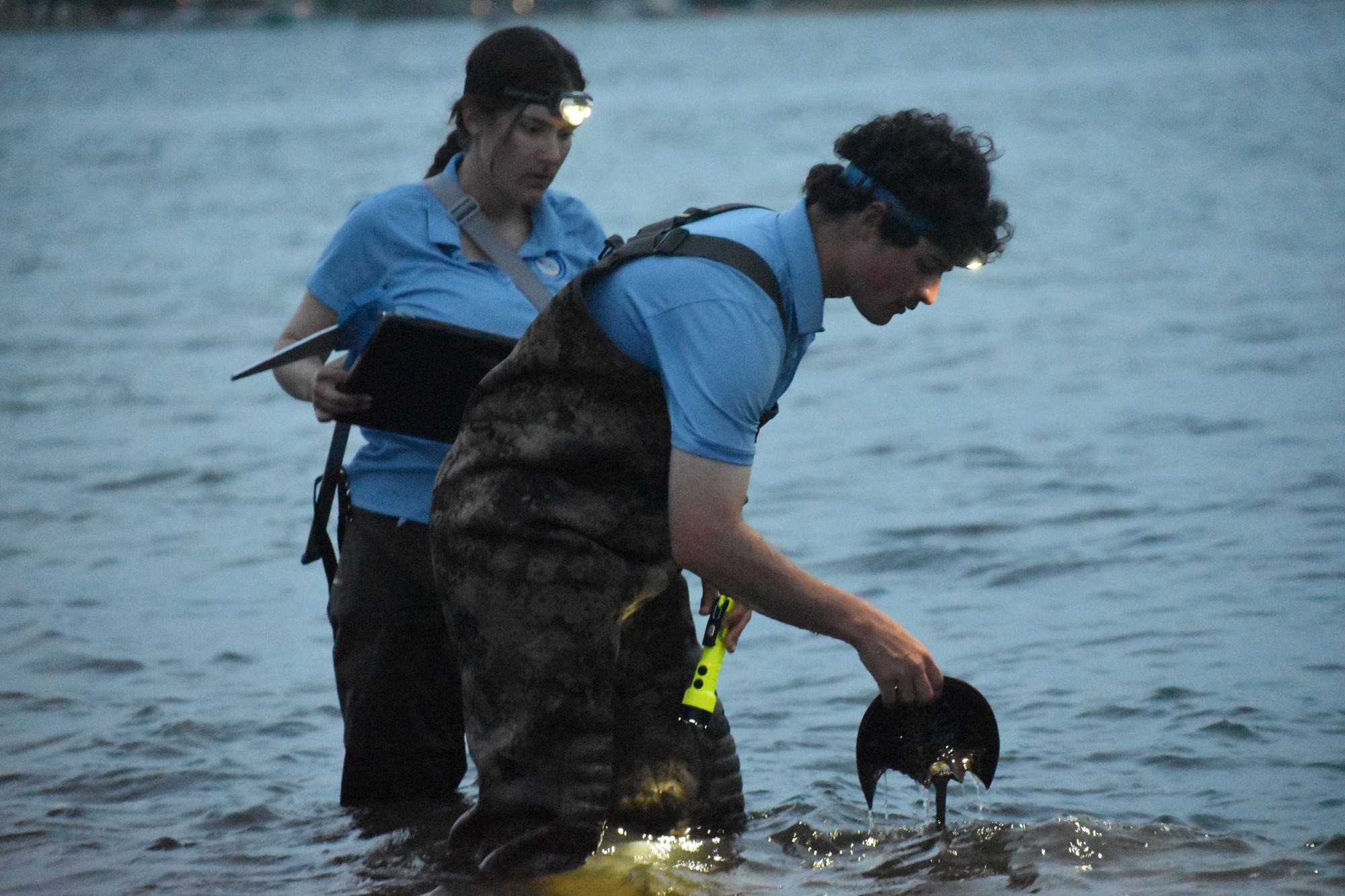
Last week 43 volunteer community scientists took to water and shore to continue a 17-year Save The Bay tradition: counting seals in the nonprofit’s annual statewide seal count. The count is an effort to help establish a minimum estimate of the number of seals present in Rhode Island.
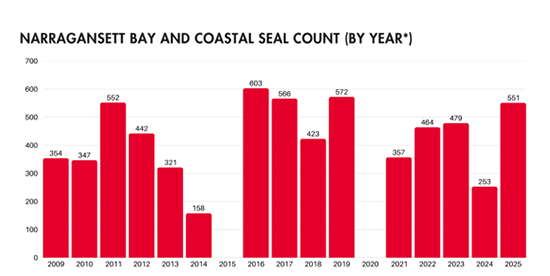
With support from the Narragansett Bay National Estuarine Research Reserve, The Nature Conservancy, and Environmental Protection Agency staff, volunteers counted 755 seals in Ocean State waters on March 27.
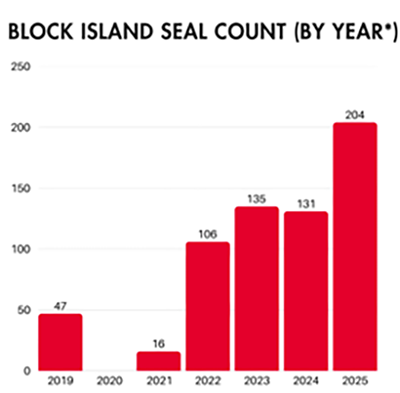
“When planning the annual count, we look to schedule it on a day at the height of seal season with ideal weather,” said July Lewis, Save The Bay’s volunteer and internship manager. “Despite the breezy conditions, the seals were out there enjoying the sun, reflected in a well-above-average number for the bay and coast, and the most we’ve seen yet for Block Island.”
The harbor seal, the most commonly seen seal in Narragansett Bay and along the state’s southern coast, plays an essential role in Rhode Island marine ecology as a top predator species. Grey seals — spotted rarely in the bay but more frequently on Block Island — can be found in the state’s coastal waters year-round.
Earlier seal counts focused on seals in the bay and along the coast. Beginning in 2019, with support from The Nature Conservancy on Block Island, Save The Bay has been able to get a comprehensive count for seals statewide.
“I am thankful for the 19 volunteers who helped to cover all but about a quarter mile of the island’s perimeter shoreline, and more than half of the Great Salt Pond shorelines,” said Kim Gaffett, The Nature Conservancy’s Block Island naturalist. “Without them an island-wide count would be impossible.”
While Rhode Island’s seals are a delight to watch, humans sometimes inadvertently put stress on seals, frightening them off their resting spots and causing them to lose precious energy. What may seem like a minor disturbance, is, in fact, a violation of the Marine Mammal Protection Act, which prohibits the killing, taking, or harassing of marine mammals.
When observing seals from land, you must stay at least 50 yards away and be sure to leash and control your dog; when observing on the water, you need to maintain a parallel course at least 50 yards away, which is less threatening to the seals than a direct approach. Also, canoes and kayaks have low profiles and are quiet and can seem more like predators to seals than motorboats.
If you see harassment warning signs, such as seals stretching their necks and chests high into the air, moving toward or back into the water, looking at you, or increasing their vocalization, back off immediately. These signs indicate that the seals are preparing to flee. If the seals enter the water, leave the area immediately to avoid inflicting additional stress on the animals.