
We Can’t Keep Trampling Nature’s Rights If We Want to Survive
May 20, 2025
Share


Endangered Species Day was last week. It came and went with little fanfare. Flag Day gets more respect, even though those human-made pieces of fabric do nothing to keep the planet alive.
The arsonists in power care so little about lives beyond their own that they want to eviscerate the federal Endangered Species Act. The destruction of habitat seems to be the country’s unofficial mission.
We should be celebrating, every day, endangered species and the rest of the natural world. We should be protecting, every day, the habitats where they live, breed, feed, and play.
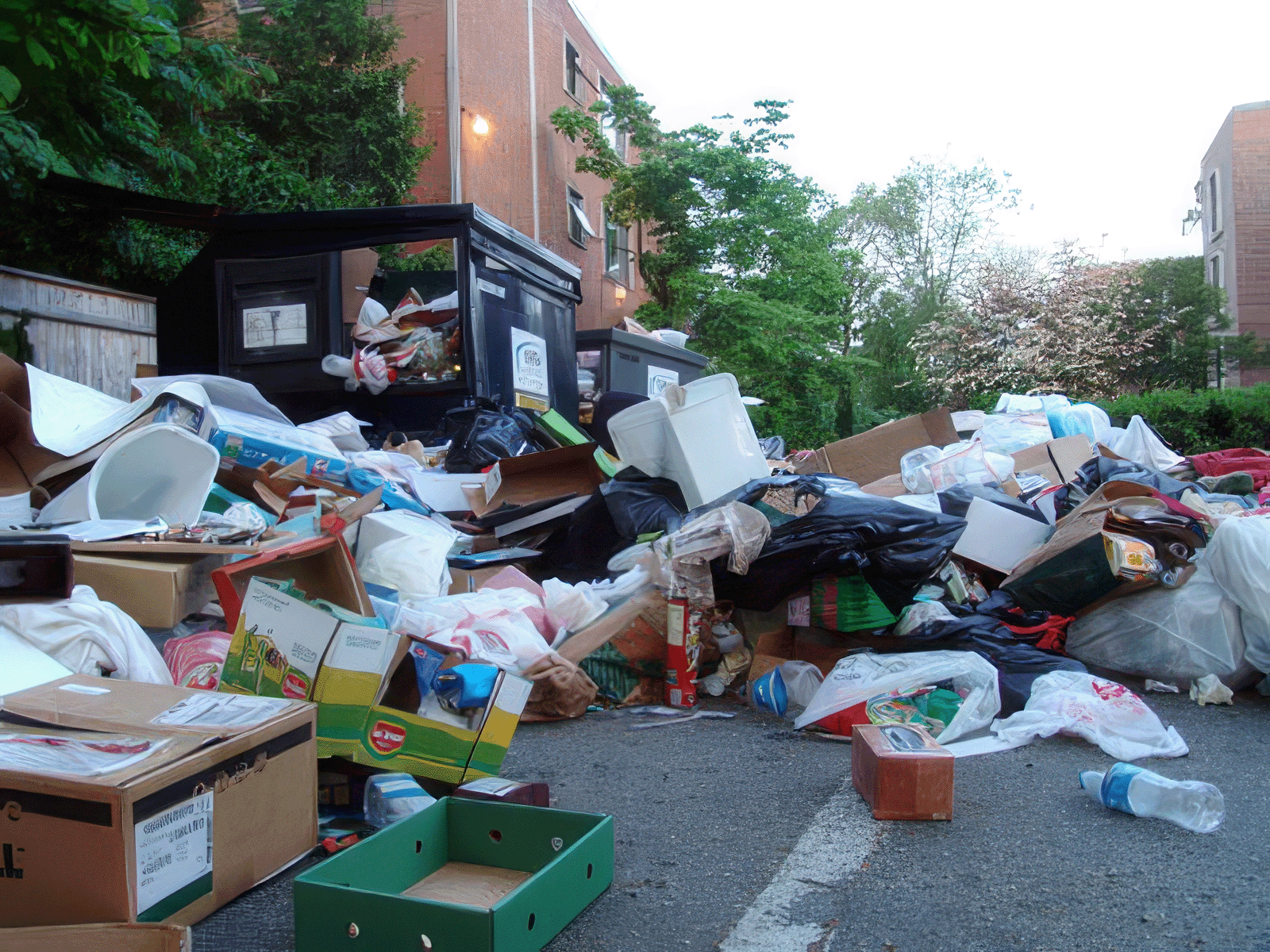
We do the opposite, every day. We prioritize politics over science and profits over protections. We allow, even support and encourage, greater destruction of flora and fauna with drilling, fracking, mining, logging, and development that is largely catered to the wealthy. Thoughtless consumption is relentlessly marketed. Plastics mindlessly overproduced.
Conservation should actually be a real American value.
For the past 52 years, the Endangered Species Act has helped balance environmental protection with economic impact. The law has been a success, having helped save hundreds of species from extinction. Among the animals saved include the bald eagle, the national icon we plaster all over bastardized American flags.
The planet is in a biodiversity crisis — a sixth mass extinction powered by our hubris. The extinction rate of species is now about 1,000 times higher than before humans dominated the planet. We are the asteroid.
Earth is losing animal and plant species at an astonishing rate. The Endangered Species Act is our most powerful conservation law. Weakening it for political reasons and for the financial gains of the few could put up to a million species at risk of extinction.
The 1973 law should actually be strengthened, because rampant consumption and runaway expansion inside a finite system eventually lead to collapse. Habitat destruction and fragmentation, pollution, the overexploitation of wildlife, a growing invasion of invasive species, and the climate crisis don’t make for healthy living conditions, for neither us nor most of the planet’s other life.
The global human population is 8-plus billion, which represents about 0.01% of all living things. But our global ecological footprint is massive, surpassing Earth’s biocapacity by 35%, and growing. Since the dawn of civilization, Homo sapiens have caused the loss of 83% of all wild mammals and half of all plants. Much of what remains is for us to consume.
To extinguish the fire we set ablaze 232 years ago — when the first hydropower textile mill, in Pawtucket, R.I., kicked off the Industrial Revolution — requires taking environmental protection seriously. We can’t continue to rely on the tired corporate-controlled, business-as-usual model of environmental management. The free market isn’t the answer.
The Endangered Species Act should actually be expanded, to provide self-protective rights of law to natural systems and the biodiversity they support. Rights of nature was first introduced, at least to the capitalist world, in 1972 by University of Southern California law professor Christopher Stone, who proposed that “we give legal rights to forests, oceans, rivers, and other so-called ‘natural objects’ in the environment — indeed, to the natural environment as a whole.”
The concept may seem irrational, especially when the arsonists are stripping away rights from humans, but what is unreasonable is the status quo, which allows politicians and the filthy rich to abuse the natural world so they can accumulate more wealth and power. Humanity’s well-being suffers and animals and plants disappear.
“Rather than treating nature as property under the law, the time has come to recognize that natural communities have the right to exist, maintain and regenerate their vital cycles,” according to the Global Alliance for the Rights of Nature. “Breaking out of the human-centered limitations of our current legal systems by recognizing, respecting and enforcing Rights of Nature is one of the most transformative and highly leveraged actions that humanity can take to create a sustainable future for all.”
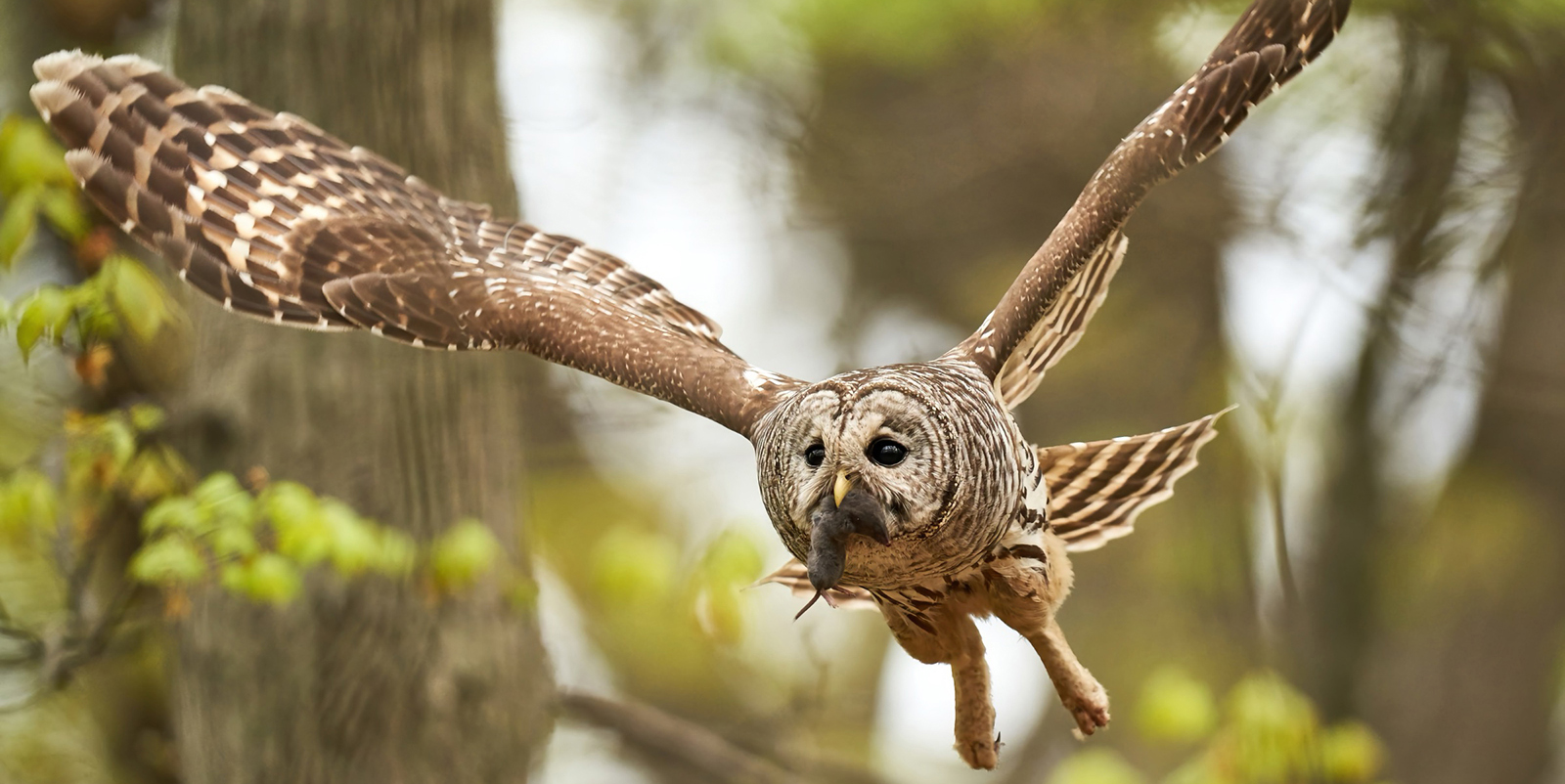
Ecosystems — mature forests, coastal wetlands, rivers, mangroves, kelp forests, the Amazon rainforest, the Great Barrier Reef, Narragansett Bay — and fauna such as elephants, tigers, North Atlantic right whales, monarch butterflies, barn owls, eastern spadefoots, wood turtles, and bald eagles should be entitled to legal personhood status. They should have the right to defend themselves in court against human threats.
One of the largest toxic algal blooms ever recorded off the coast of California has led to thousands of marine animals and birds becoming sick or dying in recent months.
The toxin, domoic acid poisoning, attacks the nervous system of marine life, either killing them or making them appear drunk. Toxic algae is largely fed by human-caused pollution. Scientists are currently investigating whether the fire retardant used to fight California wildfires — strengthened by global warming — could be contributing to the magnitude of this deadly algal bloom.
The goal of conferring rights to nature is to secure environmental protections that allow ecosystems and the biodiversity they support to thrive, not just survive. After all, their health is our health. As their well-being declines and their health fails, so do ours.
Forests, rivers, the sea, and many other biomes provide the conditions for humans to thrive. We aren’t separate from nor superior to the natural world.
Nature isn’t rightless property we can just own, use, and destroy at will.
Frank Carini can be reached at [email protected]. His opinions don’t reflect those of ecoRI News.

Think globally, act locally:
RI DEM eliminated its Natural Heritage Program in 2007 and therefore hasn’t published an up-dated list of Rhode Island Endangered, Threatened, and Of Concern species since 2006.
Nor has Rhode Island ever had an “Incidental Takings” statute that mandates the consideration of such species in our land development process if certified present by the NHP. Connecticut and Massachusetts do have such statutes.
Without the NHP, even our land trusts, when they set out to buy a property, or when they are considering cutting a trail on a newly acquired or old property, have no clue about what impact such decisions have on threatened species that might be present. (There are some egregious examples of uninformed land trusts innocently criss-crossing pre-2007 designated “Natural Heritage Areas” with trails that introduce hundreds of human visits per annum. This journal, this year, posted a story about a land trust acquisition wherein the location of a continentally threatened species, subject to the international black market trade, was innocently disclosed.)
So this suggestion: The next time Eco RI sits down for a chat with DEM Director, Terry Grey, don’t ask him why, ask him WHEN the Department is going to re-institute the NHP.
I agree with you Frank. I believe, personally, that the human species is a parasite on this planet. We are using resources blindly with no regard for the long term consequences for the environment and the negative impacts of future generations of humans. But that doesn’t mean, of course, that we, true environmentalists, give up. I will die fighting. The RI DEM’s budget is small and it seems every year it is getting smaller and smaller. Now, with the new federal administration, it is even tinier. I could puke. The Earth’s species are all connected. Nature will find a way to get rid of us in the end….that is if we humans don’t destroy ourselves first….with all the hazardous chemicals in our water, air, soil, and food. Again, Nature finds a way.
Bill, I agree with you as well. Is it possible that a group of RI citizens can donate time to work with the RI DEM? Even if the DEM/DOH trains folks to take water samples, etc.? Work on the NHP and give the “draft” to the DEM to help? There has got to be something that RI environmentalists (citizens) can do to help.
If “We, the People” do not change the way we think and make huge strides to save the environment, there will be no more “We, the People”. (I am in one of those moods, so forgive me: Earth will be better off without the human species.)
Your passion is contagious Frank! 🤩
“We aren’t separate from nor superior to the natural world.”
Wish the administration could understand this in a meaningful way.
I am glad you are bringing attention to all endangered species, including those impacted by offshore wind. We either have to recognize all the risks or ignore them.
I agree too Frank buy so what? Few pay attention to environmental issues, they played little role in the last election and plenty voted for Trump even though they knew he was hostile to every aspect of environmental quality, was a climate denier, called for endless oil drilling etc Even now, with all the attacks on endangered species, renewable energy, gutting the EPA, the Park Service, and even the weather bureau, beyond the environmental movement hardly anybody seems to care, even the Trump resistance seems focused much more on other issues such as protecting immigrants, Medicaid, trans rights, students free speech… As a movement we are struggling to do anything about it
The arsonists in the White House and his Congessional sycophants prove that Command and control laws are not enough to protect the environment. A simple signature seems omnipotent.
Unless and until we see God’s creation as sacred we will never be able to stop the avaricious nature of humankind in the wanton destruction of the environment.
Man, of his own accord, is incapable of genuine integrity.
The ESA has never been abused so brutally as it is right now. Massive industrial scale construction is actively underway smack in the middle of endangered whale migratory paths and feeding grounds. All permitted by our own government.
Ok so Trump and his crew in Washington don’t appreciate the natural world , unless of course you can golf on it, but that doesn’t explain why Rhode Island doesn’t have a water management act, or a natural heritage program. And this in a state where “liberal” politicians have been in power for years. Money talks and leaving water in rivers for aquatic life, protecting our salt ponds and ponds from nutrient enrichment, and limiting development in sensitive areas doesn’t make a certain few individuals as much money as they would like. We can be a greedy disappointing lot most of the time.
Right on. The USDA says.
We use more than 80% excess fertilizer and pesticide in farming. And wind and solar farms are destroying the natural environment of the ocean and open space.
“Bob m” is right on target: we here in Rhode Island are responsible for our own local environmental problem and WE have both the responsibility and the opportunity to act. And, we do have the organizational capacity to effectively act.
Two of our largest conservation organizations have full time “Advocacy” directors, Audubon and Save the Bay. The Land Trust Council has a full time director and local affiliates in what, 32 towns? The Nature Conservancy is generally shy of political action, but they are a major, perhaps thee major scientific support supplier to the development of our Wildlife Action Plans—they know where the birds and the bees are and plenty of their sources of information reside at our universities and colleges. And we have an umbrella lobbyist, the ECRI. …Membership across all these organizations and their geographic spread amount to a formidable engine for political advocacy. …The trick is firing up the starter.