Warming Climate Extends, Intensifies Allergy Season
March 31, 2025
Share


Allergy experts and meteorologists alike are predicting a longer, more intense allergy season this year, thanks in part to global heating and the climate crisis.
Climate change is leading to higher pollen concentrations and longer pollen seasons, according to the Centers for Disease Control and Prevention. There was 20% more pollen in 2024, and the season is roughly three weeks longer, than in 1990, according to the CDC.
This year pollen counts are forecast to spike at levels higher than the historical average at times across parts of 39 states, according to AccuWeather. Residents of the Pacific Northwest and New England can expect the worst when it comes to grass pollen, according to AccuWeather’s forecast.
“You can blame wet and warm weather patterns expected later this year for pollen levels that will reach levels higher than the historical average in many places,” said Alan Reppert, senior meteorologist and allergy expert for AccuWeather. “Millions of people living with seasonal allergies will be struggling with more intense symptoms that will likely stick around longer this year in many areas.”
In southern New England, the plants that commonly cause seasonal allergies are wind-pollinated, according to University of Rhode Island plant sciences professor Brian Maynard. The pollen of those plants is tiny and hangs out in the wind, causing the running noses and itchy eyes so common in early spring.
Plants that use bees, birds, and other animals to pollinate aren’t the culprits, he said. Their pollen tends to be a lot heavier and stickier and doesn’t get into the air.
In the spring and early summer, it’s mostly trees and grasses that cause allergies, according to Maynard.
There is some good news. Areas in the Northeast that experience a late frost and a later start to the growing season will see lower tree pollen levels this spring, experts say.
Tree pollen is the first of three primary allergens and begins in the spring after ground temperatures rise to 40 to 45 degrees, followed by a wave of grass pollen in the late spring and early summer, and then weed pollen that arrives in the late summer and fall.
AccuWeather meteorologists say tree pollen levels are expected to be higher than the historical average this year across a 2,000-mile-long zone from the Gulf Coast to the Northwest spanning 22 states.
A cooler start to spring in New England is expected to keep tree pollen levels lower over the next few weeks, but very high pollen levels are possible later this season.
“Tree pollen levels are expected to hover around average levels in the Northeast, but there could be a one-week period when higher temperatures and a lack of rainfall may send tree pollen spiking at high levels,” Reppert said.
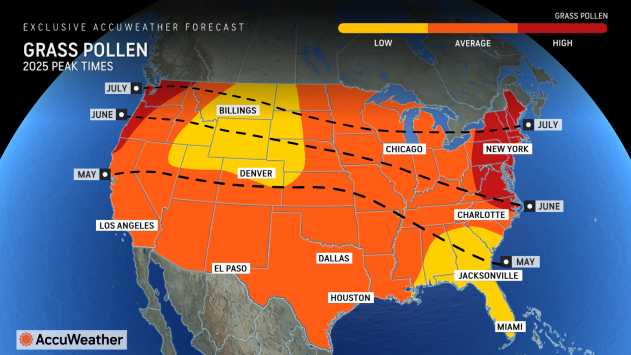
Allergy sufferers in much of the Northeast should prepare for a summer with higher grass pollen levels compared to the historical average, according to AccuWeather.
“Grass pollen starts as tree pollen starts to wane,” Reppert said. “It can last through the summer and into the early fall before the sun angle starts to decrease low enough or a frost occurs.”
Brett Anderson, a climate expert with AccuWeather, said the agency’s spring forecast is consistent with the trend of warmer spring seasons in the United States, creating longer growing seasons and an earlier start to the allergy season.
“Many allergy sufferers have noticed their symptoms worsen over the past decade,” Anderson said. “The trend of more intense allergy seasons getting a jump start earlier in the spring and lasting later into the fall follows the overall trend line of warmer and wetter spring seasons.”
He said the seasonal allergy season is lasting one to four weeks longer in many parts of the country, compared to 50 years ago. The trend of longer and more intense allergy seasons is expected to continue over the next decade.
“The burning of fossil fuels releases carbon dioxide into the atmosphere, contributing to the greenhouse effect that is warming our climate. As more fossil fuels are burned around the globe, rising carbon dioxide levels are contributing to increased pollen production,” Anderson said. “Warmer air can hold more moisture. The combination of more rainfall that can boost plant growth, higher spring temperatures, longer growing seasons, and more carbon dioxide in the atmosphere triggering increased pollen production is the reason why more people are experiencing seasonal allergy symptoms for the first time, and many longtime allergy suffers are dealing with worsening symptoms.”