
Throwaway Culture Buries Future in Waste
April 13, 2026
Share


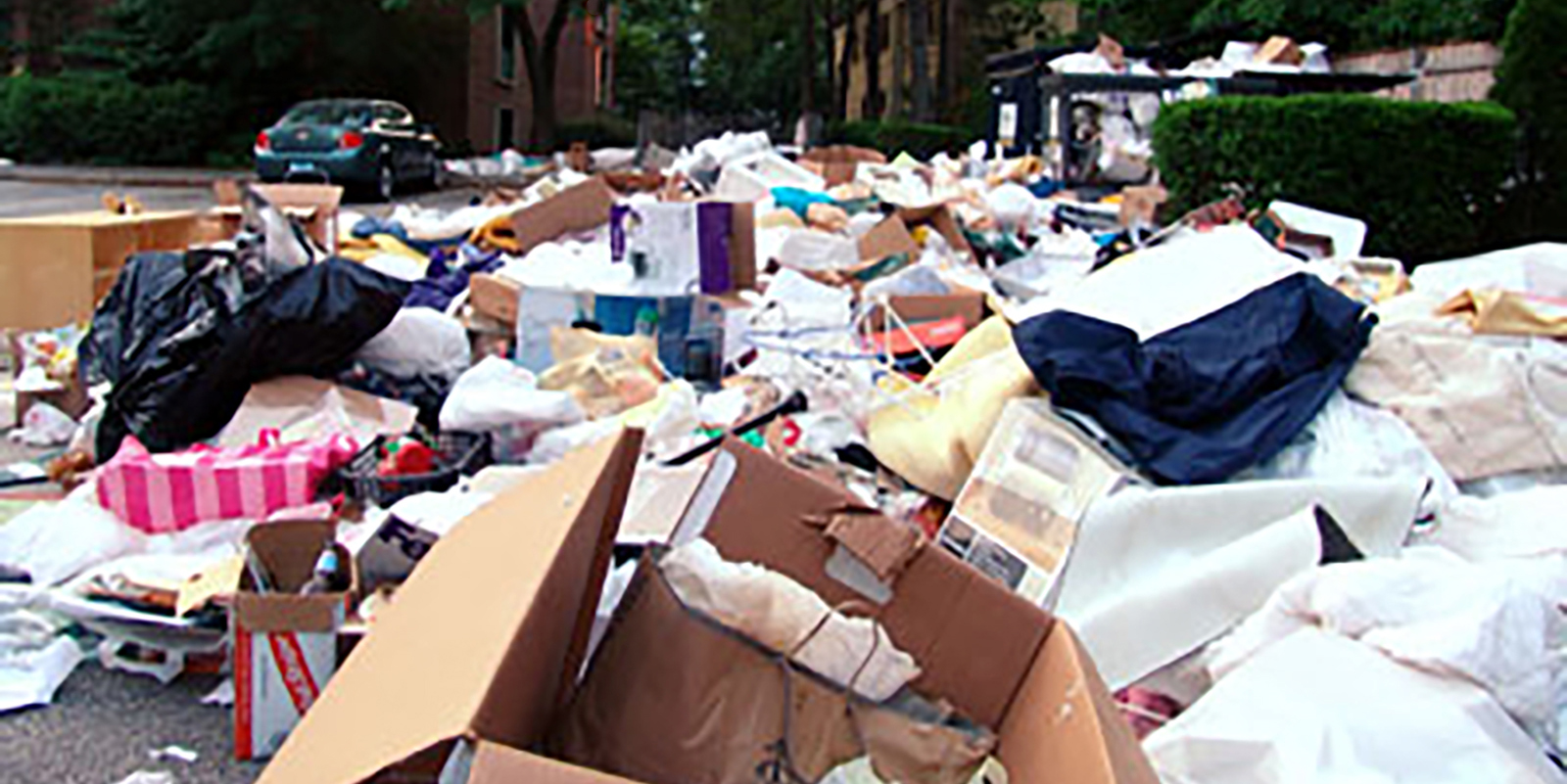
Rhode Island, in 2023, stashed 495,318 tons of waste in the ever-shrinking Central Landfill in Johnston. That weight of 3,300 blue whales didn’t include trash illegally dumped, litter that blew out of garbage trucks and the back of pickups, debris lost at sea, stuff dropped inconsiderately by litterbugs and irresponsible smokers, and recyclables that never saw a second life.
Nationally, Americans throw out some 290 million tons of municipal solid waste annually — about 5 pounds per person per day, or some 1,800 pounds every year. Only about a third of that waste is either recycled or composted.
Our mindless consumption is devouring the planet, plasticizing our bodies, fueling the climate crisis, and drowning us in poisons. Future generations will be buried under all of it.
“Our throwaway culture results in shocking amounts of needless waste that pollutes our air, water, and bodies,” Rex Wilmouth, state director for Environment Rhode Island, said. “We should make it easier for people to reuse, repair, recycle, and repurpose as much as we can, rather than dumping or burning so much waste.”
A report released earlier this year by the U.S. PIRG Education Fund, Environment America, and the Frontier Group showed “tentative progress, with more states and cities passing laws to reduce waste and significant advances in the composting of food waste.”
Filling landfills with overproduced junk can lead to toxic chemicals leaching into soil and groundwater. Trash incineration emits heavy metals, brain function-impairing mercury, and cancer-causing dioxin.
The 66-page report analyzed so-called “chemical recycling,” which has been touted as a solution to plastic waste. In realty, it’s nothing but a new euphemism for incineration.
James Horrox, policy analyst with the Frontier Group and author of the report, has noted getting to the root of our waste problem requires knowing what is being trashed, what happens when it is, and what can be done to minimize the impact.
“We have so many tools at our disposal to shift from a wasteful, polluting, and costly linear economy to a circular economy that produces no or minimal waste,” he said.
The lack of national data presents a challenge to making quicker progress, according to Horrox.
The Environmental Protection Agency had traditionally published a periodic report tracking how much waste the United States is producing and where it goes, but its most recent report is based on 2018 data. Waste data from individual states does exist, including in Rhode Island, but varies in what is published, how often it is updated, and the metrics used.
What we do know is that we live wastefully, and it is damaging planetary health. For instance, about 28% of all U.S. trash consists of packaging, which is generally designed to be thrown away once the product it contains is used. Less than half of all plastic packaging on the U.S. market is recyclable, and only a tiny fraction of that actually gets recycled.
The United States alone throws out some 133 billion pounds of wasted food annually, according to the U.S. Department of Agriculture. Those 66.5 million tons account for about 20% of our garbage. By one estimate, if all of the food wasted every year in the United States came from a single farm, that farm would be roughly the size of California and New York combined.
We throw away 7.7 million tons of electronics annually — nearly 50 pounds per person. Personal devices alone, such as phones and laptops, account for about 5 million tons of that waste. You don’t need to buy a new phone every year.
In 2018, Americans discarded 34 billion pounds of textiles, most of which was landfilled (66%) or incinerated (19%).
The recent study titled “Trash in America” offers 12 steps to reduce unnecessary waste, including:
Enact measures to facilitate package-free modes of retail and ensure that participating companies are able to compete on a level playing field with companies employing less sustainable practices.
Require producers to take responsibility for their products throughout each item’s entire life cycle, including disposal costs. As of last year, 35 states have enacted a total of 146 extended producer responsibility laws across 21 product categories to shift responsibility for the costs of recycling away from the taxpayer and onto the companies that produce those products. Maine is one of seven states to have producer responsibility laws for packaging.
Require goods to be built to last and easy to repair, reuse, recycle, or compost. Many municipalities have banned the sale of polystyrene (Styrofoam), or specific styrene products such as takeout food containers and packing peanuts. In the first year of a styrene ban in Washington, D.C., the amount of styrene-related litter collected from the Anacostia River fell by more than half.
Vermont has banned food scrap and yard waste from landfills. A similar policy in Massachusetts that banned most commercial disposal of food scrap in landfills achieved a 13.2% reduction in the amount of organic waste being buried, with some 380,000 tons of food waste being diverted and repurposed annually.
It’s about time we start taking this problem seriously, at home, at work, at city/town halls, and at statehouses.
Frank Carini can be reached at [email protected]. His opinions don’t reflect those of ecoRI News.


Hi Frank — excellent insights from your article. Are you aware of OZZI Reuse based right here in RI. Take a look at our website. http://www.ozzireuse.com — we currently have our program in 49 states & 11 Countries. Keep up the good work!