Rhode Island Should Advance Efforts to Solve Two Interconnected Crises
July 16, 2026
Share


Rhode Island, like much of the country, has an affordable housing problem. The Ocean State, like the rest of the world, also has a climate problem. A New England neighbor offers a solution the state could replicate.
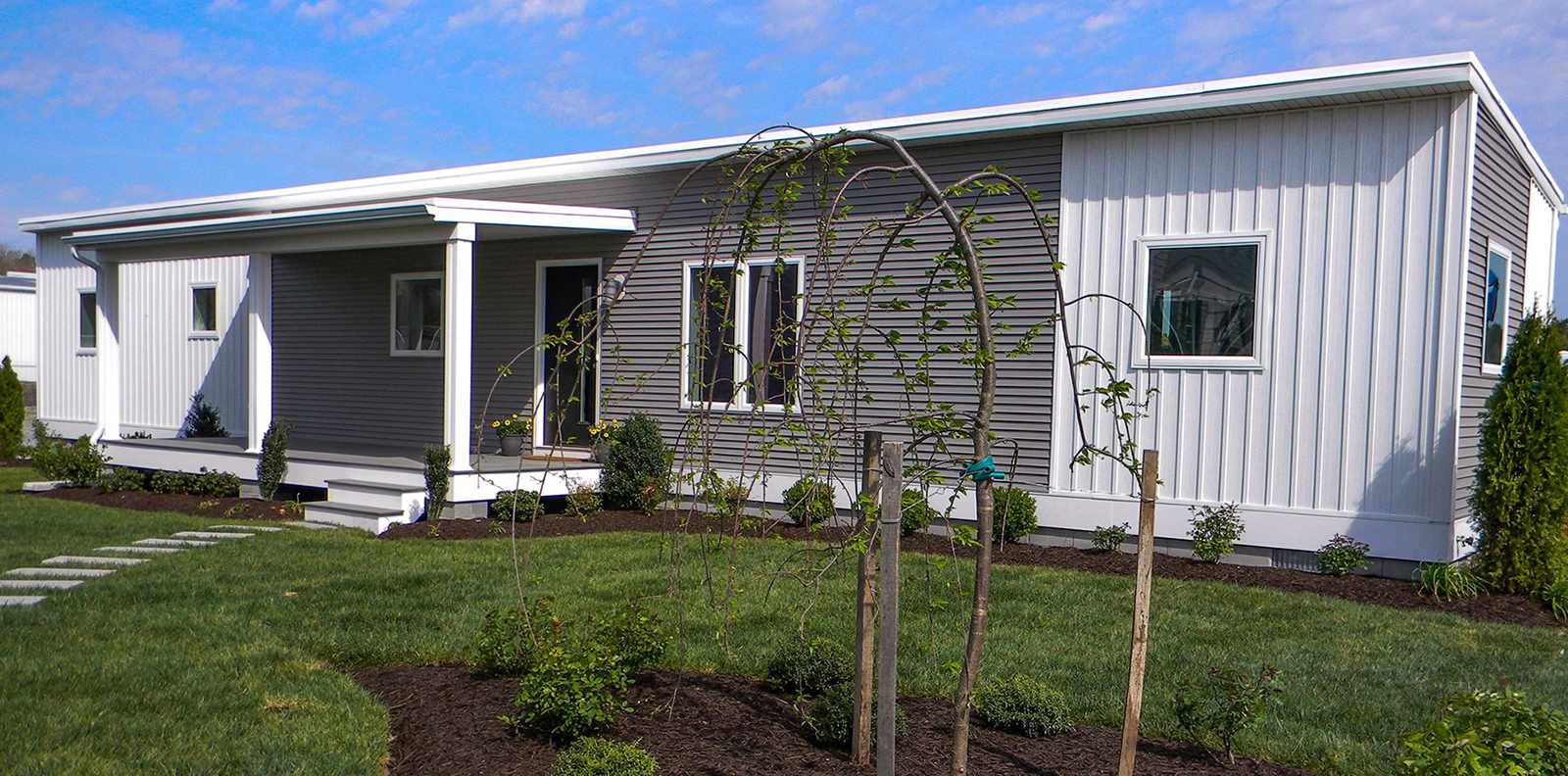
Vermont boasts an initiative that aims to tackle both crises at the same time. Canary Media recently reported a “nation-leading program that encourages superefficient manufactured homes” is underway in the Green Mountain State. The program is expected to produce significant energy savings and reduce greenhouse gas emissions.
Once called mobile homes (my maternal grandparents lived in one in Maine), manufactured homes make up about 7% of new housing. There are between 7 million and 8 million occupied manufactured homes in the United States. These factory-built homes account for about 5.5% of the country’s total housing stock, with some 20 million people living in manufactured housing.
Rhode Island, with a population of about 1.1 million, has some 5,500 manufactured homes. Vermont, with a population of about 645,000, has some 20,650 manufactured homes.
On average, these homes sell for about a third of the price of site-built homes, or for about $125,000 each. The median income for occupants of site-built single-family homes is $85,000. For manufactured homes, it’s less than half that, at $40,000, according to the American Council for an Energy-Efficient Economy.
The availability of homes affordable to many first-time buyers — units often referred to as “starter homes” — has dwindled considerably in the past decade, according to the Urban Institute. In 2016, 39% of active listings were priced less than $200,000. By 2025, only 13% were priced as such. In high-cost markets, of which Metro Providence is now one, the starter-home supply is even smaller.
Much of Rhode Island’s homebuilding is of the oversized and unaffordable type. These second/vacation homes — often built near already-stressed waters — gobble up finite resources, generate more polluted stormwater runoff, and exacerbate the housing crisis.
Smaller homes, on the other hand, use less energy, produce less runoff, and consume less resources.
The Vermont program’s all-electric, heat-pump-equipped homes reduce energy use by more than half compared with new conventional manufactured homes. To achieve that reduction, each unit meets the specifications under the Advanced Manufactured Home program, which was created by the state’s energy-efficiency utility Efficiency Vermont two years ago.
The standards aren’t mandatory. Instead, the initiative certifies top-performing options that will help Vermont meet its housing and climate goals and offers a $3,000-per-unit incentive for builders who opt in.
Older manufactured homes are notoriously inefficient, according to Efficiency Vermont, and those of any vintage are difficult to weatherize after leaving the factory. In Vermont, older manufactured homes are typically heated with costly and polluting fuel oil or propane, driving average energy bills to about $4,000 annually.
While the upfront cost of Advanced homes is higher, these units save owners on average about $2,700 annually on energy bills over existing manufactured homes and about $1,300 over new manufactured homes built to the U.S. Department of Housing and Urban Development’s current standards, Peter Schneider, principal engineering consultant at Vermont Energy Investment Corporation (VEIC), the nonprofit that operates Efficiency Vermont, told Canary Media.
(VEIC was the other entity bidding to administer the Ocean State’s suite of energy efficiency programs when the Office of Energy Resources quietly ended the procurement process this spring and handed the contract to Rhode Island Energy.)
Efficiency Vermont’s Advanced homes reportedly come with a host of efficiency improvements over conventional options: more insulation in the floors, the walls, and ceiling; energy-efficient windows, doors, and appliances; programmable thermostats; a heat-pump system that heats, cools, and dehumidifies; a heat-pump water heater; and a solar-ready roof.
Advanced homes cost about $21,000 more on average than new HUD-baseline units. Assuming a 6% interest rate on a 30-year mortgage and including utility bills, the total cost of owning an Advanced home is about the same as owning a much less efficient one that relies on fossil fuels, according to VEIC.
HousingWorks RI, in a March 2024 white paper, promoted manufactured homes as healthy and affordable. RIHousing coordinates a multiagency initiative that investments in affordable and energy-efficient homes.
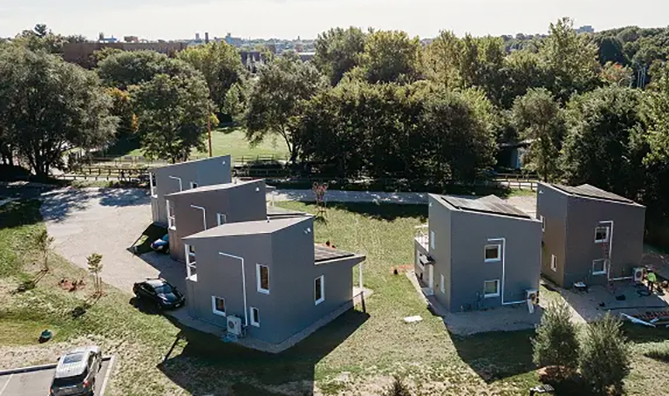
At the edge of Riverside Park in Providence’s Olneyville neighborhood is Sheridan Small Homes, a mini-development of five net-zero, solar-powered dwellings. Developed by ONE Neighborhood Builders and designed through a collaboration between ONE, the Rhode Island School of Design, and Building Futures, the project’s approach to affordable homeownership is similar to that of Efficiency Vermont’s Advanced homes.
Each home was sold to income-qualified buyers — three selling for $140,000 and two for $150,000. All were first-time homebuyers. Each of these homes features two bedrooms, 1.5 bathrooms, and 750 square feet of living space. Their design prioritizes energy efficiency, integrating all-electric systems, rooftop solar panels, and a compact layout. These elements contribute to lower energy bills and less climate-changing emissions.
In the past few years Rhode Island lawmakers have made efforts to address the state’s affordable housing crisis.
Last year the General Assembly passed and the governor signed a six-bill legislative package aimed at increasing access to housing and streamlining the permitting process. This session, the Statehouse approved legislation to expand the searchable online database of low- and moderate-income housing to better serve Rhode Islanders searching for a home.
Good progress, but much more needs to be done to address two crises that are inextricably linked. Perhaps Vermont can help provide another link in the Rhode Island affordability/climate mitigation chain.
Frank Carini can be reached at [email protected]. His opinions don’t reflect those of ecoRI News.