
Storm of the Century Brews Beneath Providence
Antiquated stormwater system no longer meets neighborhood, business needs
January 22, 2026
Share


PROVIDENCE — The city is looking to become the first Rhode Island municipality to create a system that more fairly addresses the costs associated with stormwater runoff.
Every Rhode Island municipality is dealing with its stormwater runoff problem in both expensive and commonsense ways, but lost among the Narragansett Bay Commission’s combined sewer overflow project, rain gardens, rain barrels, and permeable pavers is a tool that has received far less attention: stormwater utility districts.
Providence is working to resurrect the idea.
The city’s Sustainable Stormwater and Sewer Assessment Study Task Force has recommended implementing both a stormwater user fee and sewer user fee. Those behind the effort note Providence doesn’t have a dedicated revenue stream to manage its rapidly aging stormwater and sewer infrastructure.
“We recommend that the City develop two separate user fees for stormwater and sewer management to provide dedicated funding to address the worsening challenges seen in all neighborhoods across the City,” the task force wrote in a March 7 letter to Mayor Brett Smiley. “Understanding the additional burden that fees will place on ratepayers to the new stormwater and sewer utilities, this recommendation is not made lightly. However, these new fees are the City’s best viable option to move beyond the status quo and address the inequitable distribution of the burdens and costs of an underfunded and inadequate system.”
A Dec. 11 PowerPower presentation by Priscilla De La Cruz, the city’s director of sustainability, lays out the need and costs.
De La Cruz recently told ecoRI News that stormwater runoff “is a big problem.”
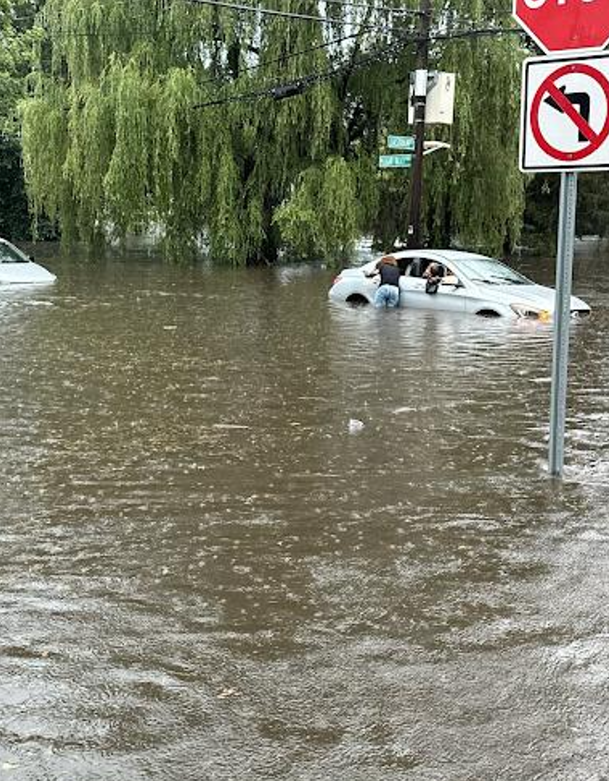
“Not only the water quality issue that we face with stormwater runoff, but as climate change is intensifying, we’re seeing more flooding in our roadways, more flooding going into homes and businesses and really disrupting the day to day,” she said. “And what’s underneath is even more problematic.”
At least 60% of the city’s sewer pipes are more than a century old and, according to Smiley, “have been neglected for too long.”
“I think that puts into perspective like how one issue is exacerbating the other when it comes to climate change and the age of our infrastructure,” De La Cruz said. “So for us, when we’re thinking about stormwater and sewer management, we’re thinking about both water quality and also flooding mitigation.”
Since water and pollution aren’t confined by municipal boundaries, a dozen years ago Providence partnered with neighboring municipalities to assess the possibility of creating a regional stormwater utility. The study concluded that a multi-municipal approach would result in significant cost efficiencies in staffing and equipment, the potential for developing more specific expertise, and more comprehensive watershed-based solutions to address the problem of stormwater runoff, which floods streets and sewer pipes and pours into Narragansett Bay.
Despite the benefits of such a regional utility, the idea was deemed “not politically feasible.”
Sheila Dormody, the city’s chief of policy and resiliency, was part of that regional effort. The time may not have been right in 2013, but she believes it is now.
“This is a problem that’s been a long time in the making, and it’s evolving,” she said. “Our aging infrastructure only gets older the more years we delay coming up with a systemic solution to address these issues.”
Dormody noted the city’s century-old infrastructure was “designed for a different climate than the one we currently live in.”
“We know that we have more rainfall now than we did 100 years ago,” she said. “Science tells us we’re getting about five inches more per year, but not only is it more volume but it is more all at once. Rain overwhelms our systems that were designed for a different city with different weather and less building coverage than we currently have. All of that means the city is overdue for coming up with a more substantial fix for this problem.”
Proponents, then and now, of the idea believe Providence is the ideal municipality to implement Rhode Island’s first stormwater utility district. The city has 13,858 catch basins, 451 miles of sewer main, 19,202 manholes, and some 175 outflows. Parts of the city’s sewer and stormwater systems date back to the 1850s.
The city has faced environmental enforcement actions from the state since 2017, when the Department of Environmental Management issued a notice of violation for noncompliance with its Rhode Island Pollutant Discharge Elimination System permit. The city quickly entered into a consent agreement with DEM to better control stormwater runoff.
Providence has also been under a similar Environmental Protection Agency order since 2007.
Paying the fines for not complying with the state and federal orders would actually be less expensive than modernizing the city’s stormwater/sewer system. Of course, the problems currently being experienced would only worsen and taxpayer money would be wasted.
“I would give the city credit, because paying those penalties would have actually been a lot cheaper than all of the work that we need to do to actually address the problem — like hundreds of thousands of dollars in penalties compared to the millions in investment that’s actually needed to solve the problem,” Dormody said.
The cost to update the system has been pegged at about $50 million.

A stormwater utility district, an idea first introduced in the United States in the mid-1970s, is essentially a tax designed to generate funding for stormwater management and to discourage the overuse of asphalt and concrete. It’s a more equitable way to deal with this pollution problem than continually relying on higher property taxes.
A stormwater utility district generates revenue through fees that are based upon the amount of stormwater generated on a property. The revenue collected supports the maintenance and upgrade of existing storm-drain systems, flood-control measures, and water-quality programs.
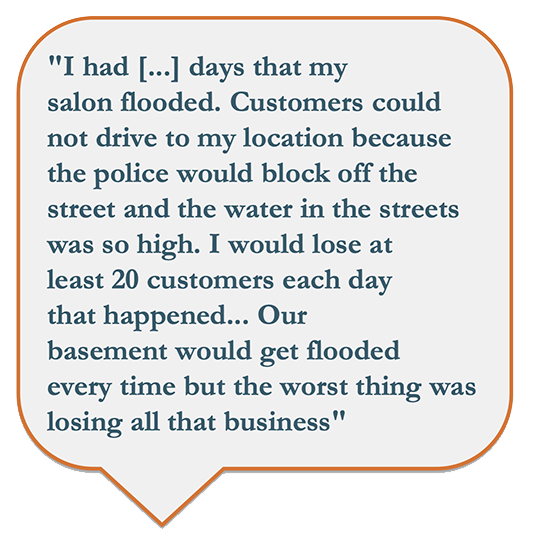
In the past few years alone, Providence has experienced significant flooding in neighborhoods across the city 13 times. Residents and business owners have noted their concerns about flooded roadways, flooded basements, mold damage, and the loss of business revenue when they had to close their doors to recover from major flash flooding events.
Much of the city’s stormwater and sewage infrastructure is antiquated, leading to combined sewer overflows (CSOs). This happens in older cities, like Providence and all other southern New England urban areas, where one pipe carries both sewage and stormwater. During heavy rains, this mix overwhelms the system, causing it to discharge untreated wastewater and stormwater into rivers and bays to prevent backups into homes and businesses. CSOs lead to water pollution, public health risks, and environmental degradation.
Smiley noted in the Sustainable Stormwater and Sewer Assessment report published last year that developing a “proactive strategy to build green infrastructure and maintain the city’s stormwater and sewer infrastructure will protect our residents and businesses and be less costly than fixing catastrophic failures in the future.”
“There’s so much deferred maintenance that right now we’re in such a reactive approach,” De La Cruz said. “We’re trying to prevent or respond to the next sinkhole … even the smallest storm is creating big consequences because the system can’t handle what we’re seeing. The system no longer meets the needs of our community, so lives are just impacted every day.”
Providence’s archaic system isn’t up to the task of handling the 21st-century climate crisis and is consistently being overwhelmed. That means homeowners need to install sump pumps, or have a mixture of stormwater and sewage frequently pumped from their molding basements. It means businesses, many of the independent kind, need to close their doors to clean up after flash flooding. It means flooded roads, contaminated rivers, and public health issues.
“It’s really figuring out what’s the fairest way of going about this problem, because we are already dealing with the cost of it,” De La Cruz said.
Some 2,000 U.S. municipalities employee such districts, according to the EPA, but none in Rhode Island.
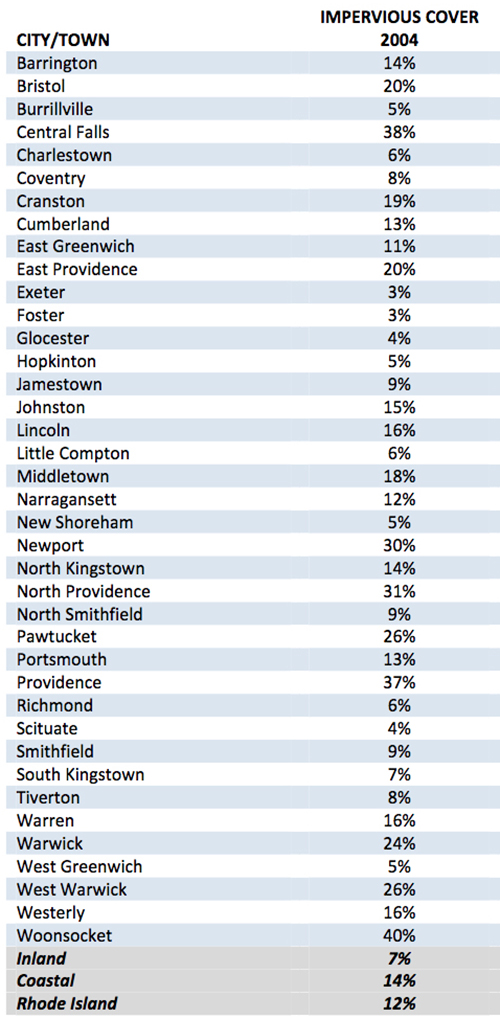
Impervious cover in Rhode Island’s 39 municipalities ranges from 3% (Exeter and Foster) to 40% (Woonsocket). Streets, driveways, parking lots, and roofs cover 37% of the state capital. The tidal wave of polluted stormwater rushing off these acres of asphalt, concrete, and shingles every time it rains or snow melts sends bacteria, nutrients, and other contaminants into nearby waterways.
Stormwater runoff picks up fertilizers and pesticides, animal and uncollected pet waste, road salt and sand, construction site sediment, oil and grease, plastic litter, and countless other debris.
The result? Beaches and shellfish beds can be closed, toxic algae blooms appear, flooding is exacerbated, and money is lost.
When impervious cover is between 10% and 25%, nearby waterbodies show clear signs of degradation. More than 25% coverage and the stress caused is unrelenting. Seven municipalities, including Providence, have impervious cover percentages above 25%.
Four watersheds drain through Providence: the Pawtuxet, Woonasquatucket, Moshassuck, and Providence/Seekonk rivers. The city’s list of impaired waters include Mashapaug Pond, Roger Williams Park Ponds, Moshassuck River, Providence River, Seekonk River, West River, Woonasquatucket River, and Upper Narragansett Bay.
The city’s 2020 Stormwater Management Program Plan notes “significant” water resources in the city include: the realignment of the Woonasquatucket River along its natural course forms the center of Waterplace Park and has transformed the historically abused river into a center for urban canoeists and kayakers; the Moshassuck River was realigned with the Woonasquatucket and Providence rivers to help with the creation of Waterplace Park; and the Seekonk River is home to the nation’s oldest rowing club and to a growing amount of fish and wildlife.
These significant water resources still need to be actively protected from pollution.
The idea of stormwater utility districts has been tossed around in Rhode Island before. The idea always ends up being kicked into the future.
In 2006, the East Providence Waterfront Commission considered creating a stormwater utility. Two years later, Narragansett looked into the idea. After the completion of an initial study, the town’s pursuit of such a utility was postponed until a “more favorable political climate arose.”
In 2013, seven municipalities at the head of Narragansett Bay — Central Falls, Cranston, East Providence, North Providence, Pawtucket, Warwick, and Providence — explored the idea of creating a regional stormwater utility to provide a long-term solution to stormwater management.
A year earlier, the town of Bristol published a stormwater utility district report. The 29-page document listed key rationales for establishing such a utility: 1) it isn’t as dependent on the vagaries of the annual budget process like taxes are; 2) the fee is based on a well-thought-out stormwater program to meet the needs and demands of the community; 3) it can adapt to changing program and funding needs; 4) the cost is borne by the user on the basis of demand placed on the drainage system and receiving waters.
Under a stormwater utility district, those who own big-box stores, strip malls, massive parking lots, and waterfront scrapyards — to provide just a few examples — would pay more, because they generate more stormwater runoff.
“In every community there are good, even compelling, reasons to improve the way stormwater programs are executed and funded,” according to the Bristol study. “Reasons might be a popular stream that is becoming increasingly impacted, a lack of riparian park space, decaying drainage infrastructure and mounting complaints, unfunded regulatory mandates, local flooding, financial pressures, loss of fish, beach closings, a roadway or bridge collapse, or lawsuits.”
None of those municipal efforts moved past the study stage.
The Stormwater Management and Utility District Act of 2002 authorized Rhode Island municipalities to create stormwater management districts, “to eliminate and prevent the contamination of the state’s waters and to operate and maintain existing stormwater conveyance systems.”
While municipal and state officials wait for the political climate to change, heavier rainfalls are becoming more frequent and intense, flooding is worsening, waterbodies are still being relentlessly loaded with pollution, the costs to address these problems are increasing, public heath continues to be threatened, and recreational opportunities are lost.
Launching a possible stormwater utility district is still a few years out, as Providence officials and consultants design a plan, recommend user fees, and hold public hearings.
“We want to build a model that other cities and towns can definitely learn from and choose to also implement,” De La Cruz said.
I was a stakeholder in 1997 and 1998 when the disciussion was on whether or not to build the giant tunnel under the city to capture stormwater for treatment.. Expensive for sure, but the Bay is MUCH cleaner and swimming and shellfishing are allowed in places that were once too polluted. Same thing with further managing stormwater. It will cost some money, but it will be well worth it.
Look upstream. One needs to look at the entire Blackstone River feeding into Providence’s waters for better perspective.
Consier the fact that upstream wastewater treatment sites still continually discharge an “Estimated Volume Based on 3-Year History: 10.73 Million Gallons” per day / storm event- of which there were over 15 discharges in 2025. Simple math indicates 150 million gallons of partially and untreated septage released. Additionally, Providence’s planners need factor in Woonsocket’s 9.3 million gallons per day (MGD) of partial and untreated septage releases as well in similar weather events. That’s approximately 90 million gallons. So there’s 240 MGD of sewerage all headed downstream to Providence. Let’s put this in perspective- supertankers (Very Large Crude Carriers and Ultra Large Crude Carriers) hold approximately 84 million to 126 million gallons- far less than the Blackstone River’s combined septage flows steaming into Providence and Narragansett Bay each year.
We need to addres the issue and all responsible participants.
Look upstream. One needs to look at the entire Blackstone River feeding into Providence’s waters for better perspective.
Consier the fact that upstream wastewater treatment sites still continually discharge an “Estimated Volume Based on 3-Year History: 10.73 Million Gallons” per day / storm event- of which there were over 15 discharges in 2025. Simple math indicates 150 million gallons of partially and untreated septage released. Additionally, Providence’s planners need factor in Woonsocket’s 9.3 million gallons per day (MGD) of partial and untreated septage releases as well in similar weather events. That’s approximately 90 million gallons. So there’s approximately 240 MG partial/untreated wastewater all headed downstream to Providence. Let’s put this in perspective- supertankers (Very Large Crude Carriers and Ultra Large Crude Carriers) hold approximately 84 million to 126 million gallons- far less than the Blackstone River’s combined septage flows steaming into Providence and Narragansett Bay annually.
We need to focus on the issue. And, that starts by bringing all responsible participants as well as EPA, RI and MA permitting agencies to the table to address it.