
City of Attleboro Plants Pocket Forest to Help Mitigate Flooding
June 24, 2026
Share


ATTLEBORO, Mass. — On Sept. 11, 2023, the city was inundated with about 10 inches of rain in 72 hours, causing massive flooding and damaging some 200 homes — a catastrophe that ended up costing $30 million to $40 million, according to Mike Davis, chair of the Sustainability Commission.
“Attleboro, like towns around the world, is experiencing more frequent and more intense storms,” Davis said. “Also, more intense droughts. The pendulum swings from being extremely dry and creating all kinds of issues to having flooding issues.”
The Sustainability Commission was created after the 2023 flood to advise the mayor and local officials on ways to better manage the city’s natural environment, and make it more resilient.
“We do deep dives and a lot of research,” Davis said. “That’s where the pocket forest came up, a densely populated vegetative area intended to act as a very concentrated sponge that would hold water and help in mitigating floods.”
The pocket forest Davis is referring to is also known as a Miyawaki forest, named after the Japanese botanist Akira Miyawaki who developed the technique of restoring native forests by planting a wide variety of indigenous species close together — just 18-20 inches apart. The dense planting creates a forest that grows 10 times faster than a traditional tree stand, with more spongy soil to absorb rain and prevent flooding.
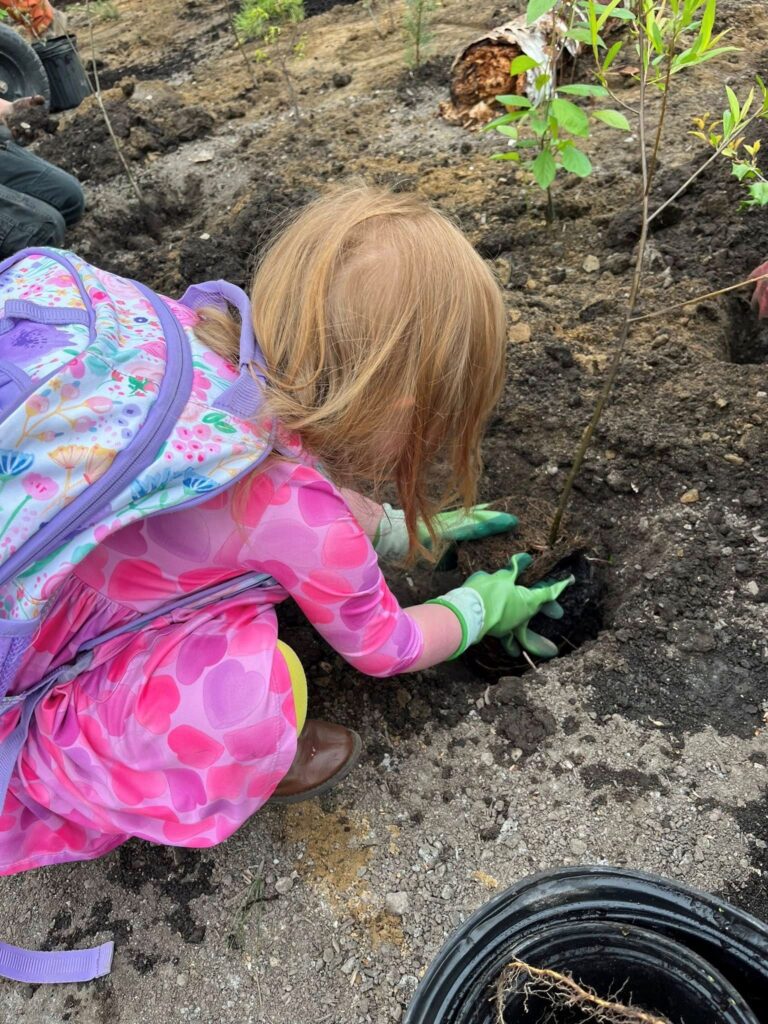
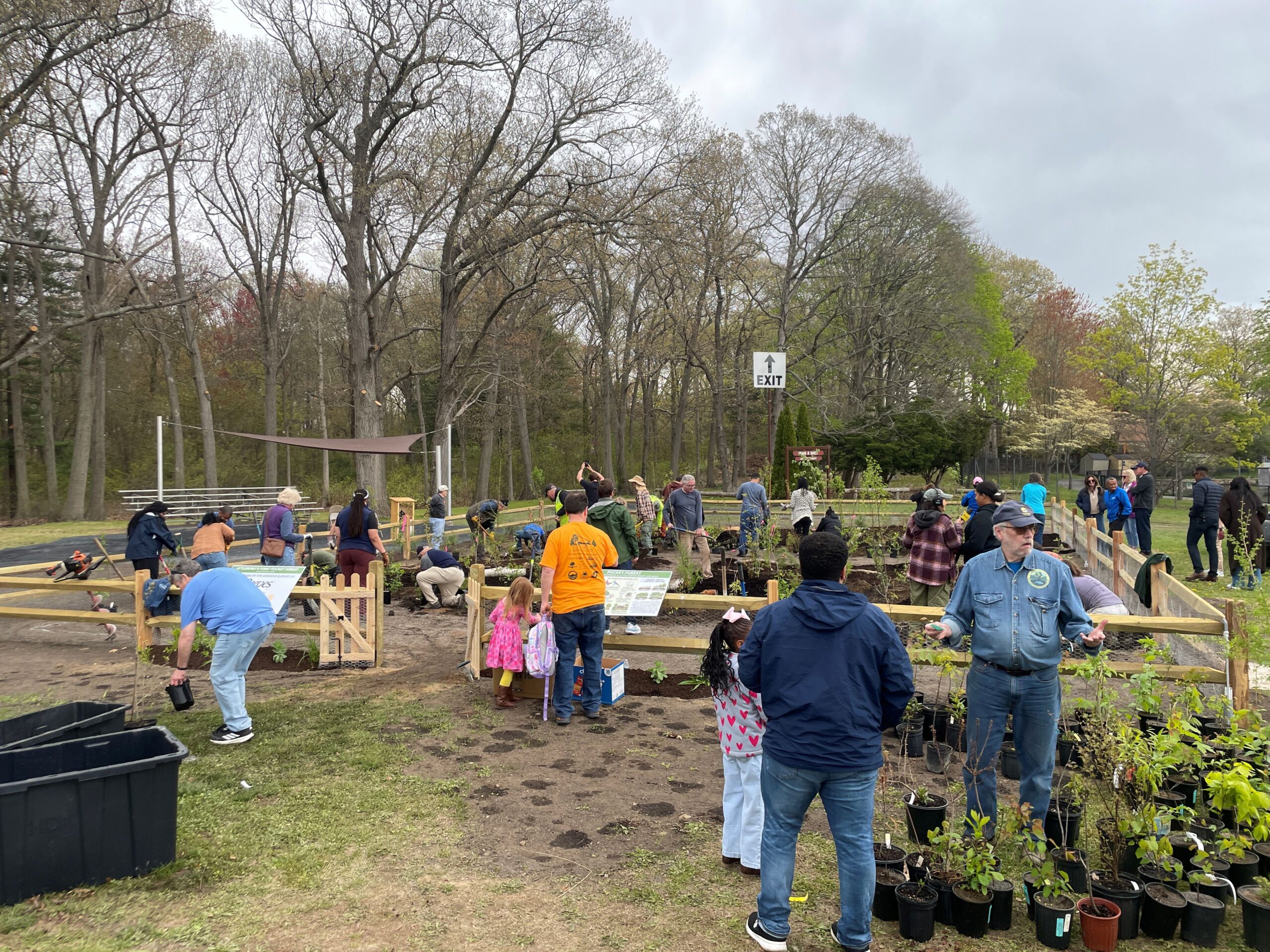
In early May a group of volunteers gathered on a 2,000-square-foot plot of land between Attleboro High School and the nearby Capron Park Zoo to plant a pilot Miyawaki forest. The hope is to inspire more pocket forests to be planted around Attleboro, reducing the chance of another flood like the one that happened in September 2023.
Chris Hitchener, lead education coordinator for Mass Audubon’s Oak Knoll Wildlife Sanctuary, brought close to 50 students from his marine science class to the Miyawaki forest planting.
“What I’m most excited about is if this has big success that gives momentum for the sustainability commission to do more of them,” he said.
In fact, Attleboro environmental planner Nick Wylie already has a site in mind for the city’s next Miyawaki forest, in a park that includes a body of water known as Lee’s Pond.
“I could conceivably see that one being 4,000 square feet,” Wylie said. “It will come down to funding, as well as plants and materials. If you have to scale it down you can always come back and increase the size, if funding is available. Having that flexibility is incredibly helpful.”
The pilot Miyawaki forest planted in a high visibility area that should draw a lot of attention was funded entirely by donations to buy the more than 500 native trees and shrub saplings representing 50 different species.
Donations totaled about $28,000, according to Wylie, including $4,000 for a bench where people can sit and enjoy looking at the pocket forest, although they won’t be able to stroll through it, as such a dense patch of trees leaves no room for visitors. Wylie said the Miyawaki forest will also be fenced to ensure it’s protected while the plants establish themselves.
Rachel Reeves Benavides said she first heard about the Miyawaki forest project from a Sustainability Commission member. Benavides is the owner of Reeves Co. Inc., founded by her grandfather in 1947. Reeves manufactures metal, plastic, and wooden name badges for hospitality, retail, transportation, and first-responder customers worldwide.
“To us, this project represented a thoughtful and meaningful way to educate, inspire and improve our community,” Benavides wrote in an email. “Instead of only reacting to environmental challenges after they happen, Attleboro has an opportunity to use science, planning and community action to help prevent future problems and build resilience.”
Benavides’ company donated $13,000 to the project. Her father also made a “sizable donation,” she said, but doesn’t want to disclose the amount.
“Business owners and members of this community have a responsibility to help set future generations up for success,” Benavides said. “Sponsoring the pocket forest is one way Reeves Company can support that responsibility in a practical and lasting way.”
Rob Moir, president and executive director of the Ocean River Institute in Cambridge, Mass., has been instrumental in pushing forward Attleboro’s Miyawaki forest. The Ocean River Institute was founded in 2007 to urge people to take local control of fighting climate change and bettering the environment.
“Attleboro did this with no outside help,” Moir said. “A little over 80 people donated $28,000 to buy the plants and build a split-rail fence around the forest. The point is to show you don’t need Uncle Sam coming in with the money to take care of the community. It’s all about Attleboro pride.”
Moir said Miyawaki was inspired by the diverse forests of native plants surrounding Buddhist temples in Japan, which he observed grew faster than less diverse forests.
“Each tree type has its own galaxy of bacteria, and so if you have different tree species together they collaborate and share the bacteria,” Moir explained. “If a plant cell wants an enzyme to thicken its walls, it puts a message into the fungi that is transported and offered to all the bacteria, and one of them specializes in thickening cell walls. It puts that ingredient back into the network, and any plant cell has the opportunity to pick that up. They distribute nutrients in the same way.”
Cambridge, where Moir is based, had one of the first Miyawaki forest planted in the Northeast, at Danehy Park in September 2021. Cambridge also has a second, smaller Miyawaki forest in Greene-Rose Heritage Park. There are several more Miyawaki forests in Massachusetts and in Bridgeport, Conn.
Last year, a Miyawaki forest was planted on a 1,000-square-foot plot at the Pearl Street Garden in Providence. Last month, a pocket forest was planted near Providence’s Juanita Sánchez Educational Complex.
While these pocket forests are fascinating, they are not the only path to flood mitigation. In Brattleboro, Vt., the Environmental Protection Agency reported on a project it funded with the town and the Vermont River Conservancy to address the devastating flooding Vermont suffered in 2011 from Tropical Storm Irene, which caused a staggering $850 million in damage.
A 12-acre site along Whetstone Brook, formerly used as a sawmill and for storing lumber, was cleaned and redeveloped as a park and restored floodplain to help protect downtown Brattleboro from future flooding and storms.
The site was filled with gravel as a result of 120 years of use as industrial storage, elevating the land above the river until it no longer functioned as a floodplain, unable to absorb the excess water from Tropical Storm Irene. The restoration included removing 55,000 cubic yards of gravel and a berm alongside the brook, restoring the natural floodplain and planting it with native bushes and trees.
“There is not a silver bullet solution when it comes to flood mitigation projects,” said Rob Evans, program manager for the Watershed Management Division of Vermont’s Department of Environmental Conservation. “The best projects typically include some combination of divestment, infrastructure improvement and floodplain restoration that will slow and store floodwater and improve habitat and water quality.”

Wonderful article. Thanks for writing and posting.