
Stomach-Turning House Hearing Showcases Societal Disconnect
May 28, 2025
Share


Colleague Colleen Cronin recently wrote a story that made me throw up in my mouth. It also made a person quoted in the story sick to her stomach.
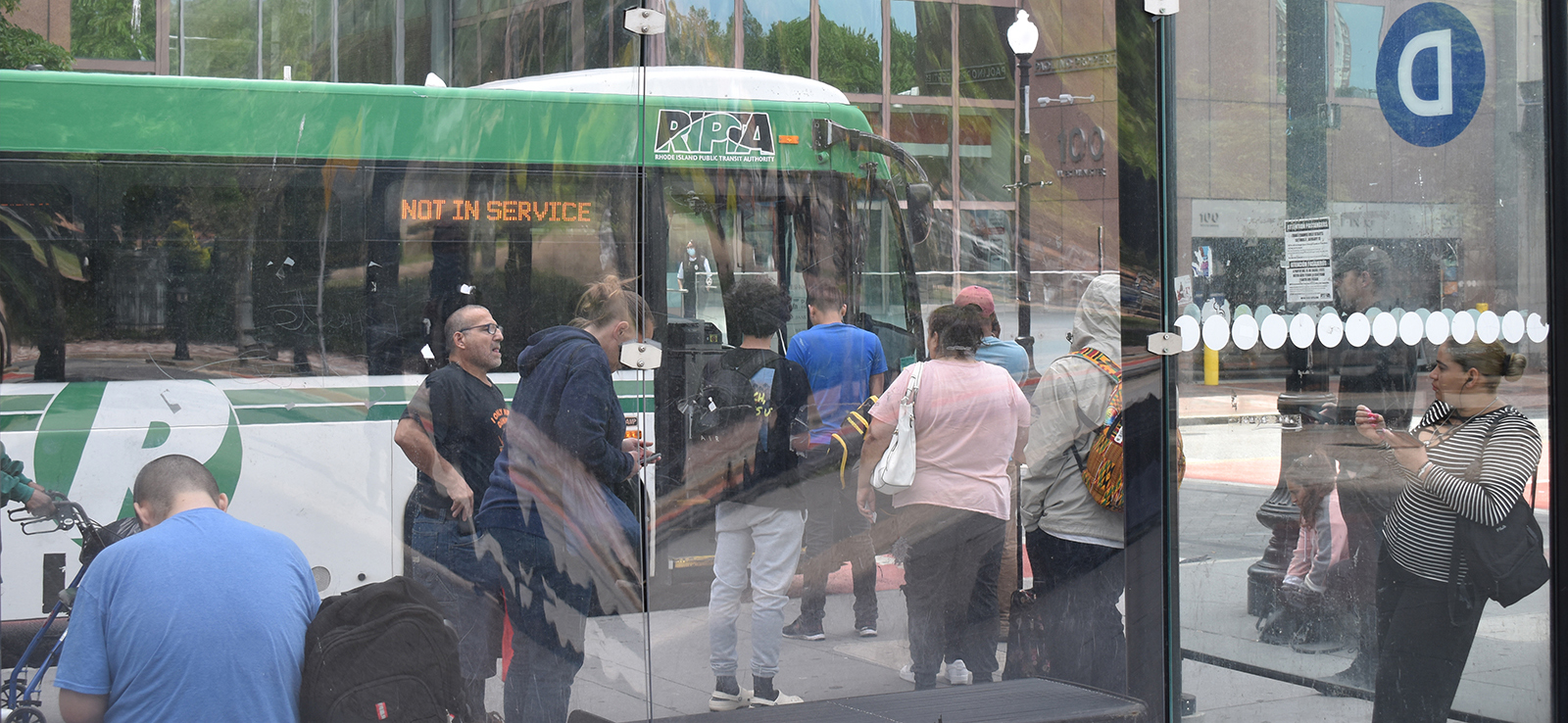
At a recent House Finance Committee hearing that featured testimony from people with disabilities, including several in wheelchairs, who rely on the Rhode Island Public Transit Authority to get to the doctors, go food shopping, and visit friends, the president of the Providence Chamber of Commerce wasn’t impressed.
To her it apparently was a freak show. People who shouldn’t be seen or heard interrupting the more important matter of making sure a proposed wealth tax is dead on arrival.
The wealthy and the people representing them, such as Laurie White, were there to argue against H6290, which would place an additional 1% tax on intangible financial assets of more than $25 million. The other half in attendance were there to speak on behalf of bills that supported public transit.
Before addressing the horrors of making the wealthy pay a little more — to be honest, only fair since they take the most — some RIPTA riders, who once again returned to the Statehouse to beg lawmakers to properly fund public transit, passionately spoke.
“If we don’t get the funding, I’d be isolated,” RIPTA rider Zack Gauthier testified.
Gauthier uses RIPTA’s RIde Paratransit Program for people with disabilities. The agency has noted that if the deficit isn’t resolved, it will have to lay off about a third of its staff and cut significant services, including fixed-route buses and paratransit service that operate in the same corridor.
White was so moved she could be heard saying how “sad” it was for them to be “parading” people with disabilities before the committee. Not nearly as pathetic, though, as groveling for the rich.
“It’s wrong,” said White, as a person who is blind spoke about how RIPTA helped her maintain full-time employment. People testifying on their own behalf without paid lobbyists must have confused the chamber president. Plus, these people work?
When it was White’s time to speak, for the rich, she whined, “I would describe the bill as draconian, confiscatory and arbitrary, and also punitive. Individuals of wealth do leave the state and they do take their wealth with them.”
Meanwhile, low-wealth people can’t get around the state.
Cheryl Merchant, CEO of the Rhode Island company TACO, also spoke in opposition to the wealth tax. She believes the tax is discriminatory against the wealthiest among us.
“If you look up ‘discrimination,’ you will see, ‘the prejudice against a category of people,’” she said. Because fewer than 1% of Rhode Islanders would be impacted by the proposed tax, she said the bill was “selective targeting.” “And that’s discrimination.”
It’s also a stomach-turning analogy that glosses over real discrimination.
The American Psychological Association’s definition of discrimination doesn’t mention the alleged unfairness of tax law on the super wealthy. It defines discrimination as “the unfair or prejudicial treatment of people and groups based on characteristics such as race, gender, age, or sexual orientation.”
Joanne Rich spoke in favor of RIPTA and the wealth tax, saying, “my stomach has been in knots” since the TACO CEO spoke.
“And all I can say is that I have a disability. I take the bus. When I look around, a lot of the bus riders look tired,” she said. “Imagine how much more tired you’d have to be if you had to do everything you do on the bus. If it seems hard to fund [transit], tax the 1% and tax the wealthy.”
But they’ll move out of state and take their wealth with them. They are all that matters.
People with disabilities make those without uncomfortable because the former often rely on community for support and care. While taking care of the most vulnerable makes for a more connected and fairer society, it’s not how we collectively operate.
This lack of compassion is why the natural world gets steamrolled and the inequality gap widens. It’s nauseating.
Frank Carini can be reached at [email protected]. His opinions don’t necessarily reflect those of ecoRI News.


Thank you for your thoughtful and honest reporting. It means more than I can articulate (weepy, angry/frustrated) , but I’m very grateful for your article. Thank you✌.
Thanks for this! Can you post links to the Capitol TV video and a link to written/verbal testimony submitted?
RI is doing as Jack Reed said about Trump recently recently:
Taking from the needs and giving to the greedy!
MA has discovered (surprise!), that increases in taxes on the wealthy, gives you more money and more wealthy peoplw! RI should try it!!