South Providence Residents Become Community Scientists through Brown University Research Partnership
May 18, 2026
Share


PROVIDENCE — As a colorful windsock flew above the Providence River and a lone boater cast a fishing line nearby, residents and researchers gathered at one of the river’s few public shoreline access points to test the air, water and soil.
They came with questions: Is it safe to fish or swim in the river? Can oysters survive there, and will they help clean the water? How are the Port of Providence’s salt piles and metal scrapyards affecting the water and land? If Public Street is considered a permanent public access to the shoreline, why isn’t there anywhere to sit?
Who and what is causing the oily smell hanging in the air? Is the wind carrying the pollution from the industrial facilities to East Providence? If something went wrong, what is the city’s emergency plan? What is leaking from the underground storage tanks?
Mara Freilich, a Brown University professor who studies oceanography, wrote the questions on a white notepad. Freilch partnered with the People’s Port Authority, a grassroots environmental organization, to help residents answer them through WaterSpeak, a community-led effort to monitor air, soil and water quality around the Port of Providence.
The team will also collaborate with Breathe Providence, a research team at Brown University that tracks neighborhood air quality across the city, including along Allens Avenue.
Together, the organization, residents and researchers are working to understand how pollution is affecting the community, said Ellen Tuzzolo, a staff member of the People’s Port Authority.
“If we can know how much lead is there in this soil we’re standing on, what’s going on in that water, what are we breathing, it’s going to help us fight for accountability and change,” Tuzzolo said.
The soil findings from the program’s May 16 launch event weren’t surprising. They found traces of lead, high levels of iron and elevated chloride that pointed to the runoff from the port’s salt pile. They also detected heavier metals along the pathway leading to the water than at the river’s edge.
“We see clear evidence of what is happening when you have these big piles of pollutants that are coming down on this public side,” said Gavin Piccione, a Brown University scientist who studies the chemical makeup of the earth.
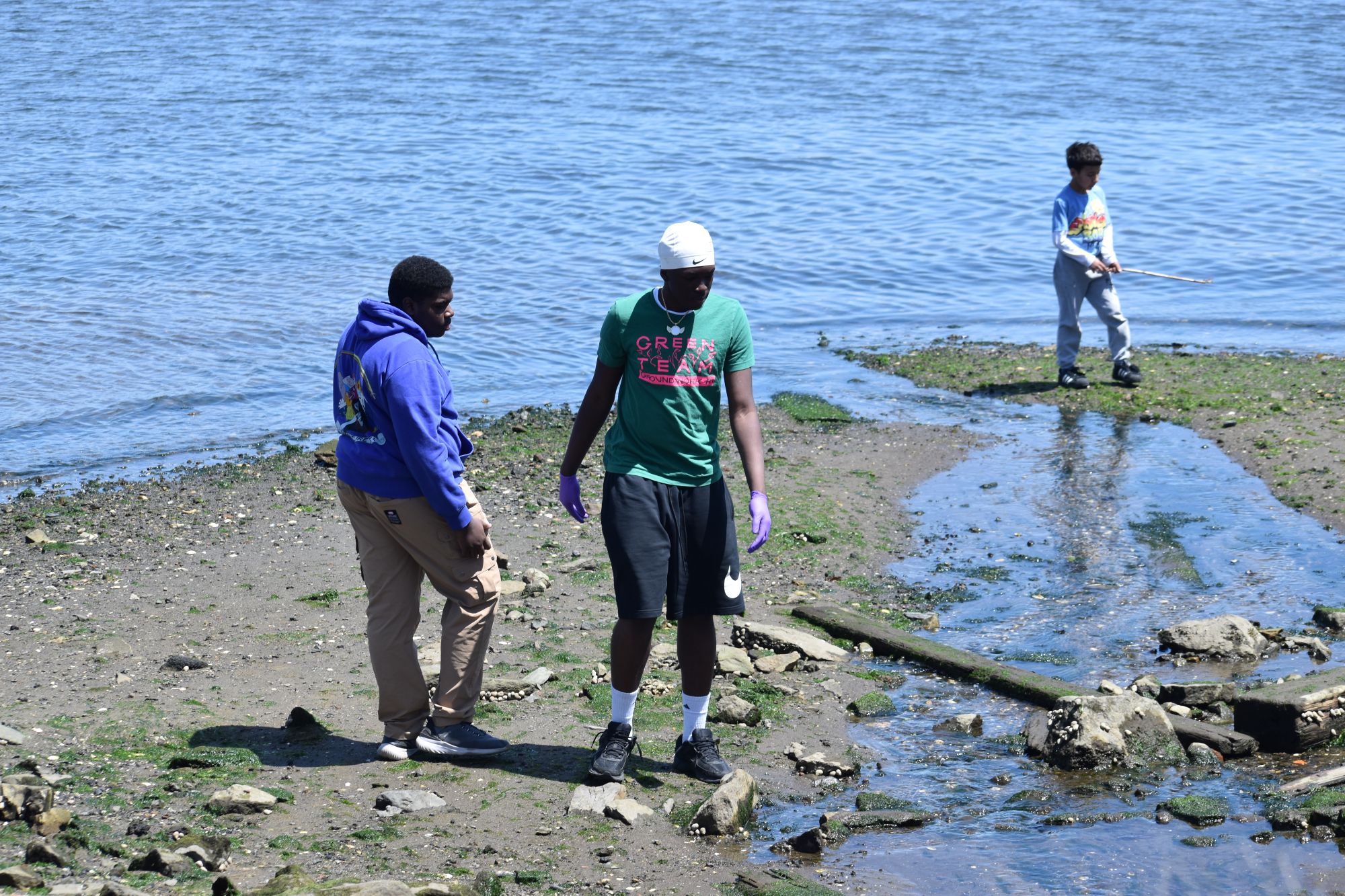
The 25 WaterSpeak participants — including children and parents —will return to Public Street each month to test the air, soil and water. They will share what they learned about conditions there in the winter.
Program leaders hope to secure more funding to test nature-based solutions at the port, including whether shellfish and other natural approaches could help restore water quality.
Monica Huertas, executive director of the People’s Port Authority, said she has always wanted to create opportunities for residents to do their own science and train children and teenagers in scientific work.
“If you know what’s in there, you’re kind of a little bit more empowered to speak up about it,” Huertas said.