
Rhode Island’s Neighbors Offer Both Success Story and Cautionary Tale When It Comes to Municipal Composting
November 20, 2025
Share


NEW BEDFORD, Mass. — When Marissa Perez-Dormitizer was first hired in 1999, her job was mostly about recycling.
It’s not an uncommon story in waste management roles. In the 1990s and 2000s the trend was to reduce the amount of waste sent to landfills by boosting local recycling rates, primarily through awareness and education.
Homeowners, businesses, schools, and other institutions were taught to separate plastic, cardboard, paper, and glass into blue bins, to keep them out of the black trash bins whose ultimate destination was a landfill or incinerator.
“Before I started, my job was a collaboration between a city employee and our executive director,” said Perez-Dormitzer, who is the waste reduction manager at the Greater New Bedford Regional Refuse Management District. “But I’m the first person to have the sole responsibility of working on waste reduction issues.”
In Rhode Island, where municipal recycling rates remain low, the state’s Central Landfill in Johnston is projected to reach its maximum capacity by 2046.
And Rhode Island isn’t alone. All landfills will reach their maximum capacity one day; there isn’t a waste management facility that can keep up with the U.S. appetite for throwing things away. As waste facilities inch closer to the end of their lifespans, state and local governments have been in search of solutions.
States can learn what works by paying attention to how their neighbors are handling food scrap. That’s where someone like Perez-Dormitzer enters the picture.
“There was a greater emphasis on recycling when I started,” she said. “Now we’ve broadened the approach to incorporate waste reduction and reuse. We’ve broadened the materials we look at, like clothing and food waste.”
The district is a joint entity between the city of New Bedford and the town of Dartmouth, and was founded in 1979 to serve the solid waste disposal services of both municipalities. In total, it serves about 130,000 customers.
It might seem strange to lifelong Rhode Islanders, but the Ocean State’s waste arrangement — all municipal solid waste centralized in a single landfill serving more than a million people — is a bit of a rare bird in southern New England.
Massachusetts
The Greater New Bedford Regional Refuse Management District is an alternative arrangement to managing municipal solid waste. Its main waste disposal site, the 152-acre Crapo Hill Landfill, 300 Samuel Barnet Blvd. on the outskirts of New Bedford, opened in 1995. The district originally bought the property in 1982, but it would take another 12 years and $11 million for the district to build and outfit its new landfill.
The landfill is 51 acres, and is permitted by the Massachusetts Department of Environmental Protection (MassDEP), its version of the Rhode Island Department of Environmental Management, to use 70 acres of the site. Perez-Dormitzer said the landfill is about to start its seventh cell since the site opened, which will provide residents with another seven to eight estimated years of landfill capacity.
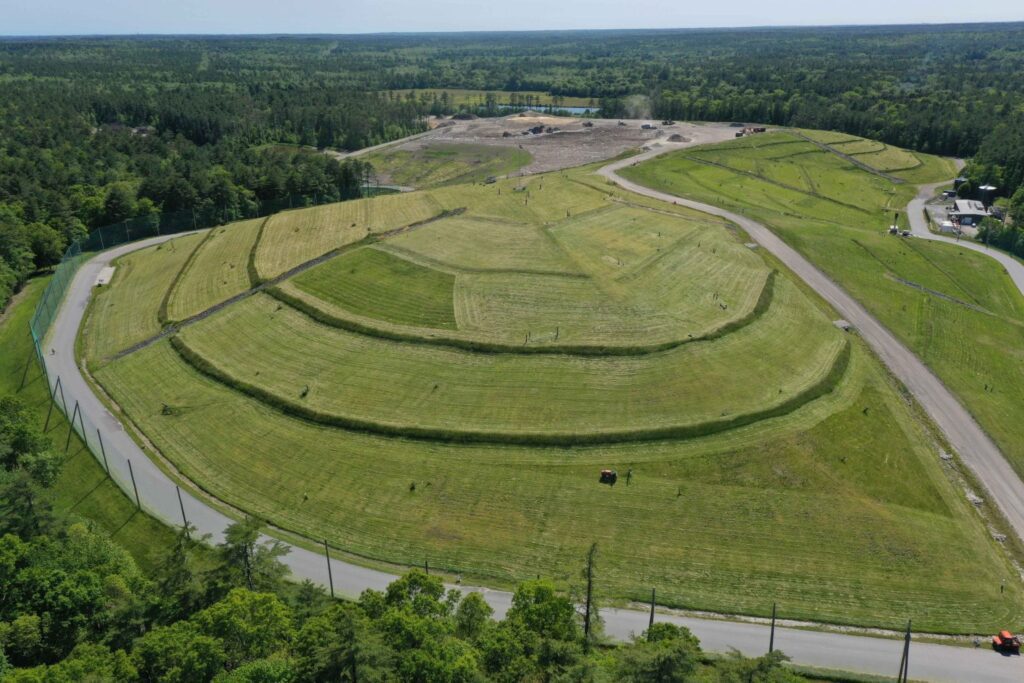
It’s good news for the residents of New Bedford and Dartmouth; without the new cell, Crapo Hill is only expected to last another five years at the most. Every year it receives 75,000 tons of solid waste, half of which is from the residents of the two municipalities, and the other from private haulers and other nearby municipalities.
Food scrap is a big part of the solid waste that is sent to Crapo Hill. It’s the single most common material sent to the landfill, according to Perez-Dormitzer. Food waste makes up an estimated 20% of the total waste buried at Crapo Hill.
In Massachusetts, food scrap is identified as the waste material with the biggest diversion potential — i.e., the largest category that could be diverted from landfills. The 2010-2020 Massachusetts Solid Waste Management Plan estimates 570,000 tons of food waste could be diverted from state landfills annually, with a goal of increasing reuse and donations to food banks and food rescue operations.
The state overall has a goal of reducing disposal by 1.7 million tons less than its 2018 baseline by the end of this decade. By 2050, MassDEP has a goal of reducing the total amount of waste landfilled by 5.1 million tons below the 2018 baseline. The plan notes that the state will have to make serious policy actions and cultural changes to meet its goals.
”MassDEP recognizes that a zero-waste future requires systemic changes in how we produce, distribute, sell, and use products and services as a society,” according to waste management plan. “This would require Massachusetts to move toward policies encouraging and requiring any reusable, recyclable or compostable material to be diverted from disposal at a very high rate, while eliminating the use of products or packaging that are not reusable, recyclable, or compostable.”
In response, Perez-Dormitzer’s department, which has one full-time and one part-time employee, has embarked on a series of programs to curb food waste. Like recycling before it — Perez-Dormitzer said she likes to call food waste “diversion recycling” — she said the district has a campaign to spread awareness and education about home composting. Both of the district’s municipalities also offer a drop-off for food scrap at their local recycling center or transfer station.
“That program is run by the municipalities,” Perez-Dormitzer said. “In general, that material is either composted, or sent to a large-scale or commercial composting facility, or an anaerobic digestor.”
The district has also started a pilot program with FoodCycler, an in-home appliance that claims to reduce food waste by up to 90%, according to a fact sheet provided by the district. Thanks to a grant from the state of Massachusetts, two versions of the appliance are offered to residents within the district at a discount. The Eco3 model costs residents $269, plus a $20 shipping fee, and the Eco5 model costs $319, plus the shipping fee. Each model at retail costs $499 and $599, respectively.
The district also encourages curbside pickup, via the Massachusetts-based compost collection company Black Earth Compost, a familiar name in curbside pickup in the Ocean State.

New Bedford and Dartmouth aren’t the only municipalities in Massachusetts with food waste diversion programs. According to MassDEP, 144 communities at least have either a drop-off at a centralized location for separated food scraps or curbside pickup, with 161 in total selling backyard compost bins for residents to compost at home. So far, those municipalities have diverted 20,750 tons of food scrap from going to landfills or incinerators.
“We go beyond recycling,” Perez-Dormitzer said. “It’s about reducing waste, repairing items, reusing stuff instead of throwing it away.”
It’s miles ahead of most Rhode Island municipalities, where the option is to compost in the back yard or hire a third-party contractor, like Black Earth Compost, to haul away the food waste. In September, the Eastern Rhode Island Conservation District launched a pilot program in Bristol and Barrington for curbside pickup of food scrap. The two-year program, funded by a grant from 11th Hour Racing, enrolls residents in Black Earth Compost’s existing curbside service.
It’s the first municipal-wide curbside compost initiative in a state where food scrap diversion is patchwork at best, and scarce to nonexistent at worst. More than 100,000 tons of food scrap enters the Central Landfill every year, providing a prime opportunity for the state to reconsider how it handles organic waste.
A big obstacle, as ecoRI News has reported in the past, is siting a commercial-scale composting facility in the state. Most local sites, like the Barrington Farm School, can take large quantities of organics, but Rhode Island lacks a facility with the scale to accept the massive quantities of scrap it’s going to take to truly divert food waste.
Such sites, like many environmentally minded projects, fall victim to NIMBYism: people may want the services rendered by a large-scale composer, but few want to live next door to one.
In comparison, MassDEP lists 41 sites in the Bay State that accept diverted food material, including farms, large-scale composters, and anaerobic digesters, which turn food waste into gas and then electricity.
In Rhode Island there’s hardly any central repository for data about composting. DEM has oversight over the state’s waste regulations, with many left up to the Rhode Island Resource Recovery Corporation, the quasi-public state agency that owns and operates the Central Landfill. It lists some resources on its website, but only accepts yard waste and grass clippings at its Eco Depot in Johnston, and offers some educational materials for at-home composting.
Connecticut
The Ocean State can look to another neighbor to see what a future without a landfill could look like. The state of Connecticut, which doesn’t have an operating landfill, spends millions exporting its trash to other states.
Connecticut traditionally relies on a network of waste-to-energy facilities around the state to dispose of its municipal solid waste. But in recent years, thanks to the rapid aging of the existing facilities and a lack of new ones, state officials have had to turn to exporting waste out of state.
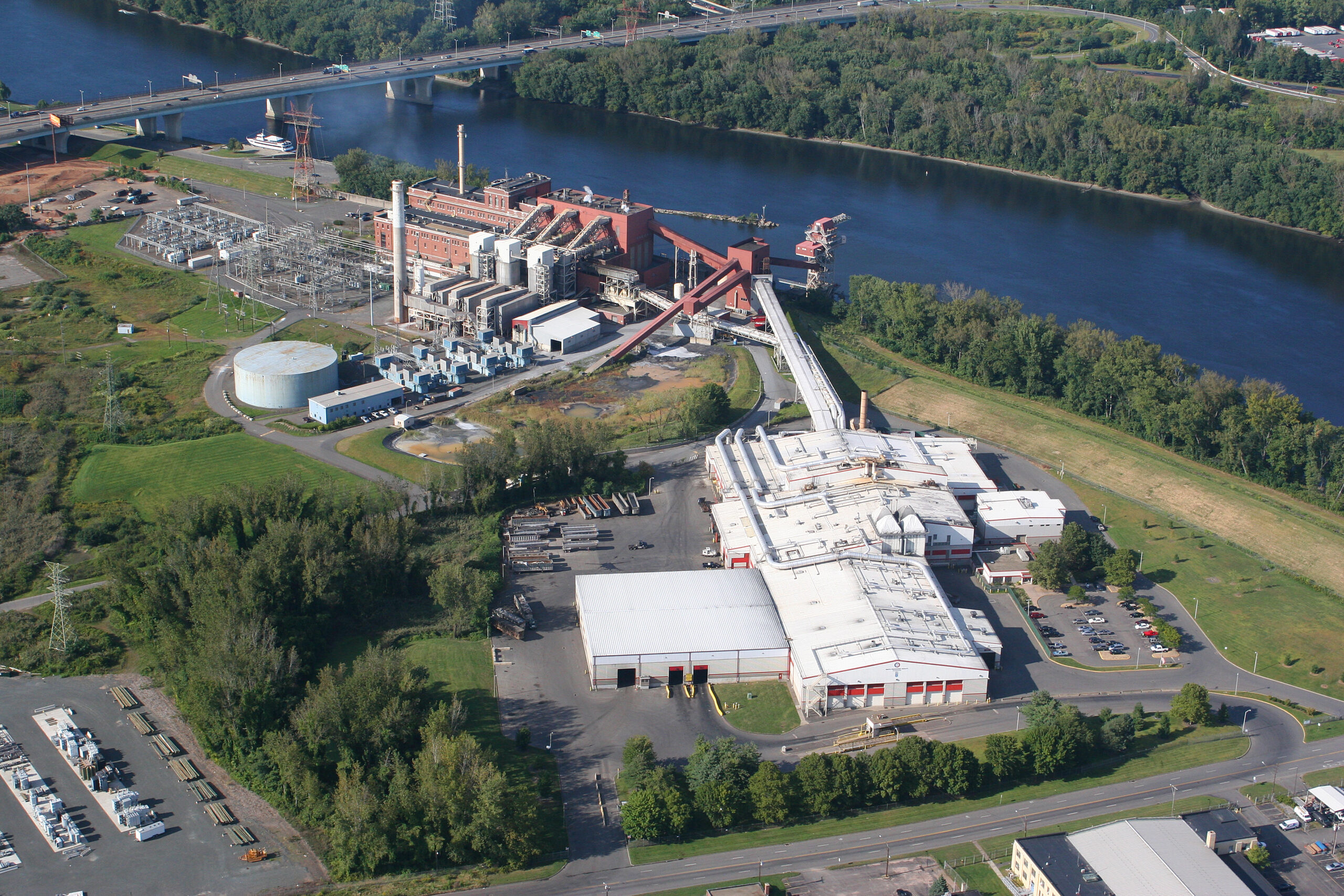
The loss of the Materials Innovation and Recycling Authority (MIRA) facility in Hartford in 2022 exacerbated the state’s trash problem. In 2023, Connecticut disposed of 2.24 million tons of solid waste, with 1.3 million headed to in-state waste-to-energy facilities. But because of lack of capacity at those facilities, around 940,000 tons were shipped to out-of-state landfills and incinerators.
Where does that trash go? A state waste disposal report shows that in 2023 the bulk of the exported waste was shipped to Ohio, with Alabama coming in second, and Pennsylvania in third. Other states Connecticut ships to include Massachusetts, New York, and Virginia.
And that comes at a cost. WasteZero president Mark Nancy testified in the Connecticut General Assembly in January that municipalities were paying about $120 per ton to dispose of the trash, costing residents and businesses a total of roughly $250 million a year.
The Connecticut Department of Energy and Environmental Protection (DEEP) has been focused on reducing the amount of waste generated in the state. Sherill Baldwin, an environmental analyst with DEEP, said state estimates show around 22% of all waste produced in the state is food scrap or other organic waste.
“Knowing that much of our municipal solid waste is food scraps helped the agency make that a priority,” Baldwin said.
Baldwin noted the state has no general food waste ban at its waste facilities. Connecticut does have a commercial organics recycling law that requires entities that generate more than 26 tons to separate organic materials from solid waste.
The state as a whole has a goal of diverting 300,000 tons of organic scraps annually to anaerobic digesters and composters as opposed to the traditional waste-to-energy plants.
But Connecticut’s composting infrastructure is still more developed than Rhode Island’s. DEEP, said Baldwin, also provides grants to incentivize municipalities to increase food scrap diversion.
“Most towns will have a transfer station for residents to drop off lead and yard debris, but about one third of all municipalities have transfer stations that do drop-offs for food scraps,” Baldwin said. “Some other municipalities contract private haulers for food scrap collection, and some are looking at contracting with vendors for curbside pickup, but that’s currently only in the pilot stage at the moment.”
Composting has really started to take off in Connecticut over the past five years. In 2019, just prior to the pandemic, the state composted 50,000 tons of food waste. Just four years later, in 2023, the state was sending 359,572 tons of organic waste to be composted, seven times what was getting composted in 2019.
It’s not all good news. “However, an estimated additional 468,000 tons of food waste remain in the MSW stream destined for disposal,” according to the state’s waste disposal report from 2023, “meaning only 7.4% of food waste in the MSW stream is currently being diverted.”

It’s still better than Rhode Island, where 2,200 tons of trash is delivered to the Central Landfill in Johnston every single day. A big chunk of that waste is food and other organic material. Food waste accounts for about one-third of all waste delivered to Rhode Island’s landfill.
Rhode Island’s 2015 Solid Waste Management Plan actually calls out composting as one of the state’s largest opportunities and challenges to reduce the amount of waste in the stream.
“For example, if 80% recovery of food scraps were achieved in addition to 80% of the materials currently mandated,” according to the 105-page report, “the refuse stream could be reduced by more than 60%. This would require a great deal of capital investment in processing facilities, coordination among participants managing waste at all levels, and a willingness among residents and business to reduce materials consumption and segregate waste into multiple streams.”
For Rhode Island it would be something new, but across state lines in the same waste management space, others see the expansion into food scraps and textile recycling really as new forms of recycling.
“Now we go beyond recycling,” said New Bedford’s Perez-Dormitzer. “It’s about reducing waste, repairing items, reusing items. Our job titles are waste reduction manager, waste reduction coordinator, but we talk about how recycling still really resonates with people over something more broad, like food waste.”
What’s the cautionary tale in municipal composting though? It only sounds like a win-win. Except those FoodCyclers are just dehydration machines. It runs all day and vaporizes the moisture of the food scraps, so it shrinks. But you can’t put it in your yard because as soon as its wet, it turns to mold, and rats like it.
The state of RI needs to step up in a variety of ways. One is to create a revenue stream for municipal efforts through a surcharge on what is dumped in Johnston. The second is to build a large scale composting facility to manage what municipalities are unable to manage. They have known this for 15 years, but still evade responsibility.