
Proposed Change Allowing Gill Nets for Catching Striped Bass Angers Anglers
February 17, 2025
Share


PROVIDENCE — Some Rhode Island anglers are opposing a proposed regulation from state environmental officials that would allow catching striped bass with gill nets.
A handful of anglers from the Rhode Island Saltwater Anglers Association (RISAA) are against the suggested change to commercial striped bass fishing rules, which would allow commercial anglers to catch the Atlantic Ocean fish with a type of net that also catches them by accident.
Anglers say the change would cause overfishing of the state’s striped bass population, which is in a regional rebuilding period after years of overfishing.
Dave Monti, a charter boat captain and RISAA member, told ecoRI News that gill nets have a habit of catching fish species that they typically aren’t set up for.
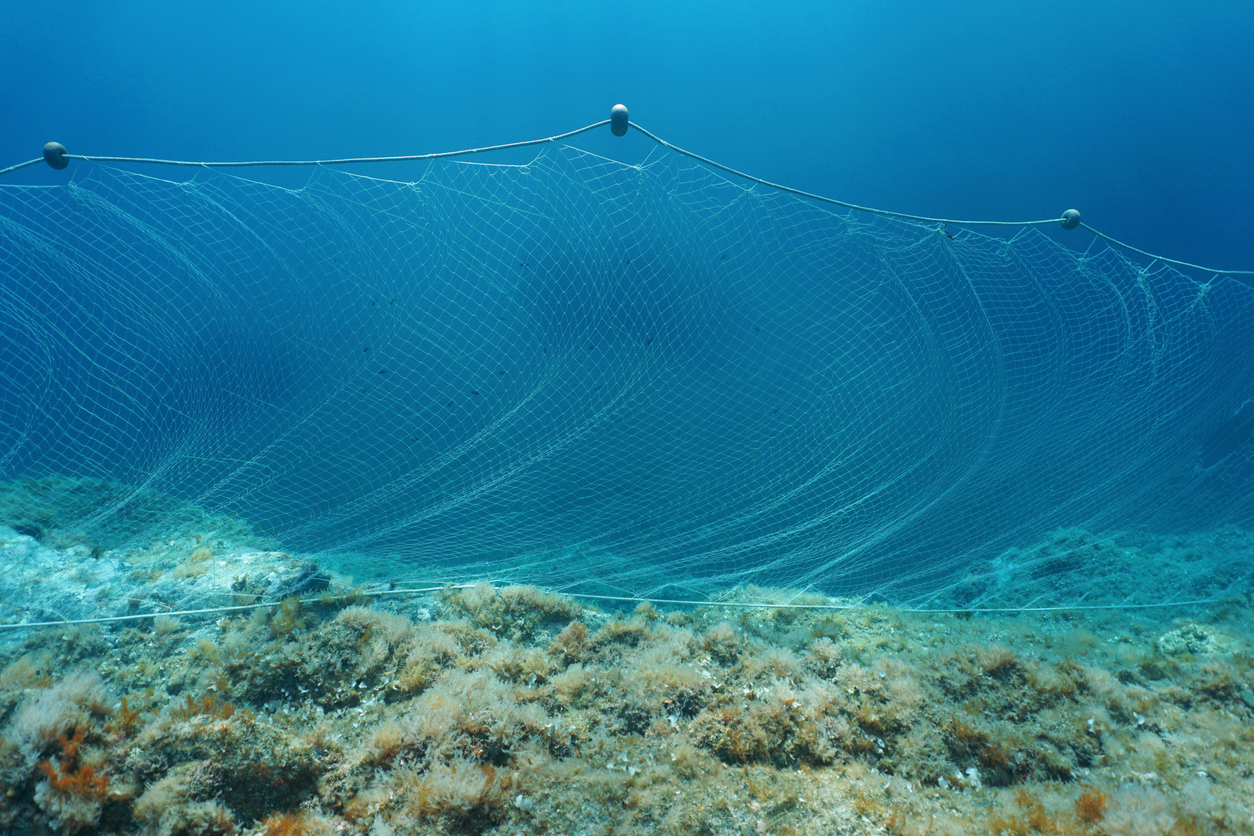
“A gill net is a net you stretch across a certain distance,” Monti said. “These nets are designed for fish to swim through them [and] the net catches the gill of the fish, hence the name.”
“Gill nets … catch a lot of fish that it shouldn’t,” he added. “They’ve been able to reduce unwanted catch over the years, but the bycatch of fish is still a tremendous amount.”
Current catch limits for recreational anglers are one striped bass per person per day. The regulations are designed to let people catch striped bass, a prized fish for anglers, while helping the population rebound from historic lows.
Limits are set by the state Department of Environmental Management, which acts on suggestions from the Atlantic States Marine Fisheries Commission, a regional body that provides fish population guidance for states on the Eastern Seaboard.
Evan LaCross, a DEM spokesperson, said the agency couldn’t comment on the proposal officially until the Rhode Island Marine Fisheries Council made its recommendation on the change.
“The proposal came from the commercial fishing industry,” LaCross wrote in an email. “In response, the Division of Marine Fisheries is studying striped bass bycatch in the state waters gill net fishery.”
“Why allow more fishing and more effort to allow people to keep striped bass and gill nets if the fish are overfished?” Monti asked. “Overfishing has already occurred, and the species is in a rebuilding plan.”
The problem with striped bass dates back to the 1970s. Increasing fishing pressure, combined with habitat loss and overall degradation, led to stock collapse and spurred the development of an interstate fisheries plan to help the species rebound. The Atlantic States Fisheries Commission created the fish management plan in 1981, with amendments to the plan made over the decades.
A 2019 stock assessment from the commission determined that, thanks to updated recreational catch estimates, the species was overfished. The commission recommended lowering all state commercial quotas by 18% and implementing a one-fish limit for recreational anglers.
Striped bass is an ocean fish that is also vulnerable to climate change. The Maryland Department of Natural Resources has found in previous studies that warming waters in Chesapeake Bay, a key spawning area for striped bass, has reduced access to food sources such as zooplankton that newborn striped bass rely on for sustenance.
The warming waters of the bay were contributing to a mismatched time window between striped bass spawns and zooplankton blooms, leading to fewer spawnings, according to Maryland officials.
The striped bass plan from the Atlantic States Fisheries Commission mandates that striped bass rebuild by 2029, a due date that many states in the region are unlikely to deliver. The commission is expected to consider new measures to bolster striped bass populations as soon as next year.
In 2023, the commission approved emergency action to reduce the recreational size limit of striped bass catch due to a larger-than-expected 2022 harvest, which was double the previous year’s. The new stock rebuilding projections estimated the probability of reaching the 2029 target dropped from 97% to 15% given current fishing mortality.
In layman’s terms, that means fishers were catching, intentionally or not, too many striped bass for the population to effectively recover.
“I tell my customers, when we released striped bass [that are] dead, you’re not supposed to take it,” Monti said. “That’s what you’re supposed to do, release it back into the water. It’s not wasted. You know, some animal is going to eat that, or several animals will eat that. It’s going back in the ecosystem.”
An in-person hearing on the changes is scheduled for Tuesday, Feb. 25, at 5 p.m. at the Corless Auditorium at the University of Rhode Island’s Bay Campus on South Ferry Road in Narragansett.
Editor’s note: An earlier version of this story incorrectly stated that the change applies to recreational anglers rather than commercial anglers. The hearing date was also changed from Feb. 17 to Feb. 25.


I really appreciate Dave Monti’s expert perspective on maintaining the health of our bay and the creatures that depend on it, as well as respecting the passion of private and commercial fisherman. I used to be an avid fisherman, enjoying the solitude and peacefulness of being out on the water – whether a lake, a bay, the ocean, or wading in a stream – as well as the thrill of a trout, bluefish, or bass on the end of my line. It’s a wonderful way to commune with nature. Even though I almost never kept what I caught, used barbless hooks, etc., and took all measures to minimize harm to the fish, I ultimately gave it up. In my middle age, it became crystal clear that fish stocks were down, that some some species had been decimated either by overfishing, or by pollution, or by warming waters, or by a combination of those things. And it was clear to me that human beings are the root cause of all of those things. I noticed also the “collateral damage” of fishing such as gas and oil spilled into our waters and the incredible amount of litter. How can a person go out into nature to fish and leave behind their food waste, beer cans, tangles of fishing line, cigarette butts, etc.? I could no longer participate in the sport of fishing believing that it was a neutral, harmless pursuit in harmony with nature. I don’t expect everyone to give up the sport like I have, but I hope that anyone who seriously loves the experience will understand that it is their responsibility to ensure these resources will be there for future generations.
I hope the gill-netting regulation does not pass. But, truly, these things can only have a small impact. The real threat is climate change; and so far, we as a species are doing precious little to slow it down, let alone stop it.
If the Atlantic States Fishery Commission is concerned about the future stock of striped bass, why then would they bow to the idea of gill netting, which will result in a higher take and increased mortality of the bass? And why does RIDEM need to take the lead of the Commission when the evidence of a declining population is well known? Doesn’t make sense to me.