
Pawtucket, State Officials Sign Off on Turning Woodlawn Neighborhood’s Only Green Space into Parking Lot
April 16, 2026
Share


PAWUCKET, R.I. — It’s almost official: state environmental regulators have given their approval for an out-of-state developer to pave part of the Woodlawn neighborhood’s only park and turn it into a parking lot.
In a letter dated Feb. 9, obtained by ecoRI News, the Rhode Island Department of Environmental Management recommended that the National Park Service allow three Pawtucket parks — Morley Field, Dunnell Park, and the McCoy Stadium annex — to be converted from public recreation spaces into other projects.
“The recreation equivalency of the replacement configuration, including the remaining and actively utilized portion of Dunnell, plus the remaining portion of South Woodlawn to be rehabilitated, as well as the proposed replacement known as Riverside, is considered to be equal to or greater than the original,” wrote Megan DiPrete, chief of DEM’s planning division and the state liaison officer for recreational spaces preserved under the federal Land and Water Conservation program.
Two of the sites, Dunnell Park and the McCoy Stadium annex, have already fully or partially been altered into other uses. Dunnell Park, better known as Hank Soar Field, had 2.3 of its 14 federally protected acres already converted into affordable housing and parking, while the McCoy Stadium annex, once a part of the stadium complex, has long since been bulldozed and removed as the city builds a new high school.
Morley Field, meanwhile, was still being used by residents up until its closure in 2022. The athletic field is the only remaining green space left in the city’s Woodlawn neighborhood, close to the city line with Providence. Official athletic leagues hadn’t used the field in years, but nearby residents and workers reported using it for informal recreation until city officials closed it.
Citing soil tests showing lead and polycyclic aromatic hydrocarbons above acceptable levels, city officials closed the park. But the soil test was commissioned by Blackstone Distribution Center LLC, which had signed a 20-year tax stabilization agreement with the city to develop Morley Field into a 165,000-square-foot distribution center.
“The City reports that use of the (existing) 5.2-acre property had steadily declined, as determined by issuance of recreation (league play) permits, and only one program utilized the site annually, August to November, since 2015 (from summer 2015 until the 2022 closure of the site),” wrote DiPrete in her recommendation to the National Park Service. “This reflects an intentional move by the City to modernize and expand league play opportunities at Max Read Field.”
The final decision on the conversion of Morley Field will ultimately be up to the National Park Service. In a letter to DEM dated Aug. 19, 2024, Missy Morrison, then-program manager for the Land and Water Conservation Fund program, wrote that the McCoy Stadium annex and Dunnell Park properties were ready for conversion.

Morrison indicated in her letter that the Riverside Park replacement proposal appeared to meet agency requirements and seemed suitable as a recreational property, pending an environmental assessment before a final decision.
But Morley Field, wrote Morrison in 2024, “is not ready” for a final conversion decision under National Park Service regulations.
“The NPS recommends that additional community-level engagement be undertaken by the City and RIDEM,” Morrison wrote.
In response to the National Park Service’s feedback, the city hired a third-party contractor to survey the Woodlawn neighborhood. The firm, the Bristol-based communications company Statecraft Strategies, sent out mailers in mid-February 2025 to 483 individuals living in the neighborhood to gauge their feelings on the Morley Field redevelopment project. Respondents had a month to complete the survey.
Results were anemic. Only 14 individuals filled out the survey, a 3% response rate, according to the report prepared by Statecraft Strategies. Of the 14 who responded, 72% expressed excitement about the project; 86% said they would use the space frequently; and 93% saying they would use it on a weekly basis.
“The data gathered unequivocally indicates that residents are in favor of the proposed redevelopment of Morley Field,” according to the report.
On paper, Morley Field is actually two separate parcels, and the field was created when the city acquired both back in the 1970s. A smaller, 2-acre portion was gifted to the city by the park’s namesake, William H. Morley, an executive with the Anaconda Wire & Cable Co. The remaining 3 acres were bought with a National Park Service grant.
For residents of Woodlawn, it’s the only green space within a 10-minute walking distance of homes and apartments. Despite being squished on three sides by asphalt, development, and pavement — its western edge, after some vegetation buffer, is bordered by Interstate 95 — it was up until its closure still well-used by residents.
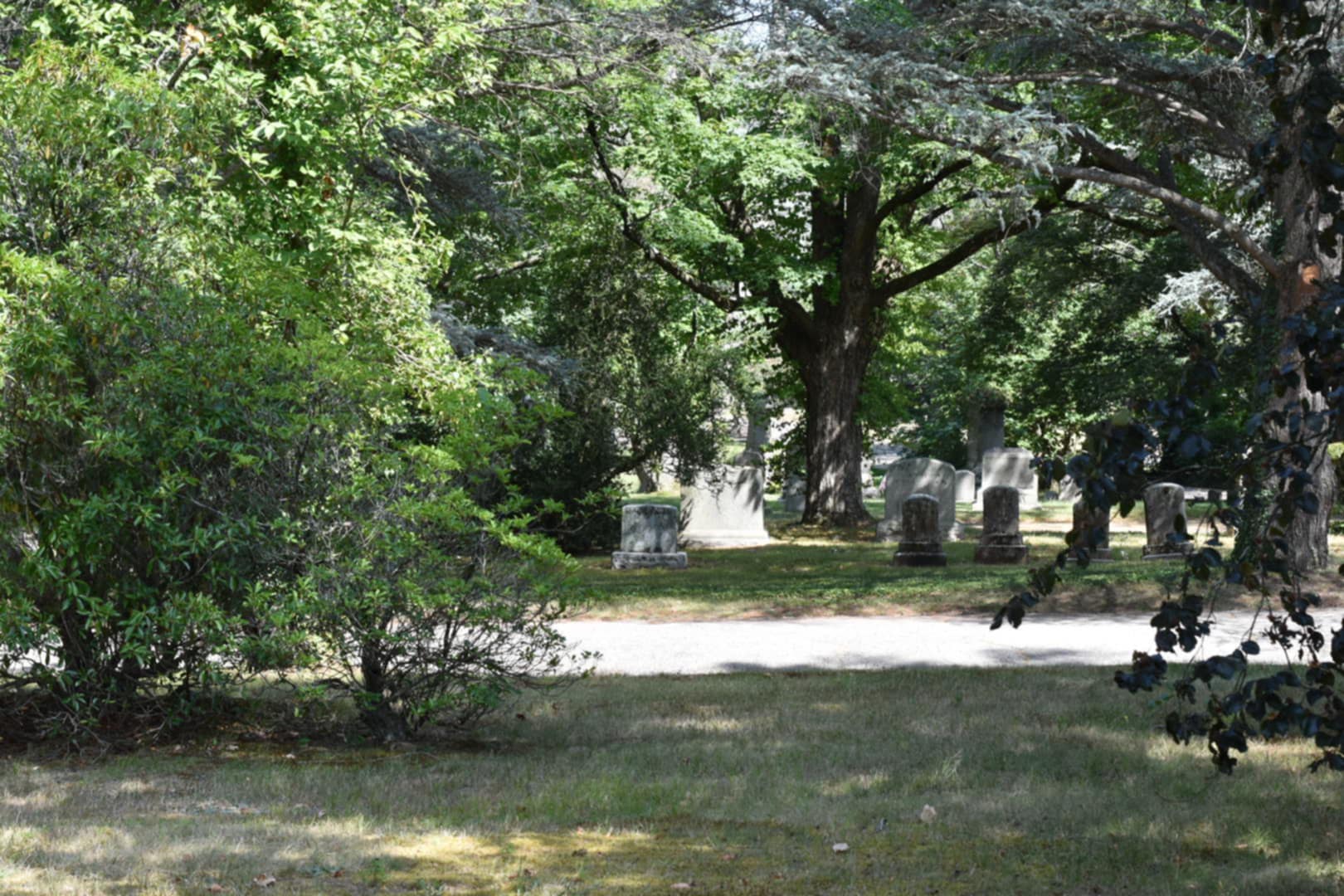
“It’s inherently morally deficient,” said City Council member Clovis Gregor, whose city ward includes Woodlawn, at a council meeting last month, “to take the only green space in a mostly minority community and turn it into parking. But before that, impairing it with toxic debris by the Moshassuck River.”
Morley Field is in an area of Pawtucket where an urban tree canopy turns into myth. A count by the nonprofit Tree Equity Score, which studies and maps environmental justice issues in the United States, shows little tree cover in the Woodlawn neighborhood.
The area between Main Street and the Moshassuck River only has 16% tree cover, according to the count. Other tracts in the neighborhood fare little better, usually averaging between 14% to 19% tree coverage. Two tracts bordering Oak Hill, a neighborhood with significantly more street trees and greenery, exceed 20% coverage.
What does that mean practically? In summer, Woodlawn is going to be much hotter for residents than other neighborhoods. The Census tract surrounding Morley Field shows temperatures are 21 degrees hotter than average, according to a report from Tree Equity Score.
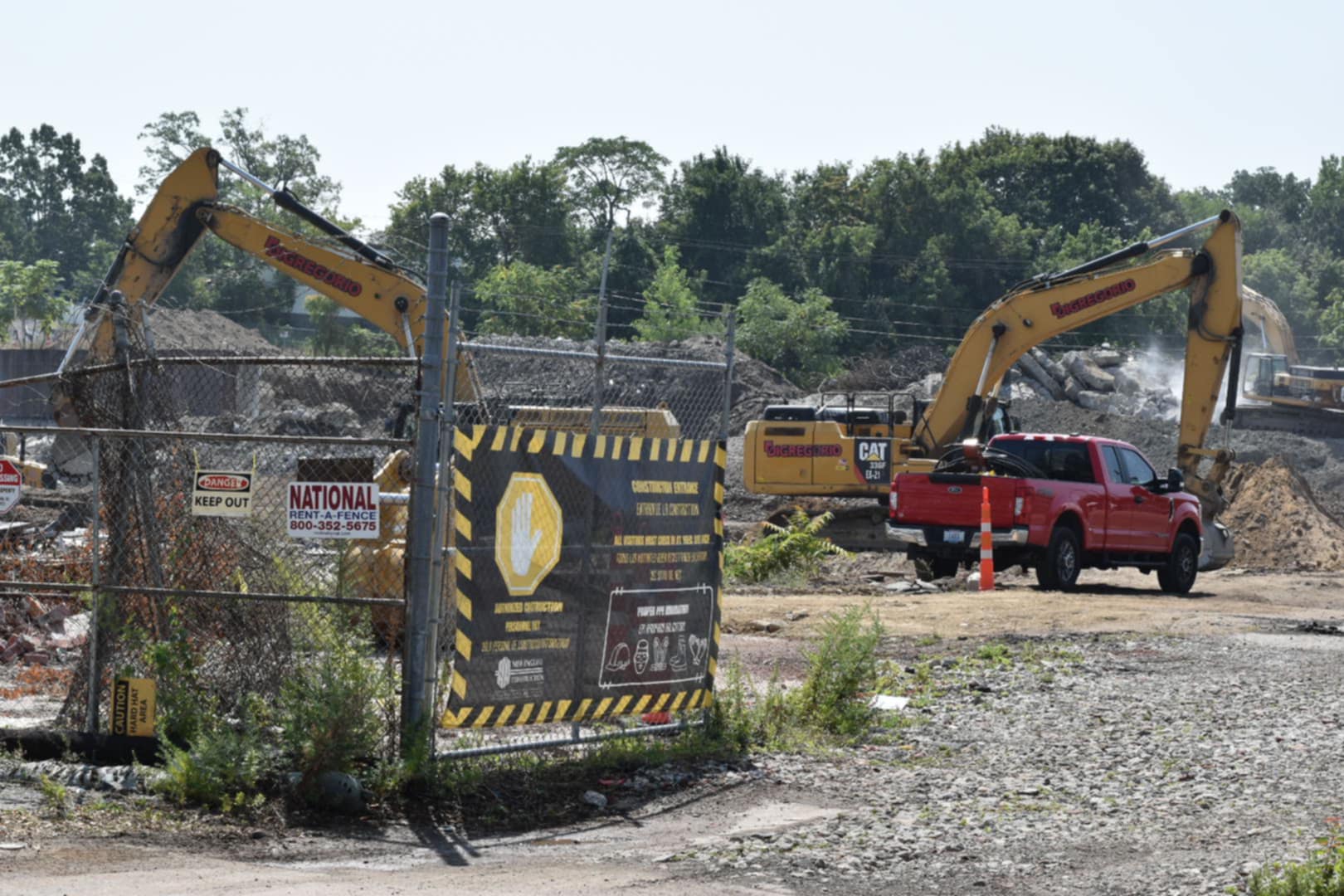
Progress on the distribution center has been stepping up. Last summer owner JK Equities began demolition of the old Microfibres factory, which occupied the parcel next to Morley Field. The developer last year also collected separate building, mechanical, electrical, and plumbing permits from the city, with construction on the distribution center commencing this year, according to reporting from the The Valley Breeze in January.
Today the project has both walls and a roof, looking more like a giant cement block, highly visible around south Woodlawn. Sealing the building and installing HVAC systems will be the next steps.
While still untouched by the development, Morley Field will eventually be converted partially into a 3-acre parking lot. The remaining parcel will be used for what the city has described as “passive recreation.” The proposal for the southern half of Morley Field includes an open lawn, an event space with pollinator gardens interspersed, and parallel street parking available on Grenville Street. Also included in the city’s proposal is a quarter-mile walking circuit around the perimeter of the new park.
According to the conversion application signed by DEM, the remaining acres will allow more passive recreation and community events, “more aligned with the current needs of the community.”
“There is community event space at Payne Park (located within one mile of Morley Field); however, due to the park size, parking availability, and street access, all events require street closures and police details,” wrote Paul Jordan, a data analyst in DEM’s planning office. “Morley Field would provide a larger space, more parking, and is located between two dead-end streets that would not require police detail. Events at Morley Field would be less disruptive to the neighborhood.”
City officials signed a purchase-and-sale agreement with the developer in August 2021. The purchase price for the 3 acres of Morley Field is stated as $550,000, and JK Equities agreed to pay the city another $1.5 million for relocation costs for the recreational facilities onsite. A 2022 appraisal, performed by Peter M. Scotti Associates, put the value of the property at $280,000.
In the city and state’s applications to the National Park Service, they say replacing an athletic field with river access and walking trails better reflects the changing demographics of the city. The conversion application for the proposed Riverside Park notes that youth sports and football leagues that once used athletic sites like Morley Field have declined in recent years.
“The City lost one little league in 2005, and two others have since merged because of low participation rates. The City has observed that local sports leagues utilize the larger citywide facilities, and not the local neighborhood fields,” wrote Jordan in the application. “The development of the Riverside Property for passive recreation is more aligned with the current recreational needs of the City.”
Meanwhile, the replacement park next to Riverside Cemetery is beginning to take shape. The city is proposing to lightly develop the 9.49-property into a series of walking trails, building on pre-existing dirt roads, and providing river access for additional passive recreation. None of the trails will be paved to avoid creating additional impervious surfaces that could direct runoff toward the nearby Seekonk River.
An environmental assessment prepared for the city by Terracon showed that the property was formerly the site of a gravel pit, and that leftover contamination from graveling operations were a possible source of environmental hazards on the site. The gravel operation left a 30-foot deep “bowl” shape in the center of the property.
“The results of the LSI identified exceedances of common soil contaminants (i.e. “urban fill” such as lead and Benzo(a)pyrene) as well as the presence of an abandoned underground storage tank (UST),” wrote Terracon in its assessment of the property. “No groundwater exceedances were identified. Lab data collected from the UST suggests the contents of the UST are kerosene.”
The report notes the nearby Tidewater Landing stadium site, which during construction had a series of oil leaks, as a possible source of contamination as well.
The property is currently owned by the Riverside Burial Society of Pawtucket, the nonprofit that operates Riverside Cemetery, and has an appraised value of $1.98 million. The city announced in January 2023 it had signed a purchase-and-sale agreement with Riverside Cemetery for the adjacent parcels.

was it Joanie Mitchell who penned the song “they paved paradise and put up a parking lot”? How prescient. Well, Morley Field is hardly paradise but it seems that for all the talk of equity, of Earth Day celebrations, of National Park protection, it all means nothing when a ruthless out of state corporation wants green space to appease the Great Parking Gods who must be obeyed, and not just in Pawrtucket. There is an election in Pawtucket coming, is this an issue?
The DEM punted on their own environmental justice statement, totally ignoring EJ concerns. The Administration in Pawtucket is truly racist, only closing parks in Black and Brown neighborhoods. The adminstration stopped maintaining the park, kickedf eveyone out, and then said no one is using it so we can close it. Liars all the way, including saying no Osprey nesdt in the park when we have video evidence of nestoing the last 6 years in a row. The whole thing stinks and the Governor and the mayor of paqwtiucket are both corrupt and chasing dollars. And just watch when, since they have no warehouse tenant, it turns into an ICE warehouse. totally stupid, totally bad economic development and totally racist.