
Pawtucket Converted Federally Funded Open Space Long Before Morley Field
September 25, 2025
Share


PAWTUCKET, R.I. — The September meeting of the city Planning Commission was supposed to be just a regular meeting.
The agenda looked like any other for a municipal planning commission, with a request to transfer ownership of a city-owned parcel and plans for a series of informal workshops outlining changes to local regulations. One agenda item was notable, however: Members were scheduled to vote on a request for an extension on preliminary project approval from JK Equities, the New York-based developer seeking to turn Morley Field, a public park in the city’s Woodlawn neighborhood, into a parking lot for its planned Blackstone Distribution Center on Moshassuck Street.
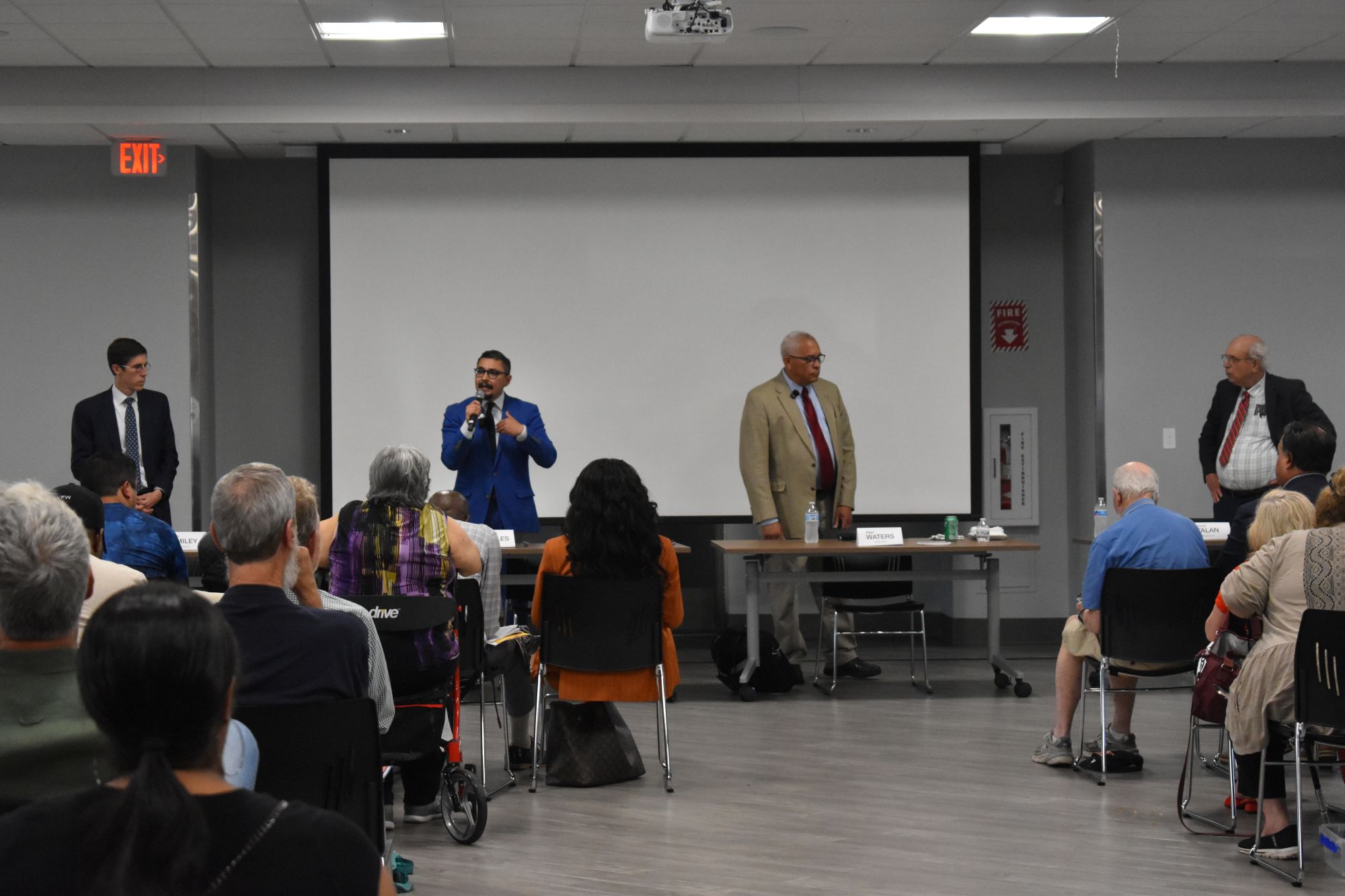
But no one from JK Equities showed up to the meeting, where dozens of advocates with Save Morley Field had gathered to lodge their protest and ask the commission to deny JK Equities’ request. The commission had originally awarded the developer approvals back in 2022, along with a 20-year tax stabilization agreement from the city.
When the Planning Commission instead voted, 5-2, to table the extension request, it was a sign of everything wrong with local government. Commissioners declined to take public comment on the agenda item, arguing they had tabled it and it wasn’t the commission’s practice for an agenda item to be considered without a representative of the applicant present.
It was the second such delay by the Planning Commission, which had already tabled JK Equities’ extension request at its August meeting.
“You seem more concerned with protecting the outside developer than you are with the residents of Pawtucket,” said Clovis Gregor, a City Council member who represents the city’s fifth ward, which includes Morley Field. “Your own planning commission agendas require you to take public comment regardless of whether or not the applicant is here.”
Save Morley Field doesn’t want to see one of the few remaining green spaces in the Woodlawn neighborhood, a chief environmental justice zone in Pawtucket, be turned into a parking lot. The group has been asking the Rhode Island Department of Environmental Management to deny the city’s Morley Field conversion application and for the city to reopen the park, which has been closed for more than 3½ years.
DEM has a say in Morley Field’s conversion into another use because of the way it was funded in 1974, when Mayor Dennis Lynch and the City Council submitted an application for federal funds under the National Park Service’s Land and Water Conservation Fund (LWCF) to develop the site into an athletic field and park.
A key component of a state or municipality accepting federal LWCF dollars is that the parkland it creates must remain public recreation space in perpetuity. Municipalities can petition the state and the National Park Service to convert public recreational space created with federal dollars into other uses, but there are stringent requirements, chief among them the ability for that municipality to provide adequate replacement space.
Other conversions
If Morley Field is converted, it won’t be the first time Pawtucket officials have changed a LWCF-funded public park or recreation site to another use. Over the past 25 years, the city has converted six different recreational properties purchased or developed with LWCF funds into private property or non-recreational uses.
In 2004, city officials asked DEM, the state agency charged with monitoring and approving LWCF properties, to give its blessing for other uses of the Laurel Hill playground on Lonsdale Avenue, the Crook Manor playground — named for the eponymous housing project now known as Galego Court — and, back in Woodlawn, another playground on Newell Avenue on what is now Gibson Street.
Growing up we played basketball there all the time. Both it and Morley Field aren’t, say, the best environment. But that’s all there is in Woodlawn.”
— Pawtucket City Council member Clovis Gregor, speaking about the Newell Avenue playground
“The size of the playgrounds and locations have outlived their useful lives,” DEM deputy chief Joseph Dias wrote in a 2004 letter to the National Park Service recommending the conversion of the three playgrounds. “All of the recreational facilities located in the parks to be converted have been relocated to other recreation facilities in the immediate neighborhood. I have inspected the sites to be converted, replacement facilities and new/park to be dedicated and fully support the conversion.”
The playground at what is now Galego Court became a soccer field with plenty of green space and trees, with a pair of basketball courts at the southern end. City records show the Newell Avenue and Laurel Hill playgrounds were eventually sold to the Pawtucket Redevelopment Agency before being turned into affordable housing units a decade later.
The National Park Service signed off on the conversions. Jack Howard, then-manager of the National Park Service’s Recreation, Conservation & Grants Assistance office, approved the city’s and DEM’s request for conversion on Dec. 6, 2004. Howard noted the addition of new play equipment at Slater Park, on the other side of the city from the small parks getting replaced, and at two other school district-owned sites.
“We have determined that the replacement property, a former brownfield site, is acceptable with a fair market value in excess of the converted properties,” Howard wrote about the Crook Manor playground. “With assistance from the LWCF program, the replacement property will be developed into a state-of-the-art soccer complex for the city.”
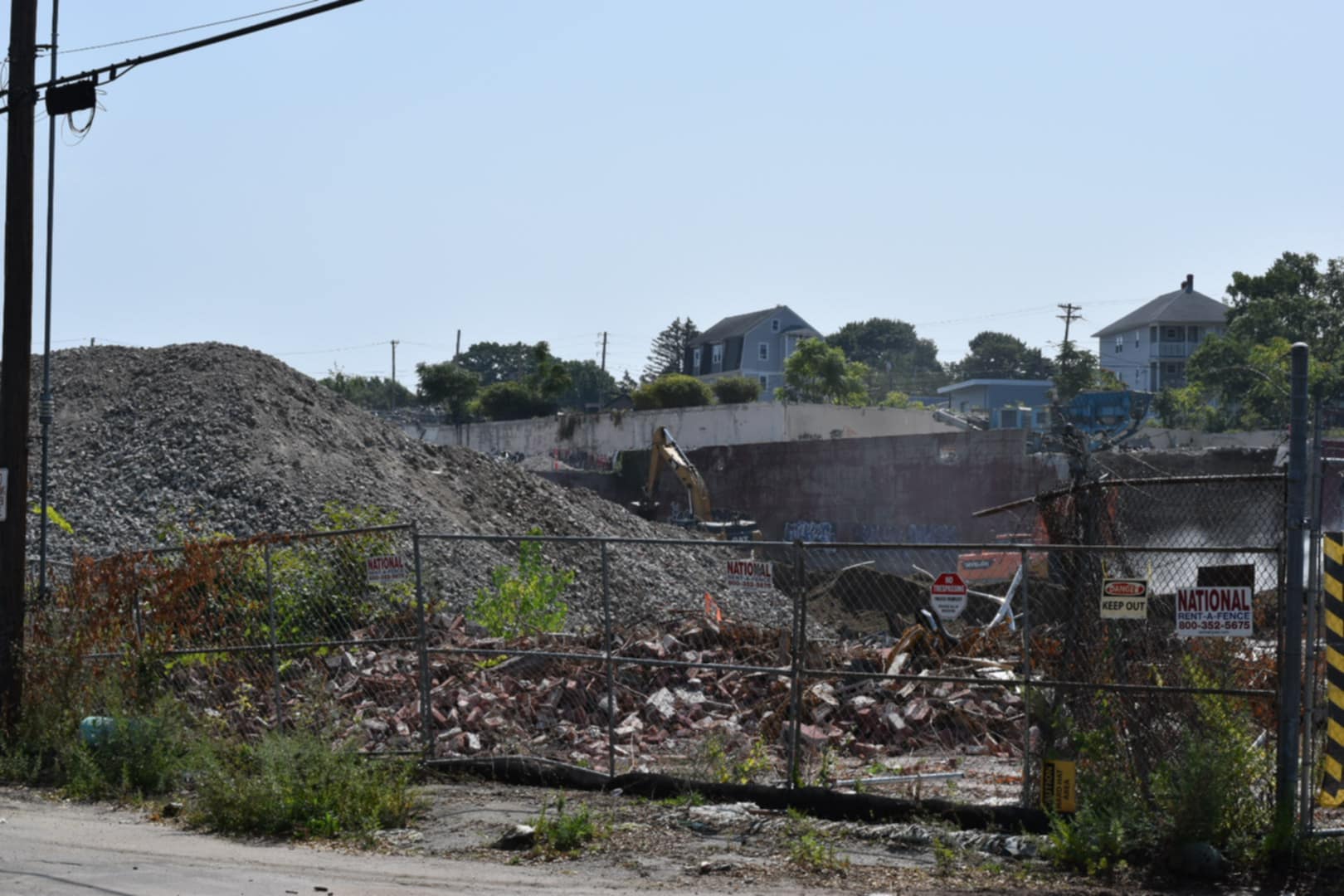
The city sought to convert three additional parks more recently, including Morley Field. DEM gave its ruling on them in June 2024. It did not recommend a conversion of Morley Field, declining to make a decision pending additional guidance from the National Park Service, and approved two other sites that had received LWCF funding.
First was McCoy Stadium, which had been closed since 2019 when the Pawtucket Red Sox finished their last season before moving to their new home in Worcester, Mass. The move left the city with an empty 10,000-person stadium and nothing to fill it. Demolition of the stadium began this year, with plans for a new high school to occupy the property.
But nearly 10 acres of the 23.4-acre stadium site received LWCF funding back in the 1970s, known as the McCoy Stadium annex. Prior to the stadium’s demolition, the protected parcel included a track, football field, baseball field, and an open field area which later became a second baseball field. Some of these recreational uses were lost when the city chose to expand parking capacity at McCoy Stadium in the 1990s.
“At the time, the City notes, they established replacement baseball fields for public use at other locations,” wrote Megan DiPrete, the state liaison officer for DEM, in a letter dated June 10, 2024. “This replacement, however, was not approved through the LWCF conversion process.”
The other LWCF approved for conversion last year is known locally as the Hank Soar Athletic Complex, a project that initially included developing 9 acres of recreational property. In 1980, the intention was to transfer 4.7 acres of the site from the city Redevelopment Agency to the city itself to develop into recreation space. That transfer never happened, and instead affordable housing units now occupy around 2.3 acres of LWCF-funded space.
“Notably, however, the recreation activity still thrives as originally intended,” DiPrete wrote. “The portion proposed for conversion does not impinge upon the active recreation of the site, which continues to include 3 baseball diamonds/fields.”
History
While it’s typically a tidbit only of interest to land use lawyers, Morley Field is actually composed of two different parcels under city records: Lot 309, which the city acquired via condemnation, and Lot 291, which was deeded to the city by the Narragansett Wire Company, with the specific purpose of becoming an athletic field. William H. Morley, for whom the field is named, was behind the parcel’s donation to the city.
“The council at the time when Morley Field was built justified it in terms of an extreme need for public recreation and athletics fields for kids that was already not present in Woodlawn,” Gregor said. “Nothing has changed since. If anything, there’s more kids around, [and] the need for a year-round park has not changed.”
In the 50 years since, the park has become a popular spot for youth sports, dog walkers, and anyone seeking relief from the built asphalt environment that characterizes much of the surrounding area in Woodlawn.
DEM is tasked with inspecting every LWCF site in its database once every five years to make sure they are adequately maintained up to federal standards.
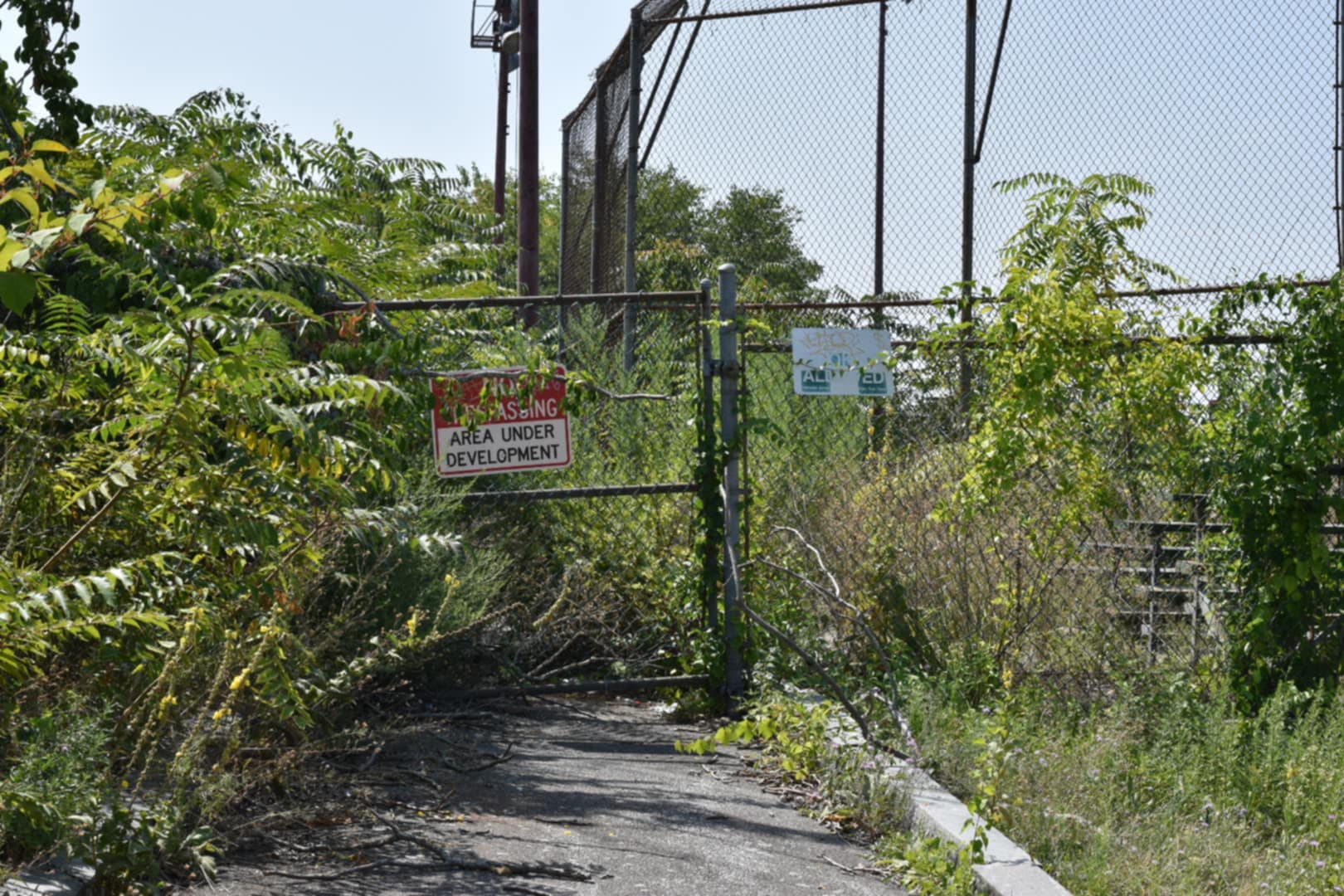
Department records show Morley Field was last inspected by DEM on Nov. 15, 2022. The report notes that the facilities on the field appear obsolete, and that the facility was not being used for the purposes originally intended. There was no LWCF signage or logo posted on the property, and the inspector noted it was not attractive or inviting to the public, or readily accessible during reasonable hours.
‘It doesn’t work’
A key plank in the Morley Field conversion application was the proposed construction of a new park on Pleasant Avenue near the Seekonk River.
The city has proposed building a new 9-acre park between Riverside Cemetery and Max Read Field, but it’s not clear if the parcel is adequate to build on. In DEM’s letter to the National Park Service on the conversions, DiPrete noted the city’s plans for the replacement park were “extremely preliminary,” consisting of two soccer fields and some riverside trails.
She also noted the proposed site had “serious grade issues,” meaning much of the property would have to be developed and flattened in order to build new recreation facilities on it.
The Morley Field saga was complicated in early August, when JK equities principal Jerry Karlik addressed the City Council during one of its regular meetings. Karlik told council members at the time the 159,652-square-foot distribution center he was building on a 10.4-acre site next door had “nothing to do with Morley Field.”
ecoRI News reached out to JK Equities asking for clarification of Karlik’s statements on Morley Field but did not receive a response.
Despite Karlik’s statement, Morley Field remains on the table as part of the preliminary plan extension awarded by the city. The Planning Commission’s September agenda specifically called out the one-year extension “as the applicant awaits city approval for the conversion of Morley Field that previously occupied the project site.”
Advocates hoping to gain clarification from either the developer or planning officials on the fate of Morley Field at that September meeting were disappointed when the matter was tabled, and the commission declined to hear their comments.
“This is why people don’t believe in government,” said Harrison Tuttle, president of Black Lives Matter PAC RI, at the meeting. “Because it doesn’t work for them.”
Its quite the twist – turning a beloved green space into parking because the applicant isnt even there to argue! Pawtuckets Planning Commission seems more intent on protecting developers than preserving the few remaining oases in neighborhoods like Woodlawn. Honestly, the idea of losing another park in Woodlawn feels like taking away the last piece of a puzzle nobody asked to be changed. While the city touts new parks elsewhere, like near the Seekonk River, it’s hard not to feel like Morley Field’s fate is being decided behind closed doors, much like the previous conversions where DEM seemed to wave a magic wand. Its a classic case of well make a new one, somewhere else – though maybe not the best replacement for the cozy vibe Morley Field offers. Seems like the real concern is about *perpetuity* ending before it even started properly again!
Pawtucket Mayor Donald Grebien takes campaign contributions from Mr Karlik. No wonder he refuses to even meet with the Save Morley Field Group or the City Councillor from Woodlawn. The city has demostrated its racism and criminality every day for the last 3 years. They have known that the sale of the land is illegal and just do not care at all.
Well, we do have a chance to vote Grebien out.