
Oasis of Green Recreational Space Grows from Industrial Mess
October 3, 2024
Share


PROVIDENCE — In the late 1800s or early 1900s, among the mills that thrived along the Woonasquatucket River was a shoe factory where buttons were used as fasteners. In the days before any environmental controls, refuse was discharged into nearby waterways. The Woonasquatucket River was no exception, and much of this legacy pollution remains, stored in sediment.
In the case of this factory, buttons were often part of the waste dumped into the urban river. Carried by the current, these buttons were swept down the river until they were snagged along the bank and accumulated in a swimming hole.
Local children, who often swam in the river, dubbed the place “Button Hole,” according to the legend recently told to this ecoRI News reporter by Ted Coogan, Button Hole’s director of development.
Yes, the 24-year-old nonprofit borrowed the legend’s name.
“We’ve been told they used to fish there and swim there, and when they were swimming there, they would be diving down to the bottom and maybe pulling up a handful of buttons,” Coogan said. “So they supposedly called this little swimming hole the Button Hole.”
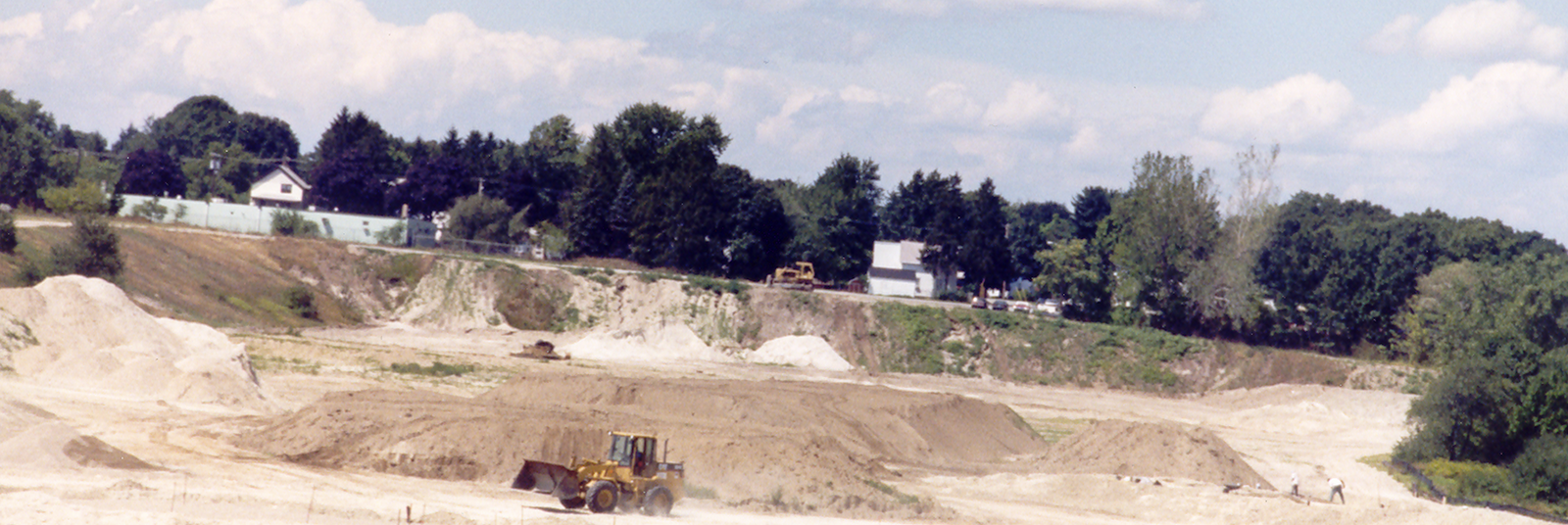
Long after the children had stopped swimming and fishing in the polluted river and before the scarred remains of a nearby vacant property were rescued by a top amateur golfer, the neighborhood’s abandoned gravel pit attracted prostitution and drug users and dealers. It also had become a graveyard for burnt-out cars. A site assessment in the late 1990s found high levels of lead, arsenic, and polycyclic aromatic hydrocarbons. And once construction began, buried toxic waste was unearthed.
Just months away from the project’s completion, tragedy struck. Five men carjacked two local college students, Amy Shute, 21, of Coventry, and Jason Burgeson, 20, of Lakevile, Mass., on Westminster Street in Providence.
They were brought to the construction site, robbed of $18, and murdered execution-style.
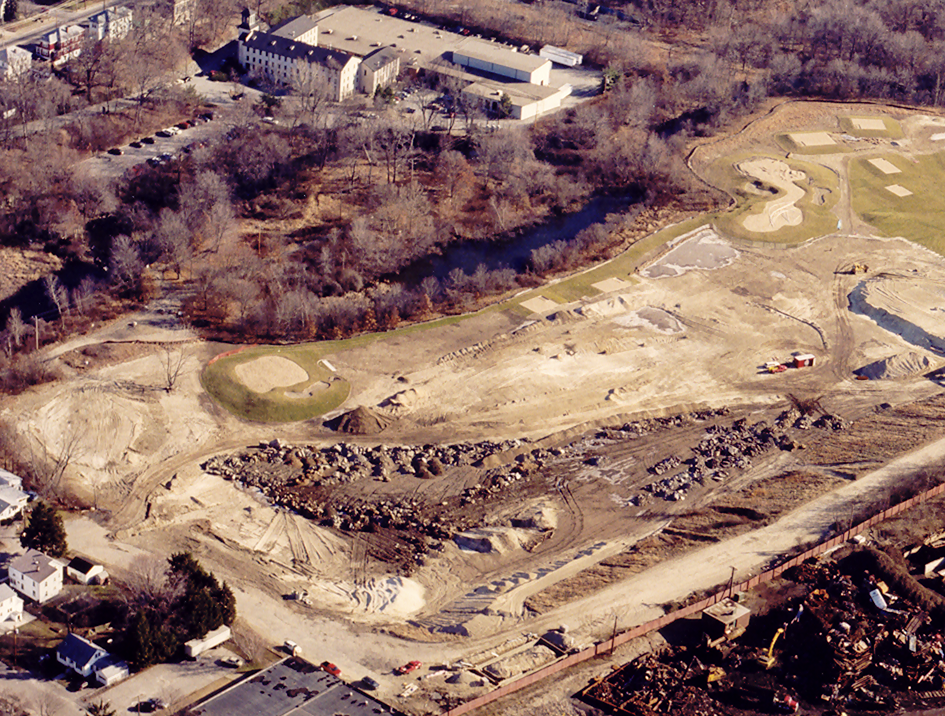
In the 1920s, Rhode Island proposed building a state park on the 26-acre site on the Providence-Johnston line not far from the Woonasquatucket River. The park idea never materialized, and in the 1960s sand and gravel were excavated from the property to build Route 6.
Upon completion of the four-lane highway, the state left the site largely derelict.
The filling in of this neighborhood cavity began on March 29, 1997, when Ed Mauro, now 93, was having dinner with David Fay. The executive director of the U.S. Golf Association (USGA) suggested to his Rhode Island buddy that he build a short course for kids.
Mauro, who, in 1965, won the Rhode Island Golf Association Amateur Championship and who would later serve as Rhode Island Golf Association president, made the friendly suggestion his mission. The avid golfer and successful businessman had connections on and off the fairway.
Four years later, on June 1, 2001, after signing a 99-year lease at a cost of a buck a year with the Rhode Island Department of Environmental Management, the nine-hole, par-3 Button Hole golf course and teaching center opened. Some 500 people attended, including Fay, the USGA president at the time, and local golf legends Billy Andrade and Brad Faxon.
Don Wright was hired as the organization’s first executive director. He returned to Button Hole a decade ago, in the same position he held in the organization’s infancy.
“It was a big mess,” Wright recently told ecoRI News. “Mr. Mauro looked a lot of different sites, but this was the one.”
Just before the grand opening, the executive director of the Olneyville Boys and Girls Club told Golf World: “It was the stupidest idea I’ve ever heard. A course in the middle of two housing projects? Tell me you’d bet on that!” But Kris Leveille continued, “You’ve got to understand, this is much more than golf. There is no grass in Olneyville. The kids couldn’t enjoy being outside in a safe and clean environment before [Button Hole]. This place has its own special brand of magic.”
To get there, the magic carpet ride was turbulent and expensive. It took thousands of volunteer hours, ample community support, and money and in-kind contributions totaling about $3.2 million. Initial funding came in a $5,000 grant from the Rhode Island Golf Association. The USGA provided $220,000.
Builder Jack Marshall personally financed the completion of the club house. Members of the Laborers’ International Union of North America laid out every square foot of sod for free.
“This is not a golf project. It is a social project,” Mauro was quoted in a February 2000 story. “The mission is to mentor the kids who come here, to play golf with a kid, to buy him a hot dog at the end of the round, to listen to him.”
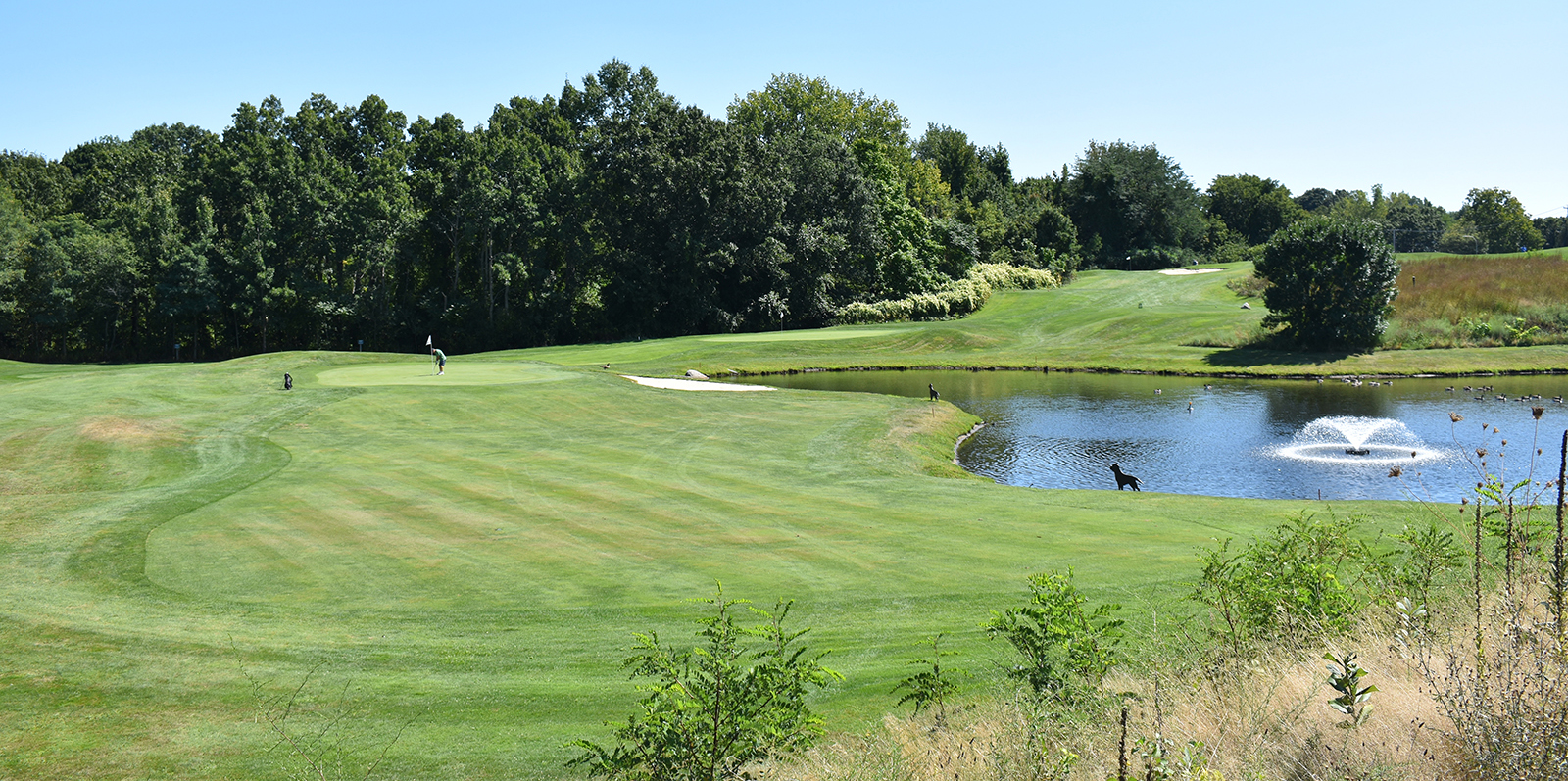
For the past 24 years, the 1 Button Hole Drive nonprofit has been working to make the game affordable and accessible to a diverse group of youth. Some 25,000 children, many from disadvantaged communities, live within 3 miles of the former gravel pit. Some 1,000 kids, ages 5-17, participate in the youth program annually. About half are from local neighborhoods, such as Hartford, Manton, and Olneyville, with the rest from Johnston, North Providence, Lincoln, Central Falls, Scituate, and other Rhode Island cities and towns.
Button Hole’s goal is simple: enrich the lives of young people by providing facilities and programs that develop strong character, teach life values, and champion success through the game of golf.
Youngsters who become “Button Hole Kids” use the facility for $1. Button Hole’s head golf professional, Tyler Piekarski, is a former Button Hole Kid.
The facility also caters to veterans, seniors, and people with mobility issues. A van provides transportation for local kids who need a ride. Any veteran can play for free Tuesdays between 1 and 3 p.m.
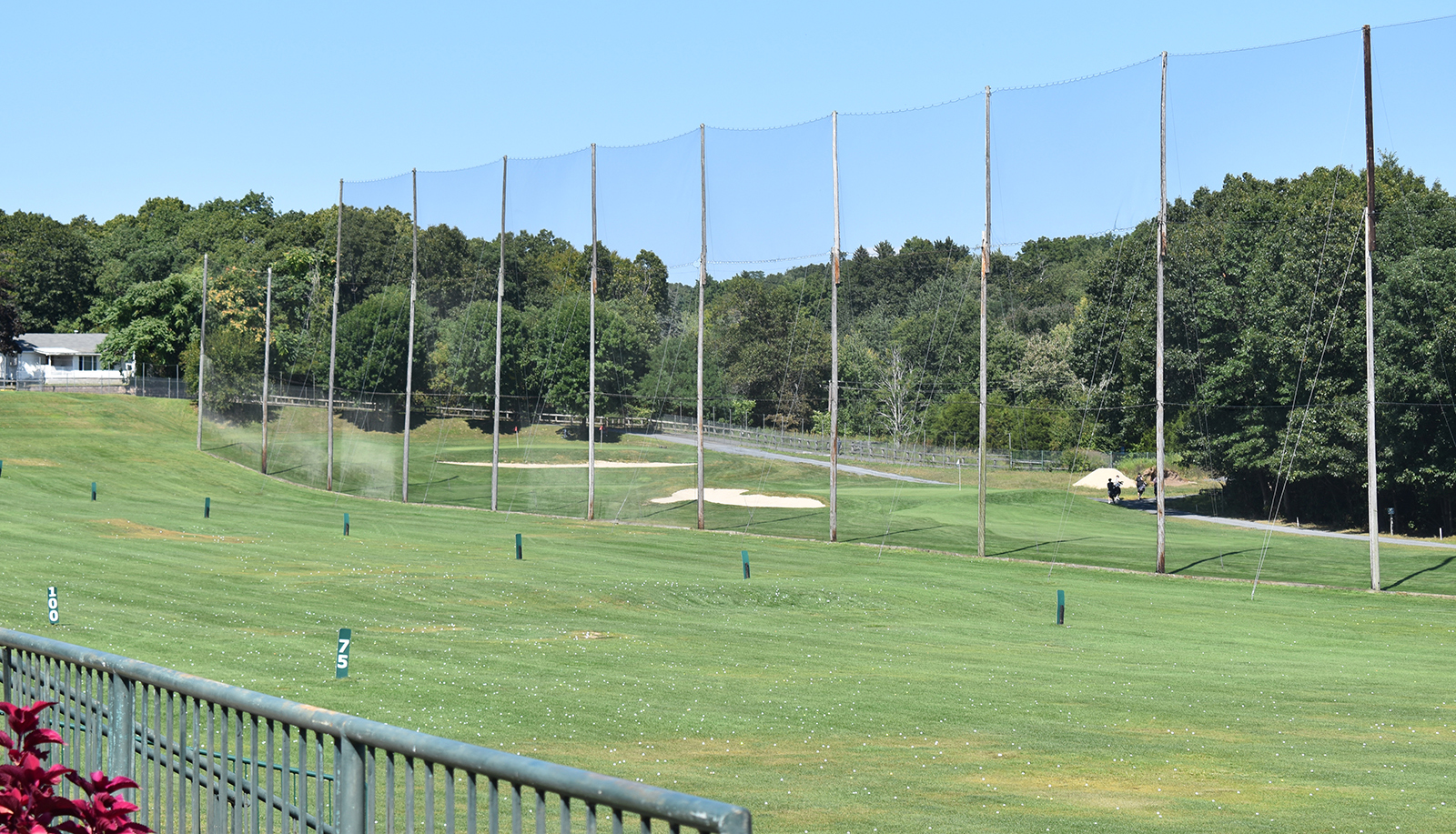
Besides its well-known short course, Button Hole, not far from the Woonasquatucket River Greenway, also has a driving range and golf simulators to help students learn the game. The range is also popular with golfers of all ages and skill levels. A women’s league plays here, a veterans’ clinic is held twice monthly, and on the early September weekday that ecoRI News visited, a group of Providence College students was about to tee off.
To others, this oasis of green space in a highly developed area serves as a park, for watching birds, bunnies, and people.
Two-plus decades after its opening, community support remains strong, as the nonprofit now features an annual budget of $1.5 million. Golf courses around the state donate used balls — “Our cost of our golf balls is zero,” Coogan said — and clubs.
“In the beginning, we used to cut the shafts and make them for the little kids,” said the 88-year-old Coogan, who began golfing when he was 8. “Now we go to a manufacturer that makes golf clubs for kids. So when we’re teaching our clinics where we have the kids, they have the right-sized equipment.”
Despite being long eligible for retirement, Coogan, who has three children and nine grandchildren, said he keeps at it because he respects the organization’s mission and believes in the work. Before being hired as the director of development, he served on the Button Hole board of directors for “a number of years,” including a two-year stint as board president.
“I would say that since we started in 2001 it’s not an exaggeration to say that we probably have taught over 20,000 kids the game of golf,” Coogan said with pride.

I was happy to read about this wonderful organization, which I was not aware of.
Button Hole is one of Providence’s greatest open space, urban recreation, and landscape revitalization achievements. It reflects that one person’s vision (Ed Mauro) can stimulate community effort to become a shared vision for community good. It brings opportunity to urban kids to play a sport that can be played for their entire lives.
I have been part of the San Miguel School community in Providence for over 30 years, and Button Hole has been a magical recreational experience for our middle school boys.
I hope this article stimulates support and donations for Button Hole.
Thank you for sharing this untold wonderful story – it proves what a visionary community can achieve. I hope we see more of this leadership and these values in RI.
thanks for this important, informative, inspirational story