
Metacomet Golf Club, Slated to Be Massive Mixed-Use Development, Is Important Native American Historic Site
May 13, 2026
Share


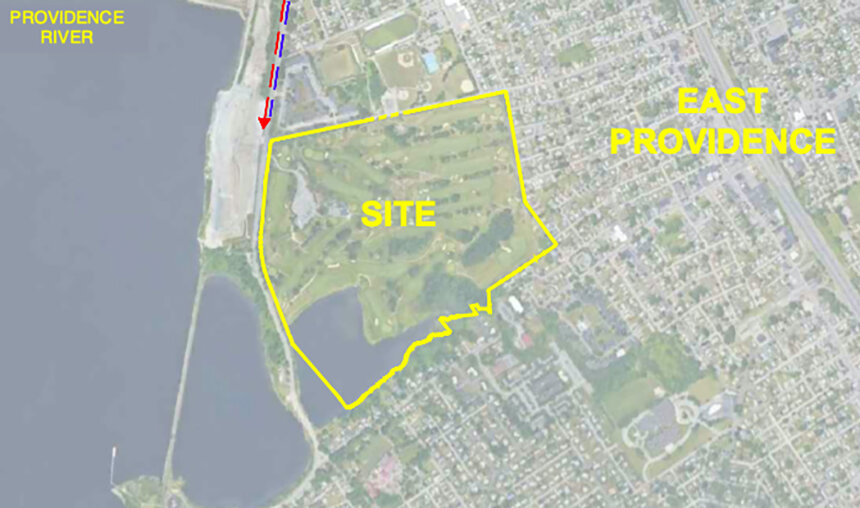
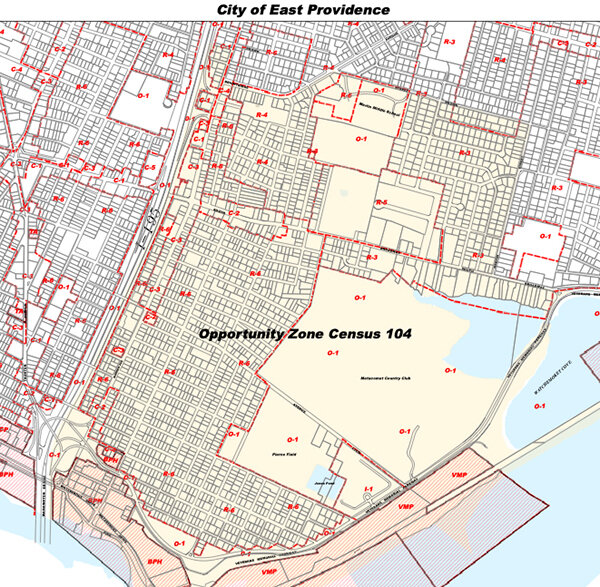
EAST PROVIDENCE, R.I. — Metacomet Golf Club, one of the last large open spaces on the coast of Rhode Island and likely an important Native American historical site, is poised to become the site of a massive mixed-use development.
The historic former golf course covers 138 acres along Veterans Memorial Parkway and is named after the Wampanoag sachem who was killed in 1676 in a war against encroaching English colonists.
There’s almost nowhere else on the coast where you could put a development of this size, according to state archaeologist Charlotte Taylor.
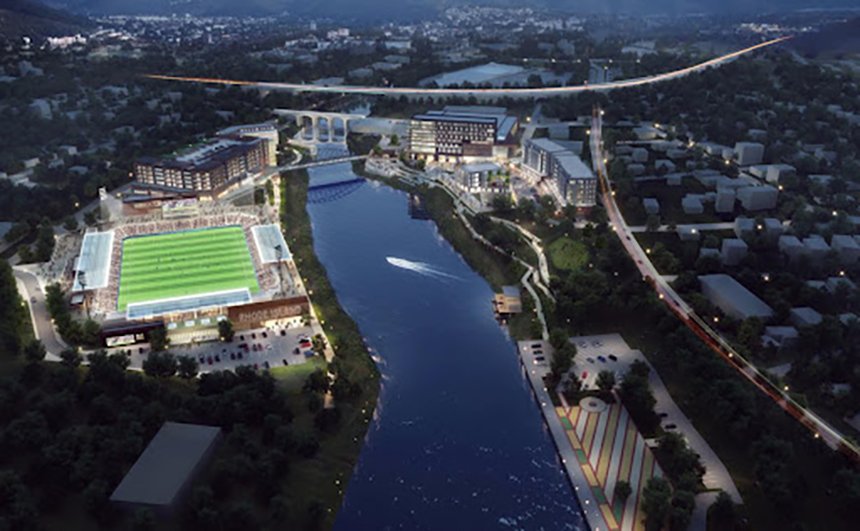
The multimillion-dollar development planned for the property will be developed by Pawtucket-based Marshall Properties Inc., Lianne Marshall, co-owner of Marshall Properties, said in an email. The project will include 845 residential units, with 10% of the homes designated as affordable, inclusionary housing.
The development will also include a “town center,” with retail space, recreational amenities, and pathways connecting the site to the East Bay Bike Path, according to Marshall. Marshall Properties is donating 9.6 acres of the property to the city as public open space.
There is no question Metacomet Green was an important Native American site, according to Taylor.
“That whole chunk of East Providence was a large settlement with both Narragansett and Wampanoag villages, not dense settlement, but concentrated settlement,” she said. “One of the things with settlements like these are very often there are burials where people were living, not in discrete cemeteries, but all over, so there are sites that might be burials that haven’t been investigated.”
Native American burials trigger further reviews when found, but don’t necessarily stop a development from happening, according to Taylor. During her 33 years of work as an archaeologist, she could only think of one project that was stopped by the discovery of burials. She declined to identify the site, wary of treasure hunters.
“[The project] was a large residential subdivision,” Taylor said. “Archaeologists went in and found another village site. This was not truncated by golf course activity. It was totally intact. All the features were still there and it included burials. It was not possible to find places without burials for the subdivision to go.”
In a brief telephone interview, Deborah Cox, president of The Public Archaeology Laboratory Inc. (PAL), the firm performing an archaeological survey for Marshall Properties, said her company’s investigation is ongoing, “but I can say we have found no evidence of burials.”
Jeffrey Emidy, executive director of the Rhode Island Historical Preservation and Heritage Commission — and Taylor’s boss — said it was his understanding that Marshall Properties got started on the archaeology of the Metacomet site very early in the process because they knew there were concerns about archaeological sites.
“There’s clearly a group of people in East Providence who care deeply about this piece of property and don’t want to see it developed,” Emidy said. “Then you have the tribe. The Narragansett are deeply concerned about it as well, for different reasons. I don’t want to put words in their mouth, but it’s clear they don’t want to see it developed.”
They don’t. Mark Andrews, deputy tribal historic preservation officer for the Narragansett Indian Tribe, said the site has all the components of the everyday life of a village.
“The piece de resistance was the post molds they discovered, indicative of a huge longhouse where families gathered in the winter,” he said. “It has to be 50 feet by 30 feet long.”
Taylor added that it’s possible the longhouse is “the very place Roger Williams negotiated with sachems for the colony of Providence.”
“The site is certainly very important,” she said. “It’s one of the last sites of its kind surviving in Rhode Island. If we could excavate the entire site we could learn a lot, but that’s not going to happen.”
Marshall Properties bought Metacomet Golf Club in 2020 from a group of investors that included Rhode Island golfing legend Brad Faxon. Faxon and his fellow investors bought the golf course in April 2019 for $750,000, assuming more than $2 million in debt. They sold the property to Marshall for $7.6 million more than a year later.
Local residents felt betrayed by Faxon and his investors, who had promised to preserve the open space and restore the golf course to its former glory. The course was designed by renowned golf course architect Donald Ross in 1926. In July 2020, ecoRI News reported that neighbors of the golf course weren’t pleased with the likelihood of increased traffic development would bring, as well as “losing a quiet nature refuge that is home to coyotes, deer, and foxes.”
“We’re all extremely frustrated,” local resident Roselette DeWitt said then. “We’re going to try to stop it.”
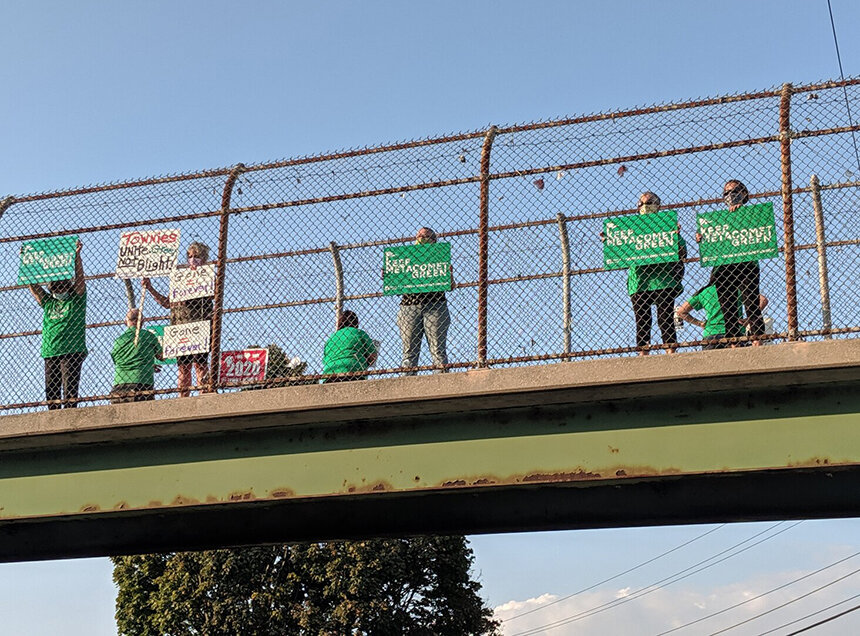
Six years later, the Facebook group Keep Metacomet Green!, with 3,100 members, continues to oppose development at the site.
“Keep Metacomet Green! started in 2020 to stop the Metacomet Country Club from being sold to begin with, but that didn’t work out,” said Heather Andrade, one of three directors for the organization.
PAL discovered arsenic in the soil on the site, left over from decades of herbicides and pesticides used for the golf course, according to Taylor. She noted PAL investigators working on the site have to wear hazmat suits because of the discovery of arsenic.
“My boss does not want me to go there,” she said.
“The project went through a years-long review and approval process at the city level,” Marshall wrote in her email to ecoRI News. “The project is expected to create 3,640 jobs during construction and approximately 630 permanent jobs, generating over $5 million in annual tax revenue for the City of East Providence.”
Marshall said that while PAL archaeologists are wearing protective suits to avoid direct skin contact with the soil before remediation has taken place, there is no hazard to the public. The remediation plan contemplates blending the soil in specific areas on the site with clean fill, according to Marshall. That plan is currently out for public comment.
PAL resumed the final phase of the archaeological study in the field in April, according to Marshall. The study is expected to be completed sometime in June.
The items located by the archaeologists include shells, fragments and animal bones. To date, there has been no confirmation of human remains on the site. Any messages or comments suggesting otherwise are inaccurate.”
— Lianne Marshall, co-owner of Marshall Properties
If human remains are found, Marshall said there is a “statutory protocol that governs the process by which these findings are to be noticed and subsequently administered. Marshall [Properties] must adhere to those requirements if and when required.”
Andrews noted the Metacomet site is adjacent to another site with known Native American burials, and that “contextually,” it makes sense that there are burials on the Metacomet Golf Club site as well.
“This has the potential to explode,” Andrews said. “That’s the last thing proponents of the project want. They cringe every time a new discovery is found. This site is one of the most significant cultural sites found in New England.”
Emidy said his organization typically gets involved in a development if there is permitting required. In the case of Metacomet Golf Club, the Coastal Resources Management Council, whose purview is to protect the coastal resources of Rhode Island, determined the project lay within its jurisdiction.
“We ultimately have to provide our comments to CRMC, and they will decide whether they want to issue a permit,” Emidy said.
Once the archaeological study is completed, Marshall said her company intends to go before CRMC to provide a comprehensive update on the project.
The same disregard done at archaeological sites in Barrington. Development even after various cooking sites of indigenous peoples were found, leveled for multimillion dollar homes. No further recognition of these sites, probably not even known by the new home owners. The same thing will probably occur at the monastery site in Barrington on Watson Avenue that was recently leveled for new home development. All along the east Bay indigenous sites that have been ignored, piled upon with no acknowledgment of the past.
The last three paragraphs tell me how this will go. With CRMC involvement the approvals are probably already signed, if not delivered.
The CRMC works for its masters, the Governor and legislators who will be salivating over housing and tax revenue and will not be happy with delay. I’m sure the developers will make a very convincing presentation that 845 housing units will not increase traffic, will only add 16 kids to the school system, will require zero police and fire responses and will provide millions in tax revenue.
Hi, Dan — Thank you for this very informative and well-searched article. If I may, I have a few comments on Ms. Marshall’s remarks.
— The development plan for Metacomet presented to the Waterfront Commission in December 2023 calls for 890 residential units, not 840.
— The submitted plan included Marshall’s Market Study & Impact Analysis, which projected new annual tax revenues to the City upon “stabilized occupancy” of $5.3 million. The net impact, considering the cost of projected municipal service costs, reduces that figure to $4.9 million, exclusive of associated public school service costs. These figures were reflected in a technical memorandum peer review by RKG Associates submitted to the the Planning Department in April 2024. However, RKG suggested that, by adding in projected school costs, the net fiscal benefit to the City would be along the lines of $2.32 million. Then, in a memorandum to the Waterfront Commission in November 2024, Fire Chief Michael Carey projected that increased demand for his department’s services due to the development would be $2.73 million. Rather than a fiscal benefit, these figures add up to a projected deficit of $400,000+. Keep in mind that in 2020 Marshall had projected $8-10 million in fiscal benefits to the City.
– As to the presence or nonpresence of human remains on the site, the case is still open. “Animal” bones have been unearthed. It is our understanding that the State Department of Health will conduct an examination to determine whether they are human or not. Note that Marshall began soil manipulation to reconfigure the lower nine holes of the golf course in Summer 2022 without applying for a permit from the CRMC, and most of the work was completed before a permit was granted in the Fall of that year. Would human remains have been unearthed nearer to the water? We’ll never know.
Thank you,
Candy Seel
co-Director, KMG
Once the green space is gone, it’s gone! This is so upsetting on many different levels. I am so happy that Eco RI has brought this to our attention. History, quality of life for animals and people will all be harmed because some people want to get rich. How about a media blitz from historians and Native Americans that could go nation wide. Is there any posibility of the Native Americans reclaiming their property? Can the partners who sold the property be sued or the development company for not complying with the property use?
Clearly this development will NOT be the “cash-cow” initially presented as (& let’s be honest we ALL Knew this would end up COSTING us EP residents $$$ 🤬) but of course they don’t care.
This whole development should be scrapped! At the VERY LEAST it should be scaled WAY DOWN to only SOME residential (none preferably) & skip the commercial & retail part of it! NONE of it is necessary whatsoever! Nothing in EP is more than 3-5 miles away!
This entire development is unnecessary & unwarranted. It is a quiet, peaceful area in that neighborhood close to Pierce Field where kids play sports. Adding this massive development is/would be a traffic & safety hazard with over 11,000 cars every day in/out of this development will cause a massive increase in traffic!
The city of EP has already MET/EXCEEDED the minimum housing requirement % !! Another 890 units is absurd!!
At every one of the meetings I/we attended, EVERY SINGLE one they mentioned that this development would NOT create any problems or in any way negatively affect city services, the school system & infrastructure! BOLD FACED LIES every single time! KMG members knew it but the “powers that be” aka: the current administration & appointed committees/commissions (all but a few with common sense) all fell for their BS or had something to gain with seeing this development approved. It’s a travesty.
Also, the developer plans to add a rotary at the intersection of Lyons & VMP!! That should NOT be approved for this development (they don’t OWN the public roadways – especially Vets Memorial Pkwy) and should NOT be able to alter it in any way!
All developments along VMP are to be designed only with the current traffic capacity AS IT IS. No development should alter the VMP to accommodate more traffic. This is explicitly stated in the city’s charter/comprehensive plan (not made up!).
They bought the land knowing FULL WELL what the regulations & local laws were…. They should have to develop the land as appropriate to accommodate the current traffic capacity of the VMP. PERIOD! No alterations, no changes, no “improvements” to the VMP should be allowed!
They don’t like it? They can take their plans elsewhere. We don’t need them!
They’re arrogant and used to getting what they want by any/all means… I’m sure they weren’t expecting ANY of the pushback/opposition when they proposed this plan and just expected everyone to just roll over & take it like good little lemmings/sheeple the residents of EP were expected to be.
The RIHS&PC archeological dig if not brought to their attention (& the public’s) would’ve easily been ignored & already excavated expeditiously.
Oddly enough NONE of this archeological evidence has ever been mentioned by the City/Mayor/Indigenous Commitee whatsoever! 🤔. Oddly & suspiciously silent on this issue from the beginning. Funny because the city/the administration holds public events & promulgates murals of some of EP indigenous people like the Watchemoket,… but has had ZERO to say regarding possible evidence of an ancient Indian lands/burial site on the Metacomet land???
KMG – keep fighting the good fight for the community, environment & residents of EP. 💚🙏🏻🙌🏻
I used to drive the parkway everyday to work , I walked the bike path everyday . When I had to move out of EP I was very sad because I thought it was one of the best run towns in the state . Not anymore
This is a desecration , as was the Club imho. Paving paradise to put up a parking lot has proved to be bad . Btw the” affordable units” well they tend not to be and the owners are just happy “ to pay the fine” it’s not a good deal for moral , ecological , historical , quality of life reasons but fabulous deal for profit makers .