
Latest Addition to Woonasquatucket Greenway Adds Pocket Parks, Kayak Launches in Providence
June 16, 2026
Share


PROVIDENCE — The Woonasquatucket River Greenway continues to evolve with the addition of a new section of the multiuse path.
The newest stretch of the greenery-laden path — which includes a mile of bike trail, pocket parks at Eagle Street, Hemlock Street, and Bath Street, and two kayak launches — is part of the 33-year development plan to revitalize the Woonasquatucket River, which begins in North Smithfield and joins the Moshassuck River to form the Providence River.
Organized by the Woonasquatucket River Watershed Council, the Greenway started as a restoration effort to remove years of industrial waste and garbage from the river. Between removing the oil drums and shopping carts, it took the WRWC and many hands to restore the health of the river, and it took many more hands to organize the Greenway project.
“We have this resource of a river streaming through our neighborhood, and it was neglected, and when you cut the knotweed back you see this amazing resource. If you stop for a moment, you will see a red-tailed hawk, a herring or a painted turtle, it’s right there,” said Lisa Aurecchia, program director at WRWC who was described as the visionary behind the additions to the Greenway that were officially opened Monday at a ceremony outside Farm Fresh Rhode Island.
The overarching goal of establishing the Greenway was to create an urban bike path linking parks and green spaces along the river. Touted as “one big, green linear park,” the Greenway features 7 miles of paved multiuse path linking Providence, Johnson, and North Smithfield, and features 52 acres of restored land.
The Greenway isn’t just about the health of the river or the path, but also the communities that it connects. WRWC and state officials said they hope the addition of the latest stretch will encourage economic development, provide green infrastructure and climate resilience, and encourage recreation. The multifaceted approach is echoed in the variety of partners and organizations involved in the Providence section of the Greenway. Featuring a combined effort from community, city, state, and federal organizations and representatives, the final project was only able to cross the finish line due to their efforts.
“[We’re] dealing with a very built environment that has an industrial history,” said civil engineer Mark Pereira, who worked on the Greenway’s newest addition. “So [the challenge] was really transforming the space into something that is now going to be pedestrian and cyclist friendly. It’s really taking what was here and making it better.”
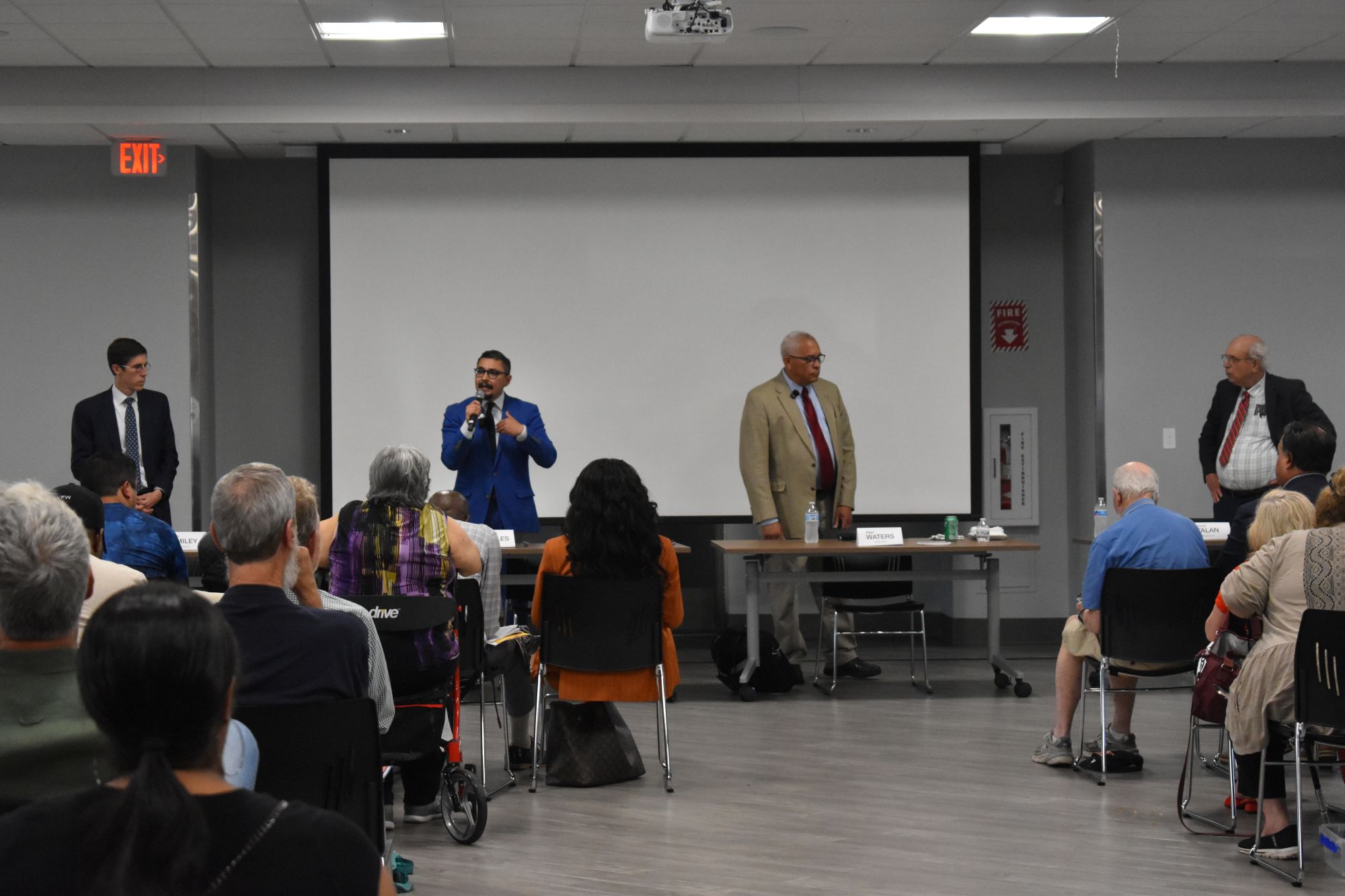
The ribbon-cutting included speakers such as Mayor Brett Smiley and U.S. Sens. Jack Reed and Sheldon Whitehouse. Each speaker described their individual histories with the Greenway, stretching all the way from the river-cleanup phase to Monday’s event.
“None of us could have done this on our own. This was a lot of hands that made this happen, and it’s the result of years of planning and collaboration,” Smiley said. “[This project] is also a transformation for the city that we want to see in other places throughout our city, which is where, when we prioritize our neighbors in public spaces, quality of life improves.”
According to Smiley, the Greenway is a key to economic growth in the area; multiple speakers said with the added connective tissue of the path, they hope more businesses will choose to situate themselves along the river. Like the host location, Farm Fresh Rhode Island, Smiley said he hopes that other businesses will take the opportunity that the Greenway provides to further strengthen the communities it serves.
“[It’s] such a thrill to get a chance to do the groundbreaking and the ribbon-cutting because we know that these projects take time, but to now start to see all of the groundwork that’s been laid out really come together is so exciting,” Smiley said.
The speakers also referenced the project’s unique funding stream. From coastal resilience funds to community development funds, the project is a patchwork of many different groups and funding streams coming together.
According to Terry Gray, director of the Department of Environmental Management, the project is also imperative to the climate resilience of the city.
“We all know that climate change is real, and we all know that as the Ocean State we’re on the front lines of climate change, and we need to be resilient for the impacts that we’re going to see in the future,” Gray said.
With some of the impacts of climate change being increased rainfall and flooding, green infrastructure like the Greenway allows excess water to seep into the ground instead of running off concrete or asphalt and creating floods or stormwater buildup.
“My mom and grandmother survived the holocaust and came to Olneyville,” said Aurecchai, who sees the project as a sign that local change can happen. “Acting locally feels good, and in the neighborhood that gave my family a chance to succeed, that also feels good. This is where my grandmother and my grandfather, my mom and aunt, this is where they grew up and survived. [It feels good] to make positive change and [realize] if you’re an immigrant coming here you don’t have to live in squalor, you can create beautiful places.”

Thanks so much for the great coverage. Awesome story!