
Fluttering Away: Habitat Loss Has Butterflies and Moths On the Move
March 17, 2025
Share


Series note: The region’s collection of native species is under threat on several fronts, most notably from humanity’s shortsightedness. Humans aren’t giving the natural world the space it needs and deserves. We’re crowding out nonhuman life, which, in turn, makes nature less productive and us less healthy. Wild New England examines the animals and insects most at risk.
Butterflies and moths share the same basic biology and have far more similarities than differences. In fact, both belong to an order of insects called Lepidoptera.
“It’s just a quirk of English that we separate butterflies from moths,” said Mike Nelson, of the Massachusetts Division of Fisheries & Wildlife’s Natural Heritage & Endangered Species Program. “They’re not biologically that different. But there are a few things you can use to tell them apart.”
The 25-year invertebrate zoologist who specializes in butterflies and moths noted the best way to tell them apart is by their antennae. Butterflies are either clubbed or sort of shaped like a pinhead. Moths are either feathery or just straight.
“All the other things in their physical appearance are generalizations,” Nelson said. “I think most people realize that most butterflies have great colors, but some don’t. There are lots of sort of brown, drab skipper butterflies that a lot of people might look at and say, ‘Oh, it’s a moth,’ but no, actually, it’s a butterfly.”
Butterflies, on average, are more colorful and fly around during the day. Moths are typically duller in color and more active at night. But, as Nelson noted, there are exceptions.
Butterflies also tend to fold their wings vertically over their backs when they’re resting. Moths tend to fold them horizontally, but again, there are exceptions to this rule.
There are about 300,000 species of lepidopterans worldwide, and North America is home to some 800 species of butterfly, including 650 butterfly species in the United States. Unfortunately, five butterfly species have gone extinct in the United States since 1950. Another 29 are considered endangered, and many others, including species that are native to southern New England, are at risk.
The nation’s butterflies are disappearing because of insecticides, climate change, and habitat loss, with their numbers down 22% since 2000, according to a study published this month.
Butterflies and moths are also threatened by agricultural intensification, hydrologic alterations that disrupt natural seasonal flooding, invasion by nonnative plants, water pollution, clear-cutting of woodlands, peat extraction for the horticultural trade, off-road vehicles, excessive deer browsing, light pollution, and parasitoids, such as Compsilura concinnata.
The tachinid fly is a parasitoid native to Europe that was introduced to North America in 1906 to control invasive populations of the spongy (gypsy) moths. The consequences continue to be felt.
“Compsilura concinnata is very indiscriminate. It’s a generalist,” Nelson said. “It does help to control gypsy moths, but it only helps a little because it’s such a generalist. Ever since its successful introduction, Compsilura has been flying around and taking a decent toll … last I heard, it had been documented attacking over 200 species of native moths and butterflies.
“Some lay their eggs mid-summer and have caterpillars in the late summer and in the fall. Those are the species that tend to be most heavily impacted by Compsilura, and the reason for that is Compsilura numbers are knocked down every winter. So in the spring, they’re relatively low in numbers, but they have several generations throughout the growing season, building up their numbers.”
By late summer and early fall, their increased numbers are on the hunt for caterpillar calories.
The continued loss of butterflies and moths could have a substantial impact on ecosystem health that goes well beyond their pollination assistance. Fifty-two butterfly species in New England are in decline, according to Robert Gegear, an associate professor of biology at the University of Massachusetts Dartmouth.
“A really important thing that’s at the top of the list of ecosystem function from butterflies and moths is their larval stage,” Nelson said. “Different species have different life cycles, where some have caterpillars in the spring, some in the summer, some in the fall. That diversity of caterpillars is especially important for nesting birds. It’s one of the primary and for some species the only food source during spring nesting season of songbirds.
“If butterfly and moth caterpillars were to disappear, many songbirds, most songbirds, I would even say, would either plummet drastically in numbers, or some would probably become extinct. If there was a spring with no moth and butterfly caterpillars, it would be an ecological disaster.”
He also noted bats feed either primarily and some entirely on nocturnal insects. Moths, he said, being so diverse and so abundant, make up a large fraction of the diet of the region’s insect-eating bats. If that food supply were to disappear or be drastically reduced, “many bats, not just the rare and endangered ones, would be really up a creek,” Nelson said.
Biodiversity of butterflies and moths is contingent upon biodiversity of native flora.
“There are moths that specialize on feeding on oaks, so oaks are enormously important in that food web,” Nelson said, “from lots of moths flying around oak trees at night for bats to eat and lots of caterpillars on oak trees for birds to eat.”
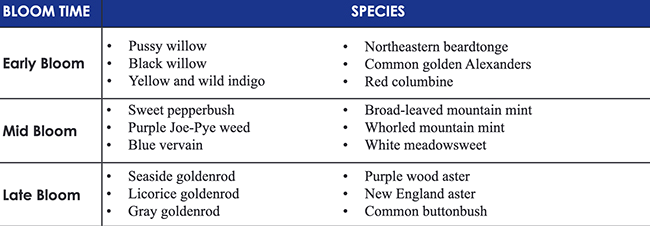
To help butterflies and moths survive in a world with humongous human footprints, Nelson recommended adding native wildflower gardens and meadows to your property.
“One wildflower garden in the neighborhood is better than none, and when it becomes more popular — it already is in some areas — you know, every little bit adds up to a lot,” he said.
Butterflies, and moths, have four life stages: egg; larva (caterpillar); pupa (chrysalis or cocoon); and adult. The length of a butterfly’s life cycle varies depending on the species, but typically 30-200 days.
Eggs: Tend to be small and inconspicuous. Adult females lay eggs on their species-specific host plant, usually on the underside of leaves. The timing of egg-laying varies between species.
Caterpillar: In this stage, the insect eats as much as possible so they will have substantial fat stores as adults. As the caterpillar eats, it can grow up to 100 times its size in a matter of days. As it grows, it splits its skin and sheds four or five times. Most butterflies spend most of their life as a caterpillar and many butterflies overwinter in this larval stage, buried in leaf litter or in shallow soils.
Chrysalis: Once a caterpillar is fully grown, it will find a sheltered spot and molt its skin one more time. Once molted, their outer skin will harden to form a protective shell. Inside this chrysalis, most of the caterpillar will be digested by enzymes except for a few important groups of cells called imaginal discs. These small autonomous cellular islets will eventually grow into all of the parts needed to form an adult butterfly. During this transitional process, it’s important not to disturb the chrysalis as this may interfere with the transformation.
Butterfly: Once the metamorphosis is complete, an adult will emerge from its chrysalis in a process called eclosion. When butterflies emerge, they have shrunken wings and swollen abdomens. They hang upside down for up to 2 hours as fluid (meconium) is pumped into their wings. They are delicate and can’t fly during this stage, so it’s important not to touch or otherwise disturb them. Once the fluid has filled the wings and hardened in the wing veins, the butterfly is able to fly.
Butterflies feed on the nectar of flowers and prefer blossoms that are red, yellow, orange, pink, or purple. They also like to visit flowers that are easy to land on, such as those that are clustered. When they visit these flowers, they get pollen stuck to their bodies, which allows them to transport it to other flowers and assist in pollination.
Moths tend to feed on nectar from flowers, fruit, or sap. Some moths, however, don’t feed at all and don’t even have mouthparts. These species tend to survive for only a short number of days, choosing to use their time to mate and lay eggs.
In Massachusetts, there are early 3,000 species of moths, compared to about 100 species of butterflies, according to Nelson.
The following is a look at the butterflies and moths in southern New England listed as a species of concern, threatened or endangered:
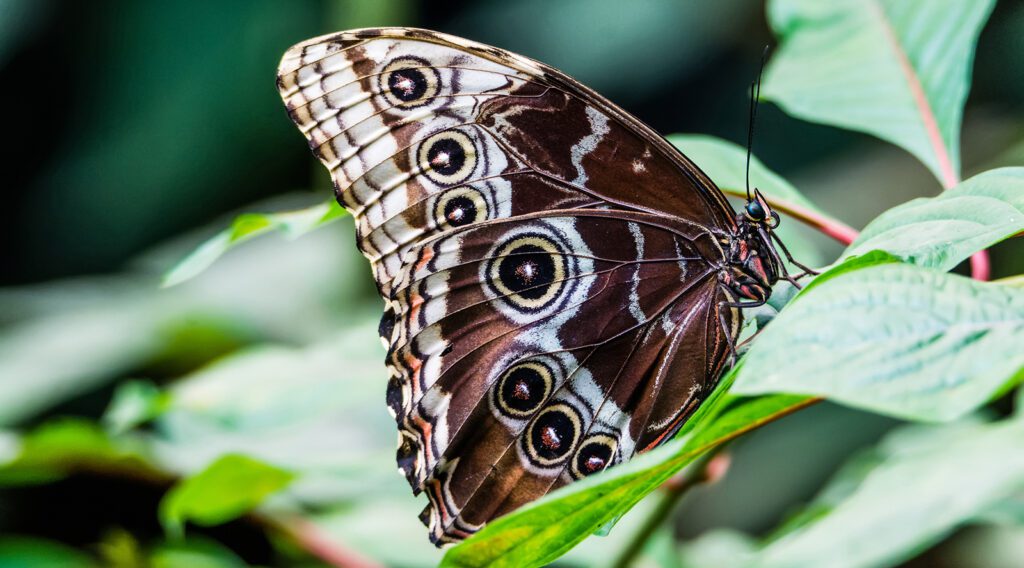
Butterflies
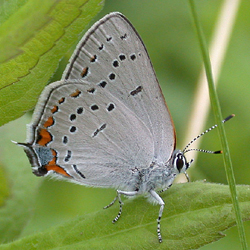
Acadian hairstreak: Listed as species of concern in Rhode Island and threatened in Massachusetts. This species can be found throughout New England except in northern Maine. In the Bay State, it’s uncommon and notably local. Most sightings occur in eastern Massachusetts, with a scattering of records from the western part of the state.
Larval food plants include black willow and pussy willow. In early July adults emerge from the pupal state and are found along wetland edges with associated willows and in nearby meadows nectaring on a variety of blossoms.
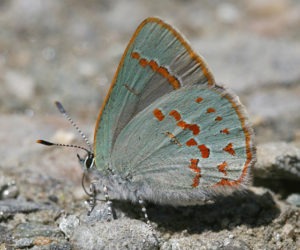
Early hairstreak: Listed as threatened in Massachusetts. This species flies from mid-May to mid-June, occasionally into late June. Massachusetts records in July and early August may represent a partial second brood, but these records are few in number. Adults are most readily observed while “puddling” on bare ground along dirt roads, paths, and ridge tops.
This species inhabits mature northern hardwood forest with beech trees, and associated openings such as roadsides and field margins.
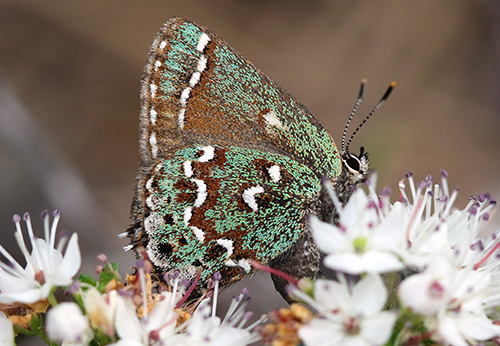
Hessel’s hairstreak: Listed as species of concern in both Rhode Island and Massachusetts and endangered in Connecticut. Adults fly from early May through early June. Eggs are laid on branch tips of Atlantic white cedar. Larvae feed on new growth of the host plant, pupating by July; pupae overwinter.
This species is often observed while nectaring. Though these butterflies typically remain in the cedar swamp and nectar at flowers of highbush blueberry or chokeberries, they may be seen near the swamp in nearby fields, yards, and roadsides, nectaring at other flowers.
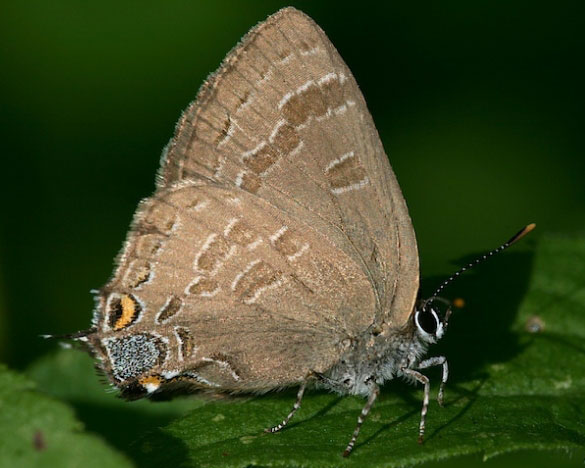
Hickory hairstreak: Listed as species of concern in Rhode Island. A famously erratic species, being locally abundant in some years and apparently absent altogether in others. In Massachusetts, “outbreaks” of the species have been recorded only in the southeast part of the state, where hickories are the dominant forest trees. The species becomes less common northward as its preferred food plant (hickory) becomes scarcer.
In New England the species ranges only as far north as southernmost Vermont and New Hampshire.
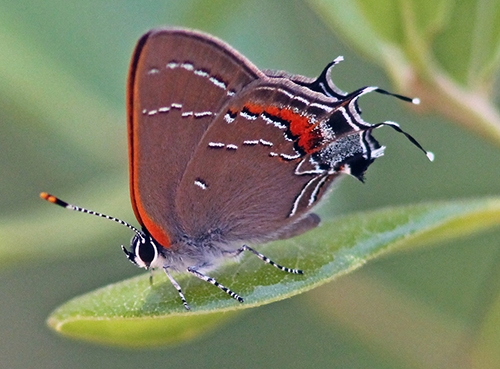
Northern hairstreak (also known as the oak hairstreak): Listed as species of concern in Rhode Island. Adults nectar in weedy or scrub areas within or near such habitat, including fields, clearings, utility line rights of way, and abandoned gravel pits. Yarrow, dogbanes, milkweeds, and thistles are favored nectar sources. The canopy-dwelling habits of this butterfly make it difficult to observe. Eggs are laid on white oak.
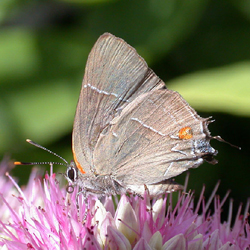
White M hairstreak: Listed as species of concern in Rhode Island. Its range is from eastern Kansas east to southern New England; south to central and eastern Texas and east though Florida and the Mid‑Atlantic. Historic records give no mention of this species in New England. In the past two decades, however, records from Connecticut and Massachusetts suggest that this species is slowly extending its range northward.
An edge species generally associated with shrubby habitats near hardwood and wetland forests. Most Massachusetts records are from areas in or adjacent to red maple and or Atlantic white cedar swamps. In Connecticut, the species favors trap rock ridges and is also common along the shore.
Adult food sources include sweet pepperbush, meadowsweet, narrow‑leaved mountain mint, milkweed, viburnum, goldenrod, and wild plum.
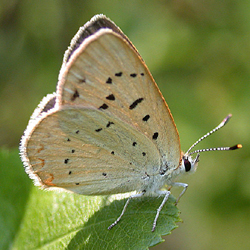
Bog copper: Listed as species of concern in both Rhode Island and Connecticut. It can be found throughout New England, except northern most New Hampshire and central and northern Maine.
The traditional association of bog copper, frequently quoted in literature and partially indicated by its common name, is bogs containing cranberries. While cranberry is critical, this butterfly can also be in other types of acidic wetlands.

Bog elfin: Listed as threatened in Massachusetts. This species has one of the most restricted ranges of any butterfly in eastern North America. Since many of its acid spruce tamarack bog habitats are inaccessible, this butterfly is facing less threat from habitat loss due to development and agriculture. However, spraying for spruce budworm, black fly, and mosquitoes has almost certainly impacted populations.
In Massachusetts, which is at the southern edge of the species’ range, adults fly in May and early June. Eggs hatch soon after they are laid, and the larvae feed on new growth of black spruce, pupating by late June or early July.
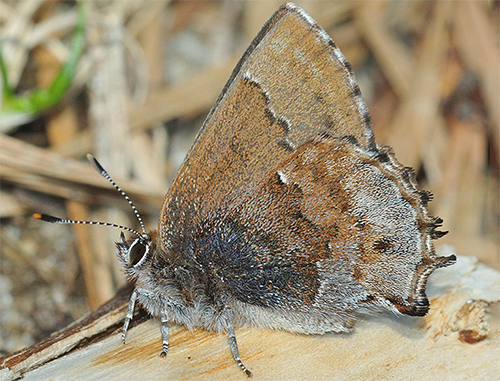
Frosted elfin: Listed as threatened in both Rhode Island and Connecticut and as a species of concern in Massachusetts. This species inhabits xeric and open disturbance-dependent habitats on sandy, and occasionally rocky, soil, especially grassy openings in pitch pine-scrub oak barrens.
This butterfly occurs from southern New Hampshire south to northern Florida and west to Wisconsin and eastern Texas, but colonies are rare and localized.
In Massachusetts, this species is found in sandplains in the Connecticut River Valley and the eastern part of the state. Adults fly from mid-April through mid-June. Larvae feed on either wild indigo or lupine in May and June.
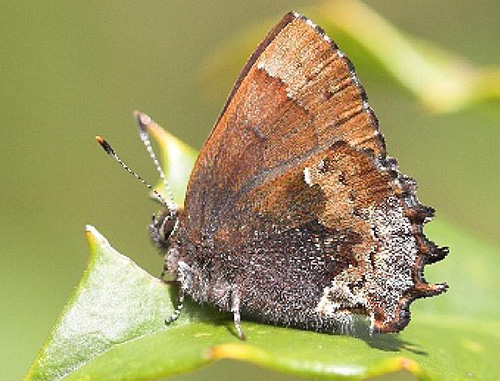
Henry’s elfin: Listed as species of concern in both Rhode Island and Connecticut. It can be found in southern New England north to southern Vermont and New Hampshire and into eastern Maine. The species inhabits edges of wooded swamps and upland heaths, sandplains, and open pine oak woodlands.
Larval food plants include members of the pea, rose and heath families, especially blueberries and huckleberries. It’s ability to eat species of buckthorn — aggressive invasives throughout the region — may allow this elfin to become more numerous and widespread.
Adult food sources include low and highbush blueberries and oak buds.
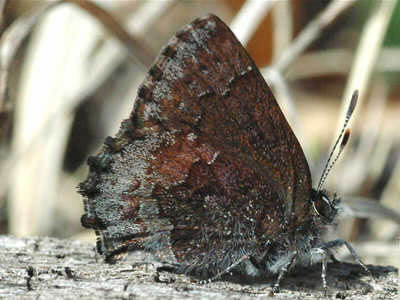
Hoary elfin: Listed as species of concern in both Rhode Island and Connecticut. In New England, this species occurs largely north to central Vermont, northern New Hampshire, and central Maine.
In Massachusetts, it occurs with some frequency in Barnstable and Plymouth counties. This species is limited to dry sandy or rocky regions in which the food plant bearberry grows.
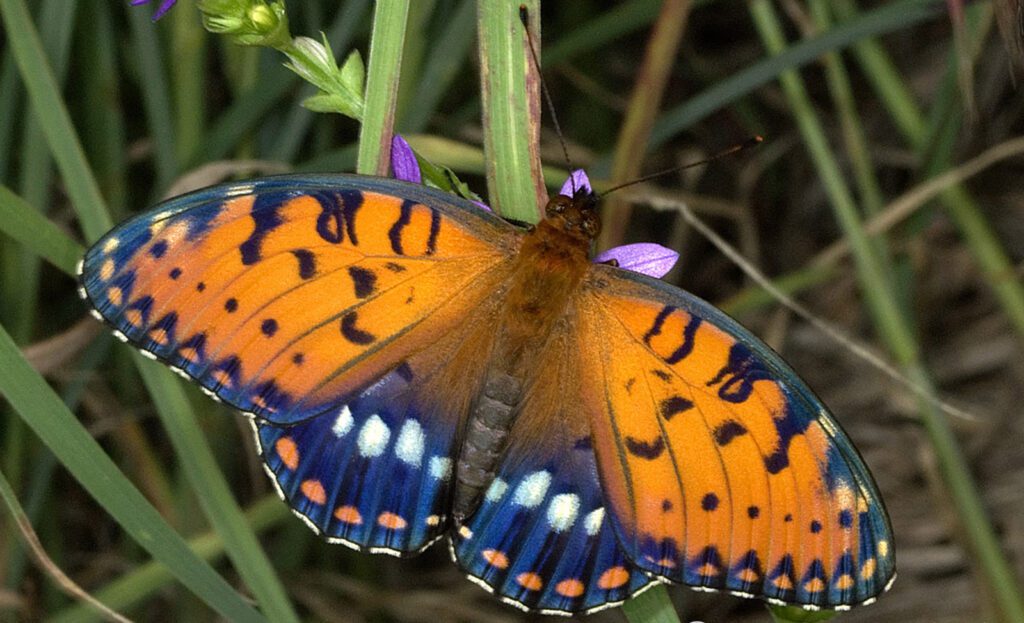
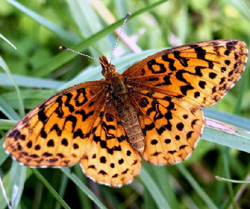
Meadow fritillary: Listed as species of concern in Rhode Island. This species can found throughout New England. Larval food plants include violets. Adult food sources include dogbane, swamp milkweed, and black-eyed Susans.
The species’ preferred habitats are pastures, hay fields, old beaver meadows, and roadside mowings.
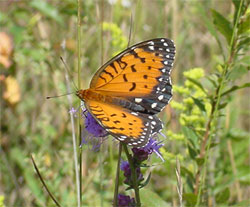
Regal fritillary: Listed as state historic in Rhode Island — last observed there in 1990 — and species of concern in Connecticut. In New England it is believed to be extirpated. The species’ preferred habitat in southern New England is extensive open areas with a combination of wetlands and upland fields containing an abundance of nectaring plants. In the Midwest, where it’s also in marked decline, it is a characteristic species of the tall grass prairie, but has also been recorded in cow pastures, mountain meadows, marshes, and grassy bogs.
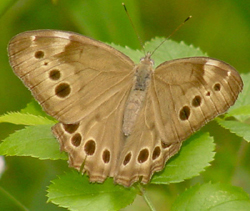
Northern pearly-eye: Listed as species of concern in Rhode Island. In New England it can be found in portions of eastern and central Maine, throughout New Hampshire and Vermont, and large areas of Massachusetts and Connecticut.
Larval food plants in New England consist mainly of woodland grasses such as long-awned wood grass, bottlebrush grass, and purple oats. Tree sap and fallen fruit are probably the main food sources for adults. Adults are rarely seen at flowers.
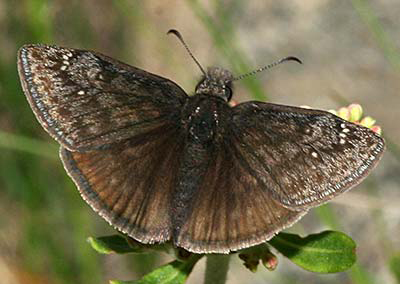
Persius duskywing: Listed as state historic in Rhode Island — last observed there in 1950 — and endangered in both Massachusetts and Connecticut. This species occupies a spotty and disjunct range in eastern North America, from southern New England west through southern Ontario and Michigan to Wisconsin, and south to New Jersey and Pennsylvania. During the past 60 years this butterfly has declined dramatically throughout its range, including in Massachusetts, where there is currently only one known population.
This species inhabits xeric, open oak woodland, sandplain pitch pine-scrub oak barrens, and other disturbance-dependent habitats with wild indigo or lupine.
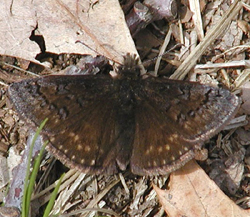
Sleepy duskywing: Listed as species of concern in Rhode Island and threatened in Connecticut. In New England it occurs from southernmost Maine and eastern New Hampshire and Massachusetts south following the distribution of its food plant.
Scrub oak is the preferred larval food plant. Adult food sources include dewberry, cinqufoils, blueberry, azalea, hawkweed, and dandelion. Barrens and other places with poor, thin, or well drained (often sandy) soils is where scrub oak thrives.
This butterfly flies in shrubby areas and openings in oak barrens seldom far from shade.
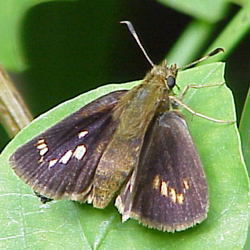
Mulberry wing: Listed as species of concern in Rhode Island. In New England this butterfly is restricted to southern New Hampshire and Vermont and southward through Massachusetts, Rhode Island, and Connecticut.
This species is largely restricted to freshwater wetlands and may be found in such locales as tussock marshes, river floodplains, swamps, and bogs. Nearby uplands with nectaring sources are occasionally visited.
The preferred larval food plant is tussock sedge. Adult food sources include swamp milkweed, common milkweed, buttonbush, and marrow-leaved mountain mint.
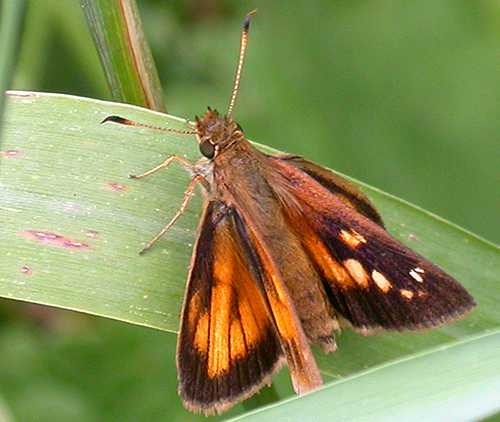
Broad-winged skipper: Listed as species of concern in Rhode Island. In New England this butterfly ranges at least as far north as the northern border of Massachusetts, and probably to coastal New Hampshire.
The species; preferred habitat is freshwater and brackish wetlands that have been invaded by common reed stands. Larval food plants include common reed and wild rice. Adult food sources include Joe-Pye weed and purple loosestrife.
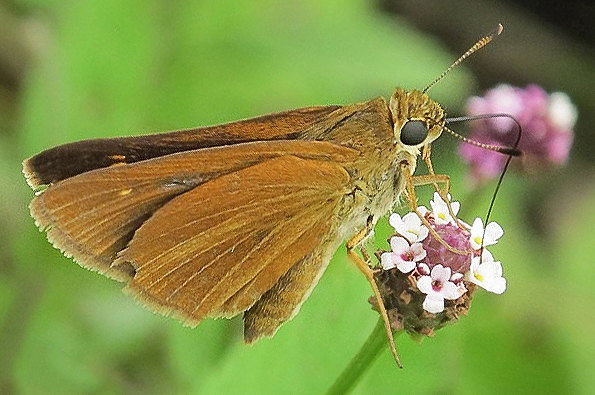
Dion skipper: Listed as threatened in Massachusetts. This butterfly inhabits sedge wetlands, including calcareous fens, riparian marshes, wet meadows, and shrub swamps. Adult butterflies nectar in infrequently mowed fields near wetlands on northern blue flag iris, swamp milkweed, and common milkweed.
In Massachusetts, this species occurs in Berkshire County and western Hampshire County.
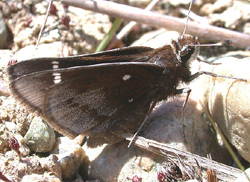
Dusted skipper: Listed as species of concern in Rhode Island. This butterfly can be found in sandy barrens, rocky outcrops, and other areas of poor soils or where fire maintains vegetation in an early successional stage.
Larval food plants include little bluestem grass and big bluestem. Adult food sources include a variety of herbs and shrubs that flower during its flight period, late May to mid-July.
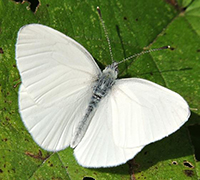
Mustard white: Listed as threatened in Massachusetts. In the Bay State this butterfly has declined dramatically during the past 150 years. The decline is probably the cumulative result of several interacting factors, such as the loss of intact woodland and wet meadow habitats, the introduction of the invasive garlic mustard, and parasitism by the introduced braconid wasp.
The species inhabits openings in mesic forest, including riparian floodplains, margins of fens and marshes, and streamsides and wet meadows, fields, and pastures.
Moths
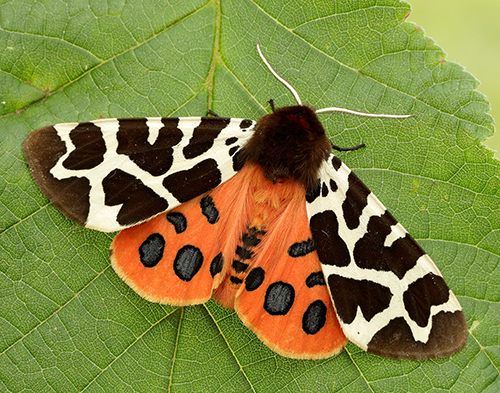
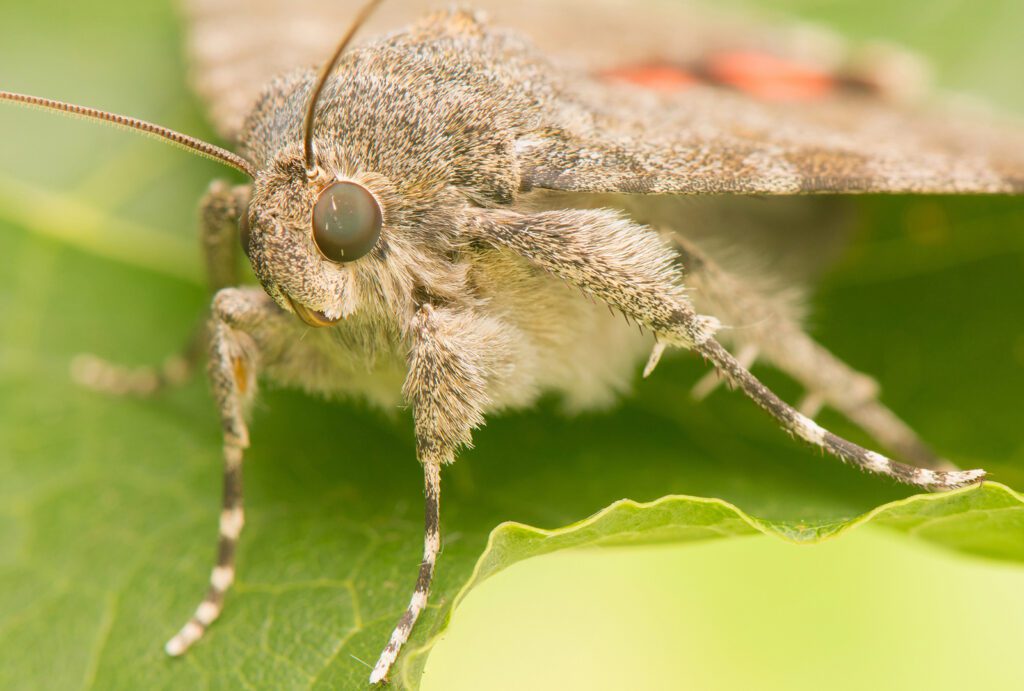
Bog tiger moth: Listed as species of concern in Rhode Island and endangered in Connecticut. Most adults have thick furry bodies and wings that may be almost solid white, or dark with white, orange, or green markings. When at rest the wings are folded rooflike over the body. Many have furry or hairy larvae (caterpillars) called woolly bears.
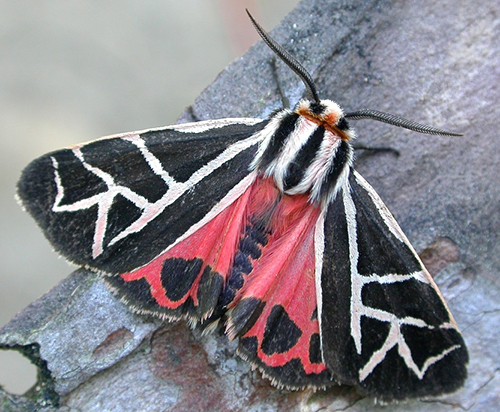
Phyllira tiger moth: Listed as endangered in both Massachusetts and Connecticut. This species has two broods, the first flying in June and the second in August. The female lays eggs loose, scattering them on the ground in the vicinity of suitable host plants. Eggs hatch within a week, and hatchlings start feeding immediately upon locating a host plant.
The larvae are ground dwelling and polyphagous, wandering to feed on a variety of low-growing forbs. Caterpillars pupate on the ground, in a cocoon composed of detritus loosely tied together with silk.
In Massachusetts, this species is only known to occur at a single site in the Connecticut River Valley, which is one of three known populations in New England.
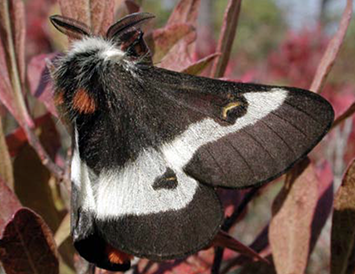
Barrens buck moth: Listed as species of concern in both Rhode Island and Massachusetts and endangered in Connecticut. In the Bay State this moth is restricted to the southeast coastal plain, with one inland population in the Connecticut River Valley.
This species inhabits xeric, open habitats with extensive scrub oak thickets, especially sandplain pitch pine-scrub oak barrens, and maritime shrublands. This moth flies from mid-June through mid-August. Larvae feed from summer into early fall, and pupae overwinter.
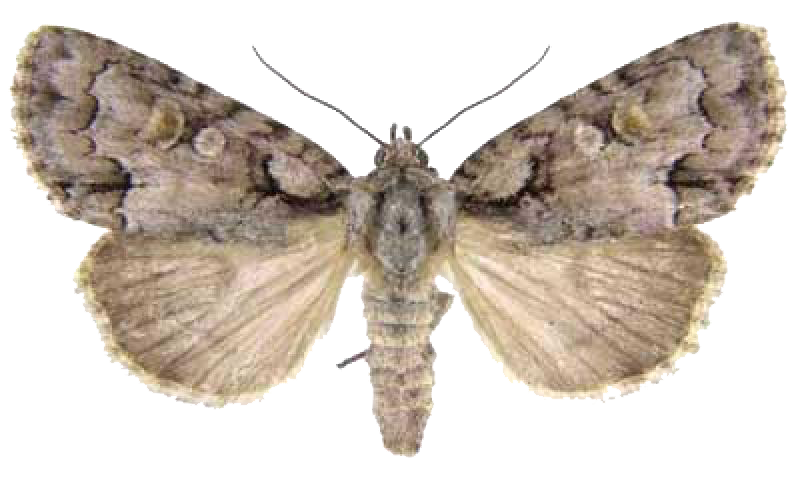
Barrens dagger: Listed as threatened in Massachusetts and species of concern in Connecticut. This moth inhabits xeric, open pitch pine-scrub oak barrens and scrub oak thickets on sandy soil.
This species flies from mid-June through mid-August. Larvae feed from summer into early fall, and pupae overwinter. In years with an early, warm spring, this species may have a second brood.
Blueberry sallow: Listed as species of concern in Rhode Island. Prefers forests and woodlands.
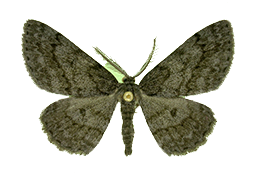
Buchholz’s gray: Listed as endangered in Massachusetts. In the Bay State this species is only known from the pine barrens of southeastern Plymouth County.
This moth flies in June and early July. Larval host plants aren’t well documented, but captive larvae accept sweet fern and bayberry.
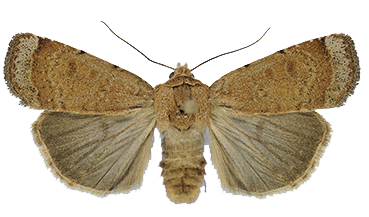
Coastal heathland cutworm: Listed as species of concern in both Rhode Island and Massachusetts and threatened in Connecticut. In the Bay State it occurs along the coast from the North Shore south to Boston and Plymouth, on Cape Cod and the offshore islands, and west to Dartmouth.
This moth inhabits xeric and open coastal habitats on sandy soil, including sandplain grasslands, dunes and bluffs, coastal heathlands or other maritime shrublands, and occasionally open pitch pine/scrub oak barrens.
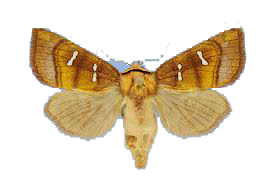
Chain fern borer: Listed as threatened in Massachusetts. This species is endemic to the coastal plain of eastern North America, ranging from Massachusetts south to Florida, and west along the Gulf Coast to Louisiana.
This moth flies in September and early October. Eggs overwinter, and larvae hatch in the spring. The larvae bore into and feed on the stems and roots of Virginia chain fern, becoming fully grown and pupating by late August or early September.
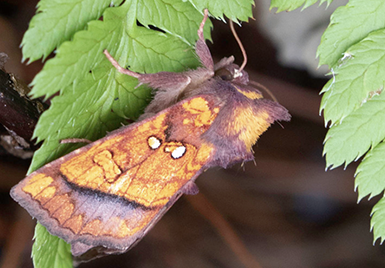
Columbine borer: Listed as state historic in Rhode Island and endangered in Connecticut. This species can be found in eastern North America.
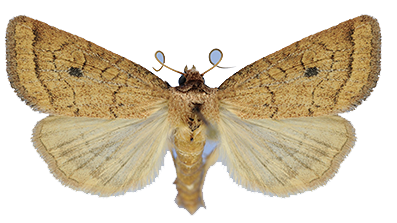
Cordgrass borer: Listed as species of concern in Massachusetts. In the Bay State this moth occurs along the coast south of Boston. This species inhabits fresh or brackish coastal marshes and margins of coastal salt ponds.
This moth flies in late August and September. Eggs hatch in the autumn, and first instar larvae overwinter, resuming feeding in the spring. The larvae bore into and feed on prairie cordgrass, becoming fully grown and pupating by July.
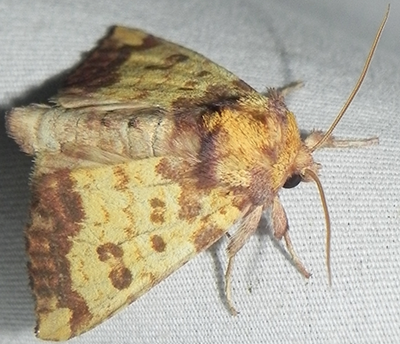
Golden borer: Listed as endangered in Massachusetts. Adults fly from September through mid-October and can be found in patches throughout the Great Lakes region. Larvae feed on lilies, May apple, bottlebrush grass, and dark green bullrush. The larva bores into the shoot or roots of its host.
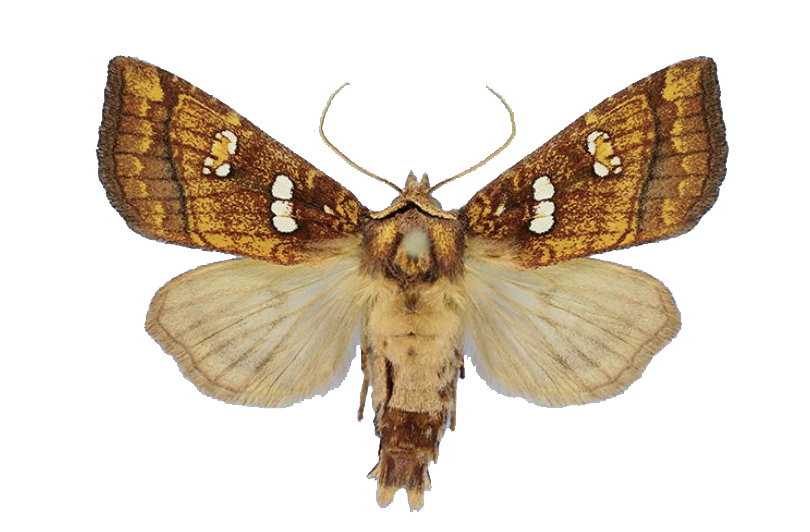
Ostrich fern borer: Listed as species of concern in Massachusetts. Bay State populations are at the eastern edge of a relatively small range that extends north to Vermont, south to Pennsylvania, and west to Wisconsin.
This moth flies from late August through late September. Eggs overwinter, and larvae hatch in spring. The larvae bore into and feed on the stems and roots of ostrich fern.
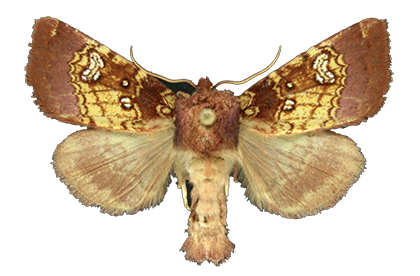
Pitcher plant borer: Listed as species of concern in Rhode Island and threatened in both Massachusetts and Connecticut. In the Bay State this moth is known to occur in northern Worcester County and in the southeastern part of the state.
This species inhabits acidic Sphagnum bogs with pitcher plants. Adults fly in late August and September. Eggs overwinter, hatching in the spring. Larvae bore into and feed internally on the roots of pitcher plants.
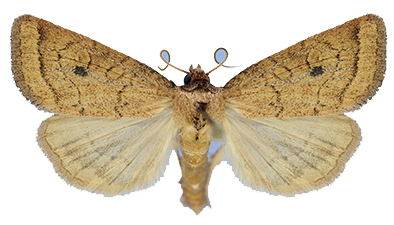
Spartina borer: Listed as species of concern in Rhode Island, Massachusetts, and Connecticut. In the Bay State this moth occurs along the coast south of Boston. This species inhabits fresh or brackish coastal marshes and margins of coastal salt ponds.
This moth flies from the last week of August through September. Eggs hatch in the fall, and first instar larvae overwinter, resuming feeding in the spring. Larvae bore into and feed on prairie cordgrass.
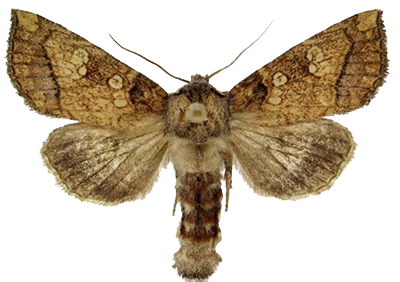
Water-willow stem borer: Listed as threatened in Massachusetts. This moth is endemic to southeastern Massachusetts, occurring in Plymouth and Bristol counties and on Cape Cod and the islands.
This species inhabits shallow portions of coastal plain wetlands — swamps, edges of streams and ponds, abandoned cranberry bogs — where water-willow grows. Adults fly in late September and early October. Eggs overwinter, hatching in the spring.
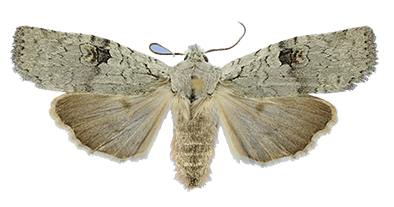
Pale green pinion: Listed as species of concern in Rhode Island, Massachusetts, and Connecticut. In Massachusetts this species is restricted to areas of suitable habitat in the eastern part of the state.
This moth inhabits acidic, shrubby wetlands, including wooded swamps, shrub swamps, shrubby bogs, and coastal pond shores. Adults emerge in October and early November and overwinter, flying on warm nights in late winter and early spring, at which time mating and oviposition occur.
Pine barrens Macaria: Listed as species of concern in Massachusetts.
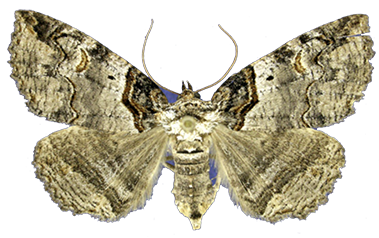
Pine barrens zale: Listed as species of concern in both Rhode Island and Massachusetts. In the Bay State this species occurs in the southeastern part of the state and in the Connecticut River Valley.
Adults fly from mid-May to late June. Eggs hatch soon after they are laid, and the larvae feed on new growth of scrub oak. Larvae pupate by late July, and pupae overwinter.
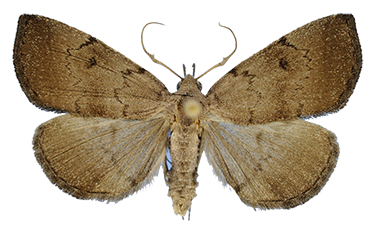
Pine barrens Zanclognatha: Listed as species of concern in Massachusetts and threatened in Connecticut. In Massachusetts this moth occurs in barrens habitats from the Connecticut River Valley east to Plymouth, but is absent from Cape Cod and the islands.
Adults fly in July and early August. Larvae feed on pitch pine. Larvae overwinter partially grown, resume feeding in spring, and pupate by June.
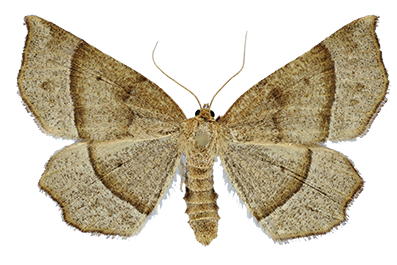
Barrens Metarranthis: Listed as endangered in Massachusetts and a species of concern in Connecticut. Globally, there are only a few localities where this “extremely rare moth” is currently known to occur, including Martha’s Vineyard in Massachusetts, one site in Connecticut, one county in Illinois, and two counties in Indiana.
Adults fly in June. The larval host plants of this species haven’t been documented. Based on the life history of other Metarranthis species, eggs hatch a week or two after oviposition, and larvae grow slowly, not pupating until late August or September. Pupae overwinter.
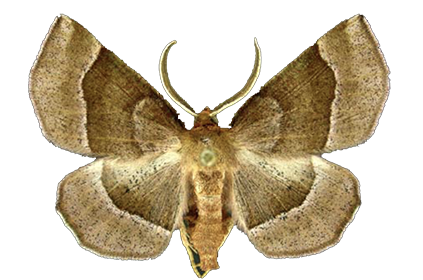
Coastal swamp Metarranthis: Listed as species of concern in both Rhode Island and Massachusetts. In the Bay State it is found on the southeastern coastal plain and in a few inland bogs.
Adults fly in June and early July. Larvae feed on blueberry in dry habitats, and blueberry, cranberry, and probably leatherleaf or other heaths in wet habitats. Larvae feed through the summer, and pupate in September.
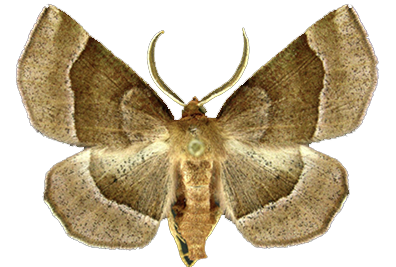
Heath Metarranthis: Listed as species of concern in Massachusetts. In the Bay State it is found on the southeastern coastal plain and in a few inland bogs. Adults fly in June and early July. Larvae feed through the summer on blueberries and cranberries.
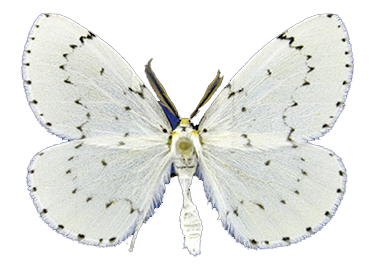
Chain-dotted geometer: Listed as species of concern in Massachusetts. This moth inhabits coastal plain shrublands, including sandplain grasslands and heathlands, dunes, bluffs, maritime shrublands, and occasionally open pitch pine/scrub oak barrens.
Adults fly in September and early October, with peak flight in late September. Eggs overwinter and hatch in the spring.
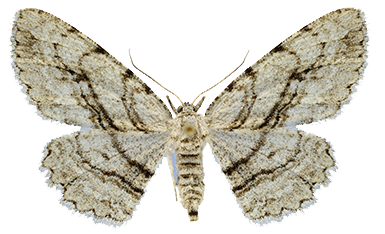
Faded gray geometer: Listed as threatened in Massachusetts. In the Bay State this species is only known to occur on the Island of Martha’s Vineyard. This moth inhabits pitch pine-scrub oak barrens, scrub oak thickets, and occasionally open oak woodland.
Adults fly from early June through the beginning of July. Larvae feed on oaks and become fully grown by August or early September.
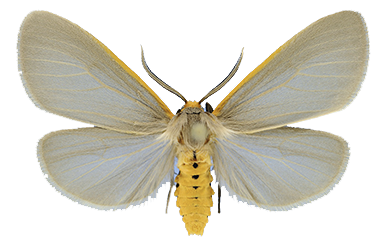
Collared cycnia: Listed as threatened in Massachusetts. In the Bay State this moth is restricted to Cape Cod and Martha’s Vineyard. It inhabits sandplain grasslands and heathlands.
In Massachusetts this species has two broods, the first flying in late May and early June and the second flying in late July and early August. Eggs are laid on milkweeds, with the preferred host plant in Massachusetts being orange milkweed. The bright orange color of the caterpillar matches the flowers of orange milkweed, providing crypsis when it’s on the flowers.
When the caterpillar is on the foliage or stem of its host plant, the bright orange color provides a warning to potential predators, as the larva’s tissues sequester distasteful and poisonous cardenolides acquired from the host plant. The pupa overwinters in a cocoon made from setae plucked from the caterpillar’s own body, woven together with silk.
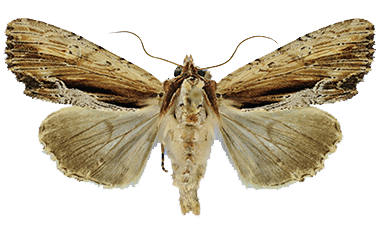
Drunk Apamea: Listed as species of concern in Massachusetts. In the Bay State is moth is known from southeastern Plymouth County to Cape Cod and the islands. This species inhabits freshwater and brackish wetlands, marshes, bogs, shrub swamps, and coastal plain pond shores.
The larval host plants of this moth are undocumented, but probably consist of one to several species of wetland grasses.
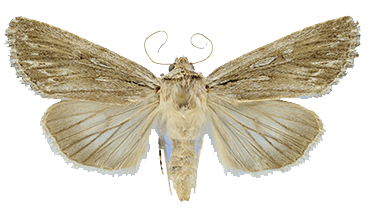
Dune Sympistis: Listed as species of concern in both Massachusetts and Connecticut. In the Bay State this moth occurs along the coast, in both the northeastern and southeastern parts of the state. It inhabits coastal dunes, dune grass grasslands, bluffs, and coastal sandplain grasslands and heathlands.
Adults fly from mid-June to mid-July, with stragglers into late July.
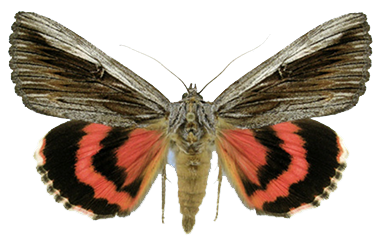
Herodias underwing: Listed as species of concern in Massachusetts and endangered in Connecticut. This moth occurs in sandplain habitats in southeastern Massachusetts, on eastern Long Island, N.Y., and in southern New Jersey and on rocky summits and ridges from Massachusetts south through the Appalachian Mountains to North Carolina.
Adults fly in July and August. Eggs are laid on the stems of scrub oak, where they overwinter and hatch in early spring. Larvae feed on catkins and new leaves of scrub oak, and pupate in June.
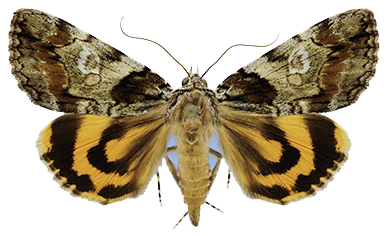
Precious underwing: Listed as endangered in Massachusetts and a species of concern in Connecticut. In Massachusetts this moth occurs in Plymouth County and on Martha’s Vineyard. It is found more extensively in southern New Jersey, but the Bay State and New Jersey populations comprise the entire global range.
Adults fly in July and early August. Eggs overwinter, hatching in early spring. Larvae feed on the new foliage, flowers, and fruits of chokeberries. Larvae pupate in June.
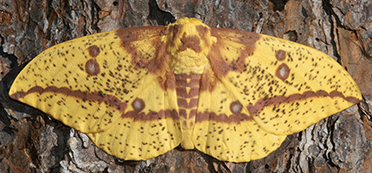
Imperial moth: Listed as threatened in Massachusetts and a species of concern in Connecticut. The species has declined dramatically during the past 100 years, with the only surviving population in Massachusetts restricted to Martha’s Vineyard.
Moths emerge in late June and July, with peak emergence in late July; the flight period ends in early August. Larvae feed almost exclusively on pitch pine, although there have been occasional reports of late instar larvae on oaks. Larvae are fully grown by September, at which time they burrow into the soil and pupate. The pupa overwinters.
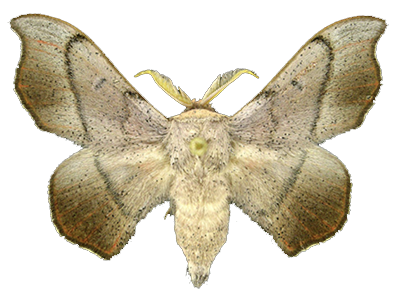
Melsheimer’s sack-bearer: Listed as threatened in Massachusetts. In the Bay State this moth is restricted to Cape Cod and the islands, west to Plymouth. Adults fly in June and early July, with peak flight in late June. Larvae feed on scrub oak from summer through fall, building a portable, protective shelter — “sack” — out of leaves and silk. Larvae overwinter and pupate in the spring.
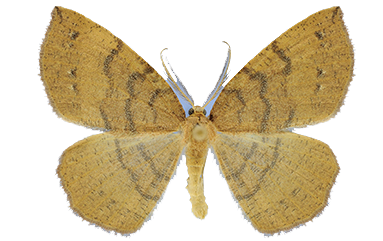
New Jersey tea inchworm: Listed as endangered in both Massachusetts and Connecticut. In the Bay State this species occurs in the Connecticut River Valley and the Shawsheen River Valley.
This moth inhabits xeric, open habitats, including pitch pine-scrub oak barrens and associated sandplain communities and rocky outcrops and ridges. Adults fly from the last few days of August through late September. Eggs overwinter, hatching in the spring. Larvae feed on new foliage of New Jersey tea, and pupate by late June.
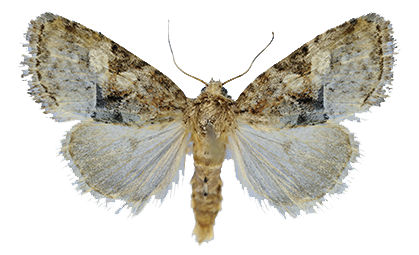
Northern brocade: Listed as species of concern in Massachusetts. In the Bay state this species is currently only known from the island of Nantucket. This moth inhabits fresh or brackish coastal marshes and bogs.
Adults fly from mid-June to mid-July. The larval host plant of this species is undocumented, but is likely a sedge or wetland grass.
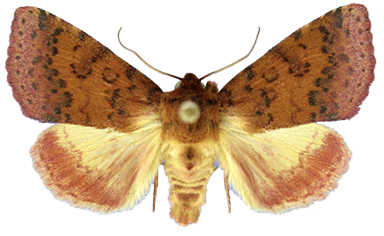
Orange sallow: Listed as species of concern in Massachusetts. In the Bay State this moth occurs in scattered colonies from the North Shore and Boston west to the Berkshires, but is absent from the southeast coastal plain.
Adults fly in August. Eggs hatch soon after they are laid, and larvae feed on the flowers, developing seeds, and foliage of false foxgloves through early October. Pupae overwinter and diapause through the following spring and summer.
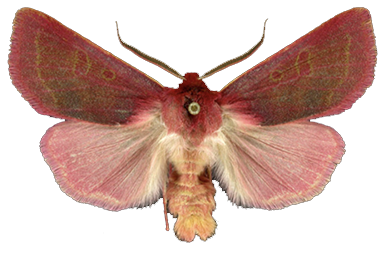
Pink sallow: Listed as species of concern in Massachusetts and threatened in Connecticut. This moth is endemic to northeastern North America, ranging from Maine south to Maryland, and west to Pennsylvania, Michigan, and Wisconsin; it is rare and spottily distributed throughout this range. In Massachusetts this species occurs on the southeast coastal plain and in Worcester and Franklin counties.
This species is found in a variety of habitats with ericaceous vegetation, including pitch-pine scrub oak barrens and heathlands on sandplains or rocky summits and ridges, acidic bogs and swamps, and occasionally logged areas and old fields. Adults fly in late September and October.
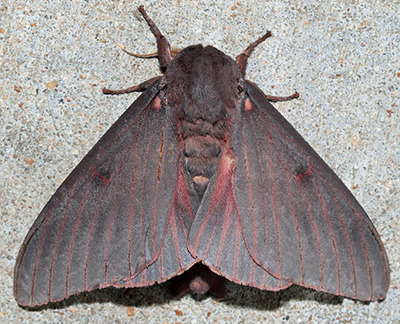
Pine-devil moth: Listed as state historical in Rhode Island. This species occurs from southern Maine west to southeastern Ohio, south to the Florida Keys and southeastern Louisiana. It inhabits coastal pine forests.

Royal walnut: Listed as state historic in Rhode Island — last observed there in 1939. Its range is New York west through southern Michigan and Illinois to eastern Kansas; south to central Florida, the Gulf states, and east Texas. This moth inhabits deciduous woods.
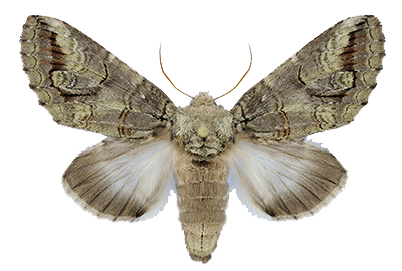
Sandplain Heterocampa: Listed as threatened in Massachusetts. In the Bay State this moth only occurs on the islands of Martha’s Vineyard and Nantucket. The species inhabits sandplain pitch pine-scrub oak barrens, sandplain heathlands and grasslands with a scrub oak component, and occasionally open, savanna-like oak woodland. Adults fly from late June through early August.
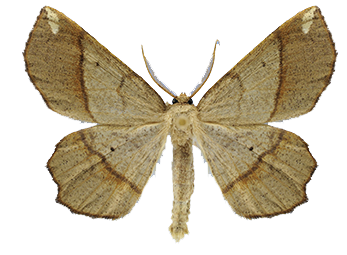
Scrub Euchlaena: Listed as species of concern in Massachusetts and threatened in Connecticut. In the Bay State this moth is known to occur in sandplain habitats in the Connecticut River Valley, the Nashua River Valley, the northeastern part of the state, and on Cape Cod and the islands.
This species has two broods per year, the first flying from late May through late June, and the second flying in August. Larvae are probably somewhat polyphagous, but the habitat associations indicate a likely preference for lowbush blueberries.
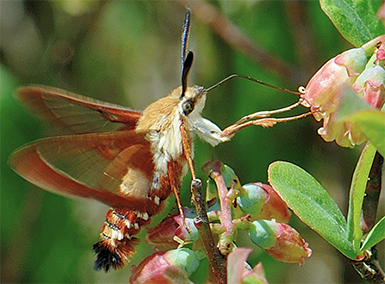
Slender clearwing sphinx: Listed as species of concern in Massachusetts. In the Bay State this moth is known to occur in Franklin County, adjacent northern and western Worcester County, in Plymouth, and on Cape Cod and Martha’s Vineyard.
Adults flu in May and June. They are diurnal and hover to nectar at flowers, especially blueberry. Larvae feed on lowbush blueberry and probably other blueberry species from June until pupation in July. Pupae overwinter.
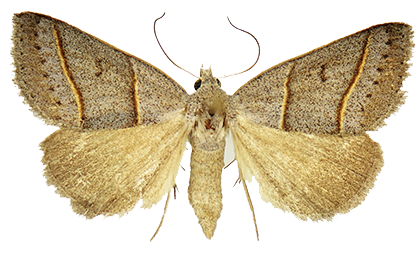
Southern Ptichodis: Listed as threatened in Massachusetts. In the Bay State this moth is only known from the islands of Martha’s Vineyard and Nantucket. Adults fly from late May to late June. The larval host plants of this species are undocumented. Presumably the pupa overwinters.
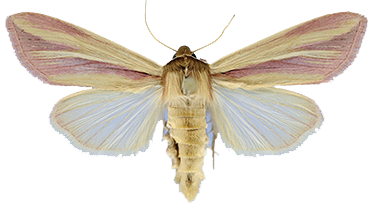
The pink-streak: Listed as threatened in Massachusetts. In the Bay State this species is only known to occur on Cape Cod and Martha’s Vineyard. Adults fly from mid-July to early August. The preferred larval host plant is switchgrass. Larvae feed primarily on the developing seeds of this grass, becoming fully grown by late August or early September. The pupa overwinters beneath the surface of the soil.
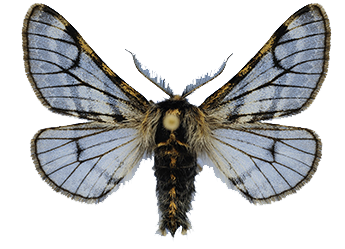
Twilight moth: Listed as endangered in Massachusetts, where this species is only known from two sites in the northeastern part of the state. This moth is a boreal species, and the rare and localized populations in northeastern Massachusetts, New Hampshire, Maine, and Pennsylvania are relicts from the period following retreat of Pleistocene glaciers.
Adults fly at dusk, and for a couple hours after, on evenings following the first relatively warm days of spring. In Massachusetts, such days typically occur in late March and April. Females ascend shrub and tree trunks and emit pheromone, waiting for males to find them by scent.
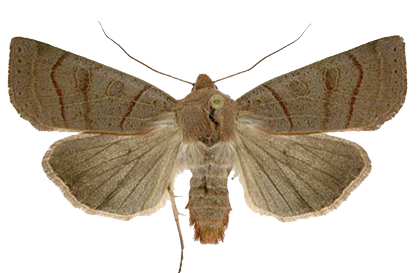
Waxed sallow: Listed as a species of concern in both Massachusetts and Connecticut. This moth is found from Maine (at least historically) west to Manitoba and south to West Virginia; populations are localized within this range. In Massachusetts it is restricted to the coastal plain in the southeastern part of the state.
Adults fly mainly in October and occasionally into early November. Eggs overwinter, hatching in early spring. Larvae feed on huckleberry, lowbush blueberries, and possibly other low-growing shrubs.
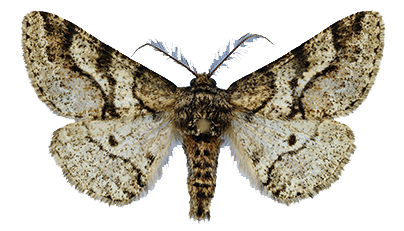
Woolly gray: Listed as threatened in Massachusetts. This species is found from Massachusetts south to Florida, and west to Minnesota and Texas. In the Bay State this moth occurs on Martha’s Vineyard and inner Cape Cod.
The larval host plants are undocumented in Massachusetts; this species feeds on rose family plants elsewhere. Larvae are fully grown by July.
Note: Some of the species listed in each state overlap, and how often the lists are updated varies — the Rhode Island list was last updated in March 2006, Massachusetts last August, and Connecticut in January 2023. For species listed as state historical — essentially extirpated — in Rhode Island, they were included in the endangered category.
Last summer, I entered many of my butterfly and moth sightings on https://www.butterfliesandmoths.org/species_search on top of putting together a list of host plants for Moths on RIDEM’s 2015 WAP list, that is currently being updated/revised, and pasted the information along to RIWPS and others.
An example is the host plant PARTRIDGE PEA for the Common sulfur butterfly. The butterfly will lay its eggs on the leaves, and the 🐛larvae 🐛then uses the leaves as a food source.
Caterpillars are a vital food source for fledglings.
Addendum:
Street lighting has detrimental impacts on local insect populations | Science Advances, notes “Artificial light at night (ALAN) is an increasingly recognized threat to biodiversity and ecosystem processes (21–23) and has recently been proposed as a driver of insect declines (24, 25)”
…..”we found that the LEDs at our field sites had greater impacts than HPS lamps.”
“The impacts that we observed—on local abundance, development, and feeding behavior—were more pronounced for white LEDs compared to traditional sodium lamps (e.g., HPS lamps, yellow hues). This is worrying, given the current shifts in outdoor lighting technologies toward white LEDs (21, 34). Yet, LEDs can be modified more easily than sodium lamps by adjusting their intensity (dimming) and spectral output (custom colors and filters) (38, 63, 64)…….
We can easily address these challenges!
A bitter irony, folks.
Just one day after Frank’s butterfly article here was posted, March 18th, the newly installed Trump administration of the U.S. Fish&Wildlife Service announced on its “Press Releases” website that new, additional, 90-day “Public Comment” periods for three species proposed for Federally “Endangered” status have been ordered.
The three species are the Monarch Butterly, the Bleached Sandhill Skipper, and the the Suckley’s Cuckoo Bumblebee.
All three had completed mandatory 7-year scientific evaluations followed by 90-day “Public Comment” periods which opened in December and concluded on March 12. Here is the lead of the December press release for the Monarch:
“The U.S. Fish and Wildlife Service is proposing protection for one of the nation’s most beloved species — the monarch butterfly — and is encouraging the public to be part of its recovery. The Service is seeking public input on a proposal to list the species as threatened with species-specific protections and flexibilities to encourage conservation under section 4(d) of the Endangered Species Act (ESA). Public comments will be accepted on the proposal until March 12, 2025. The Service will then evaluate the comments and any additional information on the species and determine whether to list the monarch butterfly.”
Here is the lead of the March 18 press release for the Monarch:
“The U.S. Fish and Wildlife Service is reopening the public comment period for a proposed rule to list the monarch butterfly as a threatened species under the Endangered Species Act. The proposed rule includes species-specific protections and flexibilities to encourage conservation of the butterfly under section 4(d) of the ESA. The comment period will be reopened for 60 days, until May 19, 2025, to give all interested parties an additional opportunity to comment on the proposed rule, which was published on December 12, 2024. Comments that were previously submitted do not need to be resubmitted as they are already incorporated into the public record and will be fully considered in the final listing determination.”
The Monarch, of course, is a Rhode Island species. And currently, to my knowledge, there are at least two additional Rhode Island present species—not insects—that have completed their mandatory 7-year scientific evaluations but have yet to have had their “proposed” status announced and their Public Comment period commenced. …As one who has been involved locally with the conservation of these two species this change in affairs is deeply disturbing.
On the bright side, at least, the Monarch should provide a national rallying issu. (If, of course, our big private national conservation organizations have the guts to lead it!)
I’m in error in paragraph one of my previous comment: For the consideration of endangered species listings, the standard public comment periods is 90 days as stated. However, for the species discussed above, the “re-opened” comment periods are only 60 days.