
Chamber of Commerce Questions Need for Building Decarbonization Bills
March 16, 2026
Share


PROVIDENCE — It’s not often in the General Assembly that science fiction novels about life on Mars are invoked as inspirations for climate legislation.
Rep. Rebecca Kislak, D-Providence, recalled reading the Mars trilogy of novels by Kim Stanley Robinson during the COVID-19 pandemic. The books depict the founding and evolution of human civilization on Mars starting with the first human colonists, to conflict and revolution over the planet’s political system, to the complete terraforming and transformation of the red planet’s landscape.
The lesson for Kislak? “It will always be easier and better to start with Earth and to make the huge investments we need to make Earth thrive and be resilient than to invest in going to another planet that isn’t habitable,” Kislak said during a March 11 House Environment and Natural Resources Committee hearing.
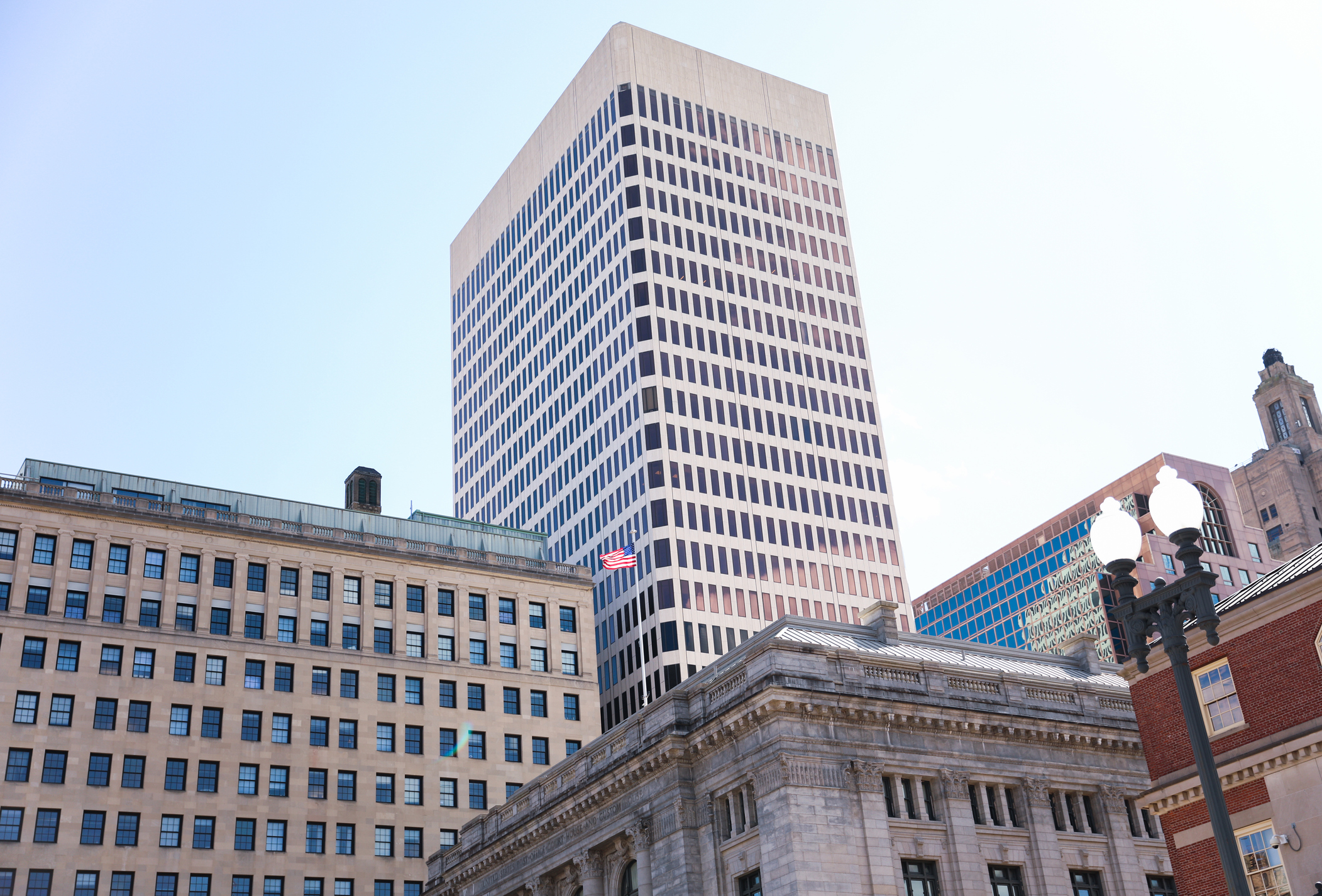
Kislak was introducing two pieces of legislation to tackle the emissions stemming from Rhode Island’s inventory of buildings. H7183 would create an energy benchmarking program and require large buildings more than 25,000 square feet in size to start tracking and calculating how much energy they use and how much emissions they are producing. Its sister bill, H7184, would implement standards and mandates on emission reductions large buildings would have to meet.
It’s far from a new idea. Kislak has introduced legislation to decarbonize buildings for years, but the legislation hasn’t succeeded in passing both chambers. Benchmarking and emission reductions were originally both in the same bill, before lawmakers and advocates split it in two to make it easier to pass.
Kislak speculated opponents allege the legislation is too expensive, too onerous, too big of a problem to fix; but that’s no reason not to pass it, she said. Humans need to reduce climate-changing emissions.
“New buildings going all-electric costs about the same as a new gas building,” Kislak said. “We need to think about not letting people have new gas hookups and we should do the upgrades to the grid we need to do.”
The Northern Rhode Island Chamber of Commerce (NRICC) said the proposed legislation lacked any data on just how expensive benchmarking could be for business owners, and that publicly posting benchmarking data on energy usage could give up sensitive business information.
“I think there are a lot of businesses doing what they can. I think they have a plan for their own buildings,” said Lenette Forry-Menard, a lobbyist representing NRICC, in an exchange with Rep. Lauren Carson, D-Newport. “When you set targets everyone has to meet, I don’t think we can expect them to be able to get to a target they didn’t set or prepare for.”
Carson, however, wasn’t keen to swallow the line, responding to Forry-Menard that she had the realization that since regular homeowners across the state were finding ways to decarbonize, why couldn’t businesses?
“There are average people who are borrowing money to put solar on their roof and reduce carbon. They don’t have the money either, perhaps, but they’re finding ways to do it,” Carson said. “Why can’t businesses finance some of these same things?”
The bills discussed Wednesday by the House Environment and Natural Resources Committee were just two of the bills the committee heard about decarbonizing buildings.
The building sector is the largest sector of the economy producing emissions in Rhode Island for which the state has no firm policy or plan. The latest greenhouse gas (GHG) inventory from the Department of Environmental Management shows residential, commercial, and industrial buildings combined account for almost a third of all emissions produced in Rhode Island.
Those buildings primarily run on fossil fuels. Just as homeowners rely on natural gas or fuel oil to heat their houses, businesses often rely on natural gas to run major appliances like industrial stoves in restaurants or heat large buildings or campuses with fossil fuels.
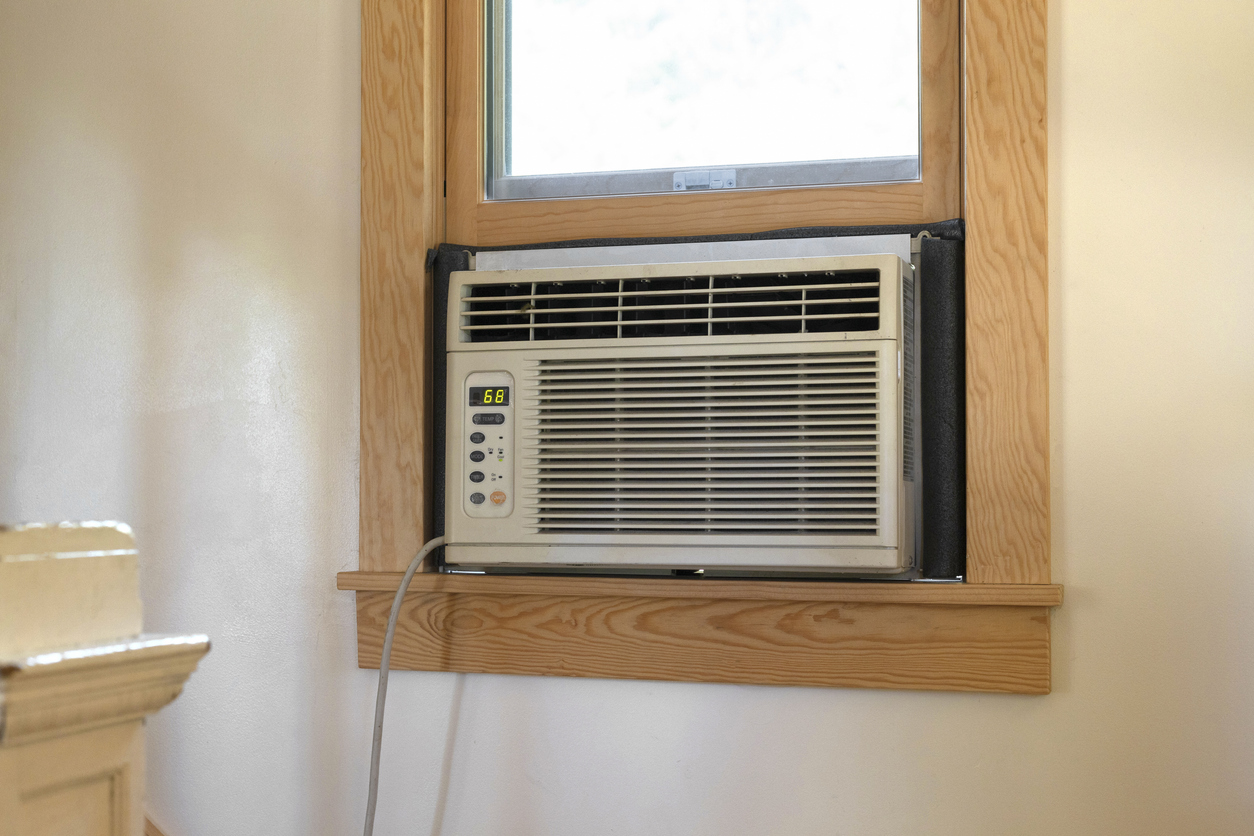
To remove fossil fuels from buildings, residents and businesses will have to adopt heat pumps or electrification technology to fulfill the old needs once fueled by natural gas. It will mean more heat pumps, more energy efficiency, and more electric stoves, among other technologies.
The state is working on it. The Public Utilities Commission has been investigating the future of natural gas in Rhode Island in a docket that has yet to publish its final report.
Other large emissions sectors — vehicles and electricity consumption — at least have concepts of plans from the state. Electricity is scheduled to be completely offset by renewables or carbon credits by 2033 — unless Gov. Dan McKee’s proposal to roll back renewable energy programs is allowed — thanks to the Renewable Energy Standard, and prior to the Trump administration, DEM was on track to phase out the sale of new gas-powered cars by the middle of the next decade.
Emissions benchmarking is not new in Rhode Island. The city of Providence began its own benchmarking program for its largest buildings just a few years ago, and the report for last year’s benchmarking program is expected later this spring.
“Benchmarking is a small step and not an expensive one,” Kislak said. “It is expensive to put heat pumps in homes, but cities are going to need to make investments and change to electric stoves block by block as we turn off the gas.”
H7813 and H7184 were held for further study.

Climate deniers are criminals. Legislation to benchmark simply gives us the information we need to move forward. That these bills are not slam dunk yeses shows how clueless some legislators are. Thanks Rep Kislak for keeping after this. providence has a bernchmarking law, and it works fine. It would be easy to emulate Providence on the state level as many of the big commercial buildings are already covered by providence’s law.