‘Environmental Justice Starts Here’: One Resident’s Fight to Clean Up a Providence Blight
June 15, 2026
Share


PROVIDENCE — It’s hard to talk about environmental justice in Rhode Island without mentioning Linda Perri’s name. The president of her neighborhood association, Washington Park, has lived in South Providence for more than four decades and is quick to remind anyone that the problems facing her corner of the city demand urgency.
When issues stall or go ignored, Perri often fires off texts and emails to a network of contacts who are willing to draw attention to it. That’s what happened on May 29 at 2:08 p.m., when 11 phones, including ecoRI’s, lit up with a text from Perri. Attached were photos and two words at the end of the paragraph: “Enough already!”
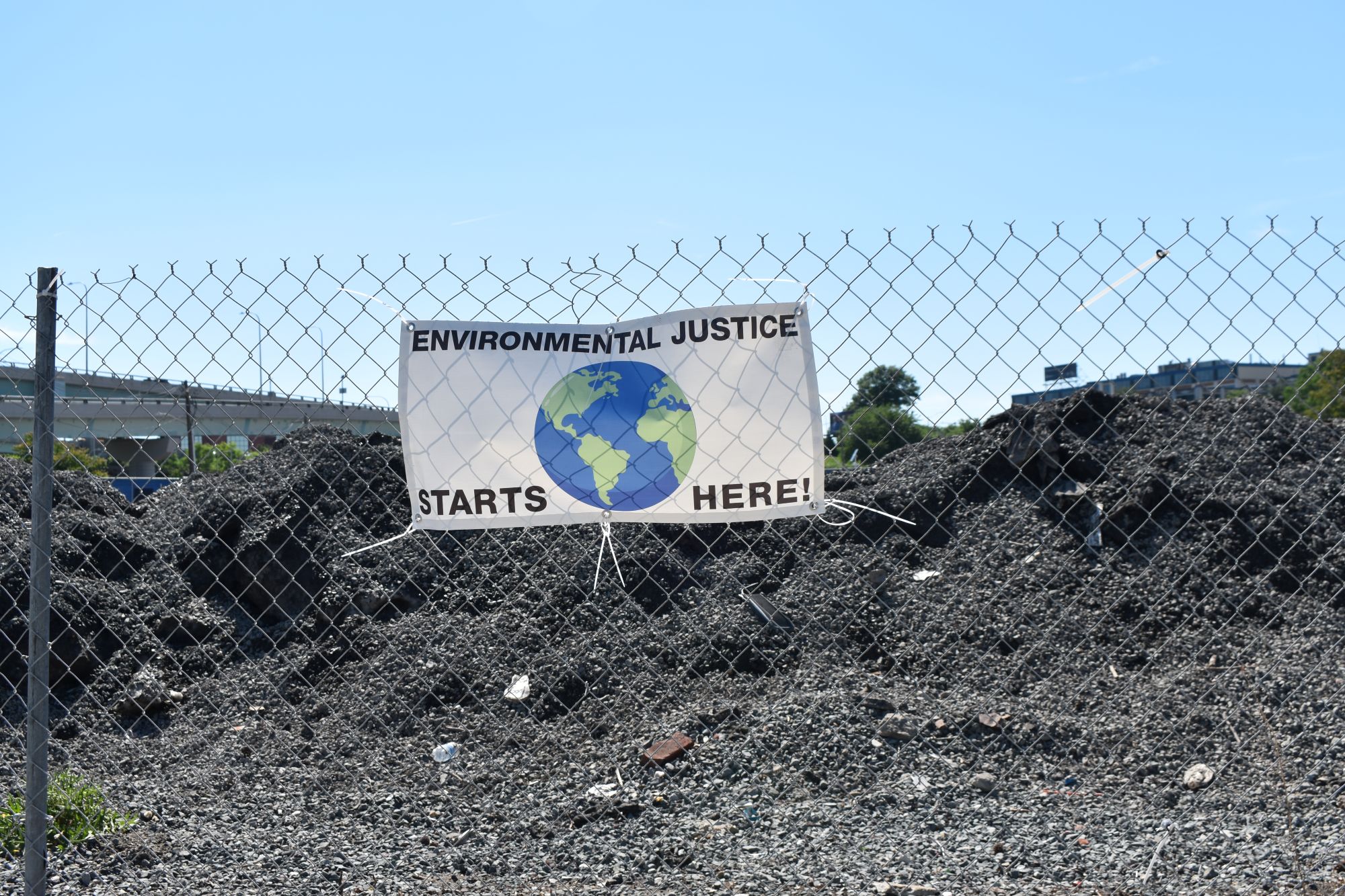
Perri had raised concerns about the lot on the corner of Eddy and Globe streets with Mayor Brett Smiley and his staff at a community meeting two days earlier. On the third day, she went to the Rhode Island Hospital-owned property with a message: “Environmental Justice Starts Here.”
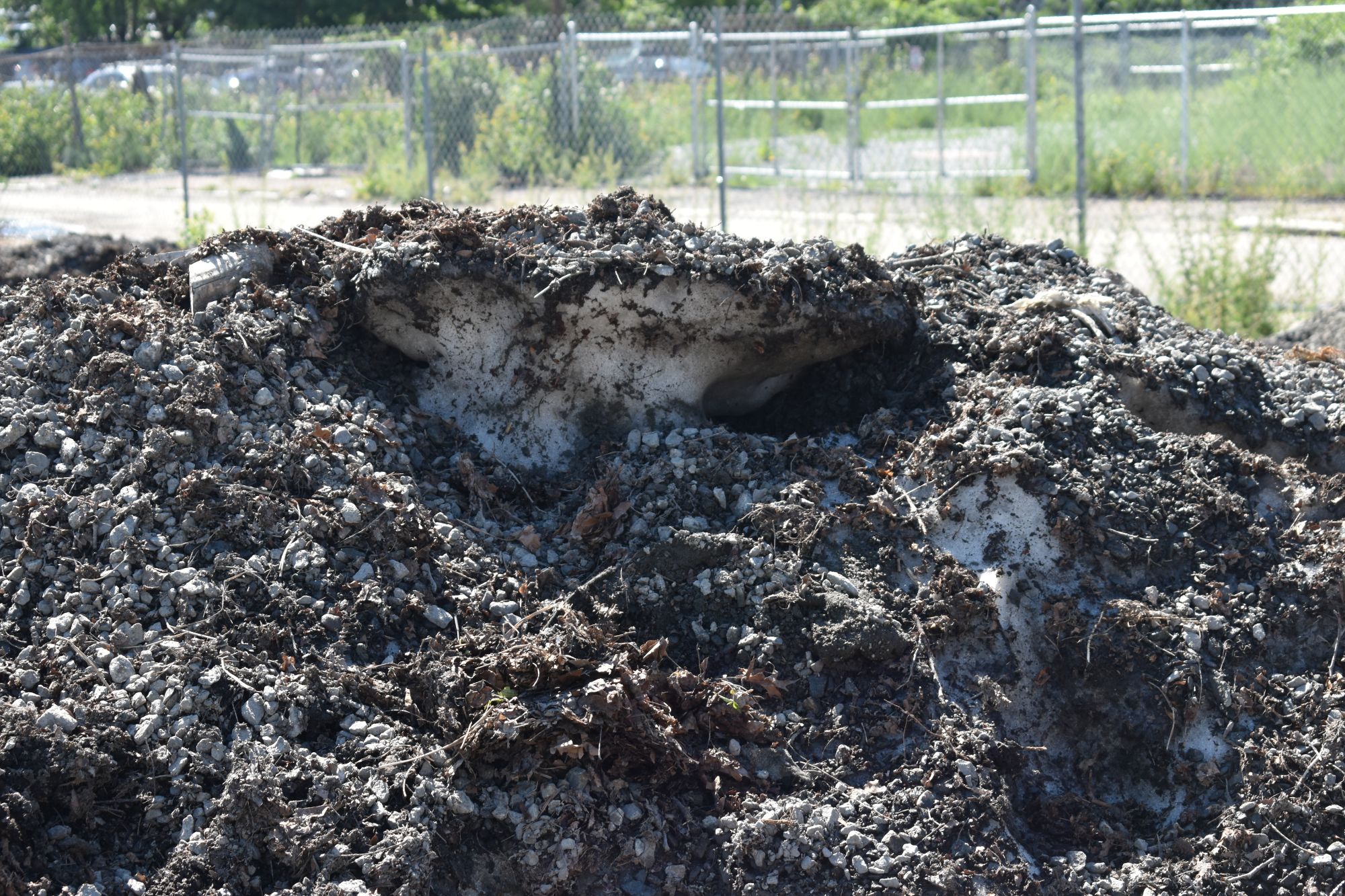
Those same words are printed on a sign mounted to a fence in front of a pile of gravel mixed with debris and chunks of snow, which are the remnants of what city officials dumped during a record-breaking February blizzard that brought 37.9 inches of accumulation.
Smiley has told residents his administration dumped most of the snow at the former Victory Plating Co. site, along with four other locations, including a city-owned lot in South Providence.
But for Perri, the decision to use a neighborhood with a high concentration of people of color, coupled with the slow cleanup at the site she passes several times a week, reinforces a familiar message: their corner of the city is treated like a dumping ground that officials can ignore.
A spokesperson for Brown University Health wrote in a statement to ecoRI News that the gravel is being removed and should be gone within the next few weeks.
While Perri is relieved to see the pile shrinking below the fence line, she believes it would still be sitting there if she hadn’t pushed officials to act.
They left it there because they figured nobody cares, said Perri, adding, “I’m here to say we do care.”
During a community meeting on May 26, Perri asked Smiley whether Brown University Health had a plan to remove the gravel. Smiley told her he would inquire. Perri shot back that the slow cleanup was making him look “lazy.”
Then came the response that disappointed her: “It’s not our property.”
She wanted the mayor to take responsibility instead of blaming the hospital for the gravel that had sat at the site for months, even as other dumping locations were cleaned up, she said, adding that the city should have had a plan for removal.
Smiley told ecoRI News that the private owners of the three dumping sites were responsible for cleaning up the gravel and debris on their own timeline.
He said the city cleared Merino Park because officials wanted the lot cleaned before soccer season began there.
Each site, he added, was handled differently depending on its ownership and circumstances.
The Brown University Health spokesperson didn’t respond to ecoRI’s question about why the gravel has remained on the property for months while other sites have been cleared.
The lot will be used for temporary parking for Rhode Island Hospital employees during an ongoing construction project at the hospital once the gravel is cleared, according to the spokesperson.
Brown University Health hasn’t yet announced plans to redevelop the site it bought in 2015.
Perri has her own vision: a solar project of thousands of panels.
“It would be nice, but that’ll never happen because the hospital needs it for parking,” she said.
City officials faced pushback from South Providence community leaders over the decision to use 246 Prairie Ave., a Providence Redevelopment Agency property acquired in 2022 and slated for redevelopment, as one of the city’s snow-removal sites.
Smiley said using the site as one of the city’s five snow dumping locations sometimes shaved a half-hour off each trip by giving crews a disposal site closer to the neighborhoods where snow was being cleared.
“I think it’s in the constituents’ best interest because their primary concern is to clear the snow as fast as possible so that we’re able to put snow in various locations to reduce the amount of travel time needed for the dump trucks and therefore get back to scooping up more snow,” he said.
And when it came to removing the snow there, he said, “We’re anxious to put that site out for our RFP (request for proposal) to have it redeveloped consistent with neighborhood feedback and all the community engagement that we’ve done.”