
Where Lost Animals Find Love: Inside One Rhode Islander’s Quest to Protect the Unprotected
Cross Anchor Rescue of Rhode Island is tackling the challenges of housing domesticated farm animals head-on
April 13, 2026
Share


NORTH SCITUATE, R.I. — Suzanne Pellegrino had a passion for taking care of animals since she was a child. At 10 years old, she found her family’s first cat, Ebony, during a trip to Essex Island Marina in Connecticut. She hid the black kitten in her jacket as she boarded the boat to head back home to Rhode Island. That wasn’t the only time she surprised her parents with an animal. She once hid a bunny in her closet until her mother found it nearly two hours later.
Pellegrino never stopped bringing furry companions home. The 62-year-old is now the person many Rhode Islanders call when they need to find a place for a stray or can no longer care for their pets.
Animal control officers say there’s an “animal welfare crisis.” It’s fueled by a rise in surrender requests, fewer adoptions, and more animal cruelty complaints. Shelters are swamped with dogs and cats that need homes. Then there are the farm animals, such as roosters and hens, that trickle in and are placed in dog kennels until Pellegrino and others can help find them a home.
“They need a second chance,” Pellegrino told ecoRI News as she washed a client’s hair at her salon on Greenville Avenue in Johnston.
‘I don’t give up’
The salon that bears Pellegrino’s daughter’s name — Angelika — has long been a place people could go for both a haircut and to find a place for their pets. Her house had become a forever home for some pets. But Pellegrino said things shifted when she received a phone call about a day-old goat who looked “lifeless and needed help” at an auction.
The call in 2022 led Pellegrino to create Cross Anchor Rescue of Rhode Island, a nonprofit that takes in unwanted farm animals, provides temporary housing, and helps people find new homes for their four-legged family members.
The name was inspired by her late parents, who, she said, taught her to choose love and faith during tough moments. She has leaned on those teachings over the years as she navigates the process of building her dream animal sanctuary.
“Does it get discouraging? Very much,” she said. “But I don’t give up.”
A lack of finances limits which animals she can bring home. She said she turned away a blind sheep once because she didn’t have the money to purchase another pen.
The cost? An easy $5,000, she said.
“I don’t have rinky-dink pens,” she added.
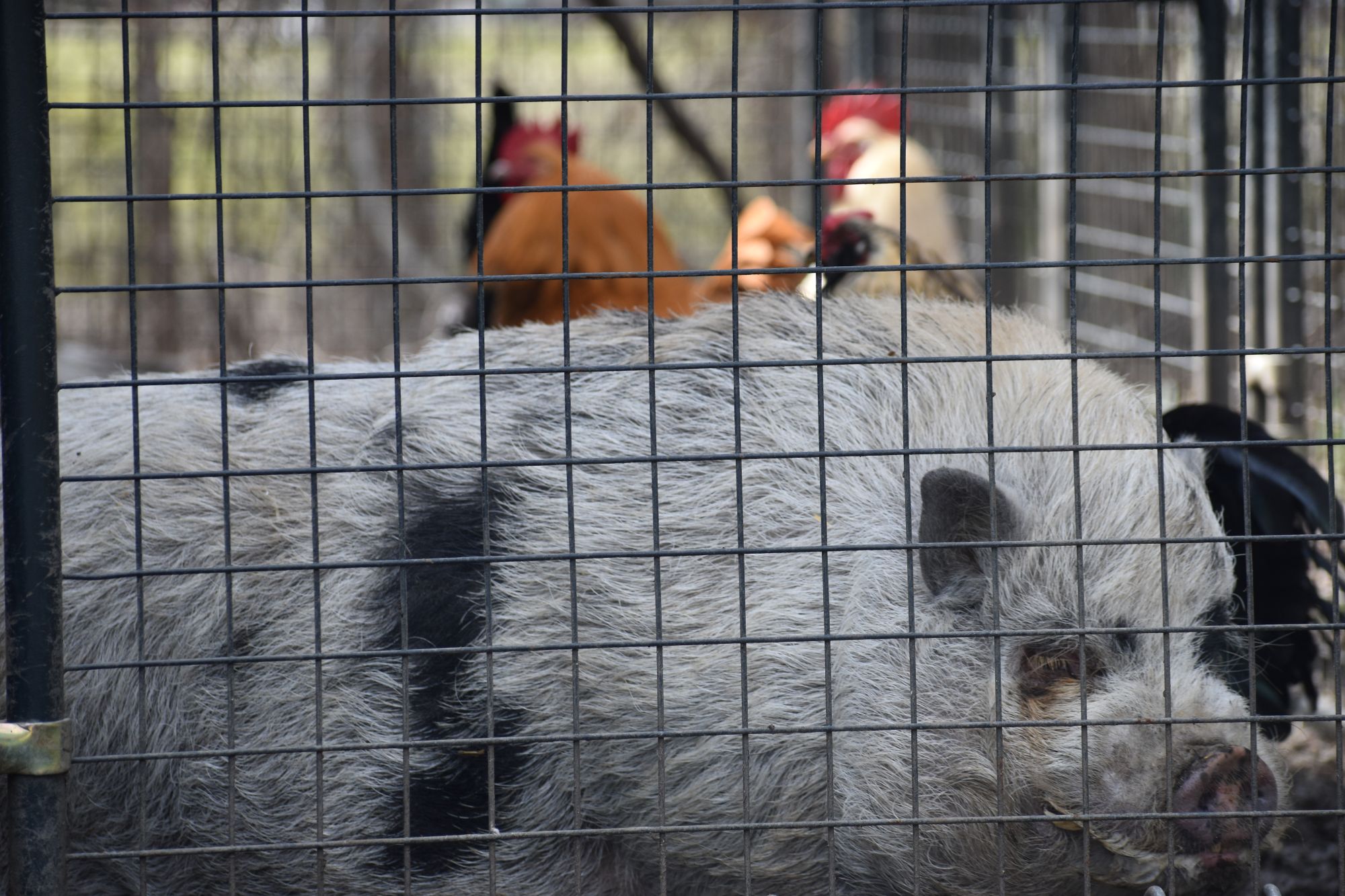
Then there’s the money she spends on providing 14 chickens, 10 ducks, five rabbits, two goats, one pig, eight cats, and three dogs with a healthy diet. She said she spends $1,000 a month just on feeding the livestock.
Other finances include Cross Anchor Rescue of Rhode Island flyers and cards, website development, organizing fundraisers and yard sales, and trips to the vet.
Pellegrino has found that fundraising and selling donated items, such as clothes and cologne, aren’t enough to care for the animals the way she wants to. She picked up a third job cleaning houses on Mondays to help offset some of the cost. That’s on top of some of the proceeds she earns from styling hair that she puts toward animal care.
“I gotta do it,” she said, adding that she considers the animals’ needs before her own.
Even though she operates a nonprofit, applying for grants and practicing on giving days like GivingTuesday or 401Gives isn’t in her wheelhouse, she said.
“I don’t know how,” she said. “If someone wants to volunteer helping me write grants, I would really appreciate that.”
‘Nobody wants roosters’
Pellegrino found Raymond the rooster near Rhode Island Hospital in Providence when he escaped a rooster fighting ring in 2023. Rooster rings are illegal organized fights between roosters that end in deaths.
She said he roamed the streets near the hospital for three months and was scared when she brought him home. She decided to name him after her uncle, father and brother, who all share the name Raymond.
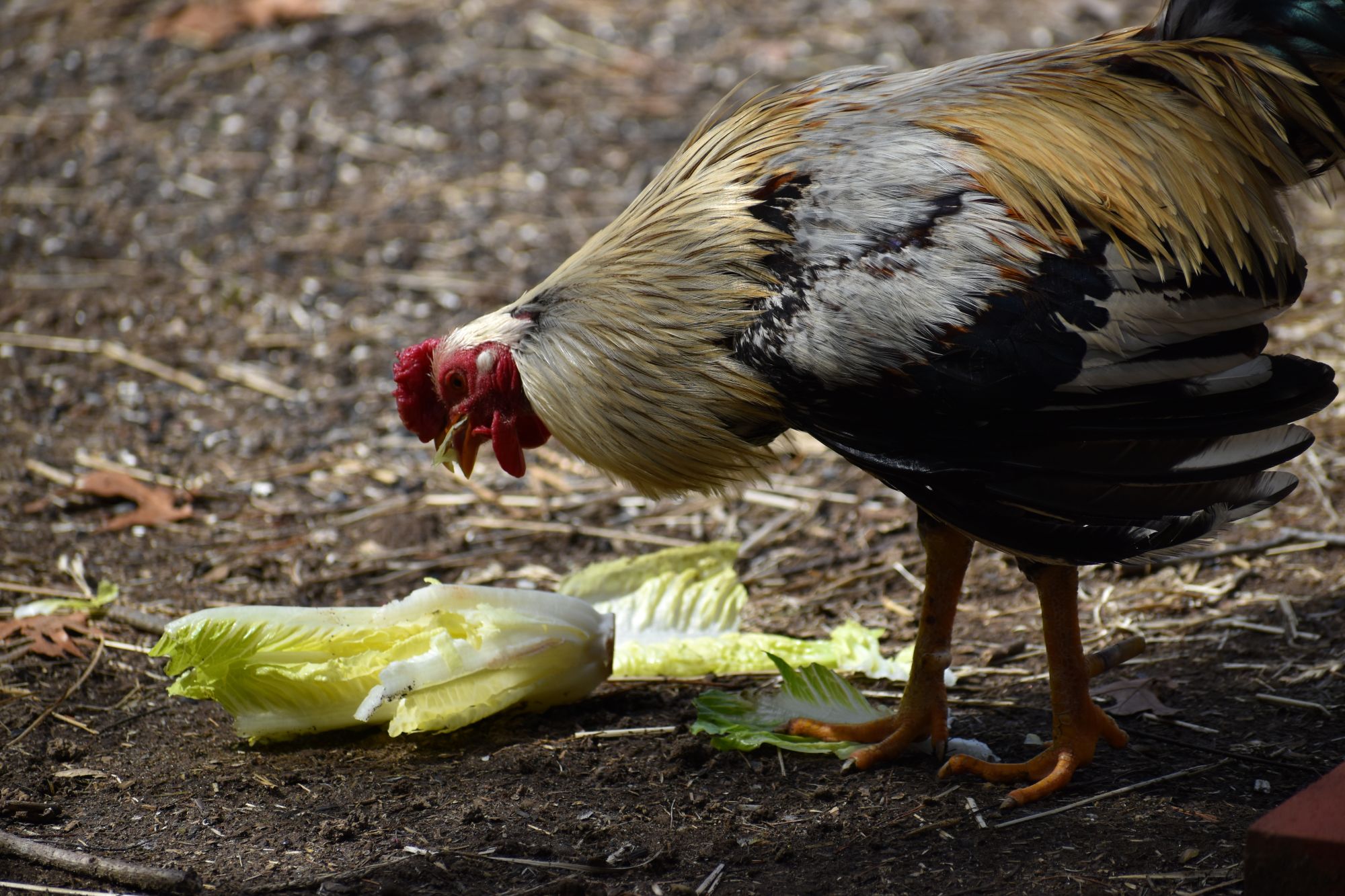
He’s “strong and wise like my uncle,” “thin and looks like my dad,” and “snappy and doesn’t like many others like my brother,” she wrote in a Facebook post, adding that “he crows so loud, New York City can hear him.”
Then 13 more poultry arrived. Seven roosters and six hens. She said they came from animal shelters in Warwick, Providence, Lincoln, and Smithfield.
Out of the four municipalities, only the state’s largest city’s zoning laws allow the owner of any dwelling to own a chicken.
When Warwick’s animal control officers capture a loose chicken, it’s not because the animal wandered into the city from Providence.
“These are people’s pets,” Ann Corvin, Warwick’s animal shelter director, said. “They’re not supposed to have them.”
Chickens end up at the shelter at least three times a year, Corvin said. She places the hens and roosters into quarantine dog kennels because she doesn’t have anywhere to house them when they arrive. Then she posts their pictures on the Warwick Animal Shelters’ Facebook page in case the owner is looking for their pet.
“Not once have I ever had somebody come forward for a lost chicken or rooster that we’ve picked up,” she said.
Corvin has found that roosters are harder to house than hens.
“Nobody wants roosters,” she wrote on the animal shelter’s Facebook page in 2024, when she needed to find placement for the loose bird.
Many urban areas, such as Providence, don’t permit roosters because of their crowing, which starts at dawn and can continue throughout the day.
You also have to monitor how they interact with other roosters because they might end up arguing and fighting one another, Corvin said. “The hens are easier to manage in terms of living in social groups.”
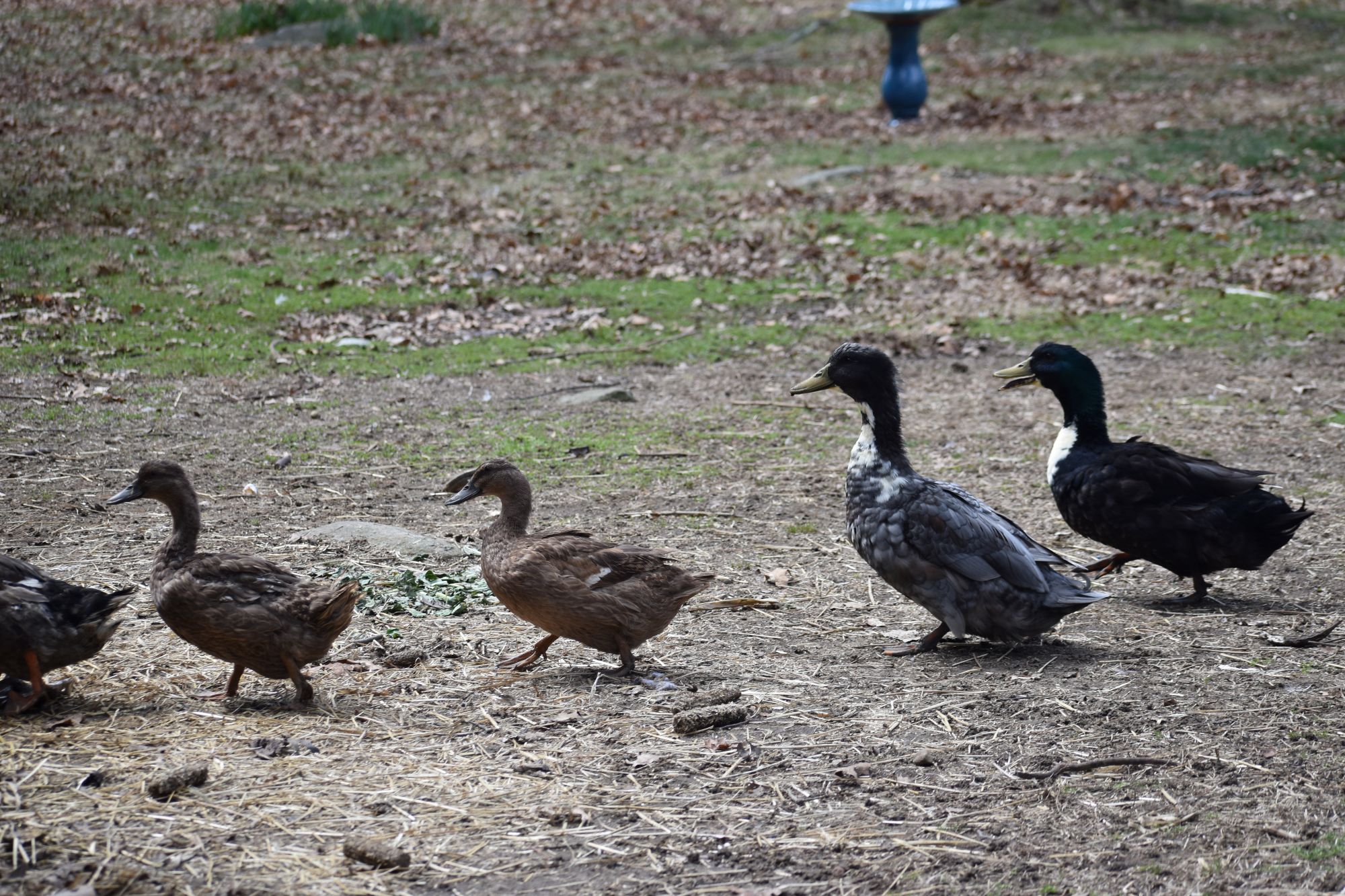
Raymond doesn’t get along with the other roosters, who are named after Pellegrino’s mother’s side of the family — the Beraduccis. She said all the other roosters get along, but Raymond was bred and raised to fight. He lives in a separate pen.
It can be difficult for people to tell the difference between a hen and a rooster when they buy the chickens as babies, Corvin said, but once they find out it’s a rooster, “out the rooster goes.”
The roosters and hens at Pellegrino’s sanctuary have survived emaciation and infectious diseases, and some have missing feathers. The fear they experience when they first arrive at the sanctuary is enough for her not to adopt them out.
“It’s not fair to have them come from neglect and abuse and then uproot them again,” she said. “They finally feel comfort, security, and safe. How do you know that? I can’t.”
‘That’s my dream’
Pellegrino dreamed about the day she could buy 42 acres of land for sale in Chepachet. The public would be able to hike with dogs on trails, visit the cat cottage, and enjoy the pond — but fishing would not be allowed.
“We love all those fishes,” she wrote in a Facebook post in 2022, adding she wanted the property to be a place where people could surrender their pets and visit them until they could take care of them again.
She learned days later that buying the land in Chepachet wasn’t feasible, so she shot for land in Foster, but that didn’t work out.
Her sanctuary, for now, is her home in North Scituate. The animals are free to roam the 9 acres of farmland, some of which became a trail in memory of her friend’s son, who died of leukemia.
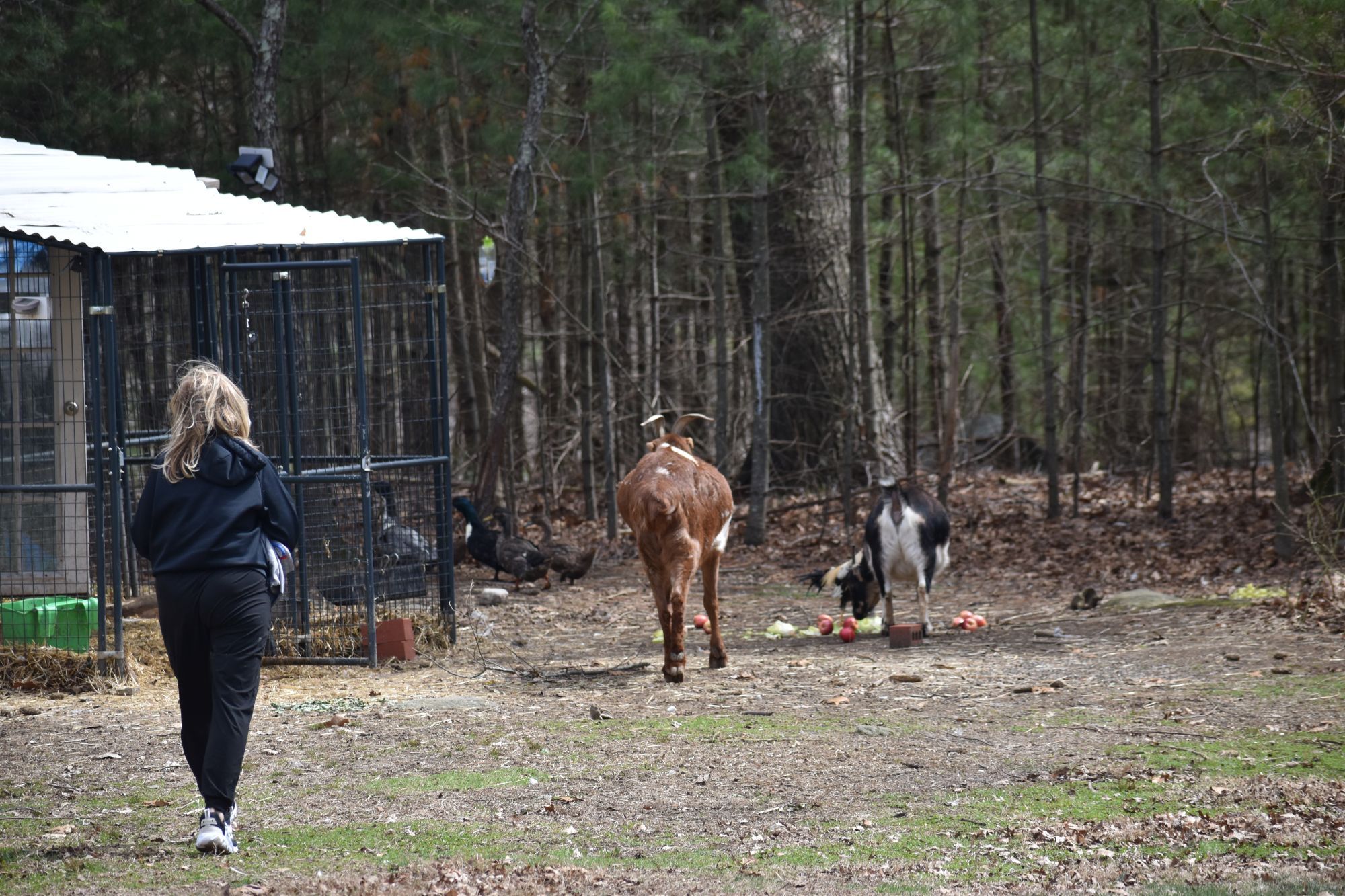
She’s still working on the pond, a shelter for unwanted cats, and has plans to expand. Although North Scituate limits the number of certain animals she can keep, she said she doesn’t plan on moving the sanctuary.
“They’re all acclimated here,” she said. “They know their scent.”
Cross Anchor Rescue of Rhode Island’s sanctuary is currently closed to the public, but Pellegrino plans to open it in June.
“My goal is for people to come up and see the animals and then walk the trail,” she said. “That’s my dream.”

Sue, I’m going to ask my daughter about writing for grants for you. That was what she did when she was employed.Maybe she could do that for you if she has the time, she now works part time as a crossing guard since she retired. I’ll let you know or she will.
I’d like to visit when you open.
I can bring bags ofcat or dog food if that helps