
When Extreme Heat Becomes Routine: Design Strategies for a Warming Rhode Island
July 20, 2026
Share


As Rhode Island moves deeper into summer, heat is becoming less of a seasonal spike and more of a status quo condition. Heat waves are more frequent, linger longer, and offer fewer periods of relief, especially at night, when temperatures fail to drop far enough to allow people and infrastructure to fully cool down.
In Rhode Island, high humidity due to our coastal climate further compounds the problem, limiting the body’s ability to cool itself through evaporation and making already elevated temperatures feel harder to tolerate, while adding additional strain on cooling equipment and infrastructure.
In urban and suburban settings alike, this shift is reshaping how communities across the northern tier of the United States experience everyday life, increasingly resembling conditions long familiar to southern states. At the same time, within any given region, the impacts are not evenly distributed. The effect is not simply about temperature variation between city and countryside. It is about how the built environment itself influences comfort, health, and exposure during extreme heat events.
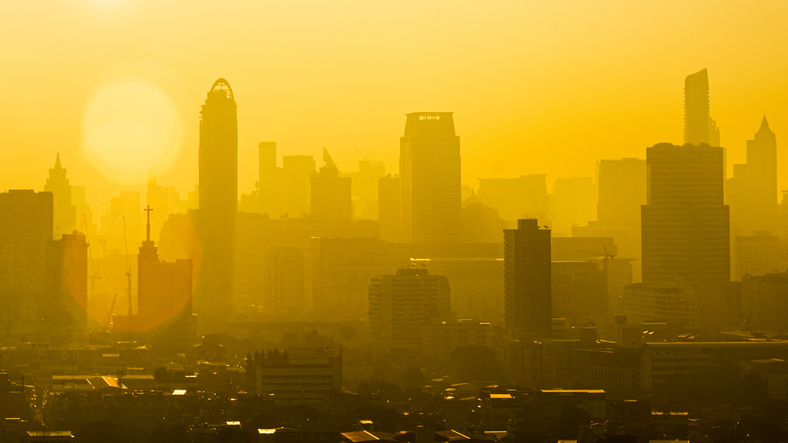
Streets, parking areas, rooftops, and buildings absorb solar energy throughout the day and release it slowly after sunset. In areas where tree cover is limited and development is dense, stored heat accumulates, creating localized zones that remain warmer than surrounding landscapes. These are commonly known as urban heat islands, areas where communities are routinely experiencing what once would have been considered occasional peak heat conditions.
This change has direct implications for public health and local planning. Temperature patterns often align with broader trends in infrastructure investment and past development decisions. This uneven distribution is not accidental. Research from NASA Earth Observatory finds lower-income urban neighborhoods tend to have significantly less tree cover — roughly 15% less in many cities — and can experience average temperatures 1–2 degrees higher than higher-income areas.
Addressing the problem starts with a few core strategies, one of the most effective being increasing tree canopy and connected green space. Expanding the canopy cover reduces localized heat in built-up areas and improves comfort during peak conditions, particularly in dense neighborhoods where shade is limited.
However, vegetation alone does not fully address the problem. The materials that make up the built environment also play a central role in how heat is absorbed and retained. Dark roofing and conventional pavement absorb large amounts of solar energy during the day and retain it, contributing to higher localized temperatures. Lighter, more reflective materials — such as cool roofs — reduce heat absorption due to their unique composition and help limit temperature build-up.
Urban form also plays a role. Dense building patterns, limited setbacks between structures, and continuous hardscape can restrict airflow and intensify heat retention at street level without carefully designed mitigation. Design adjustments such as introducing shaded corridors, breaking up large paved areas, and improving airflow pathways can help reduce heat buildup.
Alongside these physical mitigation strategies, municipalities are also expanding heat response measures as part of routine public services. Cooling centers in libraries, senior centers, and other public facilities provide relief during extreme heat events. Public pools, splash pads, and spray parks offer outdoor relief. These services are increasingly viewed as baseline public health infrastructure rather than temporary emergency responses.
Municipal heat response strategies also point to the need for longer-term resilience. Planning grounded in current climate trends is what turns those efforts into lasting change. Identifying high-exposure neighborhoods, mapping tree canopy coverage, and assessing access to cooling resources help direct investment where it is most needed. This allows limited resources to be focused on areas with the greatest exposure to vulnerable populations.
Energy systems are also part of the equation. As temperatures rise, demand for electricity increases sharply during peak hours, placing additional strain on the grid when cooling is most critical. Planning for long-term heat resilience includes strengthening existing electrical infrastructure to handle sustained demand, along with distributed energy resources such as battery storage and local solar to help reduce peak load and improve system flexibility.
There is a clear shift in how communities are approaching climate adaptation. Heat is now understood not as an isolated event, but as an ongoing condition shaped by design, infrastructure, and land-use decisions.
Managing extreme heat is no longer just about reacting to hot days as they arrive, but about adjusting to a reality that is quickly becoming the norm.
Nate Kelly is president of the Horsley Witten Group.
Categories
Join the Discussion
View Comments

Your support keeps our reporters on the environmental beat.
Reader support is at the core of our nonprofit news model. Together, we can keep the environment in the headlines.