
RIPTA Narrows Down Sites for New Bus Hub As Efficiency Study Looms
April 4, 2025
Share


PROVIDENCE — The Rhode Island Public Transit Authority has recommended, after several delays, two sites near the train station for the development of a new bus hub to its board of directors.
Both plots sit next to the Providence Train Station and across from the Statehouse, with one proposed 4.4-acre lot on Francis Street and another, smaller 1.5-acre lot off Park Row.
The authority and its development partner Next Wave searched for a new site for months, extending the process and location announcement several times. (An initial timeline from Next Wave had suggested that RIPTA would receive a 60% completed design by March 2025, with a “definitive project submittal” finished by August 2025.)
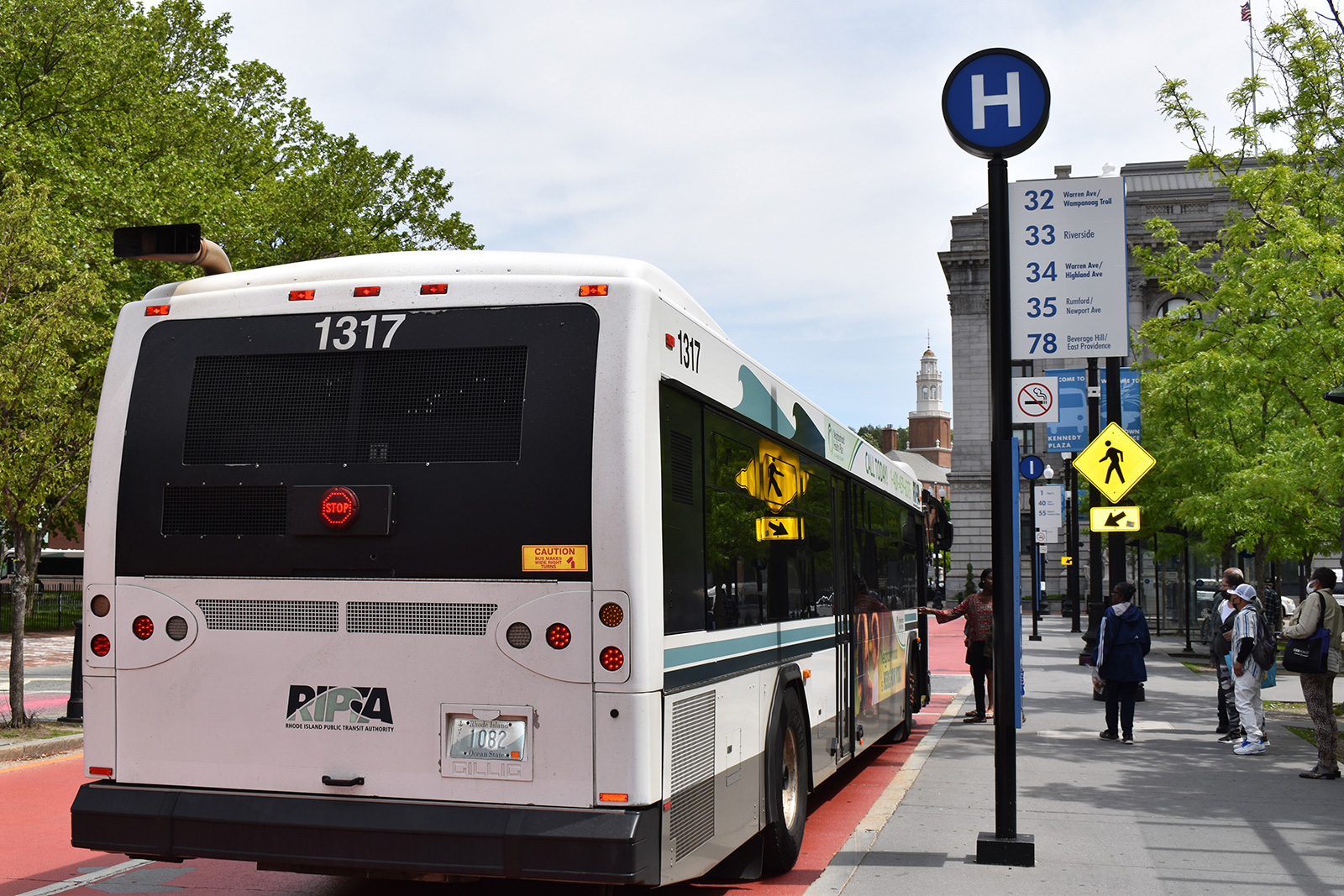
RIPTA currently operates its largest bus hub out of Kennedy Plaza in downtown Providence, which has served as a transit center of some sort for hundreds of years. In the past century, the area transformed from the site of the old train station, which recently became a dining hall, into a bus hub as the city transitioned away from trolleys and moved the train station to its current location.
Opposition to moving the hub has shifted over several campaigns to move the transportation center from Kennedy Plaza. Riders and advocates led staunch opposition to plans that proposed moving the hub to Dorrance Street, and then a proposal to locate the hub on an Interstate 195 parcel farther away from downtown. Some advocates have been more supportive of moving the bus hub next to the train station, as long as there are plenty of buses operating in whichever hub RIPTA chooses.
“RI Transit Riders is open to the possibility of a hub located near the train station provided we can be assured that the state will simultaneously commit to full operational funding for RIPTA,” the transit advocacy group said in a statement, “including money to not only address the fiscal cliff, but also to implement the Transit Master Plan.”
RIPTA currently faces a $32 million shortfall in its fiscal 2026 budget, which RIPTA staff have said could lead the agency to lay off about one third of its employees and impose massive service cuts.
“There is no point in building a new facility if RIPTA service is allowed to deteriorate,” the statement added.
Transit advocate and rider Daria Brashear said she favors the Francis Street location of the two sites offered at RIPTA’s last board meeting. “If I were going to move the transit hub, that’s the site I would move it to.”
“While the mall isn’t everything, and it’s not the majority of downtown destinations, it’s at least something. It’s at least a place where people want to go, unlike most of the other things that have been proposed,” she said of the location, which is on the same street as Providence Place. “It’s also a big enough lot that, unlike the site on the other side of the station, you could actually do something with it.”
But Brashear said she worries relocating the hub out of Kennedy Plaza is better for businesses than it is for riders, and said she wants to see more evidence to the contrary.
“If we don’t figure out what we’re going to do to fund the gap in service” the location of a bus hub won’t matter much to her or other riders anyway, she said.
Several bills currently in the General Assembly seek to fill in the budget gap and provide more sustainable funding for the agency into the future, provide additional bus service and fulfill the initiatives outlined in Transit Forward RI, also known as the Transit Master Plan, an ambitious transportation agenda adopted by the state in 2020.
While the future location of the state’s transit hub and bus service remain uncertain, RIPTA is also undergoing an efficiency review, which Gov. Dan McKee mandated after providing an additional $10 million in funding to the agency in his budget last year.
The governor set an initial deadline for the study for March 2025, but RIPTA’s board of directors delayed it until CEO Chris Durand was hired permanently. (The board voted on Durand’s appointment last November, finalizing his contract earlier this year.)
Durand said at a board meeting in January that he hopes the review, although delayed, will offer some significant findings to the General Assembly and governor by May, when the state budget deliberations will be winding up.
“Perhaps the efficiency study should have been greenlit by the board earlier than it was, so that this wouldn’t be an excuse that could be used on Smith Hill to decide not to fund transit service,” Brashear said. But she said she doesn’t believe it will turn up any new information on how RIPTA could be spending more efficiently, pointing to the fact that Rhode Island already spends less on transit per capita than neighboring states and other similar systems.
“It seems to me that it’s pretty well run,” said Andy Nosal, an avid transit rider who writes a column for Motif Magazine called “Two Feet, Two Bucks,” which takes him around Rhode Island exploring places he can get to only by RIPTA and/or walking. “I don’t know what they’re wasting money on.”
Nosal said if the state wants to make RIPTA more efficient, he suggested it find ways to avoid having drivers continually idling in traffic.
“Give the buses their own lane,” he said.
RIPTA’s board awarded a $412,000 contract to WSP and Foursquare to complete the efficiency review, which the companies said will take about 4,200 hours of work spread out between more than a dozen employees.
The final report for the review is scheduled to be ready in about five months, according to the RFP submitted by WSP and Foursquare to RIPTA, although some of the analysis will be completed before then, including a performance assessment of operation which the companies estimate could be completed in three months.
My recollection is the concrete slab and underlying structure over the train tracks in those locations have insufficient bearing capacities. These parcels were not envisioned for dynamic use.
I do not trust anyone who does not regularly ride the bus to be on a committeee determining where the bus hub should be. I know many RIPTA employees ride the bus, but DOT, State Planning Council, consultants, legislators (yes a few do ride the bus) are hardly filled with regular riders, and you know the real estate owners in downtown never do such things. I sincerely doubt they will come up with anything to make the riders experience better. That said, I would accept what RI TransitRiders finds acceptable as longh sa it comes with guarantees of enough funding to complete the entire master plan.
I’ve always wondered if the buses are ever filled to capacity on routes outside the cities?
If not, wouldn’t smaller electric buses be logical if they had enough range to do a full route?
Public transportation is important to the community whether you ride a bus or not.