
Newport Officials Lukewarm on Proposed Moratorium on New Natural Gas Hookups
November 1, 2025
Share


NEWPORT, R.I. — After rejections from Middletown and Portsmouth, city officials are skeptical of a proposed Aquidneck Island-wide ban on new natural gas hookups.
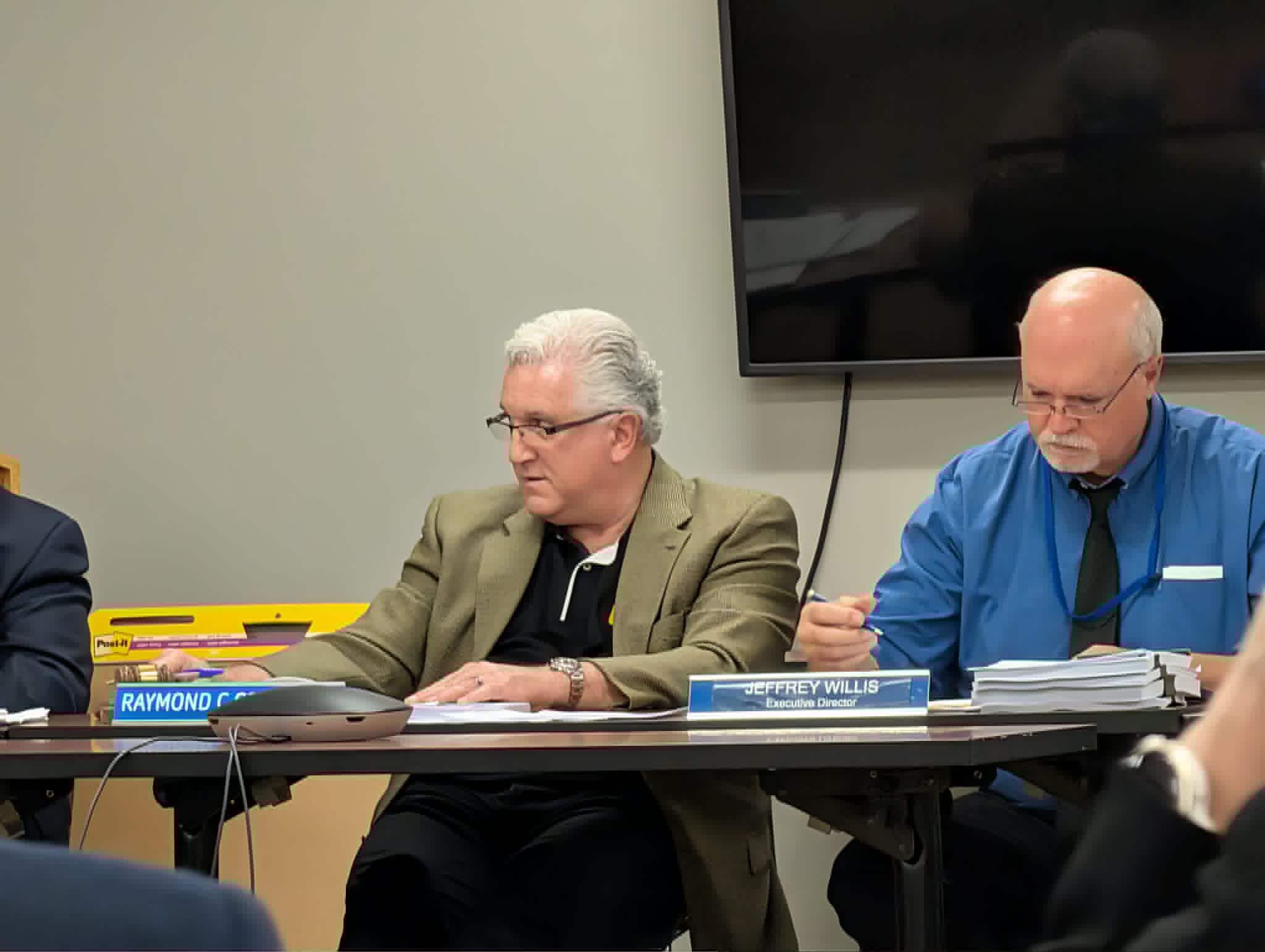
On Wednesday, City Council members and members of the city’s Energy and Environment Commission held an information workshop at City Hall. The goal was to become informed on the pros and cons of an island-wide moratorium as proposed by the state Energy Facility Siting Board (EFSB).
Environmental groups — the Conservation Law Foundation, Acadia Center, and Green Energy Consumers Alliance — were on hand to answer questions, along with an attorney representing Rhode Island Energy.
The City Council was skeptical of the moratorium — most of Aquidneck Island’s residents use natural gas for heating and cooking — and members were loath to approve anything that might reduce housing construction or tamper down the local economy.
City Council member Xaykham Khamsyvoravong said it was unfair for Newport’s marginalized residents to abide by a moratorium when other municipalities in the state weren’t even being asked in the first place, especially in a time of rising energy costs.
“What answer do I give to a family facing rising housing costs, facing an additional 30% in energy costs, so Newport can be the tip of the spear?” Khamsyvoravong asked.
“We’re headed to a situation where gas will be even more expensive than it is now,” said James Crowley, a CLF attorney. “Newport will be switching to a cleaner fuel now rather than later.”
Jamie Rhodes, another CLF attorney, noted that Rhode Island Energy turned a profit over natural gas expansion and ratepayers often subsidized the expansion of the natural gas system. Massachusetts, said Rhodes, banned subsidizing new connections earlier this year, requiring households or businesses to pay the whole cost upfront.
“Natural gas really isn’t equitable either, it just isn’t felt individually,” Rhodes said. “All of us pay into the system without any say of what happens in it.”
Crowley, whose organization supports a moratorium, told council members that from a peak-demand point of view, switching to electric heat pumps in winter for heat makes sense. Electricity demand typically peaks in the summer on the hottest days when the most people are turning on their air conditioning, said Crowley, so electricity is less likely in the short-term to impact grid reliability.
Crowley also noted the state has obligations under the Act on Climate law to reach net-zero emissions by 2050, with plenty of benchmark goals in between. It would ultimately be more costly and wasteful for oil customers or new construction to hook up to natural gas, when in the next 20 years they would likely have to transition again to all-electric heating and cooking systems.
“Any pathway to net zero is going to require a move away from natural gas,” Crowley said.
Reaching the goals of the legislation, under penalty of legal challenges, means cutting out natural gas and other fossil fuels almost entirely.
Two important reports are expected out of the state this year: A Climate Action Plan, a roadmap of how Rhode Island will actually reduce its greenhouse gas emissions to meet the Act on Climate, and the final report on the Future of Gas docket.
First opened by the Public Utilities Commission in 2022, state regulators have been working to investigate what the future of natural gas will be in Rhode Island.
In Newport, some took a more neutral approach on the proposed moratorium. Rep. Terri Cortvriend, D-Portsmouth, whose district includes temporary natural gas infrastructure on Old Mill Lane that keeps another island-wide gas outage at bay, invited council members to drive by the facility, noting nearby residents hate living next to it.
“I don’t think you’d want to live next to it either,” she said. “Anything we can do to lower demand for natural gas is anything we can do to close the facility on Old Mill Lane.”
The debate over a moratorium on new natural gas hookups has occupied Aquidneck Island’s three municipalities the past few months. The island faces a unique energy crisis unlike any other in Rhode Island, thanks to its position at the very end of a natural gas pipeline owned and operated by the Calgary, Canada-based Enbridge Inc.
Local support for the moratorium has been slim. An island-wide public hearing by the EFSB in the summer was split. In October, the Middletown Town Council voted unanimously to oppose the moratorium, and in September, the Portsmouth Town Council voted, 4-3, to oppose it.
A ban on new hookups means new construction, and residents looking to transition to something besides heating oil, would be required to get energy-efficient heat pumps instead, and electric induction stoves. Both are major appliances, with the heat pumps requiring either pre-existing ducts or the installation of a mini-split system into the wall of a home, making them major and costly household investments.
Rhode Island gets its natural gas from the Algonquin Gas Transmission pipeline, which cuts across New England in a northeasterly direction. The main pipeline barely passes through Rhode Island; there’s a compressor station in Burrillville before it passes through a bigger station in Mendon, Mass.
From Massachusetts, the pipeline splits. A pipeline called the G-lateral supplies southeastern Massachusetts, Cape Cod, and much of Rhode Island’s East Bay with natural gas. Aquidneck Island’s position at the end of a smaller branch of the pipeline is one reason it faced failure six winters ago.
In early 2019 the natural gas distribution system experienced a sudden drop in pressure thanks to rising local demand caused by cold temperatures and the failure of a vaporization system at Fields Point and a manufacturing valve at a meter station in Weymouth, Mass.
The outage led what was then National Grid to install a temporary vaporizer on a property on Old Mill Lane in Portsmouth, ready to go online each winter in the case of another pressure drop or outage. The EFSB approved the temporary installation for a five-year term, and re-upped it for another five years in August 2024.
Part of the reauthorization of the Old Mill Lane equipment was a look into how to reduce demand for natural gas on Aquidneck Island, to avoid overloading the system in cold winters. The EFSB floated a moratorium as one way to curb demand.
“We expect natural gas demand on the island to be relatively modest,” Steven Boyajian, an attorney representing Rhode Island Energy, said at the recent workshop. “Over the next five years we project natural gas to grow 0.15% annually.”
Rhode Island Energy submitted its own economic analysis of a moratorium to the EFSB in August. It shows only 182 new authorized natural gas connections in the residential sector between 2022 and 2024, with another 34 in the commercial and industrial sector. The company expects another 209 natural gas connections from now until 2029, over half of which will be in Newport.
“It’s just something I have a hard time deciding on as the only community being asked to impose a moratorium,” Khamsyvoravong said.
Categories
Join the Discussion
View CommentsRecent Comments
Leave a Reply


Your support keeps our reporters on the environmental beat.
Reader support is at the core of our nonprofit news model. Together, we can keep the environment in the headlines.
Any individual can have the gas supply turned off to their home or business. There is no need to involve others.
it is time to phase out natural gas permanently
Intermittent renewables cannot possibly replace gas for electricity until on-demand small nuclear reactors are widespread, and that won’t be by 2030. And they will never replace gas for heating. Meanwhile, the Portsmouth LNG facility provides gas only on occasion, and at a cost of more that 1,000 times that of pipeline gas. That’s because LNG is much more expensive, and the cost of the LNG facility has to be amortized over very little use. So what do we need? In the short run, a moratorium on new commercial hookups (hotels, etc.), not on residential, until the opening of more gas lines into RI.
Greg,
Natural gas heating systems are the most efficient. Why should individuals be forced to use a less efficient and more expensive system just to make a perfect stranger feel good? You don’t like natural gas; don’t use it. Last I knew this is a free country.
Right on, Babs. And when there is a shortage of anything, the price goes up. That is, unless there is no shortage of the product except it’s availability is artificially restricted to promote a different product. A few weeks ago, there was no wind in the North Sea, and Britain had to get all but 7% of it’s electricity from the EU.
And wind cannot run without gas plants to levelize the up and downs of wind velocities and direction that go on constantly, even every few minutes. (I know, I’m an avid sailor.) Every study done to date has shown that more gas/coal is used when wind farms are running than when they are not. (see Bentek IV ERCOT study and others.)