
‘Failing the Students:’ RIPTA Cuts Affecting Those Who Rely on Agency’s Buses to Get to School
January 12, 2026
Share


PROVIDENCE — High school student Chrys Santos said he used to be able to get to school on time.
Like thousands of students living in or around Providence, Santos doesn’t take a yellow bus to school, he relies on the Rhode Island Public Transit Authority. It worked fine, until last year when RIPTA was forced to reduce bus frequency, among other service cuts, to close a fiscal gap.
Now, students like Santos, who rely on public transit to get to school, are feeling the pain from the service cuts.
“Earlier this week I woke up late, after 6:15,” Santos said. “I was an hour and a half late to school. I missed two of my morning classes, and my grades in Spanish and algebra have gone down by five points.
“It might not seem like a lot from the outside, but my grades determine my eligibility for honors classes, for scholarships and all that, and it’s a bigger weight than just a report card.”
Santos said dozens of his classmates are in the same boat, and their concerns are more than being late to class. Students report having to wait 20 to 30 minutes longer for buses, in the bitter cold of winter, in the snow, in the rain, and in the dark.
“I can’t imagine my younger brothers having to take the bus in the future and deal with these conditions,” Santos said. “They might not have as many options as I have with my education if access to education is determined by how early you wake up or how long you stand out in the cold. We’re failing the students that actually need the most support.”
Stories like Santos’ are common in Providence, and advocates are hoping to spotlight more of them as the General Assembly gets down to business this year. The Save RIPTA coalition, which officially launched its campaign Jan. 8, where Santos told his story to a packed Statehouse library, has long pushed back against budget or service cuts to Rhode Island’s only transit agency.
Funding public transit in Rhode Island has always been an uphill battle. When Gov. Dan McKee rolled out his budget last year, RIPTA faced a $32.6 million shortfall that was left to the agency and the Legislature to figure out how to fill.
The General Assembly allocated the transit agency $15 million, and the shortfall was shrunk further by favorable diesel fuel prices and strong returns from its pension plan investments down to just $10 million.
But even that deficit meant RIPTA had to implement the biggest service reductions in its almost 60-year history as an agency. Starting on Sept. 27, 45 out of 63 total routes operated by the agency saw bus frequency reduced or routes cut.
“This is not the right size for RIPTA,” said Liza Burkin, president of the Providence Streets Coalition. “We have to restore these cuts, and we need to pass legislation to stabilize the finances and grow and expand RIPTA, not just save it.”
Part of the coalition’s legislative launch, the third year in a row Save RIPTA has hosted the event, was the release of an impact report on the 2025 service cuts to RIPTA. The coalition surveyed impacted riders and drivers directly, asking how their bus rides were changing and how they felt about the new cuts.
The new schedules reduced the number of transit service hours, while paradoxically increasing much of the staffing overhead (RIPTA did not lay off a single driver due to the cuts). Only 21 bus routes now meet RIPTA’s minimum standard of frequency, a key standard to meet to increase ridership.
The report estimates 81% of RIPTA’s routes were gaining ridership before the cuts. Following the September reductions in service, 75% of the routes were now losing ridership. Routes with service cuts saw on average 4,000 fewer daily riders, while routes without cuts saw only 26 fewer daily riders, according to the report.
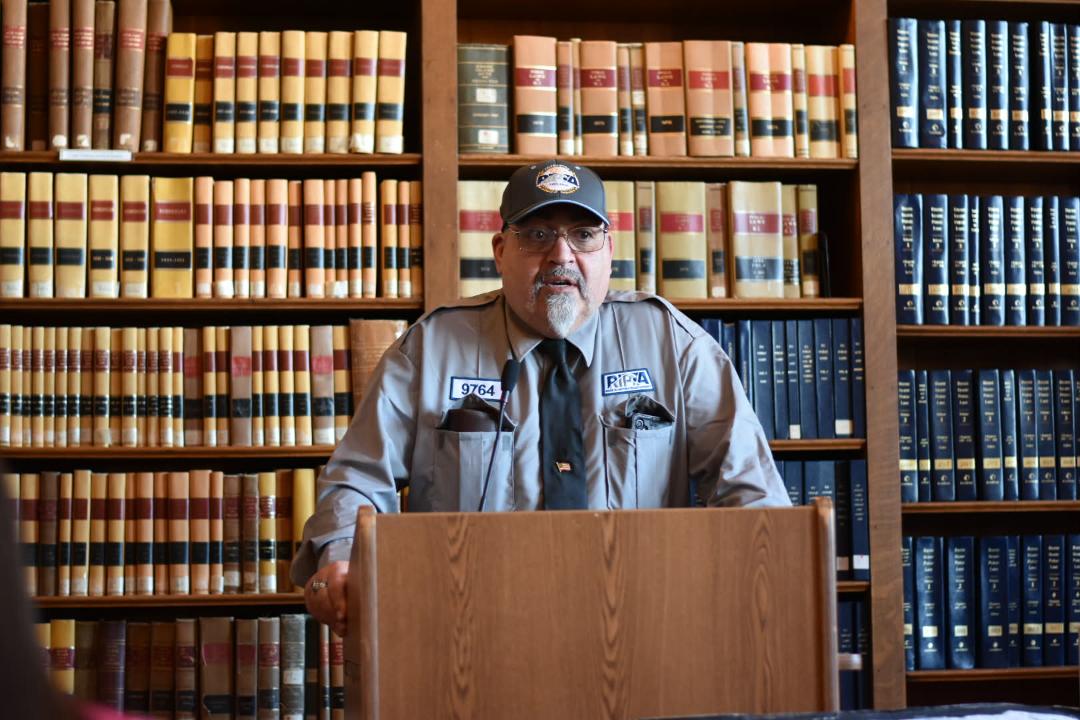
“Our interaction with riders now is turn and burn,” said Jorge Alves, a RIPTA bus driver for 13 years. “We don’t have time to slow down and let people go at their own pace. There’s a lot more increase in incidents and it’s become very stressful to work because the pressure is always on.”
Drivers have the same job for the same pay, said Alves, but now are expected to work faster and get more done in a shorter amount of time.
Save RIPTA’s mission this year is to reverse those cuts and expand service to increase ridership. Last week the coalition announced its 2026 legislative package, a suite of eight bills in each chamber of the General Assembly designed to reverse service cuts, boost RIPTA’s bottom line, and restructure the governing board that makes final decisions for the transit agency.
“If we do all these things, we can set RIPTA on a path to real expansion, real usefulness for more Rhode Islanders,” Burkin said.
The legislative wish list includes:
A $5 million allocation from next year’s budget to reverse the 2025 service cuts.
Increasing RIPTA’s share of the highway maintenance account, from a 5% split with the state Department of Transportation to a 20% split. Advocates estimate it would give RIPTA another $10 million.
Allocating sales tax collected on Uber and Lyft rides to RIPTA’s paratransit programs. Estimated annual revenue for RIPTA, around $10 million.
Requiring any company with 500 or more employees to provide RIPTA passes as a pre-tax benefit and generate more money for RIPTA via its Wave to Work program.
Putting a $100 million bond on the ballot for capital improvements in the state’s Transit Master Plan.
Increasing the car inspection fee, the first time since 2014, with those funds earmarked for the Highway Maintenance account shared with RIDOT.
Reversing the 2023 law making the director of RIDOT the chair of RIPTA’s board.
Indexing the motor fuel tax to a two-year inflation rate.
New taxes are always a tough sell in a deficit year. Lawmakers began the 2026 session with a $101 million shortfall in the state budget, an environment in which legislators are traditionally loathe to expand or introduce new state services.
In the meantime, riders and drivers will continue to bear the brunt of the cuts, as many of them don’t have other transportation choices.
“My family and I immigrated here in 1978, and we were completely dependent on the bus system, my parents to go to work, me to go to school,” Alves said. “I’ve been involved with RIPTA forever; any vision that anybody has for the future of this state has to include RIPTA.”
RIPTA should absolutely be part of the GA’s affordable housing laws and bills. The state cannot mandate affordable housing and then ignore the fact that many communities do not have public transit to go along with it. The number one reason suburban and rural communities come out against affordable housing; traffic.