
Round Two: Mayor Smiley Revisits South Providence Concerns in Meeting with Residents
May 29, 2026
Share


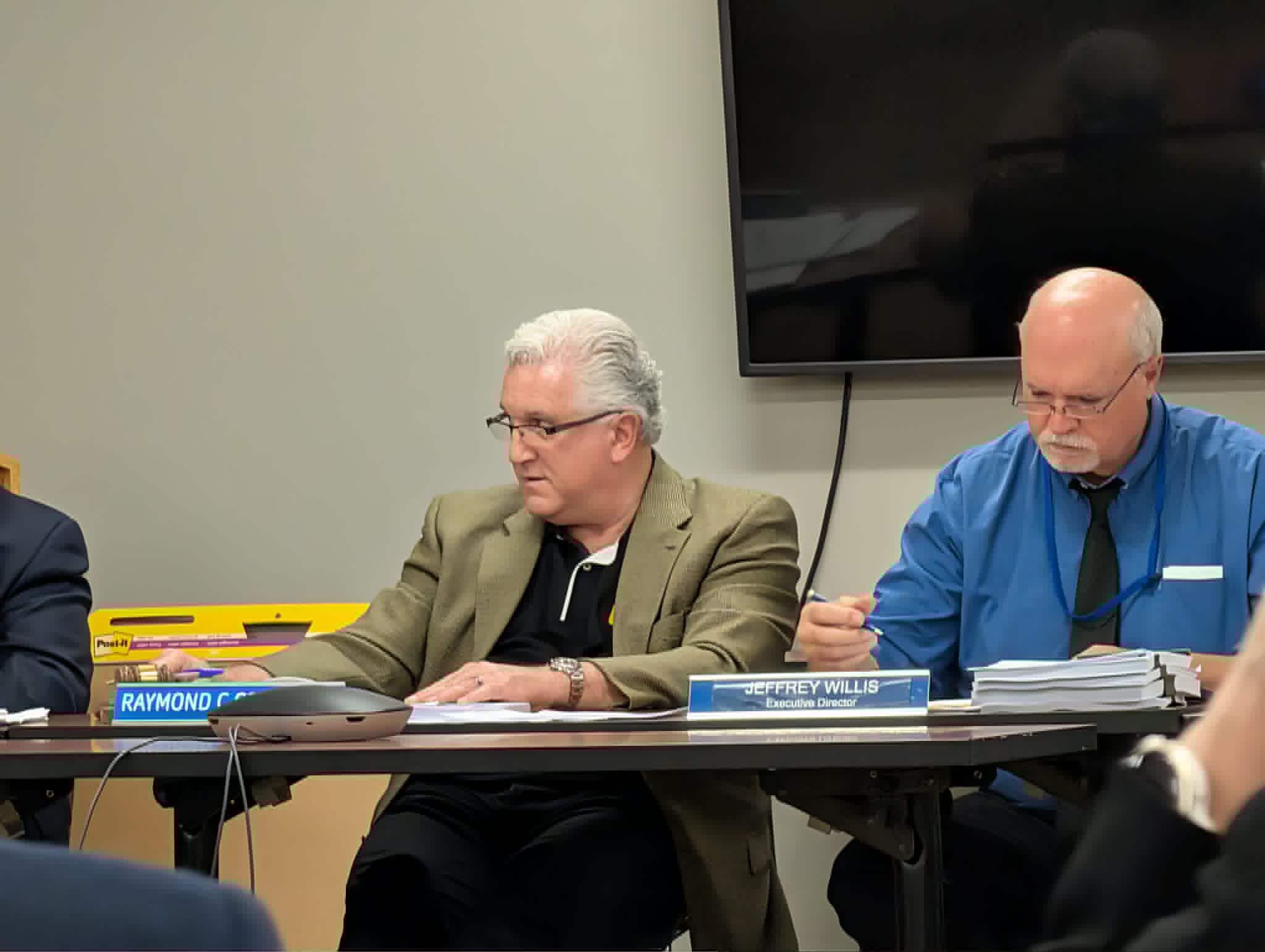
PROVIDENCE — Two weeks after the Jacqueline Clements Park Collective rallied outside City Hall, Mayor Brett Smiley sat down with South Providence residents May 26 to answer questions about neighborhood concerns.
The discussion followed a March meeting hosted by sisters Yaimani and Yadira Rivera, leaders of a grassroots organization, to bring residents and the mayor into direct conversation.
While residents returned with new questions, some lingering frustrations came back into the spotlight, including how the city handled its snow removal during February’s blizzard.
Here are a few questions and concerns that stood out. Responses and remarks have been edited for clarity and brevity.
Question: By using the 246 Prairie Ave. site for snow dumping and trash bin replacement and describing the area as already contaminated, it reinforces the perception that South Providence is a dumping ground, physically and metaphorically. Why is this happening under your administration?
Smiley: “So, with respect to snow, there was a misleading, if not fully inaccurate, story that 246 Prairie was the only place we put snow — that’s not true. We put snow in multiple locations in every neighborhood in every part of the city, including on the East Side. Actually, most of the snow went to what’s referred to as Victory Plating, which is the gravel area abutting I-95 in the Jewelry District.”
The other locations include:
- The parking lot of the Brown Football Stadium
- The parking lot at Merino Park
- The parking lot at the flea market on Plainfield Street
“246 Prairie was chosen because the city owns the lot. There weren’t a ton of places we could put snow, so that’s where we put it. As soon as the snow melted, we ran our trash cart operation out of there, and that’s wrapping up now. You’ll see most of the new carts are gone. Hopefully, most of you have received your new carts. Now we’re recycling the old carts. The wheels and the metal bar get taken out and thrown away. Then the plastic part that’s remained gets trucked away, and those actually get ground up and melted down, and they will be turned into new carts for someone else. The old carts you see stored there right now are being removed in batches for recycling.
“There’s been a long community engagement process for the future use of 246 Prairie. We all hope that it’s a major redevelopment area, and the community has shared their aspirations for that site. But no matter what ends up being done, there is going to be a big construction project. That site is going to be remediated and excavated as part of the construction process, is a true statement. We hope there’s sufficient interest to make it a big construction project because we think it can be a real asset for the community. So that’s the snow story and where we put the snow and why we use that site amongst what were four other sites.”
Concern: Two large piles of debris have yet to be cleaned up, and we’re now in June. It’s hard for residents not to see South Providence as a dumping ground and blatantly disrespected.
Smiley: “So, the Victory Plating site, the city doesn’t own that site — Brown Health owns that site. That pile is gravel. They’re doing temporary parking while they do a construction project there. So they went and compacted the site, painted stripes on it, and such. So, that’s the old gravel; that’s what that pile is. But that’s not ours; that’s Brown Health. Their plan after the construction project is to redevelop that site into something.
“They haven’t said what yet. But that’s just gravel. I mean, we talked about the snow and why it was used. We started hauling snow there in the middle of a significant snowstorm. We were looking for places to put the snow, and that was one of the places because the city owns the lot. Constituents were calling us every hour, saying, ‘When is this street going to get snow removed?’ So, that was the decision that we made in the middle of the storm, and it was a solution to a problem that many residents were having.”
Question: Do you understand it’s disrespectful? I understand a lot of constituents have called, saying we want the snow removed. When did that translate to “Let’s dump it in South Providence?”
Smiley: “But it was dumped in five places in the city.”
Question: What other options can the city pursue for snow removal instead of what it did in the past few months? Did you find that removing snow from the city would cost more money? What was the issue, and how can we solve it?
Smiley: “Just like the businesses, we had sort of the same problem. So, when we do snow removal, generally speaking, in a normal year, maybe a third or a half of it is done in-house by public works, and then the rest of it is done by private vendors. They also charge us to pick up the snow and take it away. Keep in mind, this was the first time in over a decade that we had actually hauled snow away. Generally, the storms are such that we just plow. We don’t actually remove it. This was the first time in a long time that we removed it. The January storm was the first time we had to find a place to store it. The February storm was, of course, historic, the largest in the state’s history.
“We have not historically allowed private snowplow people to dump their snow on city locations for no charge because, otherwise, the complaints that we’re hearing today from the community would only be worse. Then you would have every private business and parking lot owner dumping their snow somewhere, also. There were just not enough places to put the snow this winter. It was the most snow in state history. In the old days, they used to let you dump it in the river. We don’t do that anymore — that’s probably for the best. That’s bad for the environment and for the river. So it’s a problem.
“Some places have purchased snow melters, which is like a giant dumpster with a heating element. You dump the snow in it, it melts, it turns to water, and it runs off. That’s not equipment we’ve ever owned, because we’ve never needed it. We’re looking at other options. We try to learn from difficult moments. So, we’re trying to learn from this winter to see what we might do differently in the future. But this was not a normal winter, and it’s unlikely we’ll have one like this again for a while. The last time we had a storm like this was 1978, almost 50 years ago. We plan for the average winter. We don’t plan for the historic winter. The reason we don’t plan for a historic winter is that we would be spending a lot of your tax dollars preparing for a storm that’s highly unlikely to happen, and that’s money we’re not spending on something else you want. But we are looking at some other tools that would be helpful in the snow question. Maybe it’s a melter. Maybe it’s a different plan for dumping. But if we’re removing snow, it’s got to go somewhere, and finding those locations is hard.”
Question: Out of those five locations, how many are still contaminated with gravel and stuff?
Smiley: “I’m not aware of any snow that’s left.”
Question: Does the hospital have a plan to get rid of the pile of gravel that’s on Eddy Street?
Smiley: “I don’t know what their plan is, but I could inquire.”
Concern: “You should because we’re getting a lot of comments about it and it’s making you look lazy.”
Smiley: “It’s not our property.”
Concern: “It’s not your property, but you used it, and what you used to put there is still there. Last time, you said it’s going to melt and go away — well, it’s not.”
Smiley: “It’s not snow; it’s gravel.”
Question: You should have an environmental justice department that works across sections. The pile of gravel on Eddy Street and the issues with the Port of Providence would fall under the environmental justice header. Why isn’t there a city environmental justice division?
Smiley: “Our sustainability department would be the one that would be responsible for the environmental justice work. We also have a board, the sustainability task force, and that’s also part of their purview. I think that clearly falls under their responsibilities.”
Question: What is the update on the leaking pipe on Public Street? What is happening, and why is that issue so hard to resolve?
Smiley: “Part of the delay is we’re not sure who’s responsible for the leak. I’m happy to report that we’ve been able to get Rhode Island Energy to pay for the probe and the pipe scoping so we can assess the source of the leak and therefore assign responsibility for the cleanup. Rhode Island Energy recently agreed to pay for the initial assessment, which will happen shortly and help us get to the source of the leak. But we know about it, and thankfully, Rhode Island Energy, and not the taxpayers, is paying for it right now.”
Categories
Join the Discussion
View Comments
Your support keeps our reporters on the environmental beat.
Reader support is at the core of our nonprofit news model. Together, we can keep the environment in the headlines.