
Cool Breeze: Juanita Sánchez Students Reshape Providence’s South Side
May 18, 2026
Share


PROVIDENCE — Josmeily Minier Estevez has been transforming Providence one corner at a time, during rain or shine. The Juanita Sánchez Educational Complex senior can pinpoint the contributions she’s made across the city to help the next generation breathe cleaner air.
The school she attends — named after a social worker from the Dominican Republic who helped shape Rhode Island’s history — sits in an urban heat island with little shade, in a neighborhood with one of the lowest tree canopy rates in the city and part of a state where 13% of its land consists of pavement.
Minier Estevez sought to change that during her sophomore year when she planted her first tree. She has planted 35 saplings over two years with the support of a Pawtucket-based environmental nonprofit, and she doesn’t see herself stopping any time soon.
With a colorful bandana tied to her belt loop, the 17-year-old has helped Groundwork Rhode Island advance its vision of more equitable urban communities by introducing residents to a growing movement that is reclaiming urban spaces through her work on its Green Team.
The team, an army of high schoolers, has installed native vegetation that creates miniature forests in small spaces in Providence since 2024. And when it was time to find a place for another, Minier Estevez knew the best spot. A 1,000-square-foot pocket outside of the Juanita Sánchez Educational Complex.
“I really wanted to make a big hit for my school,” she said. “I thought this was going to impact my community the most.”
A group of volunteers, ranging from senior citizens to toddlers, gathered on a cloudy, drizzly Saturday morning on May 9 to plant a microforest at the high school using a method created by Akira Miyawaki, a Japanese botanist and plant ecologist.
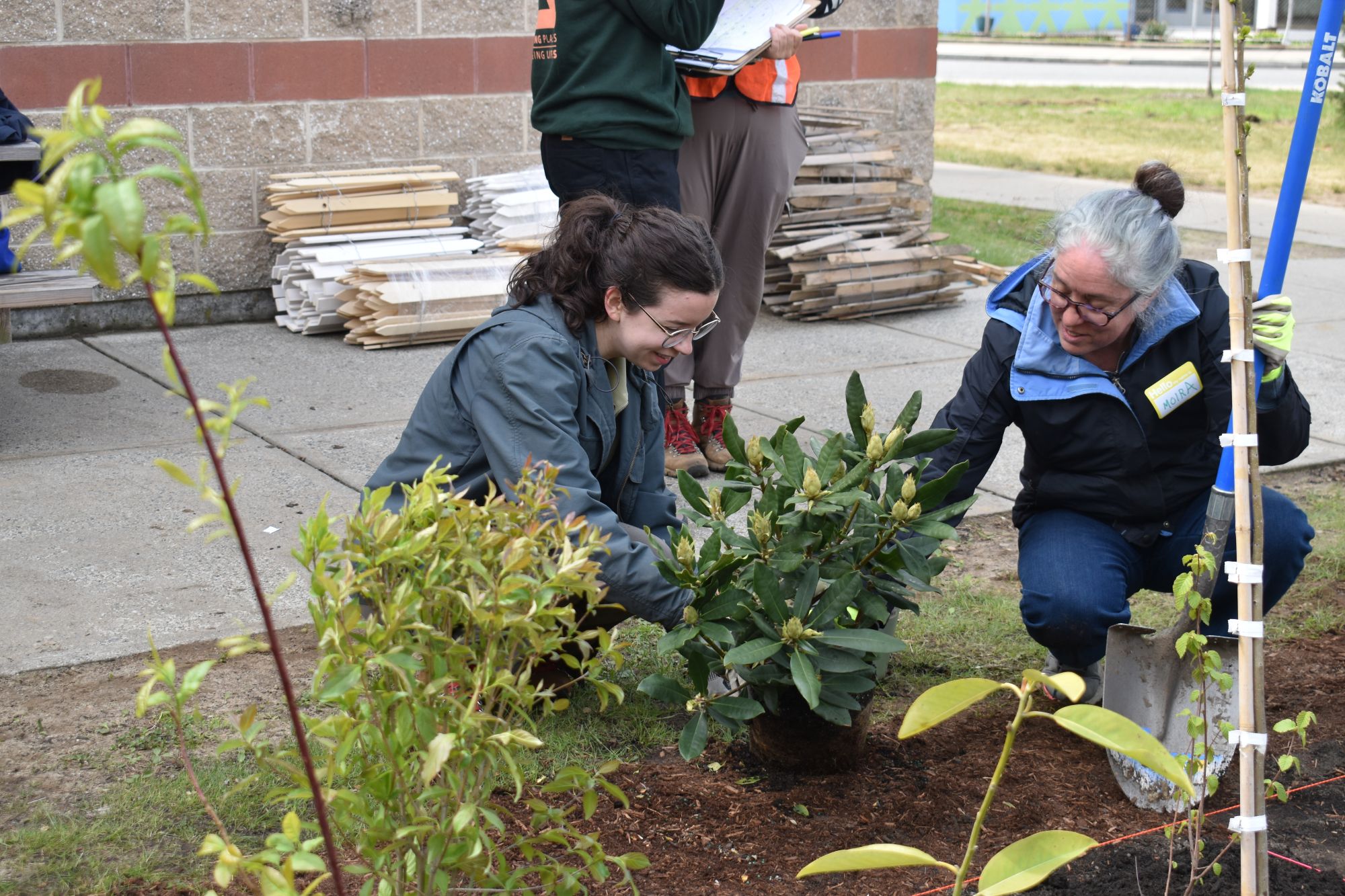
Miyawaki developed a method that uses intensive soil restoration and dense layered plantings of native species at three to four plants per square meter to mimic the biodiversity and natural competition of wild forests.
Wild forests can take more than a century to mature, but the tiny one planted at the high school, which consists of 296 trees and shrubs, can grow up to 10 times faster than traditional tree planting.
Alisson Aviles, a Classical High School junior, doesn’t need a study to tell her what she already knows: Neighborhoods with low tree canopy tend to have higher rates of chronic health conditions.
Aviles’ family immigrated from Ecuador and noticed their younger child, who was born in South Providence, is the only member of the family with asthma.
The finding led her to become a tree ambassador who is implementing the Providence Tree Plan. The 17-year-old attends tree-planting events wherever her feet will take her and helps lay down new roots in Rhode Island.
“There’s always an opportunity to make a change,” Aviles said.
Studies have shown urban forests can lower neighborhood temperatures, filter air pollution, and improve residents’ quality of life.
The Miyawaki Method has also spread to Massachusetts and New Jersey, where more than 20 mini-forests have been planted across the two states, The Boston Globe reported last year.
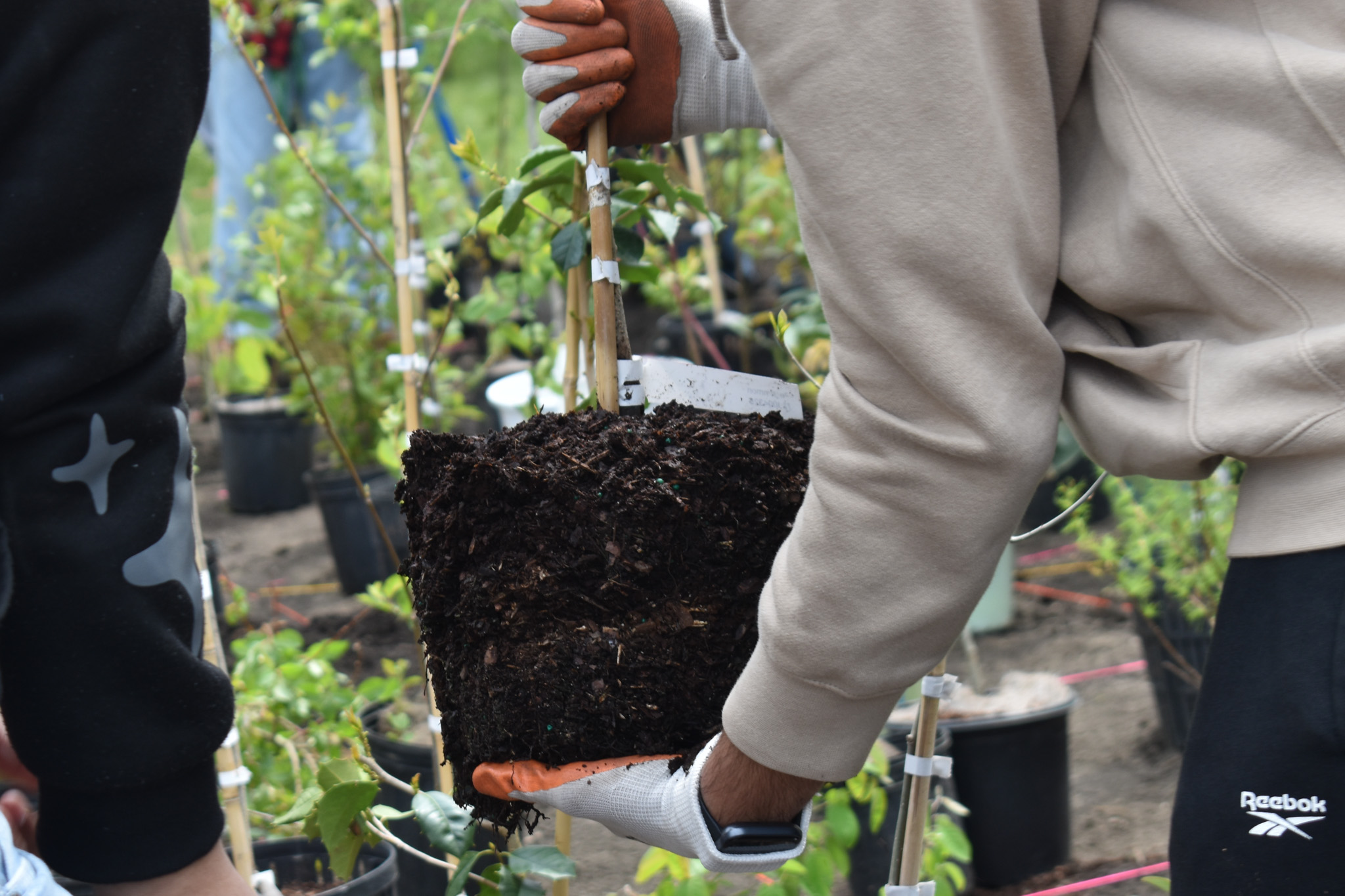
A study by the nonprofit Earth Economics found that each dollar invested in New Jersey’s microforests generates an average of $10.09 in public benefits, such as cleaner air and reduced heat, The New York Times reported.
Groundwork Rhode Island has planted two other forests in South Providence — one on Pearl Street and one on Prairie Avenue — in addition to the new one on Thurbers Avenue.
The nonprofit aims to expand its network of forests, with funding, space, soil remediation in former industrial areas, and long-term maintenance determining where and when the next one takes hold, said Currie Touloumtzis, the organization’s director of urban forestry programs.
“Trees live for decades,” Touloumtzis said. “So, we want to have someone who’s going to be really committed to protecting that space.”
When Minier Estevez pitched her high school for the third site, she knew who she could trust to care for it. She turned to members of the school’s National Honor Society to maintain the forest as it grows.
“They’re going to treat the trees like it’s basically their family members,” Minier Estevez said.
One of those members is 17-year-old Jaylenn Rivera, who will help water and weed the forest after school and on weekends.
“Usually in the summer and spring, the air quality kind of gets bad because of global warming,” Rivera said. “I think it’s very beneficial for a bunch of plants and trees to be planted, especially near our school.”
Rivera added that once the forest matures, she would like to see benches and ornaments installed around it to invite students to spend time there.

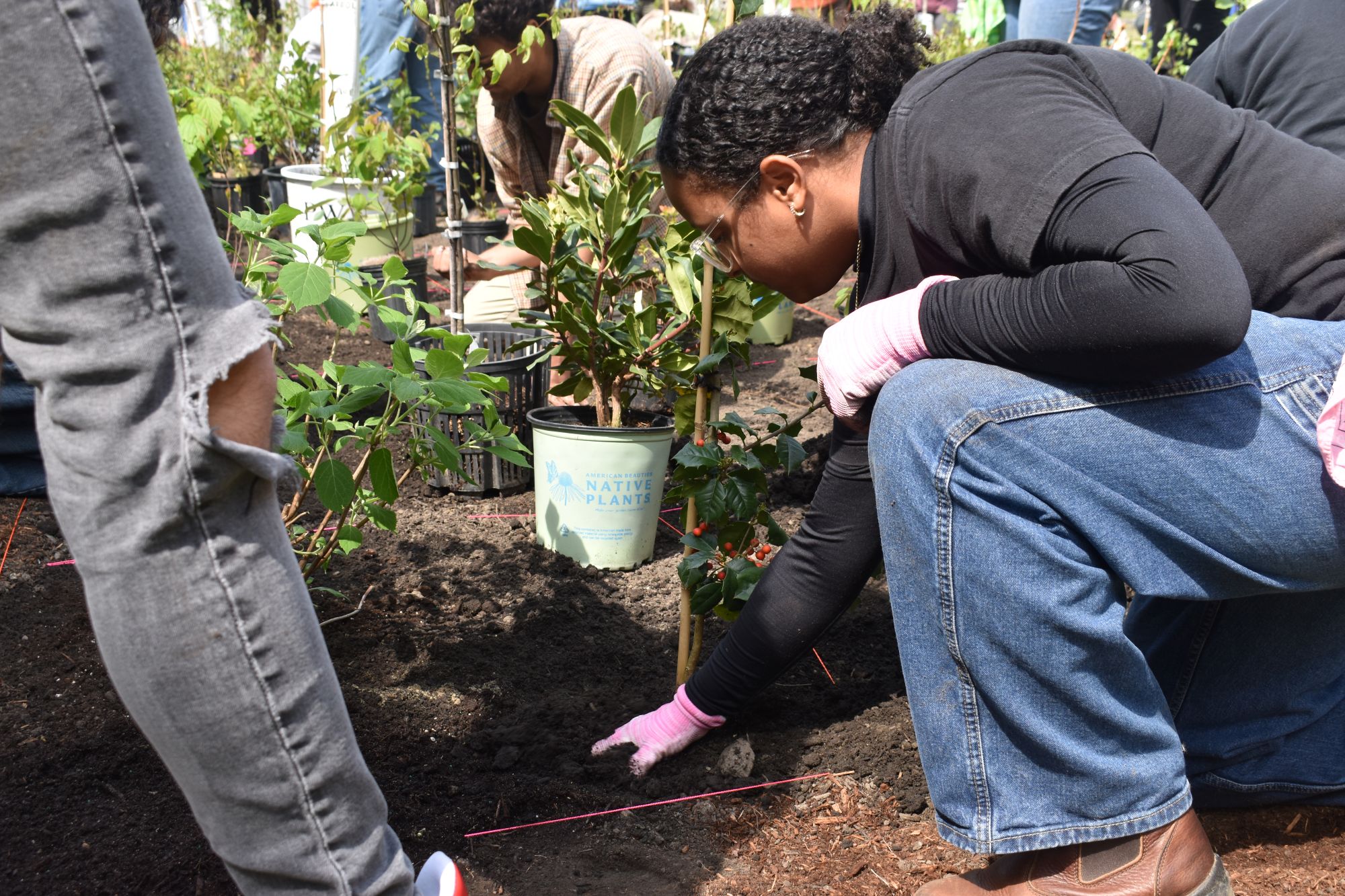
Speaking as one of the “senior citizens” present, I have to say this was an exciting event because of all the plants put in AND because of all the energy and enthusiasm of the youth involved in planning and creating this forest. watching so much youthful energy being directed towards creating a better world is truly inspiring.