
Hidden in Plain Sight: Neglect Along Lower Blackstone River
February 2, 2026
Share


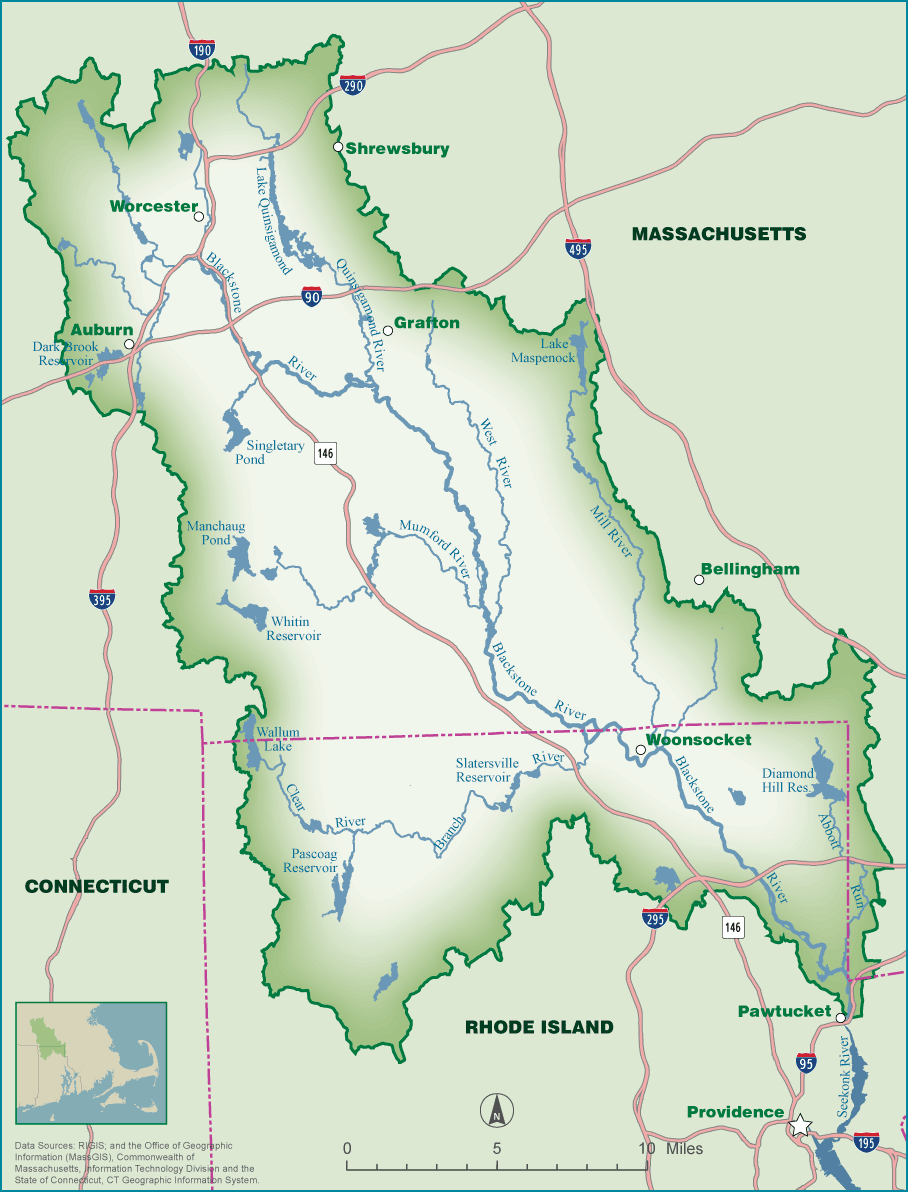
Where the Seekonk River flows into the Blackstone neighborhood in Providence and, running parallel, Hope turns into Pawtucket, the communities and their relationship to their neighboring rivers change drastically. The Seekonk, a central part of Fox Point, Blackstone, Hope, and other neighborhoods on Providence’s East Side, bears little resemblance to its northern tributary for the next few miles: the Blackstone River.
For its southernmost miles, as it traces the communities of Pawtucket and Central Falls, the Blackstone functions more as an inconvenient backyard than a community hub. In many places along the bank, it is an inconvenient backyard. The development prospects and sometimes unsightly polluted banks make the river an easily obscured target for commercial and political motives. To some community members, the Blackstone represents a potential community center and identity marker; to others, it’s something to be further obscured.
Despite requiring intention to actually see the river in some places, it does not require a critical lens to see the Blackstone as an underserved river.
“It’s hidden … the river is a mixed space, right on the border of green space and housing developments,” said Tarshire Battle, a Pawtucket resident of 18 years.
Battle is the executive director and founder of Roots2Empower, a grassroots organization “us[ing] direct service, education, public policy, and community engagement to confront social injustice and advance equity in southern New England.” The organization leads numerous environmental justice initiatives around greater Providence, including working to create equitable river access. To Battle, these communities must foster a kind of relationship with urban rivers that not only promotes further community development but also utilizes existing infrastructure.
Battle’s chief concern about the state of the Blackstone River is the discrepancy between the existing infrastructure and its use. “It’s shut off,” she says. “Not to say [people] don’t have access, but I don’t know if it’s promoted. They don’t have promotions that say, ‘Hey, there’s a space here.’”
To Battle, the amount of infrastructure is not the problem; it’s the lack of communal care for the river. The intangible cause of the river’s neglect makes considerations about solutions nebulous, but education, community action, and political coordination can and do help, and are at the forefront of efforts to address the Blackstone’s condition.
The Blackstone River takes its name from William Blackstone, the first European settler to arrive in Rhode Island; it’s also one of the only Rhode Island rivers with an Anglophone name. Between the Moshassuck, Seekonk, Woonasquatucket, and Pawtuxet, many of the rivers local to Rhode Island carry Indigenous, pre-colonial names. The Blackstone has one of the longest colonial histories, having served as the American hub of the Industrial Revolution.
From the turn of the 19th century, the urban parts of the Blackstone powered and supported industry, most famously at Slater Mill. This hyper-dependence on the river led to immense pollution and overuse, misuses which were only exacerbated by the economic degradation of Pawtucket and Central Falls following the end of the industrial boom. Although the Blackstone’s cleanliness and accessibility have fluctuated throughout its colonial history, the southernmost, primarily urban stretch hasn’t been truly clean or accessible for at least the last few centuries.
This historical context is not to suggest that there have been no contemporary efforts to address these issues. A little more than 50 years ago, in 1972, a community effort to clean or, more specifically, ZAP the Blackstone took place. Alleviating many of the issues stemming from pollution, this effort made nationwide news and seemed emblematic of a brighter future for the Blackstone. But this one-time cleanup wasn’t enough to permanently change the river’s condition.
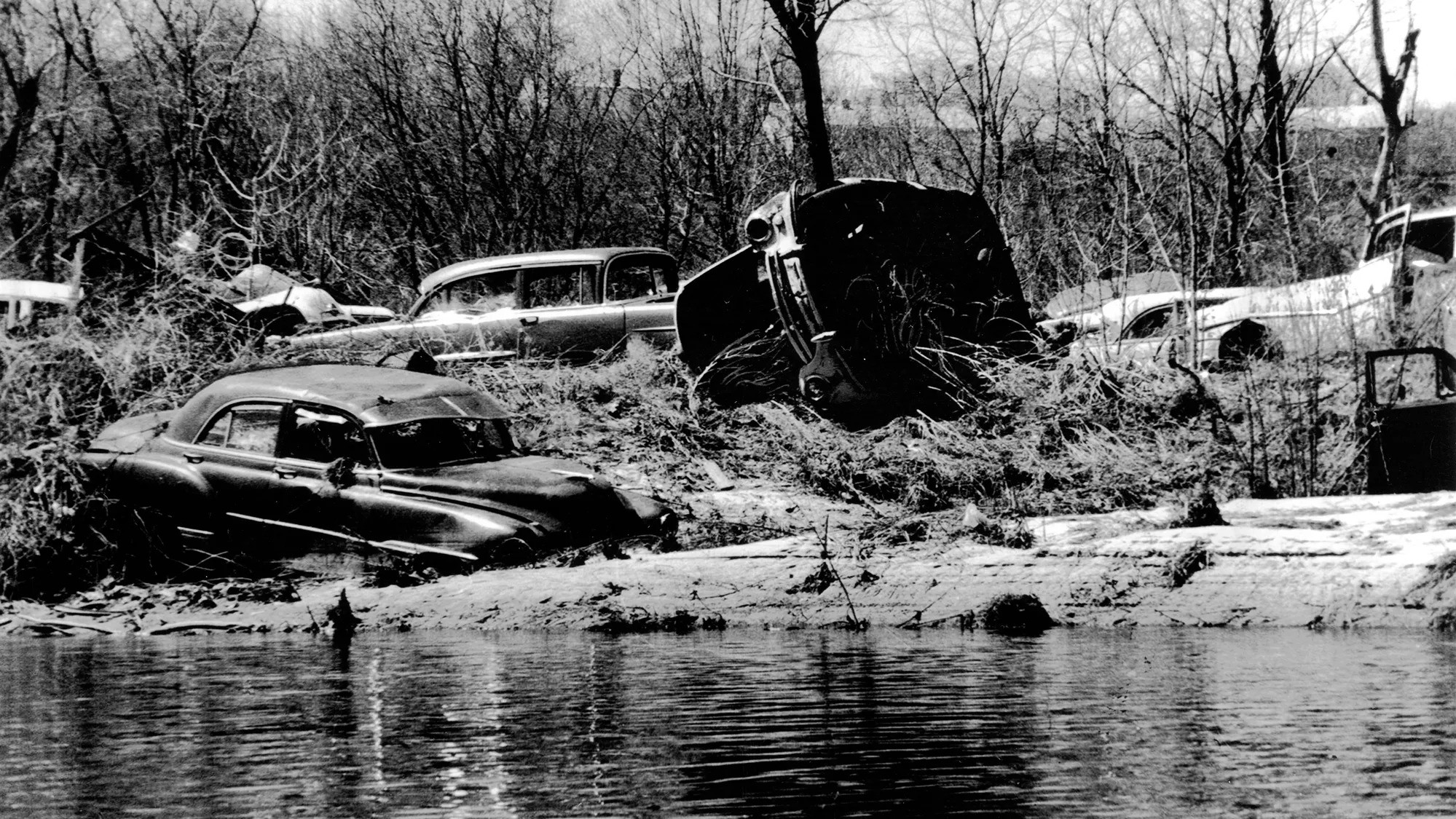
Since many of the people who participated in the ZAP came from outside Pawtucket and Central Falls, this large-scale success didn’t generate the cultural shift it had aspired to. And today, the Blackstone is still not the exemplary urban river so many people want it to be. Between the ZAP program and the dependence on a well-protected river in industrial Pawtucket and Central Falls, the Blackstone has oscillated between very intentional stewardship and widespread disregard.
Today, whether walking along the lower Blackstone or viewing it on satellite maps, the fraught relationship between the river and its surrounding communities is unmistakable. Brownfield sites — abandoned or underused due to contamination concerns — line the urban watershed. As most of these sites result from long-lived industrial pollution and contamination without remediation, they represent the neglect that has long plagued the Blackstone’s lower watershed.
In 2021, the Narragansett Bay Estuary Program released the Blackstone Needs Assessment, the culmination of a years-long research project outlining recommendations for the river’s revitalization and future stewardship. Among other things, the document articulates the need for a centralized management body, educational programs, and strategic watershed restoration. In response, the Blackstone Collaborative came together.
According to the website, the collaborative is an organization built from a previously disconnected group of volunteers, planners, educators, activists, scientists, water quality monitors, and more who have “worked tirelessly throughout the watershed.”
Bryce DuBois, an environmental psychologist and professor at the University of New Haven, has been an active voice in facing the Blackstone’s crisis. “From Worcester to Providence, in these urban areas, despite the notion that this river is a backwater or forgotten place, lots of folks care deeply about it,” says DuBois.
The primary issue for DuBois is not that people don’t care about the river, but that their care for the river isn’t effectively channeled into community development or dispersed among the diverse community. The collaborative seeks to address this discrepancy through intentional efforts developed from community input and need.
Speaking to some of the work done before the collaborative’s inception, DuBois notes that a previously disconnected group of community members and organizations brought in the National Park Service to recognize the Blackstone Valley Heritage Corridor for its role in early U.S. industrial history. Though eventually successful, this process was a years-long effort, prolonged by the lack of a centralizing body, another hurdle the Blackstone Collaborative could have helped address.
DuBois’s work as an environmental psychologist frames the ongoing public alienation from this urban river as more than just social underutilization; it’s also an active public health issue. He cites place-based psychological theory — the notion that people’s relationships with their lived environment profoundly affect their mental health — as a framework for understanding the community’s relationship with the Blackstone.
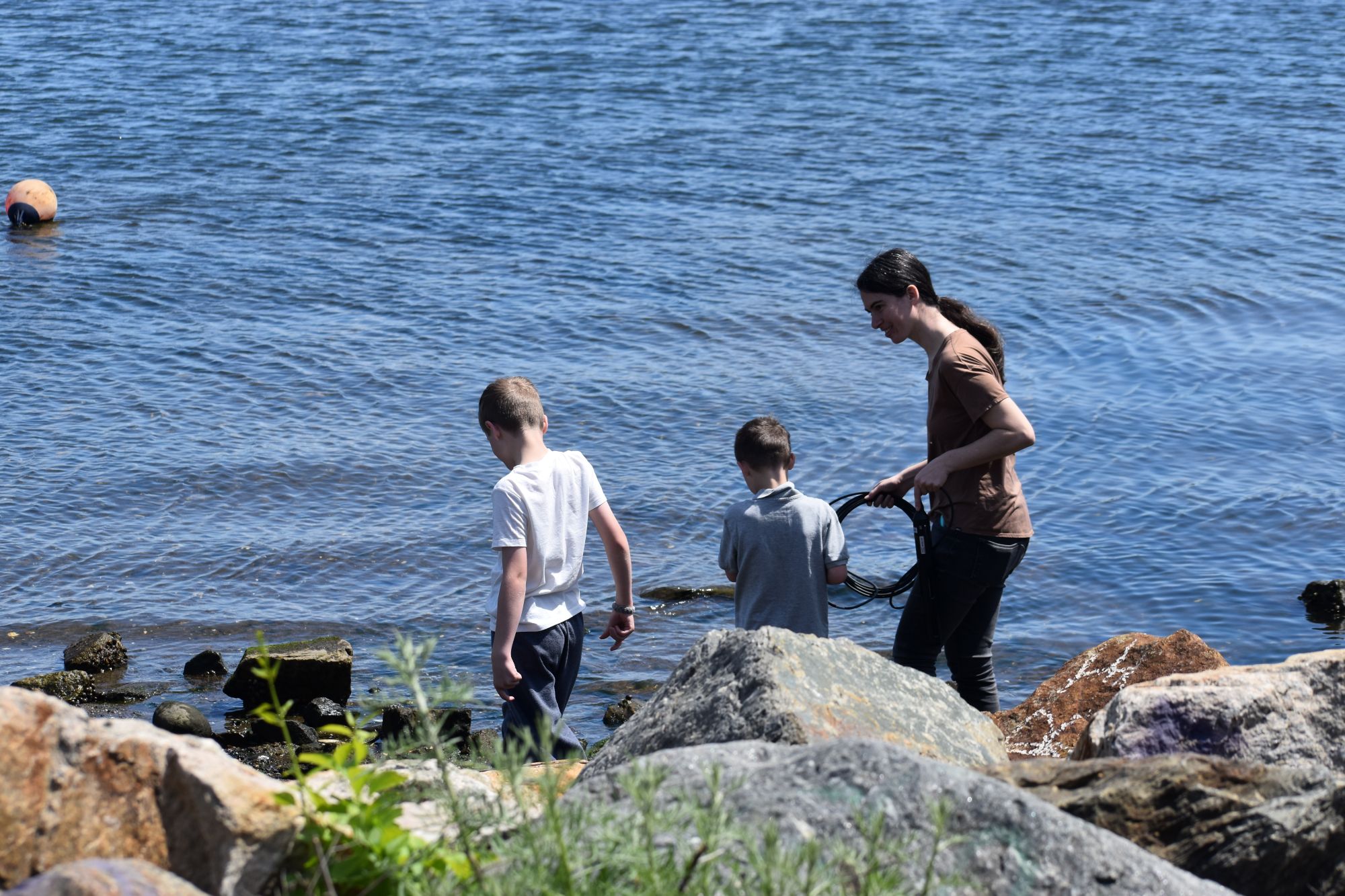
In a 2021 article entitled What’s Water Got to Do with It?, DuBois and two other scientists considered place-based psychology through an examination of coastal communities’ relationship with “visibly disruptive, yet environmentally protective cooling towers.” The scientists found that, without efforts to understand the complex nature of water sources, people struggled to engage with them meaningfully.
The study holds, “[the results] reveal a key role for interventions intended to boost ecological place meanings, such as environmental education and other outreach that supports collective learning about water bodies and water-related infrastructure.” This throughline between nature and health is the center of Dubois’s academic and personal desires for the future of the river.
“There’s a cultural identity of Pawtucket having it on their seal, yet not many folks have that same formal identity around it,” says DuBois.
In considering futures for the river, DuBois says, “For people to imagine what those relationships are, working against these really entrenched jurisdictional differences, people need to keep asking and relearning. That, to me, comes through coalition building and collective organizing.” He says there is no progress through policy intervention alone, nor progress through community organization alone. “It’s going to require large coalition building.”
On the other side of Providence, the Woonasquatucket also runs through the city into Narragansett Bay. It also has a long history of neglect and industrial exploitation, but it has had a relatively recent rejuvenation as an accessible, community-centered river. Much of the recent success of the Woonasquatucket can be attributed to the work of the Woonasquatucket River Watershed Council (WRWC).
Colleen Keenan, the events and outreach coordinator for WRWC, says that much of the organization’s success stems from its intentionality in serving the entire watershed. To Keenan, understanding the cultural significance of the river requires an understanding “that the river and its health are more than just the waterway itself.”
As the landscape, demographics, and community needs of the Woonasquatucket vary drastically from the lower to upper watershed, Keenan said the council’s work must cater to a variety of people and lands. The lower watershed flows through the primarily non-white, low-income, urban Olneyville, while the upper watershed extends through the more rural, affluent, and primarily white suburbs of Johnston. The Blackstone has a similar course; its southernmost cities, such as Pawtucket and Central Falls, mirror the demographics of Olneyville, while its northern watershed borders some of the most sparsely populated parts of southern New England.
Catering development initiatives to markedly different communities is not an easy task, says Keenan. The WRWC began as a project to alleviate pollution and disregard for the river in Olneyville and Providence’s West Side, and the expansion to the upper watershed came through interorganizational collaboration.
“The strategy has been getting a reputation and doing work there by partnering with other people who are already doing good work in those communities,” says Keenan. This collaboration and deference to preexisting groups along the upper watershed have allowed for the kind of coalition building crucial to the success of the WRWC’s work — a facet many people working along the Blackstone have cited as the leading cause of its disregard.
Although the Blackstone Collaborative has made some progress in improving the river’s health, its relationship with the community, its cultural perception, and its relative youth mean its reputation is still under construction. While many organizations have historically done work in the upper watershed, the organization with the longest history in the lower watershed is the Blackstone Valley Tourism Council (BVTC).
Although ostensibly the BVTC isn’t centrally focused on community development, it aims to promote tourism in the lower watershed communities. “It helps to develop and benefit everything that’s in the area, preferably small businesses, which of course is what we try to feature, the smaller independent things,” says Melanie Fernandes, the director of environmental education at BVTC. “But any income that helps the cities that the Blackstone runs through is, of course, important.”
Building a community development organization through the lens of tourism creates a kind of contradiction: the mechanisms for touristic development are different than those for the community members. While economic development is crucial for the prosperity of these communities, the channels through which this money enters and is dispersed out of these organizations are more important.
Fernandes says the forms of investment the BVTC accomplishes are, “for lack of a better word, focused advertising or promotion of specific institutions. For instance, the glass blowing place across the river from us, or a couple of the churches that are along the river.” Promoting engagement with these local places and people is at the core of the BVTC’s mission.
This intentionality in promoting these historical sites exemplifies the need to highlight the historical river along which many of them are situated, but today’s Blackstone needs promotion, too. While the BVTC’s mission to promote tourism and engagement with the river has been successful, it is a hard ask for one organization with a specific focus to cater to everyone along a 48-mile watershed spanning such diverse demographics.
Speaking of the anecdotal impacts the council sees, Fernandes discusses a recent group of “people from all over the country” here to “learn about the river and what we’re doing to make the river better and how we are embracing the cultural heritage.” Ultimately, the tourist development around the Blackstone Valley helps to spread awareness of the river and its local communities, but one nonprofit alone cannot bear the responsibility of creating a more reciprocal relationship between the people and the urban watershed.
Unlike many of the urban rivers around Greater Providence, the Blackstone is much longer than just its urban stretch, and must be cared for by each of its various communities. The crucial step in addressing the Blackstone’s current state of affairs is to ensure that no community members are left without access to and education about the river. Equally important, the process for protecting and reinvigorating this river must come from community input and inter-organizational collaboration. Building these coalitions must span the various demographics of these communities and function for everyone within them.
This story was published as part of a collaboration between ecoRI News and students in Brown University’s Science Journalism class. The stories examine the science, history, and human experiences connected to the Ocean State’s rivers — from water quality and wildlife restoration to flooding, pollution, social justice, and the communities working to protect them. To read more of these stories, click here.

I see no mention of either the Blackstone River Watershed Council or Friends of the Blackstone, two groups that for decades put a great amount of effort into the cleanup of the river. They worked closely with the the late Senator John Chafee, BVTC, RI DEM, EPA, FRC, Trout Unlimited and others to identify and correct long standing problems of the river and had a great deal of success resulting in the river changing from the foul smelling toxic mess we saw in the 1980s to the state it’s in now supporting now thriving populations of fish and wildlife.
one idea that could boost interest in using and protecting both the Blackstone and Woonasquatucket river areas are bike paths along the rivers, connecting sites of interest and rural and urban areas to each other. And a good start was made in both places and it should be noted the “bike paths” are also used by hikers, birdwatchers, roller-skaters….
But ever since Gina Raimondo was elected Governor and put in Peter Alviti as head of DOT in 2015, both paths stalled as he was put in to build massive expressway projects that the related unions and contractors wanted. DEM which had bike path infrastructure in their 2916 and 2918 bonds had also stopped promoting bike infrastructure ever since. though plans were already in place, virtually no progress had been made to extend the Blackstone Path to central Woonsocket and Pawtucket, or to extend the Woonasquatucket beyond its Johnston terminus where local opposition and town indifference are also obstacles. Sad!