Nine R.I. Waterbodies Fall Into Toxic Soup
November 13, 2025
Share


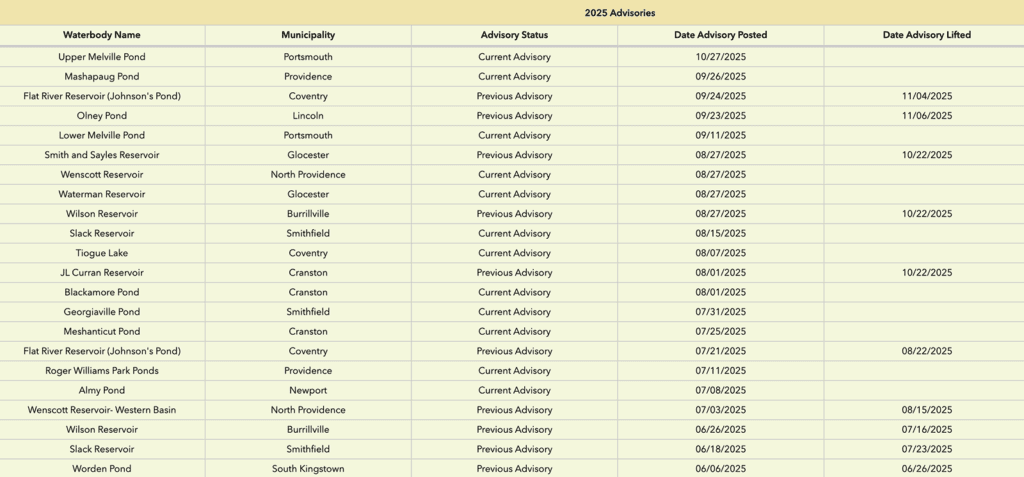
Since fall officially began, Sept. 22, the departments of Health and Environmental Management have issued no-contact advisories for nine Rhode Island waterbodies.
People and their pets are/were advised to avoid the ponds and reservoirs because of cyanobacteria blooms. Also known as blue-green algae, this bacteria is naturally present in waterbodies, but under certain conditions will form harmful algae blooms. Swimming, fishing, boating, and kayaking are ill-advised when these blooms emerge, as they can produce toxins that can be harmful to humans and animals.
Contact with water containing cyanobacteria can cause irritation of the skin, nose, eyes, and throat. Symptoms from ingestion of water can include stomachache, diarrhea, vomiting, and nausea. Less common symptoms can include dizziness, headache, fever, liver damage, and nervous system damage. Young children and pets are at higher risk.
The nine waterbodies state officials advised against coming in contact with were: Flat River Reservoir, also known as Johnson’s Pond, in Coventry; JL Curran Reservoir in Cranston; Mashapaug Pond in Providence; Olney Pond in Lincoln; Smith and Sayles Reservoir in Glocester; Upper Melville Pond, also known as Thurston Gray Pond, in Portsmouth; Waterman Reservoir in Glocester; Wenscott Reservoir in North Providence; Wilson Reservoir in Burrillville.
Some of the advisories have been lifted.
A combination of excess nutrients, sunlight, and high temperatures can lead to a rapid increase in cyanobacteria, according to DEM. Blooms generally occur in late summer into early fall when water temperatures are warmest and an abundance of sunlight and nutrients are available.
These waterbodies typically suffer from high levels of phosphorus, nitrogen, and other nutrients, often from fertilizer and other lawn-care products, washed into them by stormwater runoff. Nutrient overloading is typically correlated with development.
Cyanobacteria feasting on abundant nutrients, combined with other factors such as sunlight and temperature, allows it to grow into massive algae blooms that prevent sunlight from reaching the bottom and changes the water to a sickly green color. The blooms consume dissolved oxygen in the water as they grow, and when the algae finally dies, it takes the oxygen with it, causing hypoxic events.