
A Tale of ‘Shared Magma’ Bridging Rhode Island and Sweden
New exhibit at Brown University celebrates a long-distance friendship and the rock, cumberlandlite, that started it all
September 18, 2025
Share


The seed for a new Brown University exhibit highlighting the historical, geological, and environmental stories surrounding cumberlandite, Rhode Island’s state rock, took root during a hike in Sweden two years ago.
But one could argue it was planted decades ago in a small town, also in Sweden, when a friendship between the exhibit’s curators formed over a love for alternative music.
Or perhaps it began billions of years ago when cumberlandite was formed beneath the Earth’s crust.
The exhibit, Shared Magma, which opened at the John Hay Library on Sept. 10, follows all these threads, weaving art and artifacts to narrate a story about the Earth, and two friends.
Formed
Exhibit curators Robin Wheelwright Ness and Kajsa G. Eriksson met 40 years ago, when Ness was an exchange student in Eriksson’s native Sweden.
“We met each other in the kind of underground music scene in town,” Ness said. “It was a small town, like, very tight underground ’80s scene. And, yeah, we’ve been really good friends ever since.”
Piles of letters sent back and forth between the pair are stacked in one of the exhibit cases. Doodling on envelopes, they passed details about each other’s lives across the world. Ness studied at the Rhode Island School of Design after leaving Sweden, then joined the Brown staff in 1990, where she’s now a senior library technologist at the John Hay. After meeting Ness, Eriksson pivoted away from math to study art, becoming a professor, and now is a full-time artist based in Gothenborg, Sweden, where she runs Vague Research Studios.
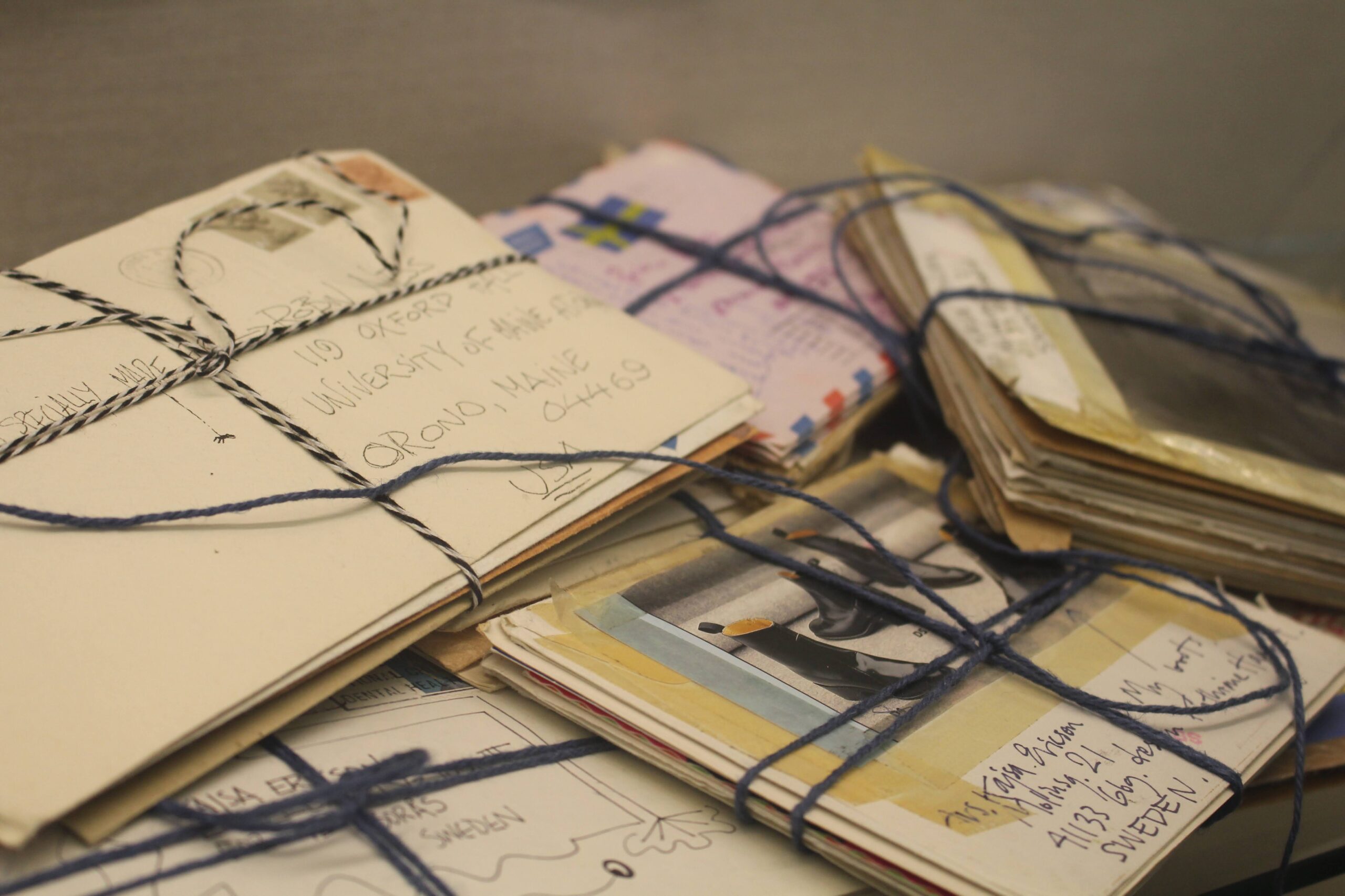
“Forty years of friendship,” Eriksson said. “Time flies.”
Fast forward to 2023. A lot of Eriksson’s work uses “place-based pigments,” and seeking materials for a project that involved iron, the artist was hiking up a mountain, a former iron mine turned nature preserve, when she saw something that made her think of her dear friend, thousands of miles away.
There was a sign on the mountain explaining that “titanomagnetitolivinit,” a special rock found in the area, was only known to exist in Sweden … and Rhode Island.
“So of course, I was photographing it and sending it to Robin in 10 seconds,” Eriksson said.
On the other side of the Atlantic Ocean, Ness was googling cumberlandite, and the friends were sending pictures of the rocks back and forth.
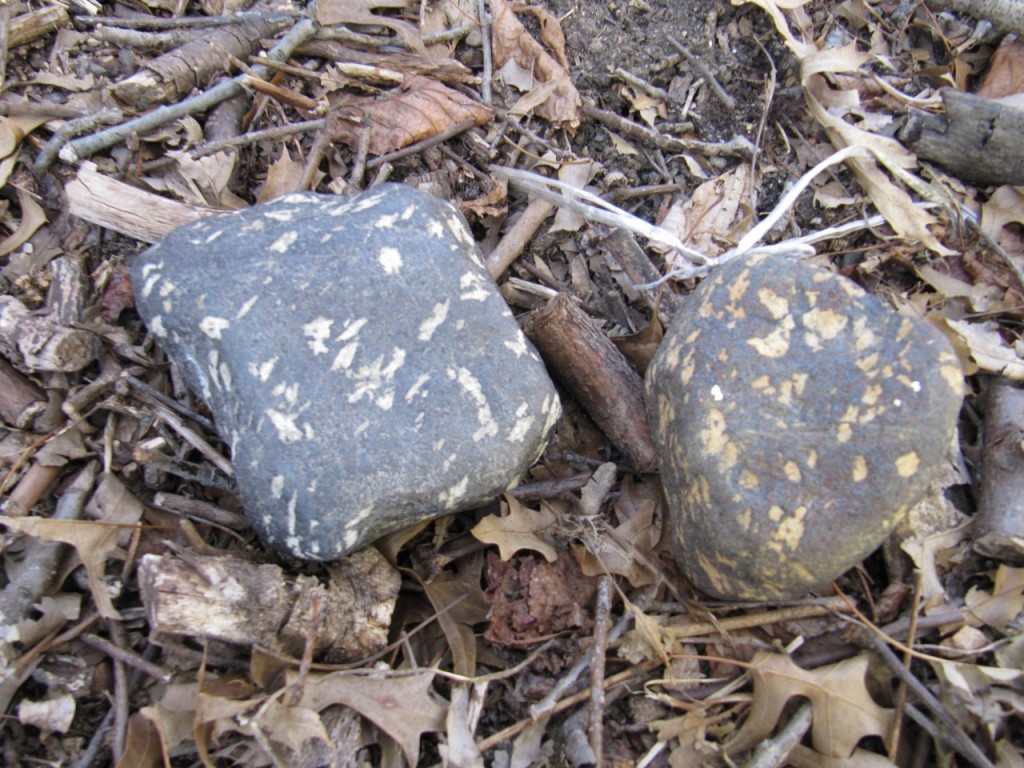
“It’s very distinctive,” Ness said of the rock, usually black or dark brown with lighter speckles.
Ironically, soon after, Ness, a Central Falls resident, was mudlarking — a British word that means searching for historical artifacts in riverbeds — in the Blackstone River, when she came across a water-polished stone that looked suspiciously like cumberlandite.
“I kept questioning myself, because I thought it would be too weird of a coincidence,” she said. “I don’t live in Cumberland, what would it be doing here?”
Sure enough, using photo comparisons and taking a magnet to the rock confirmed it.
Almost instantly, the longtime friends knew they wanted to turn the connection into a project they could share.
By the next week, Ness was carrying the sample around and showing it to Brown library staff, asking how they could put an exhibit together.
Blasted
Just like the transcontinental friends, the two rocks also had a lot in common, Ness and Eriksson found as they researched.
The Swedish and Rhode Island rocks were formed billions of years ago amid shifting tectonic plates and intense volcanic activity, and although geographically divided today, they have almost identical geochemical compositions.
In more recent history, Iron Mine Hill in Cumberland — the rock was named for the town in which it was found — and the Taberg in Småland, Sweden, served as important industrial centers.
Each was co-opted during times of war. Cumberlandite was used in the cannonballs of the American Revolution. A Nazi shadow company ran the Swedish mine during World War II.
Both mines also have histories of using slave labor.
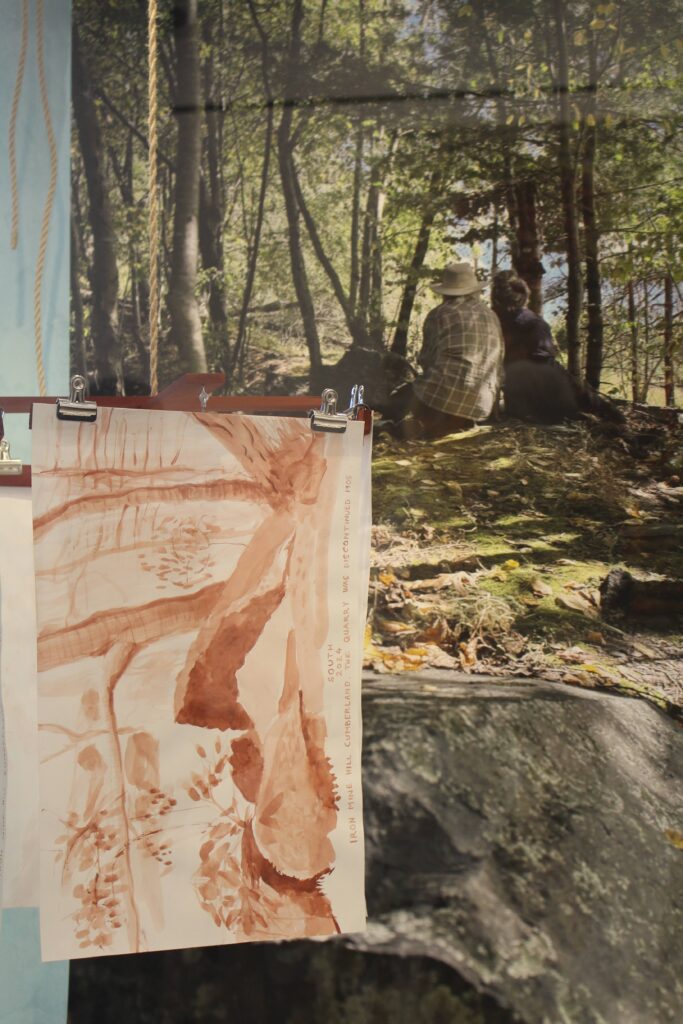
The Brown exhibit includes art by Eriksson depicting realistic and abstract mining scenes. The paintings use watercolor pigments Eriksson made with cumberlandite dust Ness ground at a Brown lab.
In one painting, called, “Täkt,” which means quarry in Swedish, Eriksson casts a scene of blasted rock in shades of grays and rusts.
In addition to the art, archival material both from Brown and Sweden tell the history of the rocks and their homes.
“It was hard to narrow down, believe me, because we’re dealing with, like, over a billion years of history, two different countries, two different languages. It’s a lot of personal story and the history of both places,” Ness said.
Ness noted library staff had been particularly excited about the exhibit because there were already many artifacts in its archives that fit in perfectly.
“Even images of the Taberg, of this, like, obscure mountain in Sweden, we have that in this library,” Ness said.
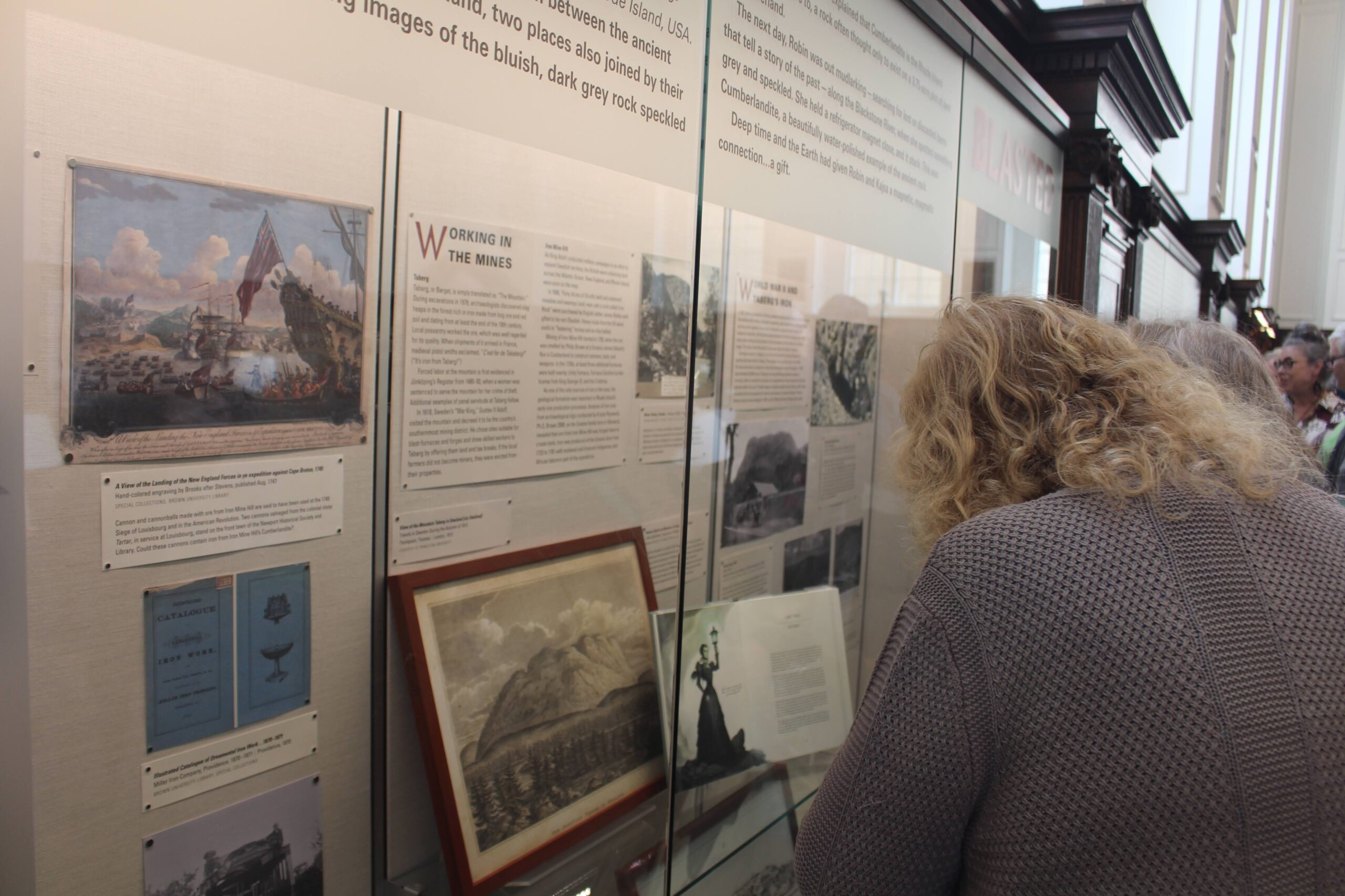
“That was pretty cool,” Eriksson added.
Between their own story and the rocks’, the pair noted plenty of moments like that, a synchronicity which helped them keep the faith throughout the two-year, cross-continental journey.
“We feel like the rock wanted to have the story told, like how it happened,” Ness said, “how I found it, literally, in my front yard, by the river. I was like ‘There’s something weird going on here.’”
Bonded
Of the main three cases of the exhibit, broken down into the categories, “formed,” “blasted,” and “bonded,” it is that final section that is perhaps the most personal and reflective of the project.
“This is where we talk about our friendship, but also our connection to the earth and our environmental concerns,” Ness said.
Photos and drawings of the women from their punk days are pinned to the wall, along with excerpts from a series of letters written in their early friendship. Themes of isolation run through their words — alongside messages about the belonging they seem to find with each other.
When asked about how they’ve been able to maintain a friendship for so long and from so far apart, Ness joked, “Well, if you want to test a very strong friendship, work on a lengthy, high-pressure, academic, international exhibit.”
Joking aside, laughter and fun have been the strings that keep them tied, especially after long days of putting this project together.
Still, both noted that while working on the project during a time when political upheaval seems to be growing and the climate crisis is unfolding in real time, “Shared Magma” has sometimes felt like an escape.
There’s a lot under threat these days, even their ancient subjects, they said.
In Cumberland, Iron Mine Hill is both a geological and contemporary historic landmark, but Ness worries about the impact of development pressure.
There have been plans in the past to make the area a historical district, but none have come to fruition, while more buildings have gone up around the site.
“So, even if that were to become a historic district, there’s housing literally a stone’s throw from the top of this ancient promontory,” she said.
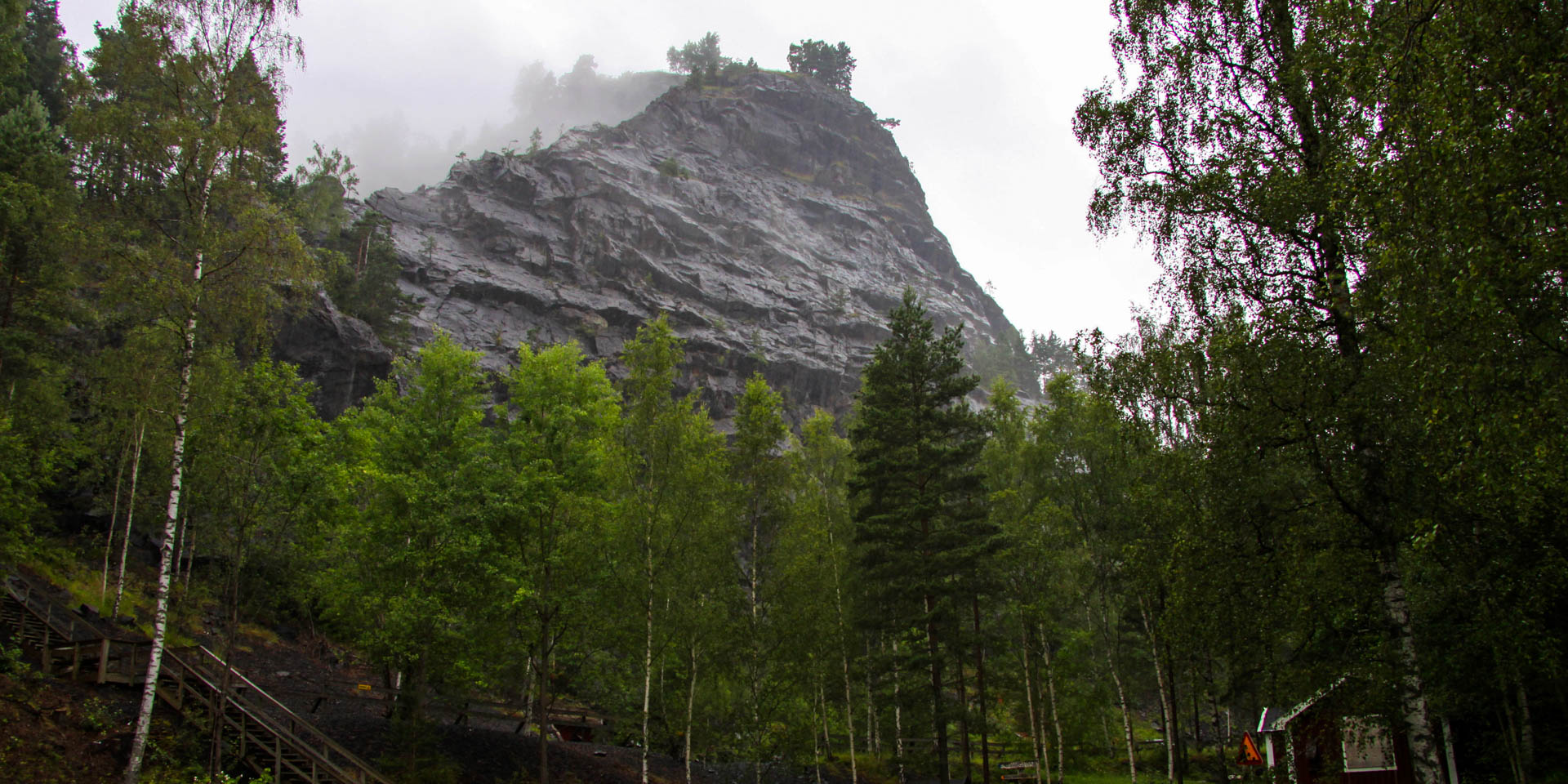
Although the mountain in Sweden is largely preserved now, its status is “not cut in stone,” Eriksson said. Even if there isn’t drilling within the conservation area’s confines, it doesn’t mean that it couldn’t take place next door.
Despite the concerns which they address in the exhibit, for all the time and collaboration, Ness and Eriksson said their friendship has emerged, like cumberlandite, stronger and their understanding of themselves deeper.
“We could have told it from the ore perspective or rock perspective, I guess, you know, more like a landscape, place, site, kind of history, industrial history,” Eriksson said. “But I think what’s kind of different is that we decided to engage our own personal history.”
“We’ve become very connected to the places, to the earth,” Ness added, “It feels very organic.”
“Shared Magma” is on view at the John Hay Library at Brown University until August 2026. It is free and open to the public.
Every winter I co-lead a tour for the Blackstone Heritage Corridor and National Park Service of the Cumberlandite Site. It is free but you have to sign up in advance. https://blackstoneheritagecorridor.org/ We cover the geology of the site and the history some colorful figures who were buried at the cematary next door.
I am not sure, but I am pretty sure that Cumberlandite was named for the town, not vice versa.
Greg,
You’re correct, and we made the fix.
Cumberlandite is surprisingly dense. It will startle you. Jim Egan who is the curator of the Newport Tower Museum at Truro Park can show you where it was used in the structure. As a diver, he has retrieved some of these dense magnetic stones under nearby Narragansett Bay.