
To Build or Not to Build? That is the Easton’s Beach Question
Three-day public workshop to help shape future of popular beach
June 12, 2025
Share


NEWPORT, R.I. — A trio of consultants has been working since 2021 on a plan to prepare Easton’s Beach for an unsure future. Back-to-back unnamed storms in December 2023, followed closely by another in early January, forced the Woods Hole Group, Fuss & O’Neill, and DBVW Architects to reimagine the popular beach’s makeup.
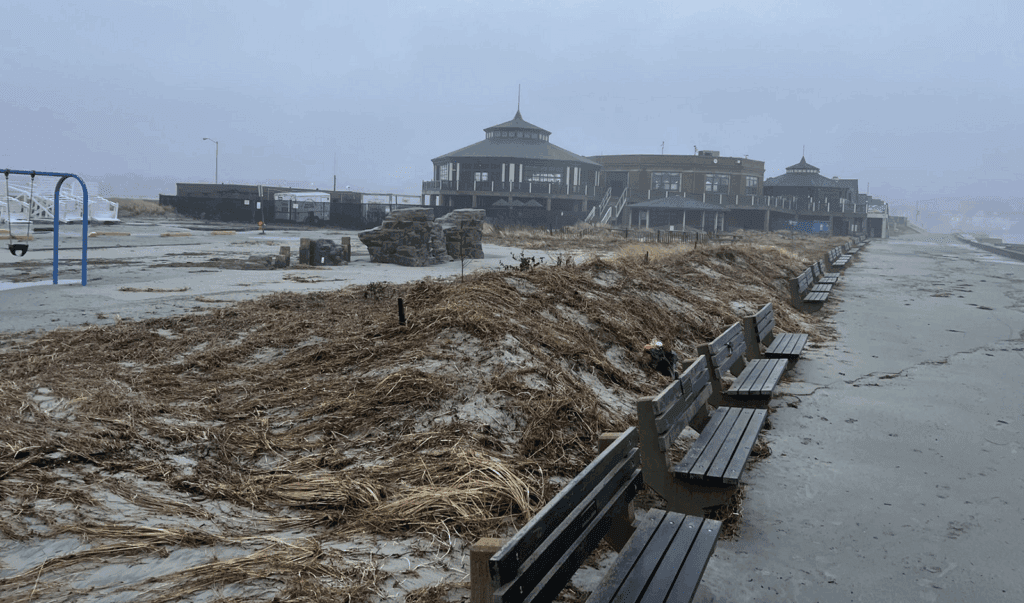
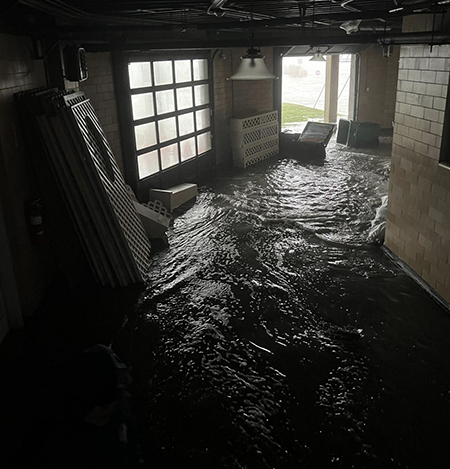
The harsh winter of 2023-24 also provided a wake-up call for a community looking to rebuild all of the beach’s human amenities. These nameless storms took out the rotunda’s elevator, twice dumped 6 inches of sand inside the building, and collapsed two ramps to the beach.
Easton’s Beach is eroding at a significant rate — about a foot and a half annually. A 2022 report done by the consultants predicted there would no longer be a beach off Memorial Boulevard by 2070 if nothing is done.
But what can be done? The sea is uncontrollable, and rising. The climate crisis is intensifying. The consultants are close to sharing some possible answers.
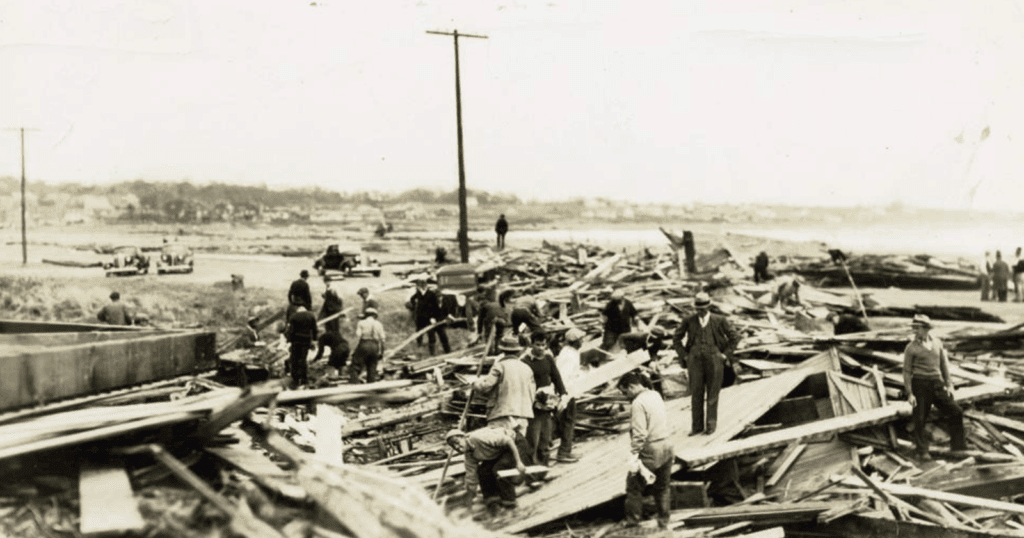
The beach’s snack bar and carousel, built about 40 years ago, have already been lost to the elements, and the Save The Bay aquarium has moved to America’s Cup Avenue. The shoreside rotunda — built in 1939, a year after the “Great New England Hurricane of 1938” vandalized the region’s coastline — and the bathhouses are in various states of disrepair.
The concrete deck upon which the bathhouses sit is pitched incorrectly and needs to be repaired. That means the bathhouses need to be moved and then replaced or torn down and built new. The rotunda needs a new roof, new windows, new plumbing, new electrical, and a new elevator.
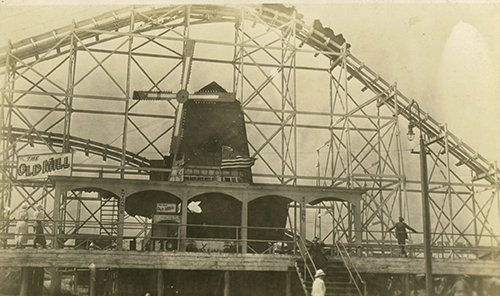
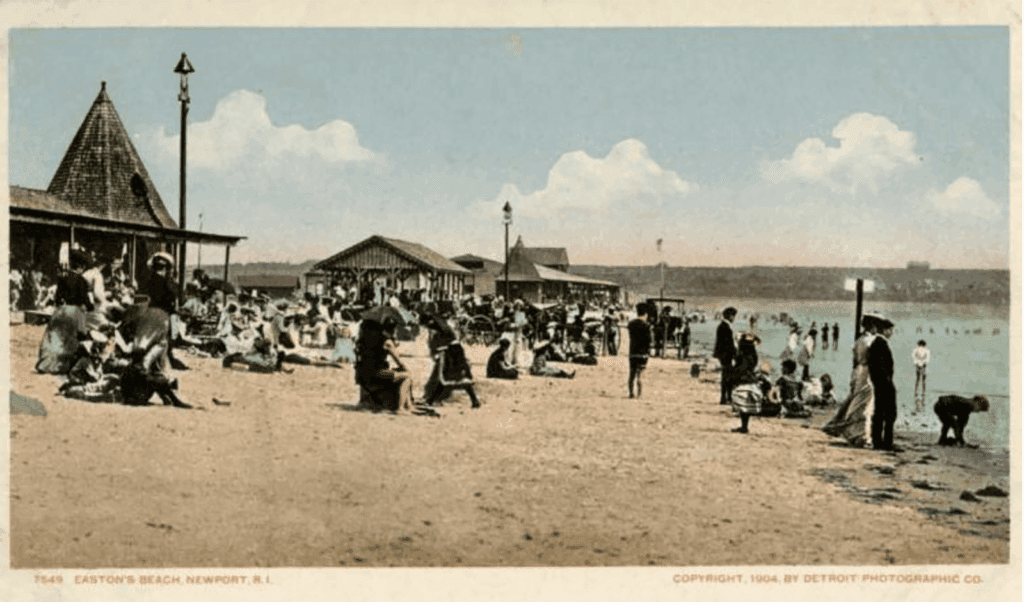
Easton’s Beach, owned and operated by the city, has been a public recreation spot for centuries, and in that time has experienced a considerable amount of development: a pavilion and boardwalk; a casino and gateway; a saltwater pool that included a high dive; and a large rollercoaster named “The Old Mill.”
The ’38 hurricane essentially wiped the beach clean of the human-built environment. Sixteen years later, Hurricane Carol destroyed the rebuilt shoreline.
Today, during more frequent and intense weather since Superstorm Sandy in 2012 kicked off a beating along 420 miles of Ocean State coastline, storm surge has made its way to Memorial Boulevard, prompting both local and state responses to prevent saltwater intrusion into Easton’s Pond.
Bill Riccio, director of public services, has worked for the city for the past 18 years.
“The ocean’s right there and the number of times [expletive] comes over that wall … but we’ve never had the regularity that we have now,” Riccio recently told ecoRI News. “You talk to people who are very committed and passionate about things historically that were here. But I personally think that triple winter storm really started to open up people’s eyes and realize it’s not just hurricanes.”
He was sitting at an Easton’s Beach picnic table in late May with Erik Reis, the city’s recreation administrator, David Vieira, Easton’s Beach manager, and Thomas Shevlin, the city’s director of communications.
“The focus needs to be on the resiliency of the beach, keeping sand on the beach, because the amount that ends up in the back of the parking lots by the end of the winter is crazy,” Vieira said.
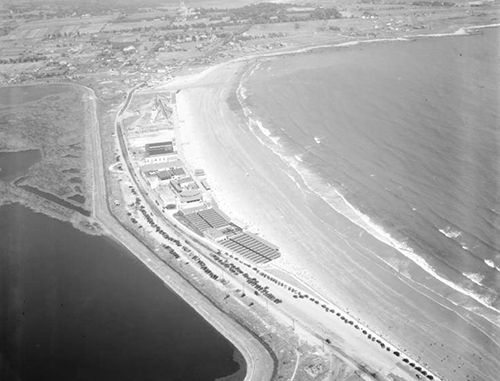
Besides being a tourist attraction and a local hangout, Easton’s Beach acts as a protective barrier between the ocean and Easton’s Pond, an Aquidneck Island drinking water source. The reservoir is one of nine that feed the Newport Water Division.
“I think this project hopefully speaks to that, because this is a barrier beach, and I know in the 15 years I’ve been here, I’ve always kind of tried to concentrate on dunes and trying to make it more of a natural environment, because everything is paved over,” Reis said. “That makes it and the drinking water supply across the street very vulnerable.”
The consultants’ project, Easton’s Beach: Planning for a Resilient Future, was initially commissioned to evaluate the structural integrity of the carousel, snack bar, and rotunda buildings. They quickly determined the carousel and snack bar were in poor condition and showing signs of significant deterioration.
Emergency repairs were done, but the question of whether to substantially upgrade these buildings became part of a larger discussion about climate resiliency at Easton’s Beach. A decision was eventually made to demolish the carousel and snack bar buildings and the adjacent elevated walkways.
The carousel and snack bar buildings were constructed in the 1980s. The carousel horses appear to date from the 1950s. They are now in storage.
The consultants provided a preview of their work at the June 4 Beach Commission meeting. During a three-day Easton’s Beach public workshop scheduled for June 16-18 the consultants’ plan will be further laid out and discussed. The multiday event will include an interactive Easton’s Beach walk and talk, community visioning sessions, and a design open house — all aimed at creating a shared vision of the beach’s future.
City officials have promised community feedback will play an important role in guiding concept development and informing future design decisions on a beach that fronts a Type 1 water. The Coastal Resources Management Council designation is defined as an area “of natural habitat or scenic value of unique or unusual significance, or areas that have been deemed unsuitable for structures due to their exposure to severe wave action, flooding, and erosion.”
A follow-up virtual presentation from the three-day event is scheduled for June 30. A Zoom link will be posted on the project’s website closer to that date. The final beach plan is expected by the end of the year.
The goal of the June 16-18 workshops is to “co-create a sustainable and vibrant future for Easton’s Beach, balancing critical infrastructure needs with the recreational, environmental, and cultural value the beach holds for the people of Newport and its many visitors,” according to Shevlin.
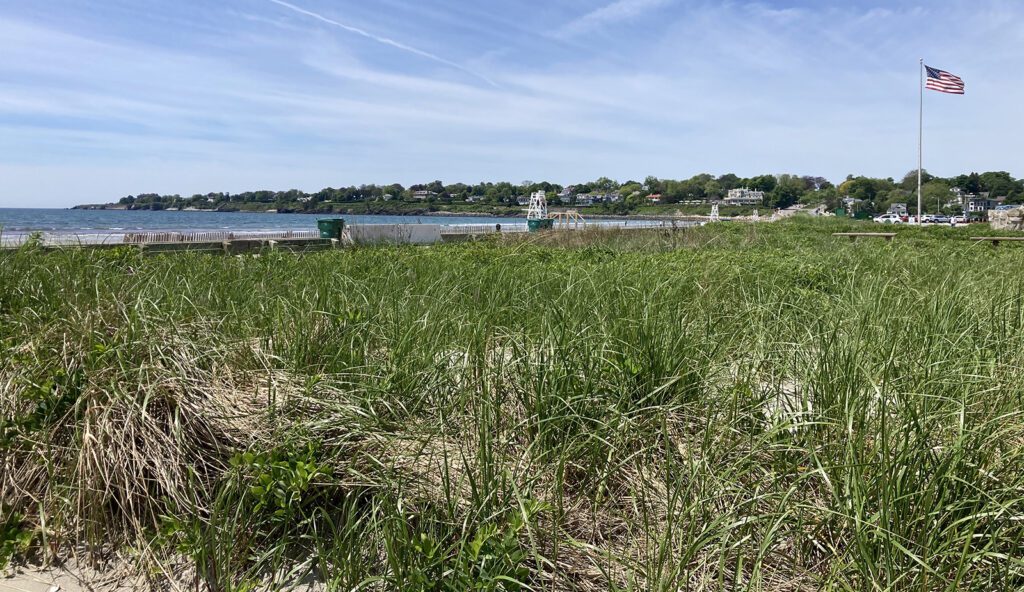
The consultants have researched current movements, wave action and energy, sediment displacement, and other coastal processes. They have modeled how the three-quarters-of-a-mile-long beach could be impacted by future storms. Nature-based solutions are expected to be implemented to slow erosion and protect the beach and Easton’s Pond from storm surge.
Their modeling has shown that a 2-year storm (50% chance of happening) would produce overwash and throw sand into the parking lot. A 10-year storm (10% chance) would “cause significant beach erosion.” Neither of those scenarios come close to packing the wallop that the hurricanes of ’38 and ’54 brought.
At last week’s Beach Commission meeting, Beth Kirmmse, a landscape architect and climate resilience specialist with Fuss & O’Neill, said building new structures at the beach would be both risky and expensive.
The consultants and city officials have already begun collecting public comment. Among the high priorities, at least so far, are parking for both bicycles and cars, protecting the beauty of Easton’s Beach, better restrooms and concessions, less seaweed, and improved water quality.
They also learned most people drive to the beach, and that the top three activities at Easton’s Beach are walking the shoreline, surfing, and swimming.
While the consultants and the city officials ecoRI News recently spoke with want to take a cautious approach to built structures along Easton’s Beach, the public is basically divided on the issue. Some want to move away from fixed amenities to mobile ones. For them, restrooms and showers are all they really need.
Others want to go back in time.
Michael Andrew Wilson lives less than a mile from Easton’s Beach. He acknowledges that climate realities are undeniable, but believes there is hope for his beloved beach. He noted abandoning infrastructure and allowing nature to reclaim Easton’s Beach is “sticking our heads in the sand.”
“Private investment, coupled with innovative public-private partnerships, could fund raised platforms, storm-resilient structures, integrated drainage systems, and flexible-use spaces that adapt to seasonal and weather shifts,” the Annandale Road resident wrote in a recent email to ecoRI News. “The idea that nothing can or should be rebuilt is a self-fulfilling prophecy of decline. This approach ignores the role of innovation, engineering, and creative problem-solving that other coastal cities around the world are using to balance resilience with public enjoyment.”
Wilson supports the integration of more dunes, beachgrass, and natural buffers, but “we should also explore adaptive design that allows the beach to remain a civic asset, not a fenced-off erosion zone.”
“If we leave Easton’s Beach to fade away without trying, we’re not just losing a playground — we’re losing a vital public space, an economic engine, and a cultural icon,” he wrote.
What would such an effort look like? Wilson has offered one. His vision includes: building a one- or two-level parking structure; building a “hurricane-resistant, multi-level structure” where the existing parking lot sits; and extending a hurricane-resilient boardwalk from beachside dressing rooms to the raised parking structure.
“If we work together as a community, there are many options available to Newport if we decide to prepare for the future and do our best to ensure that future generations have a beach that is designed to adapt to changing weather conditions,” Wilson wrote.
Toni Wallace Ciany, a longtime local resident who lives about five blocks from Easton’s Beach, is more concerned about protecting the beach from the climate crisis and erosion. The city’s former recycling coordinator offered what she believes is a lower cost and more environmentally friendly solution to the beach’s erosion problem: glass.
The amount of sand that is consumed annually is twice the amount of sand that is produced every year naturally by every river in the world, according to Sheila Puffer, a professor of international business at Northeastern University whose research focuses on global sand prices and sustainable sand substitutes in the construction industry. Puffer has noted most of that sand goes into the production of concrete.
“Glass has an impeccable reputation as a sterile container for food and beverages and is 100% recyclable,” Wallace Ciany said. “It has multiple applications. Why are we landfilling it?”
The Gibbs Avenue resident looked to the south for inspiration. She found Franziska Trautmann, co-founder of Glass Half Full in New Orleans, is using the material to help rebuild Louisiana’s coastline. Since its inception in 2020, Glass Half Full has diverted millions of pounds of glass from being landfilled, with the goal of using the resource to restore the state’s eroding shoreline and “rebuilding the barrier islands and sandbars that protect our coast from tropical storms and hurricanes.”
The company recycles about 150,000 pounds of glass bottles monthly into sand. Easton’s Beach sand renourishment is projected to cost between $10 million and $12 million every three years, city officials and the consultants have estimated.
Resanding a beach, though, is more complicated than simply pouring the mixture of silicon dioxide, sodium carbonate, and calcium carbonate along eroding shores. Grain size matters.
“You need to understand how the beach responds to tides, winds, waves, storms,” Kirk Bosma of the Woods Hole Group told the Beach Commission. “You can’t just dump a bunch of sand on the beach.”
He noted the sand doesn’t disappear. It gets pulled offshore or, as city workers know all too well, tossed into the parking lot, pushed into Memorial Boulevard, and/or washed into buildings. It then has to be shoveled back into place, by hand and/or with a front loader.


The sand level is at a very high level, too high for the existing seawalls to work properly. With the sand up to the tops of the seawall, the water can only overtop the wall versus flow against it as the walls are designed for. Adding sand will only make the seawater enter the parking lot and street easier than it is now. The answer is to remove tons of sand so the wall works as designed. Why waste money on more sand when nature has already deposited more than we need. The tons of sand will wash out to sea and bury the reefs in Easton’s Bay. Foolishness to add more to the beach.
Resilience will be maintained by structured natural berms of seagrasses.
Time to let the beach go and cliff walk too. They are dead men wlaking and Mother Nature bats last. Seas are rising. Retreat from the ocean is the only good solution