
Pocket of New Forest Brings Native Life to Urban Lot
May 28, 2025
Share


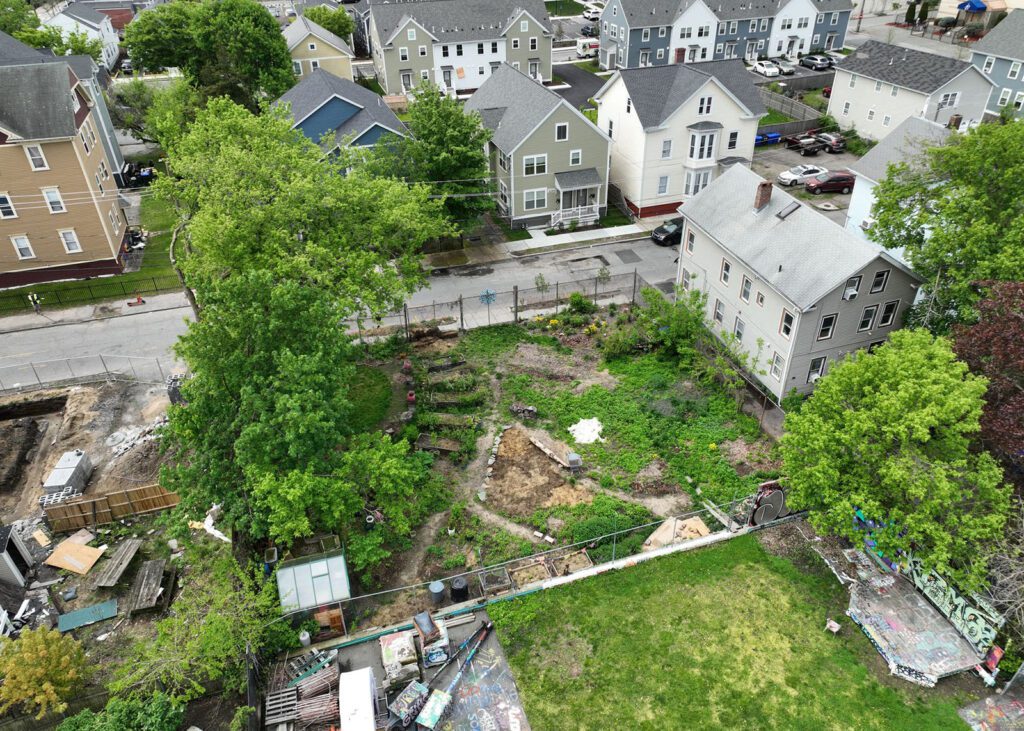
PROVIDENCE — There was a method to the madness of planting 185 trees and 80 shrubs 2 to 3 feet apart in a 1,000-square-foot corner of the Pearl Street Garden.
The method is named after Akira Miyawaki, a Japanese botanist and ecologist who specialized in natural vegetation restoration of degraded land. His method has been implemented worldwide. He died in 2021 at the age of 93.
The Miyawaki Method focuses on swiftly creating dense, biodiverse forests — or, in the case of the Pearl Street Garden, a microforest — using native vegetation. The practice involves planting seedlings at high density, to mimic natural forest ecosystems and to rely on natural processes such as competition and mutualism to accelerate growth.
A mix of trees, shrubs, and understory plants are used to create a multi-layered forest that promotes biodiversity and ecosystem resilience. The Pearl Street Garden had the understory and now, thanks to some 30 volunteers, the trees and shrubs, at least seedlings and juveniles.
Miyawaki forests can mature in 20 to 30 years, significantly faster than conventional afforestation techniques, which can take a century or more.
The city’s second microforest was born on an overcast, drizzly, and somewhat raw Saturday morning on the South Side. “People are really showing up. It’s amazing,” Currie Touloumtzis, Groundwork Rhode Island’s urban tree program manager, told a volunteer who had just passed through the garden’s front gate.
The volunteers and the handful or so of bandana-wearing project leaders planted a combined 35 species of trees (20) and shrubs (15) in a corner of a 8,600-square-foot parcel that is surrounded by a chain-link fence and multifamily homes. It took them until mid-afternoon or so to get all the vegetation planted.
The parcel at 219 Pearl St. is owned by Yarrow Thorne, founder of The Avenue Concept. The Lockwood Street nonprofit backs up to the Pearl Street Garden.
Since 2005, Thorne has supported a rotating cast of gardeners, environmentalists, and advocates’ use of the lot to grow food, build urban ecosystems, and to heal land and community. Thorne has estimated that about 200 different people have gardened there in the past 20 years.
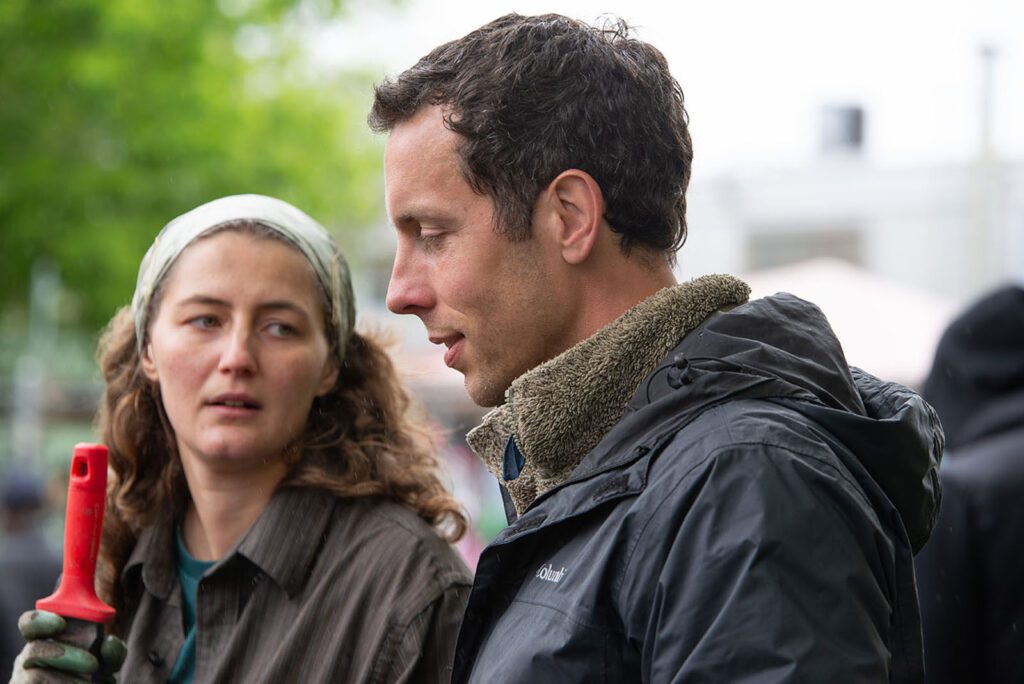
Jeff Matteis and Cristiane Caro currently steward the Pearl Street Garden, and last year officially formed the Pearl Street Garden Collective to take on projects beyond this residential lot. This collective of gardeners, educators, and artists uses the practice of permaculture to regenerate ecosystems, build resilient communities, and to engage people with the practice of caring for land.
The collective’s co-founders define permaculture as a “multidisciplinary design approach that thoughtfully integrates land, resources, people, and animals to meet human needs while creating environments that benefit all.”
They have said the process begins with one question: “What would the world look like if we designed our homes and neighborhoods to function like thriving ecosystems?”
In this world, things like McMansions, lawns, and strip malls and big-box stores with massive parking lots likely never would had been born.
Their work is inspired by the need to transform lawns into diverse ecosystems filled with native plants, animals, and pollinators. Their work is about depaving landscapes so rain can soak into the land and restore groundwater, not to carry polluted runoff into stressed waterways. The duo wants to work on projects that spark joy and inspire people to make a difference.
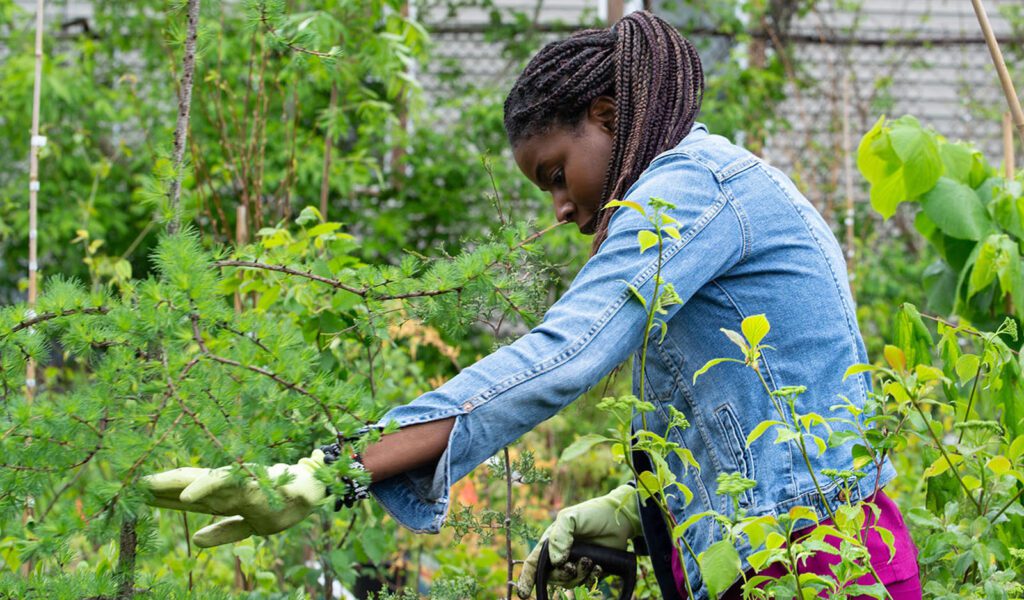
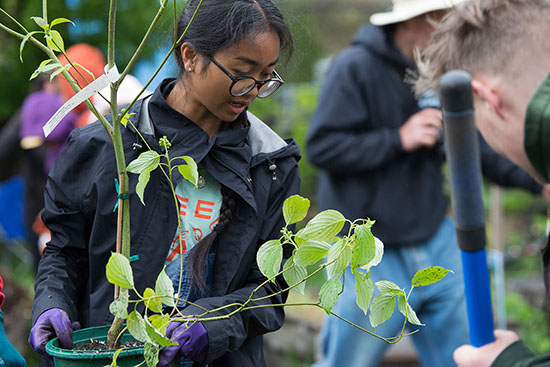
That’s what happened May 10. A diverse group of about 30 Black, brown, and white community members, including parents with children, college students, young adults, and more-senior individuals grabbed shovels and began digging.
Actually, planting trees and shrubs, especially so close together, is a little more complicated than that. Before the digging and planting began, Groundwork Rhode Island staffer Sarah Hashem showed those gathered how to dig a hole properly. She noted it’s important to be careful when pulling trees and shrubs from their pots and to properly measure the hole’s depth.
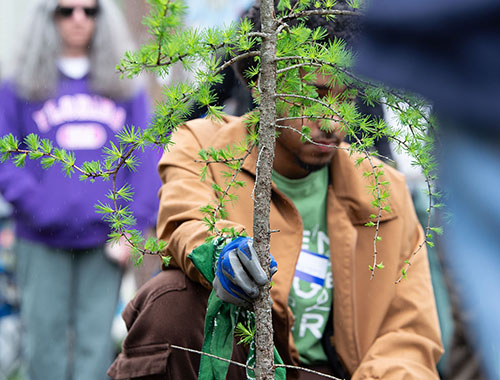
The 1,000-square-foot plot was broken into four quadrants and filled with Atlantic white cedar, white oak, red maple, cherry birch, black cherry, larch, dogwood, black willow, pussy willow, and beach plum. For a complete list of trees and shrubs planted, click here.
Last year Groundwork Rhode Island planted the city’s first microforest, on Prairie Avenue in South Providence. This pocket forest — as Matteis and Caro like to call them — also used the Miyawaki Method for faster growth and maximized carbon sequestration. It’s about half the size of the Pearl Street pocket forest.
The Pearl Street Garden Collective partnered with Groundwork Rhode Island to create the 265-native-tree-and-shrub forest in the garden’s upper-left corner — a few feet from a small urban meadow at the front of the lot that is filled with 70 native species, which were also planted close together.
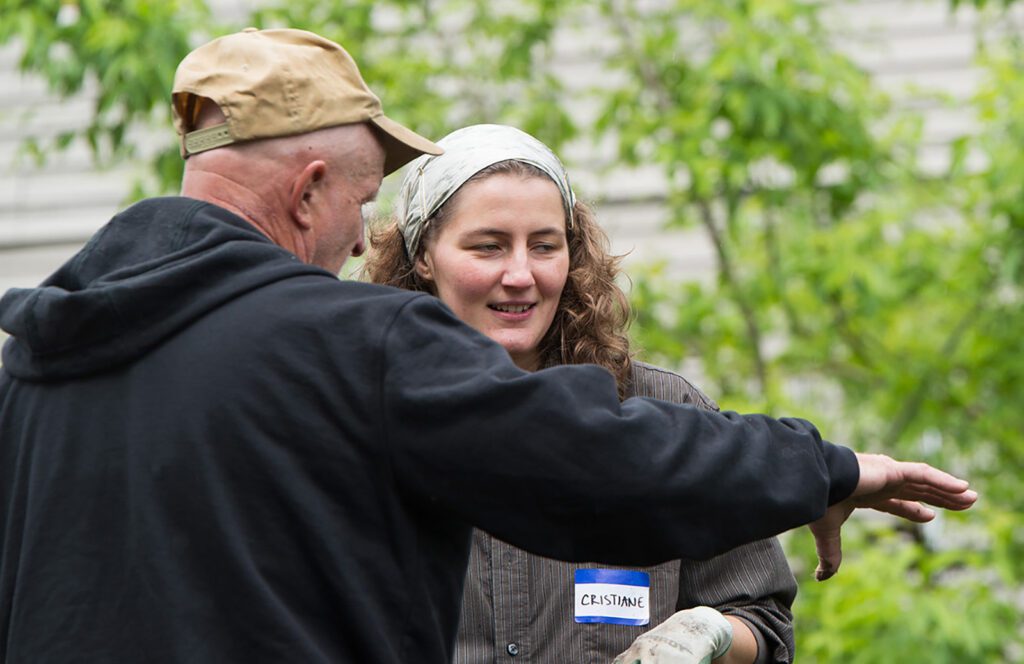
Caro’s interest in the natural world began as a Rhode Island School of Design student. While studying furniture design, the pandemic “kind of interrupted my studies” and she found herself drawn to the outdoors.
When students returned to campus, Caro co-founded The Regenerative Earth Collective, a student-run community garden that “became sort of a material lab for art students to learn about fibers and dye plants.”
From there, Caro decided to get a master’s in teaching, also at RISD. She focused on outdoor education and designing spaces for outdoor learning. She also became a University of Rhode Island master gardener. She lives a short bicycle ride from the Pearl Street Garden.
While Caro and Matteis were both living in rented apartments not far from each other in Barrington, they first met two states to the north at a permaculture program.
“We met in Vermont, but we were actually neighbors here in Rhode Island,” said Matteis, a Brown University graduate who now lives in East Providence with his wife. “So when we came back, we synced up a little more formally and asked if Cristiane wanted to be a part of the Pearl Street Garden. We had some of the neighbors coming here and helping out, and then partnering with Cristiane, it’s really finally opened the Pearl Street Garden up to the world.”
The duo eventually formed the Pearl Street Garden Collective, to research, design, and guide learning that connects people with nature. They have since created, with help from former inmates, a 1,400-square-foot edible garden at OpenDoors on Plainfield Street, and worked with The Avenue Concept to create six downtown gardens.
The collective is currently working with The Corliss Center — a nonprofit human service agency in Warren that provides support and activities for deaf and hard-of-hearing adults who have developmental disabilities — to revive an acre of neglected garden space.
“We went there in the fall to clear their abandoned existing garden,” Matteis said. “The members showed up, and they were all like hands on the ground, like helping us clear the garden. It was incredible.”
A handful of Corliss Center clients also lent a hand at the May 10 microforest planting.
A microforest, or if you prefer pocket forest, is a form of afforestation — the act of planting a forest where there wasn’t one before. They support biodiversity, and they are “becoming increasingly popular, particularly in urban areas where space is usually tight, since they can fit pretty much anywhere,” according to Earth.Org.
Since these tiny forests are built with layers, Earth.Org, calls them “true forests where many plants, insects, and fungi can thrive.”
The Pearl Street Garden microforest was funded through Groundwork USA and by a U.S. Department of Agriculture grant, according to Amelia Rose, executive director of Groundwork Rhode Island.
great story, and uplifting – needed in these often dark times!
Warms my heart.
Need to support such new pocket forests. Especially, in urban areas that lack any tree canopy.