Searching for Salamanders in Burrillville
April 21, 2025
Share


BURRILLVILLE, R.I. — As the wind died down Wednesday evening, a group of children and adults headed out into the woods behind the middle school in search of salamanders.
The little amphibians, which come in various colors and patterns and can famously regrow their limbs, can be found throughout the woodsy, wet pockets of New England.
Bundled in winter gear to endure the fickle April evening and equipped with small nets of different colors, the four kids and their chaperons set out, excited about what they might find.
Fewer attended the walk than usual, according to Samantha Young, a member of the Conservation Commission and one of the salamander walks’ organizers. Usually, they get a bigger crowd, but she suspected the weather and the fact that it was school vacation week may have kept some people home.
Young, along with fellow commission member and conservationist Roberta Lacey, has been taking groups out seeking salamanders since the start of spring.
The pair, who have their hands in several environmental education projects in town and in vernal pools and rivers, hosted their first walk of the year a few weeks ago, a nighttime salamander search held to celebrate the Burrillville Land Trust’s 25th anniversary.
The point of the walks, Young said, is to get kids to appreciate nature so that when they grow up, they’ll understand the importance of protecting it.

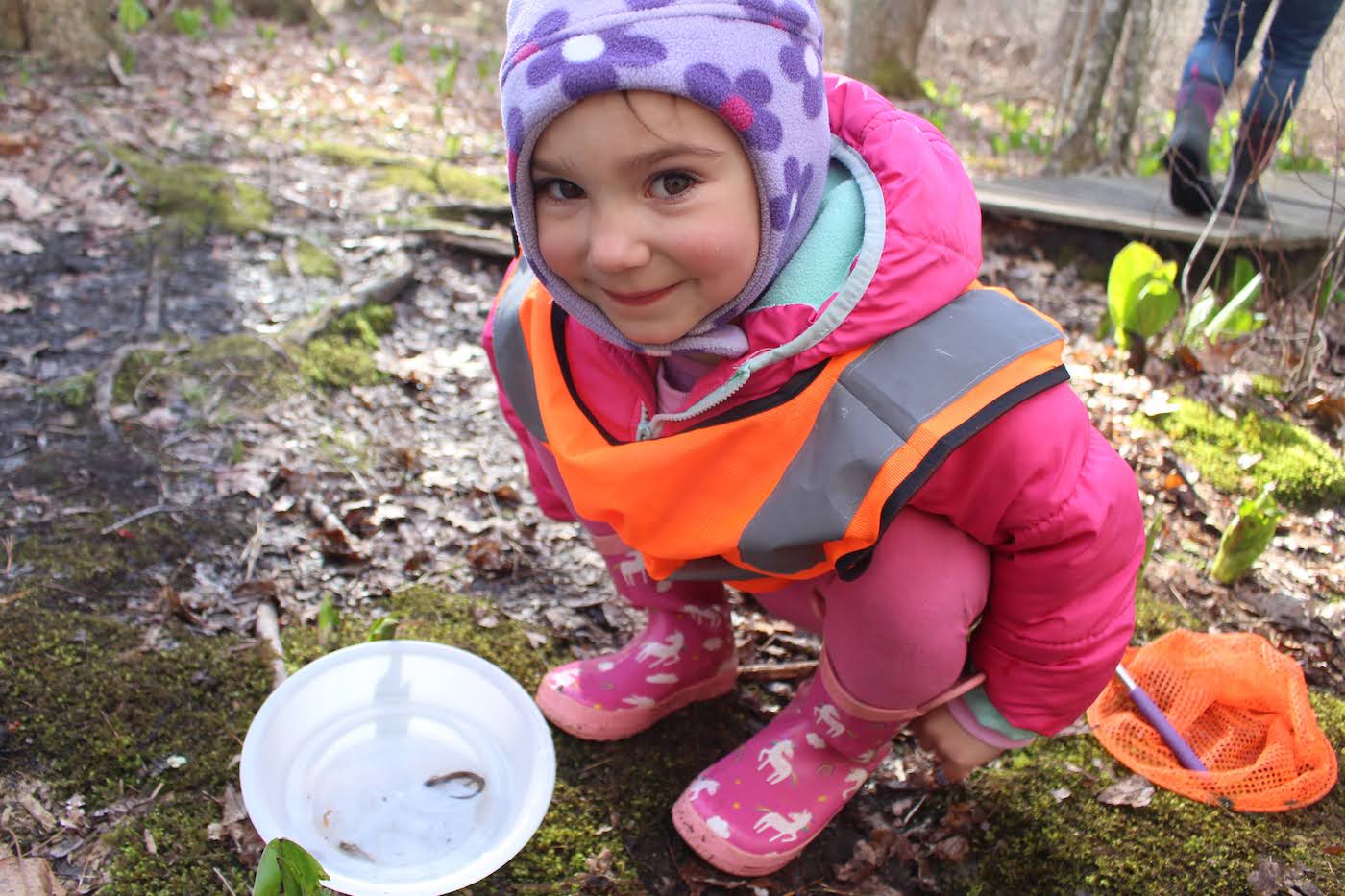
“It’s all about connecting kids to nature,” she said, “letting them touch the things that are creepy and crawly and slimy and gross because when they get older they learn to respect it.”
The group only walked a few minutes on Burrillville Middle School’s cross-country trails before they reached a steep downgrade that led to a little stream.
“Salamanders are under there,” 6-year-old Kevin Tatro said confidently, net in hand, pointing to a log.
Kevin’s grandmother Shelly has brought him to several of Young and Lacey’s walks this year, where Kevin has honed his salamander-seeking skills.
“Well, let’s see,” Lacey said to Kevin. “This is near the river, so it’s probably a really good place.”
They lifted the log. “There you go,” Lacey said — they had spotted their first salamander.
The other kids on the walk, Lincoln, 5, Savanna, 3, and Hunter, 2, and their mother, Amanda Rondeau, hunched over the log to see the find, which turned out to be an eastern red-backed salamander.
“Do you want to hold him?” Lacey asked Savanna. “If he wiggles out, I’ll catch him.”
She explained to the kids that the salamander needed to stay wet but didn’t belong in the water, after one of the kids suggested tossing the creature in the river. Red-back salamanders don’t have lungs and must live in damp habitats to breathe, so they spend a lot of time in moist, woody areas on land.
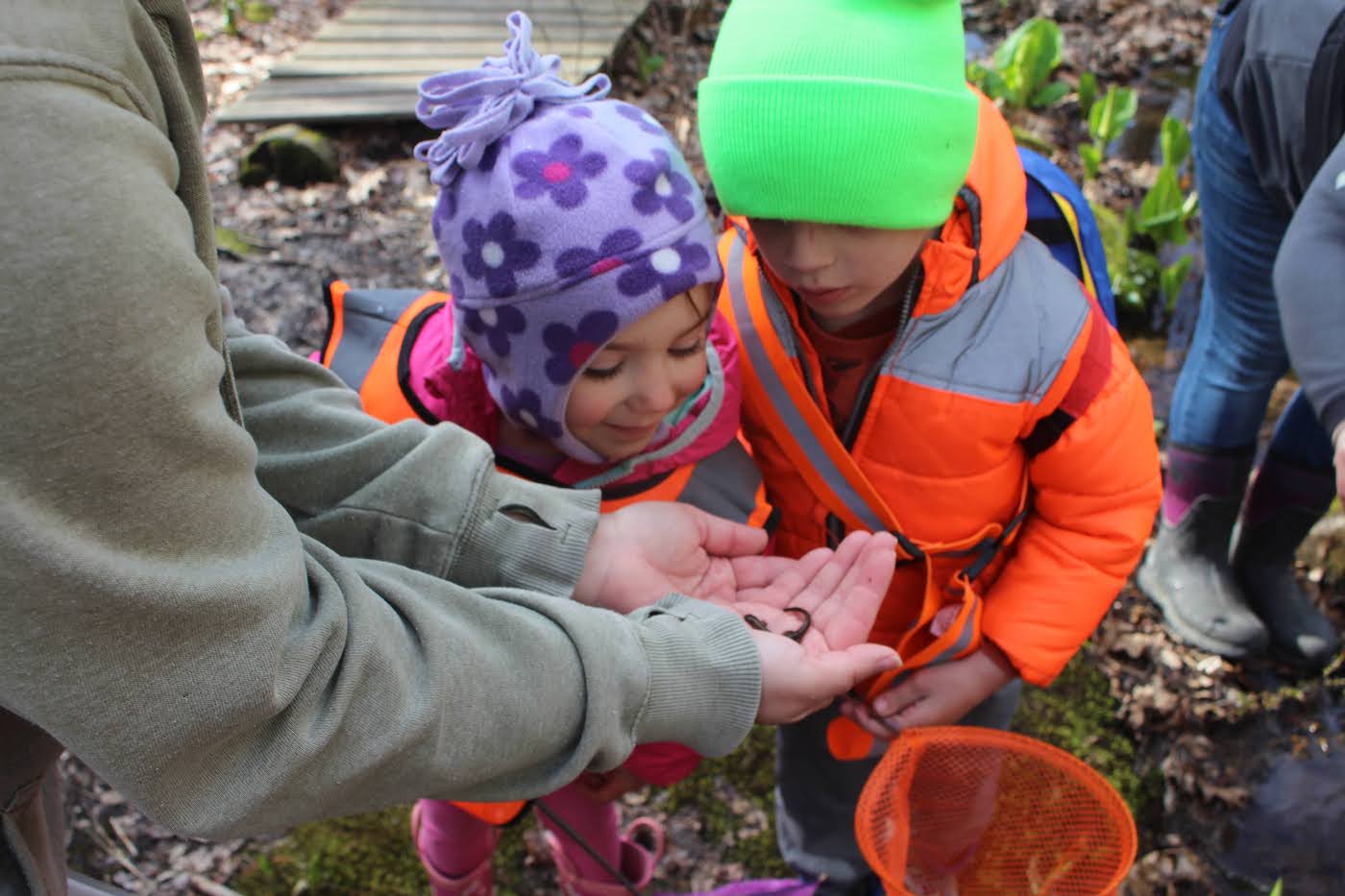
The first find marked the start of a lucrative search.
The kids fanned out, peeking under logs and stomping through the nearby stream.
In addition to finding northern two-lined salamanders in the river, the children also spotted woodlice, millipedes, and caddisfly larvae that had formed little cylindrical homes out of pebbles.
Twenty minutes into the walk, any reservations the children held about the creatures they were finding disappeared. Each held the squirming salamanders gently in their hands, and watched the caddisflies peek out from their encasements with wonder.
Holding up a crane fly larva, Young showed the group the pudgy, little brown insect, and said, “That’s the whole point of learning, is that something so nasty …”
“Bring on the nasty!” Kevin exclaimed.
“Something so nasty and gross can grow into something so beautiful and useful,” Young continued, “because they all eat mosquitoes.”
Young advised the kids to put the creatures back and restore the rocks and logs just as they found them, before they headed back up the hill to look for some amphibian eggs.
“Can you put them in here?” said Kevin, holding up his net to Lacey. “If you find them, can you put them in here?”
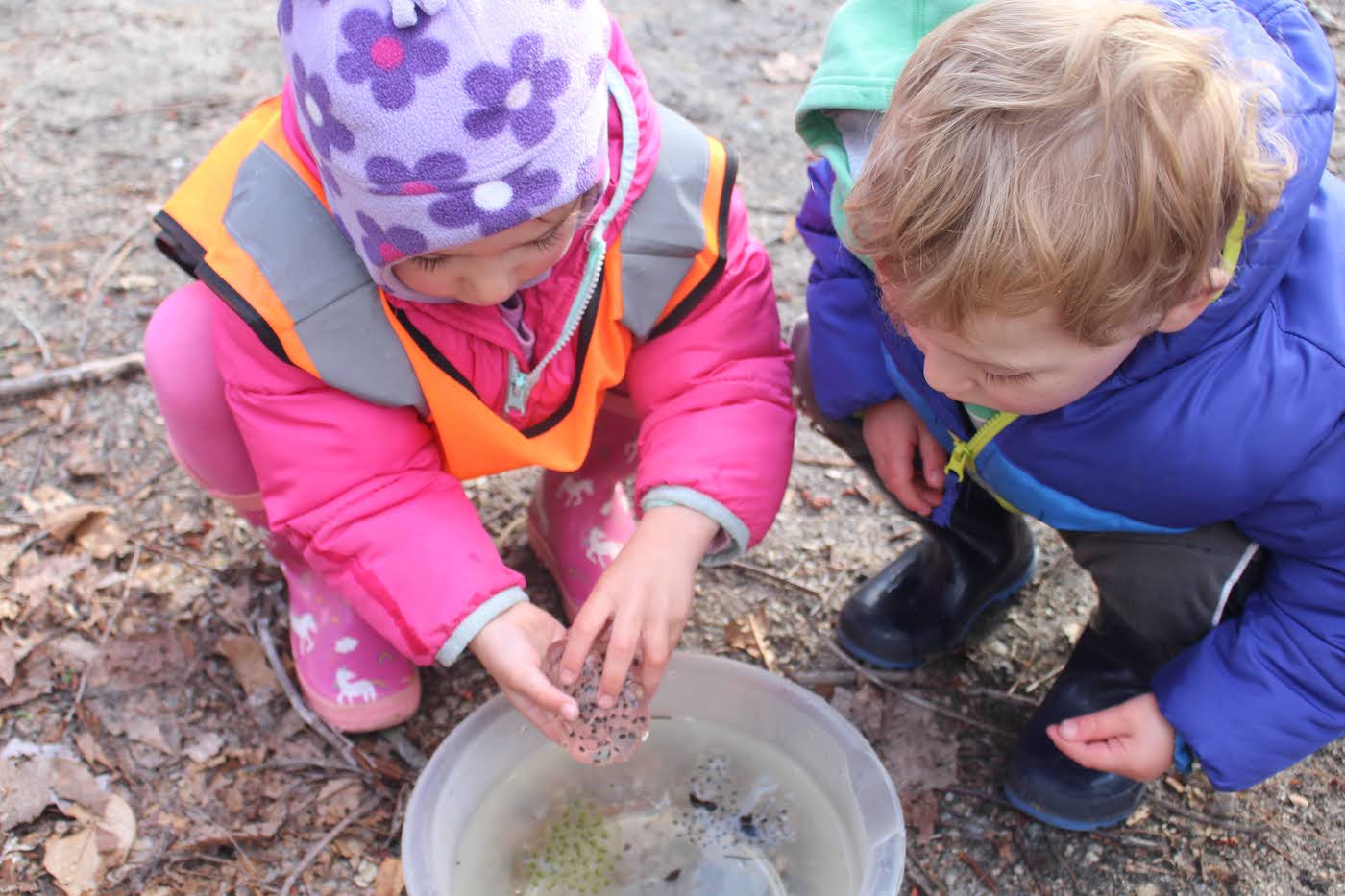
Since the vernal pool, where the frogs and salamanders lay their eggs, was deeper than the stream and surrounded by briars, it was Young and Lacey’s job to search for the shiny pods of eggs.
“It all depends on the time of the day how well you can see them underwater,” Lacey said at the edge of the pool, as the egg sacs camouflage almost perfectly into the muck.
After lots of poking around with a net in the murky water, Lacey eventually found a lump of spotted salamander eggs.
Savanna and Lincoln held the gelatinous masses in their hands, giggling as the eggs jiggled.
As the weeks go on, the little balls inside the jelly will get bigger, and so will the salamanders growing inside them, until eventually the jelly disintegrates and the salamanders are large enough to hatch, Young explained.
After putting the eggs back in the pool, the group headed back to the parking lot, and Lacey reminded everyone to wash their hands really well when they got home.
The wind started to pick up again as the sun hit the group and the trees at a slant, but the kids still stopped along the path to pick up pine cones, point out birds, and ask questions.
Everyone went home with a Junior Conservationist sticker, the little ones thanked their guides, and the parents asked when the next walk might happen before hopping into their cars and heading home.