
URI Research: Forests Part of Rhode Island’s Smart Solutions
April 14, 2025
Share


KINGSTON, R.I. — A forestry extension specialist at the University of Rhode Island, Christopher Riely works with faculty and students across campus, and with off-campus partners, to help improve Rhode Island’s forests and the wildlife they support.
A certified forester, Riely is also involved with research in the emerging field of climate-adaptive forest management, taking place in Rhode Island, just 5 miles away from campus.
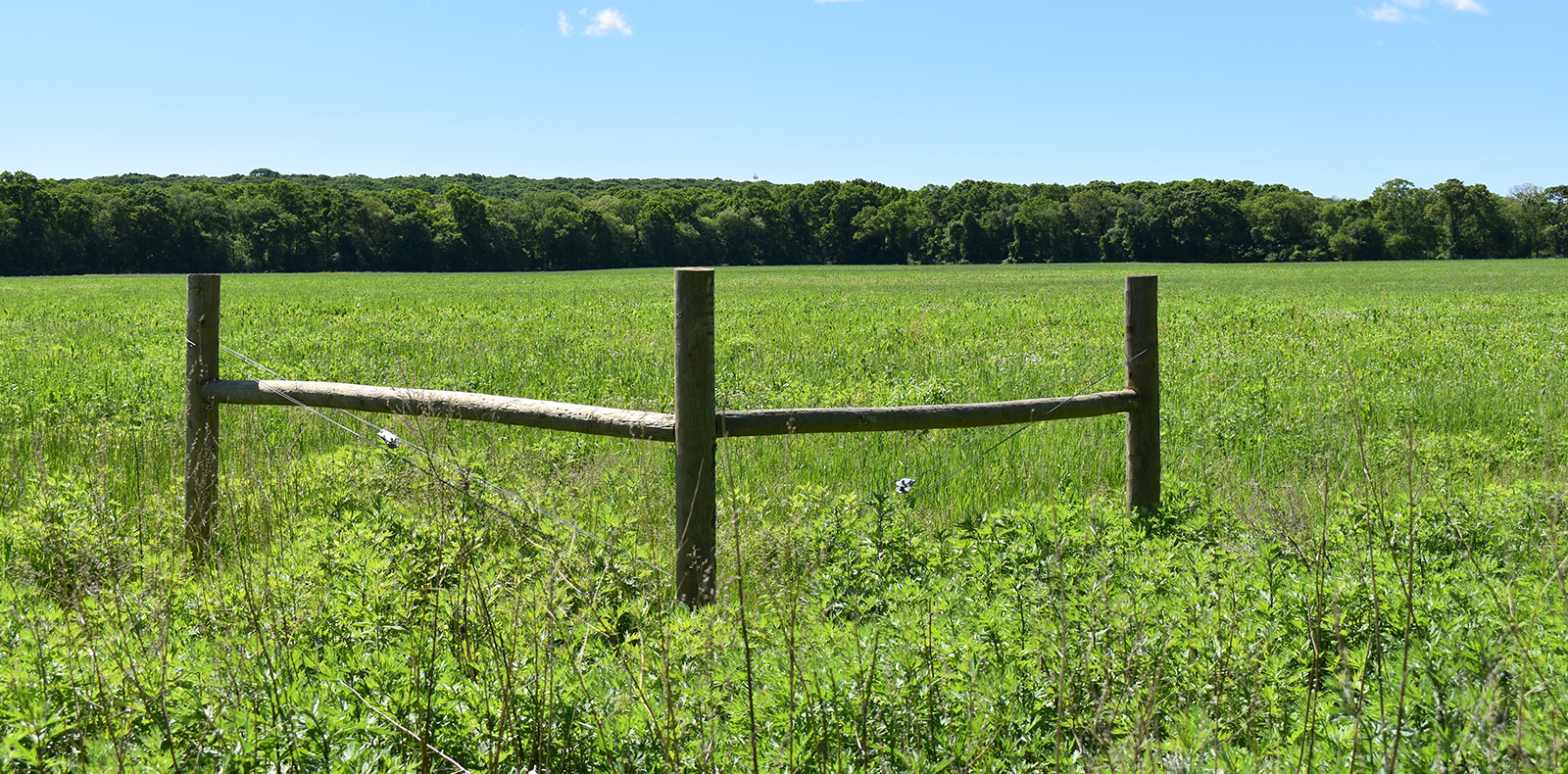
Riely frequently works with students in URI’s College of the Environment and Life Sciences, often accompanying students to the 1,825-acre Hillsdale Preserve in Richmond to study Rhode Island’s other main ecosystem beyond Narragansett Bay: its woods.
The Ocean State is still more than half woodland.
Previously managed as a hunting preserve for a Wall Street banker, the Hillsdale Preserve was deeded to the state for scientific forest management and is now managed by the Rhode Island Department of Environmental Management in research partnership with URI. The property is full of history and beauty, and scores of dead trees decimated years ago by the spongy (gypsy) moth.
“Forests are an important ecosystem in our state,” Riely said. “There is recognition here of both the value that forests provide, and also the need for affordable housing and smart growth. We can preserve and support both trees and business, too.”
He noted trees are stressed by climate change, but that some species have the capacity to adapt. Together with colleagues in URI’s Natural Resources Science department and at the University of Connecticut, Riely is studying ways people can help northeastern forests adapt.
Strategies for helping forests adapt to change can include promoting resistance to pests, fostering resilience through accommodating some change, and facilitating transition to new combinations of tree species better adapted to future climate conditions, according to Riely.
An example of a “transition” strategy could include assisted forest migration, which involves intentionally moving and planting tree species in new places where they may grow in changing climate conditions, such as chinkapin oak and southern red oak in Rhode Island.
“We have variety here in our tree landscape,” Riely said, “but climate change will slowly alter the kinds of trees present in our local forests due to changes in weather, temperature, and precipitation.”
He noted New England’s iconic pitch pine, for instance, which lines the way to Cape Cod, is at risk from the southern pine beetle that, with warmer winters, has migrated here. This insect may be an issue for these trees in the future, he said.
This research on climate-smart forestry is part of a collaborative effort to test experimental forest management strategies across the United States and Canada.
The Hillsdale Preserve is dominated by oak-hickory forest and is experiencing forest health issues exacerbated by climate stress, which makes it an interesting study site, according to Riely.
“We are implementing different types of forest management strategies there to compare the effectiveness of different approaches,” he said. “We’re monitoring vegetation growth to analyze how the area’s forest canopy and understory conditions are changing in response to different treatments.”
Categories
Join the Discussion
View Comments

Your support keeps our reporters on the environmental beat.
Reader support is at the core of our nonprofit news model. Together, we can keep the environment in the headlines.