This Species’ Situation Isn’t Ducky
April 14, 2025
Share


Series note: The region’s collection of native species is under threat on several fronts, most notably from humanity’s shortsightedness. Humans aren’t giving the natural world the space it needs and deserves. We’re crowding out nonhuman life, which, in turn, makes nature less productive and us less healthy. Wild New England examines the animals and insects most at risk.
A 2019 study sounded the initial alarm, finding a net loss of 3 billion birds in North America in the previous five decades. The recently published annual status assessment of the health of the nation’s bird populations, researched by scientists from conservation groups, found those losses are continuing.
A notable concern in the 2025 State of the Birds report is that duck populations — a traditional bright spot in past reports, with strong increases since 1970 — have trended downward in recent years.
The Prairie Pothole Region (PPR) is North America’s most important area for breeding ducks, supporting as much as two-thirds of the continent’s population. But over the past decade duck populations in the PPR have declined and are now 10% below the long-term average, according to the report.
The report noted the recent duck declines in that region correspond with a period of deteriorating environmental conditions and unrelenting wetland and grassland loss, driven by the expansion and intensification of row-crop agriculture and erosion of wetland protections.
Proactively protecting birds isn’t just about the birds. The most recent State of the Birds report highlights the economic significance and well-being benefits of birdwatching as additional reasons to support conservation efforts.
Supporting bird conservation can boost the U.S. economy, according to the report. With nearly 100 million people in the United States engaged in birding activities, their contributions to local and state economies are substantial. It noted that the total economic output related to birdwatching activities is nearly $280 billion, and birding-related activities support 1.4 million jobs.
Just as importantly, the report recognizes the significance birds and the natural world play in supporting mental health, citing research that has found encounters with birds can reduce stress, anxiety, and depression.
“There is no doubt that the 2025 State of the Birds report is cause for alarm,” said Jeff Walters, the Conservation Committee co-chair at the American Ornithological Society, “but it is also cause for hope. Public interest in birds and the economic benefits from birding are at unprecedented levels, as is the information available about the status of each and every one of our bird species.”
Despite the concerning trends, the report emphasizes that conservation efforts can succeed when adequately supported.
“Many bird populations are struggling. But a proven blueprint for success is science-based planning and collaborative investment in habitat conservation,” said Steve Adair, Ducks Unlimited chief scientist.
Private land programs and partnerships such as conservation ranching, coastal restoration, seabird translocation, and forest renewal show how concerted efforts and strategic investments can recover bird populations.
“Fortunately, many of the actions that are good for birds are good for us,” said Amanda Rodewald, faculty director of the Cornell Lab of Ornithology’s Center for Avian Population Studies. “When we protect the habitats that birds rely upon, we also protect the ecosystem services that sustain us.”
Rhode Island features 28 duck species, including the American wigeon and the northern pintail. There are 27 duck species that can be found in Massachusetts, from the mallard and wood duck to the long-tailed duck and harlequin duck. Connecticut features 29, including the American black duck and the northern shoveler. (These species numbers aren’t written-in-stone fact, but provide a good baseline, and they are changing as the climate changes.)
The following is a look at the ducks in southern New England listed as a species of concern, threatened or endangered:
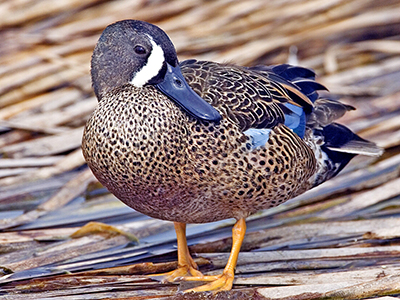
Blue-winged teal: Listed as a species of concern in Rhode Island. This species is among the smallest ducks in North America, with males weighing an average of a pound and females 0.8 pounds. This species has two populations. One is west of the Appalachian Mountains, with particularly high populations in prairie-pothole country, extending to California and Alaska. The other population nests along the Atlantic Seaboard from New Brunswick to North Carolina.
This duck can be found on calm bodies of water from marshes to small lakes. The prairie-pothole region is the heart of their breeding range, where they thrive in grassy habitats intermixed with wetlands.
They begin moving through Massachusetts by late August and are largely absent from the state by late October.
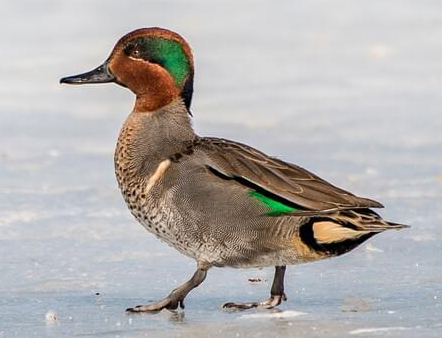
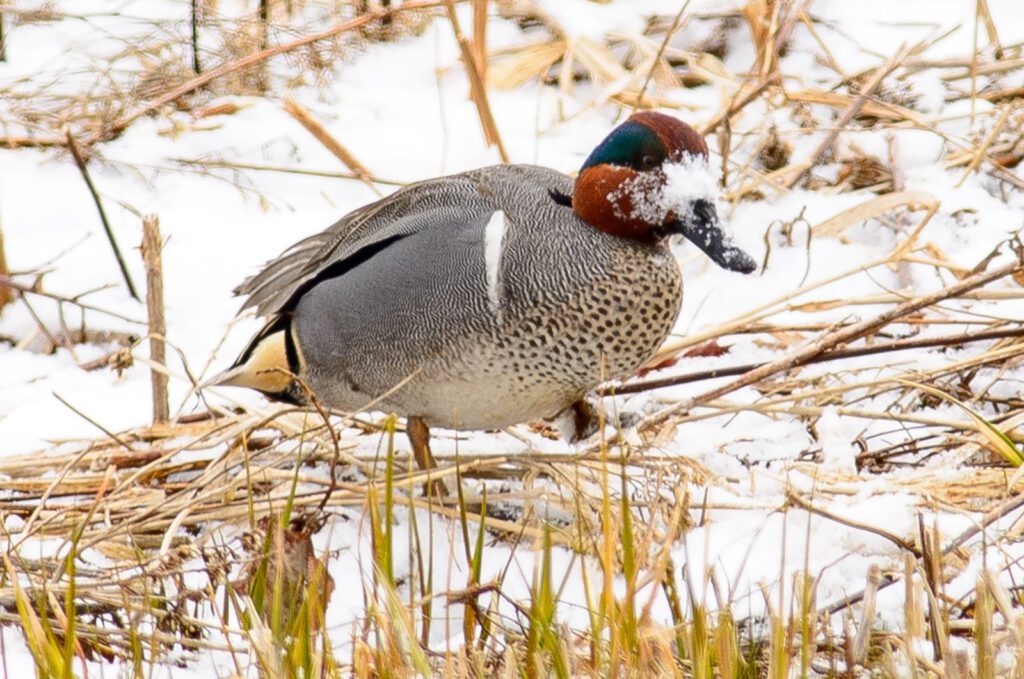
Green-winged teal: Listed as a species of concern in Rhode Island. These small ducks have short, blocky bodies and their tails sit high out of the water. Their heads are large, their necks are short, and their bills are relatively small. They feed in shallow bodies of water and in flooded fields. They breed in dense vegetation along river deltas. During migration and winter, look for them on shallow wetlands, coastal marshes, and estuaries.
Although it is the second-most commonly taken waterfowl, after the mallard, by hunters, its small size and secretive breeding habits have allowed its populations to weather the pressures of hunting.
The male deserts the female as soon as the clutch is complete.
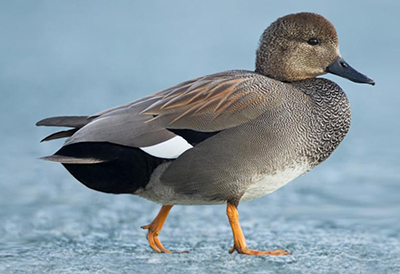
Gadwall: Listed as a species of concern in Rhode Island. They are about the same size as mallards. They feed with other dabbling ducks, tipping forward to feed on submerged vegetation without diving. They sometimes steal food from flocks of diving ducks or coots. These ducks can be seen in pairs through the winter, because they select their mates for the breeding season as early as late fall.
They breed mainly in the Great Plains and prairies. On migration and in winter, look for them in reservoirs, ponds, fresh and salt water marshes, city parks, sewage ponds, or muddy edges of estuaries.
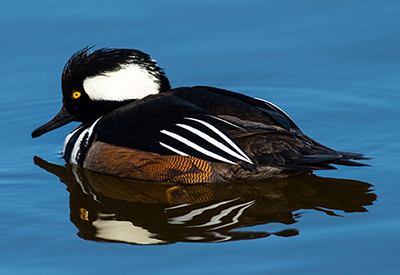
Hooded merganser: Listed as a species of concern in Rhode Island. They are small ducks with a thin bill and a fan-shaped, collapsible crest that makes their heads look oversized and oblong. They dive to catch aquatic insects, crayfish, and small fish.
In summer, these ducks nest in holes in trees, often near freshwater ponds or rivers. For winter, they move to larger bodies of fresh water, marshes, and protected saltwater bays.
Like other diving birds such as the common loon and the Atlantic puffin, this species is a “sight feeder,” finding and pursuing aquatic prey with eyes specially adapted for keen underwater vision. Powerful eye muscles allow these ducks to control the curvature of their eyes’ corneas and lenses — in contrast, humans can only control the curvature of their lenses. This allows equally accurate vision both below and above the water.
Note: Some of the species listed in each state overlap, and how often the lists are updated varies — the Rhode Island list was last updated in March 2006, Massachusetts last August, and Connecticut in January 2023. For species listed as state historical — essentially extirpated — in Rhode Island, they were included in the endangered category.