
Global Heating Discombobulates Region’s Bird Populations
Multiple stressors combine to impact southern New England’s feathered friends
April 7, 2025
Share


Series note: The region’s collection of native species is under threat on several fronts, most notably from humanity’s shortsightedness. Humans aren’t giving the natural world the space it needs and deserves. We’re crowding out nonhuman life, which, in turn, makes nature less productive and us less healthy. Wild New England examines the animals and insects most at risk.
The work of Charles Clarkson, the Audubon Society of Rhode Island’s director of avian research, has documented the challenges birds face as the climate crisis increases the unpredictability of weather. Species that have timed their migratory movements over thousands of generations to coincide with gradual spring warming or autumn cooling are finding themselves out of whack with the plant and insect communities they rely on.
This climate mismatch is leading to avian population declines, particularly with those species that undergo long-distance migration, such as the common yellowthroat, the wood thrush, and the American goldfinch.
“Migratory birds rely on a multitude of habitats. It’s not just the distinctive breeding and overwintering habitat. They have these stopover sites in between the two that they routinely stop during periods of migration to refuel and replenish lost fuel reserves,” Clarkson said. “If any of those stopover habitats become either lost because of development or degraded such that they can’t provide the resources these birds need during periods of migration then they’re unable to refuel and much less likely to make migration successfully.”
More than a third of all birds found breeding on Audubon Society of Rhode Island refuges are experiencing long-term population decline, and only a quarter are showing signs of long-term increases in population, according to data collected at the 14 properties between Jan. 1 and Nov. 1 2022.
Overwintering species are faring only slightly better, with slightly less than a third exhibiting declining population trends.
Released in January 2023, the State of Our Birds Part I: Breeding and Overwintering, along with Part II: Migration released four months later, provide an in-depth look at the health of Rhode Island’s avifauna.
Both reports were written and edited by Clarkson. He also co-authored The Second Atlas of Breeding Birds in Rhode Island. This document contains a rich account of the data captured in collaboration with the University of Rhode Island during the 2015-19 bird survey.
The project was completed with the support of some 200 volunteers, 20 biological technicians, and a cast of researchers, scientists, statisticians, and mapmakers. Together, a total of 3,705 breeding season count surveys were conducted and 173 species were documented in the Ocean State.
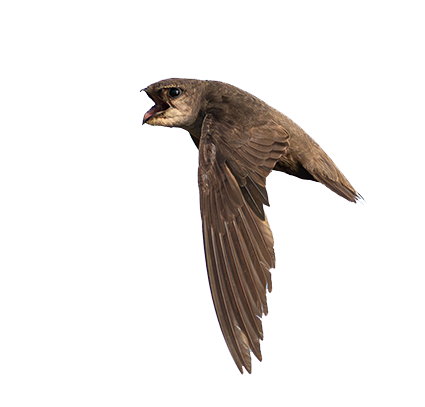
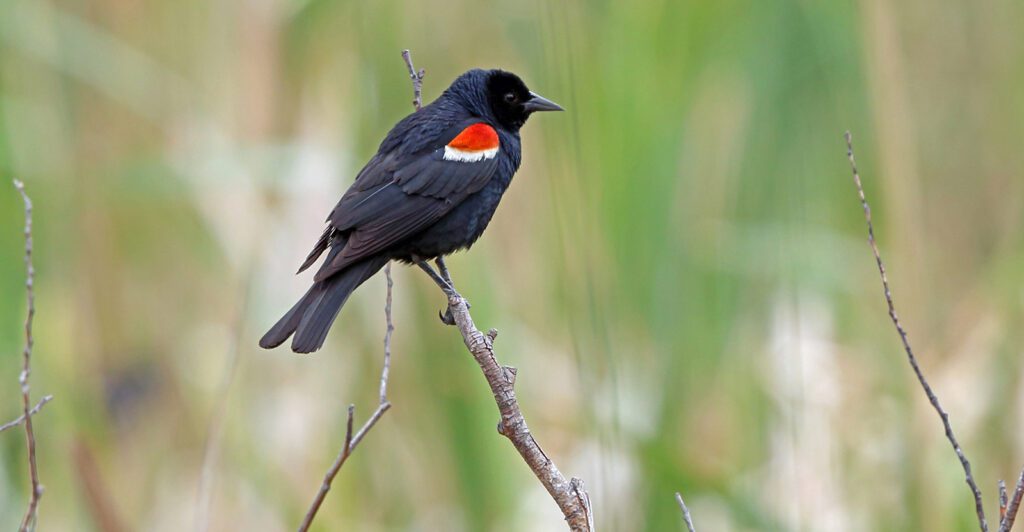
Through all this research, Clarkson has identified and labeled nine bird species as “responsibility birds” due to their declining populations and the need for focused conservation efforts: barn swallows, black-and-white warblers, chimney swifts, common yellowthroats, eastern towhees, prairie warblers, red-winged blackbirds, scarlet tanagers, and wood thrushes.
“It’s a collection of species that are associated with mature forested habitats that we have in western Rhode Island, the early successional scrub-shrub habitat that’s declining throughout the Northeast, and forested wetland habitat like the red-winged blackbird, and then the aerial insectivores, like the chimney swift and the barn swallow,” he said. “Species associated with multiple different habitat types, so by directing conservation efforts towards these nine target species, we’re indirectly also conserving basically entire habitats and all of the closely associated species.”
Poor or lost habitat and decreasing insect populations are just a few factors in bird population declines. Clarkson said house cats kill some 2.4 billion birds every year. He noted it’s been estimated that about a billion birds die annually from flying into buildings and windows.
“A lot of people will hear a bird or two over of the course of the year that strike their windows and say, ‘Oh, it’s just two birds. That’s not that big of a deal.’ But if you multiply that by the 147 million homes across the United States, it adds up to a pretty significant amount of mortality,” Clarkson said. “And then the other big area of bird building collision occurs during peak periods of migration, when these nocturnal migrants are flying at night using a celestial compass to guide their way and being drawn off course, confused, exhausted by the lights on the terrestrial landscape below them.”
To lessen our footprint on birds and biodiversity in general, Clarkson offered a few simple suggestions most any of us could adopt: reduce consumption; be more energy efficient; turn off nonessential lights during nighttime hours; don’t let cats out of the house; plant native species; stop spraying pesticides and using fertilizers; put UV decals on your windows or use other means to lessen bird strikes; and buy certified bird-friendly coffee, where the coffee plants are grown among the native vegetation.
“If you go down to the Central and South American tropics and you look at these plantations that are providing the coffee that services companies like Folgers and Maxwell House and these cheaper coffee companies, you see that they actually absolutely obliterate the rainforest,” Clarkson said. “Sun-tolerant coffee varieties in places where highly functional, highly diverse ecosystem used to be.”
Massachusetts hosts about 300 different species of birds annually, according to Mass Audubon. The Massachusetts Division of Fisheries & Wildlife has 448 species that meet the state’s listing criteria.
Connecticut is home to about 450 birds, according to the state’s Avian Records Committee. Three species are extinct: the Labrador duck, the heath hen, and the passenger pigeon.
According to to the Yale Peabody Museum, of the some 10,000 species of birds in the world, 957 have been recorded in North America north of Mexico, and 421 are found in Connecticut. These species include 175 that nest in Connecticut and 55 that remain through the winter.
From the common black-capped chickadee to the rarely encountered northern goshawk to brash wild turkeys, southern New England’s birds come in all shapes and sizes. And a number of them are at risk.
In fact, across the country many of the warm-blooded vertebrates with feathers, toothless beaked jaws, a high metabolic rate, and a four-chambered heart that humans love to spy on are in trouble.
The State of the Birds 2022 report, produced by a coalition of science and conservation organizations including the American Bird Conservancy, the Cornell Lab of Ornithology, Ducks Unlimited, and the National Audubon Society, highlights steep population losses in virtually all habitats. The report found 1 in 4 breeding birds have been lost from the United States and Canada in the past 50 years.
The nationwide report also identifies 70 tipping point species that have lost half or more of their breeding population since 1970, and are on track to lose another half or more in the next 50 years. Included among those 70 species are the chimney swift, golden-wing warblers, and seaside sparrows.
The recent release of the State of the Birds 2025 report found continued widespread declines in American bird populations across all mainland and marine habitats, with 229 species requiring urgent conservation action.
“The rapid declines in birds signal the intensifying stressors that wildlife and people alike are experiencing around the world because of habitat loss, environmental degradation, and extreme weather events,” said Amanda Rodewald, faculty director of the Cornell Lab of Ornithology’s Center for Avian Population Studies. “When we see declines like those outlined in the report, we need to remember that if conditions are not healthy for birds, they’re unlikely to be healthy for us.”
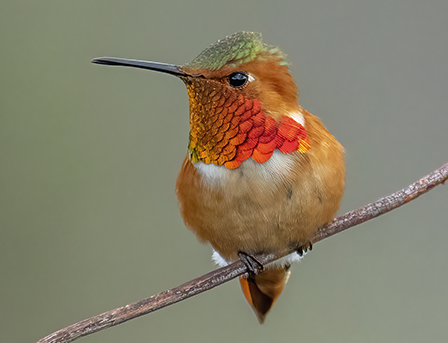
Key findings from this year’s report show that more than a third of U.S. bird species are of high or moderate conservation concern, including 112 “tipping point” species that have lost more than 50% of their populations in the past five decades. That list includes 42 “red alert” species facing perilously low populations, such as the Allen’s hummingbird, the tricolored blackbird, and the saltmarsh sparrow. The latter are predicted to go extinct in the next 15 to 20 years, as rising sea levels flood marshes throughout their range along the East Coast.
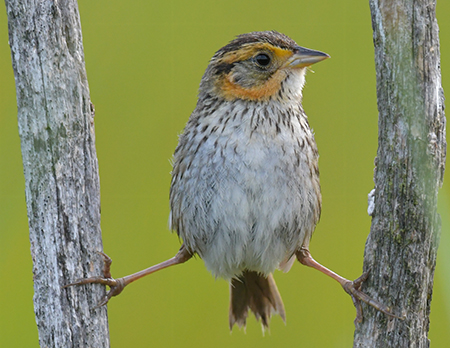
In the Ocean State, at a 36-acre salt marsh at Jacob’s Point in Warren, volunteers have kept careful watch on the saltmarsh sparrows that nest there.
“We live on a planet with a finite number of resources, and the human population is currently consuming nearly two planets worth of those resources,” Clarkson said. “We’re outstripping the capacity of this planet to provide the resources, not just for ourselves, but for the other wildlife communities that we share the planet with.”
The following is the first of seven looks at birds in southern New England listed as a species of concern, threatened or endangered:
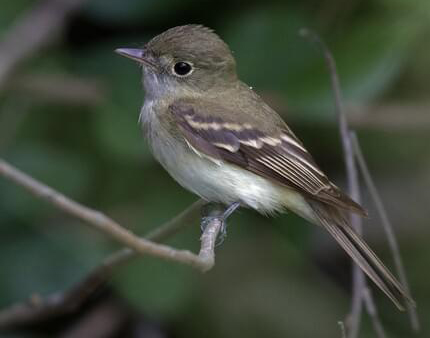
Acadian flycatcher: Listed as a species of concern in Rhode Island. Of the dozen or so similar species in the Empidonax genus, this bird is the common one in mature forests of the Southeast and Mid-Atlantic. They are such adept fliers that they sometimes take a bath not by wading into water but by diving at it, hitting the surface with their chests, and then returning to a perch to preen and shake.
They perch on slender branches at middle heights to sing explosive “ker-chip!”songs, or to fly out to catch insects. Their affinity for relatively undisturbed forest makes them useful as an indicator of forest health.
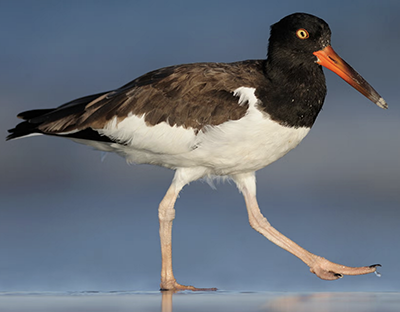
American oystercatcher: Listed as a species of concern in Rhode Island. A shorebird that can be found on Atlantic and Gulf Coast beaches, this species prefers coastal areas with extensive sand beaches, tidal mudflats, and salt marsh. The key element is the presence of a good food supply, such as oyster beds and clam flats.
Females first breed at age 3 or 4. Sometimes pairs mate for life. In areas with high populations, they may form trios, with one male and two females attending one nest or two nearby nests. Nest sites are on the ground, on marsh islands or among dunes, usually well above the high-tide mark. Nests, built by both sexes, are shallow scrapes in sand, sometimes lined with pebbles and/or shells.
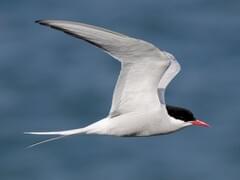
Arctic tern: Listed as a species of concern in Massachusetts. Records of this species have been inconsistent in the past because of the difficulty of identifying this bird and distinguishing it from the common tern. It’s generally believed that in the Bay State, this tern was rare in the late 1800s and required a longer period of time to recover from the damaging impacts of the millinery trade than common or least terns.
When feeding, they will hover over the water and dive from heights of 30-40 feet, splashing the surface and becoming submerged. They nest in colonies ranging from several to tens of thousands of pairs. They also can be found with common and least terns. They can found in sandy gravelly areas on islands and barrier spits and, occasionally, on mainland shores.
On Cape Cod in 1937 and 1938, 60 pairs were reported; in 1946 and 1947, 280; and between 1968 and 1972, 110.
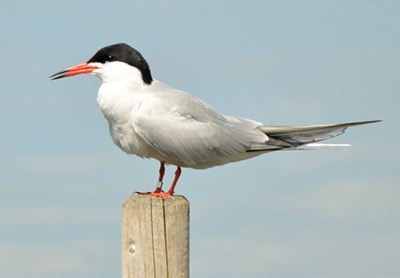
Common tern: Listed as a species of concern in Massachusetts. Bay State populations are well below levels reported pre-1870, when hundreds of thousands are reported to have bred. Egging likely limited populations throughout the 1700s and 1800s. More seriously, hundreds of thousands were killed along the Atlantic Coast by plume-hunters in the 1870s and 1880s, reducing the population to a few thousand at less than 10 known sites by the 1890s. Only 5,000 to 10,000 pairs survived, almost exclusively on Penikese and Muskeget islands.
In 2005, 15,447 pairs nested at 34 sites in Massachusetts. About 90% of these birds were concentrated at the Monomoy National Wildlife Refuge in Chatham, Bird Island in Marion, and Ram Island in Mattapoisett.
At Penikese Island in Buzzards Bay, after a pilot project in 1998 was initiated — the aggressive discouragement of gulls using harassment by trained dogs and human site occupation was initiated — the colony increased from 137 pairs to 756 pairs by 2006.
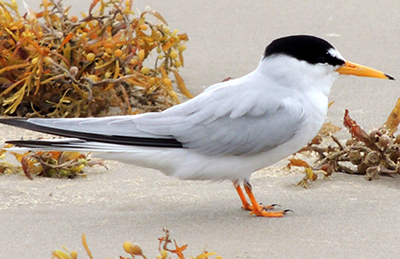
Least tern: Listed as threatened in both Rhode Island and Connecticut and as a species of concern in Massachusetts. This species nests along the East Coast from southern Maine to Mexico. There are also populations that nest in the Missouri and Mississippi River systems and on the Pacific Coast. The species winters from the Gulf Coast and Central America south to Peru and Brazil.
By the early 1900s, this species was almost extinct because of market hunting for the millinery trade. Although their numbers have rebounded, the development of the shoreline for recreation has limited the number of available nest sites. In addition, beach stabilization projects have reduced the quality of the remaining sites, forcing the birds to nest in areas with greater vegetation and increased human disturbances.
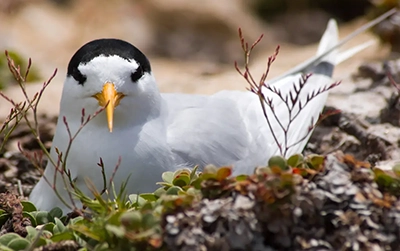
Roseate tern: Listed as state historical in Rhode Island — last seen there in 1979 — and listed as endangered in both Massachusetts and Connecticut. Historically, this species suffered losses due to the millinery trade. This bird’s productivity has also been affected by increased human recreation and disturbance in coastal areas and by predation by great black-backed and herring gulls, owls, and nocturnal-feeding mammals.
Increasing numbers of gulls and human activity on or near coastal barrier islands have greatly reduced available nesting habitat for this tern in the Northeast. Many traditional nesting sites in southern New England were abandoned during the 1940s and ’50s when great black-backed and herring gulls rapidly expanded their nesting ranges.
Tern restoration is a long-term commitment that requires annual monitoring and management to track progress, identifying threats, managing vegetation, preventing gulls from encroaching on colonies, and removing predators.
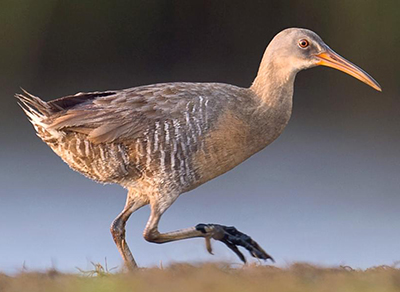
Clapper rail: Listed as a species of concern in Rhode Island. This species, also known as the salt-marsh hen, has been a regular breeder in marshes along the Atlantic Coast for years, although the center of their breeding range is well south of southern New England.
These chicken-like birds spend most of their time in dense vegetation, making them difficult to see. They typically walk or run, seldom flying except during migration.
They are very vocal, making loud, chortling “clapper” calls. Pairs give the clapper call individually or as part of a synchronized duet; one pair’s duet can lead to a cascade of duets from other pairs in an area.
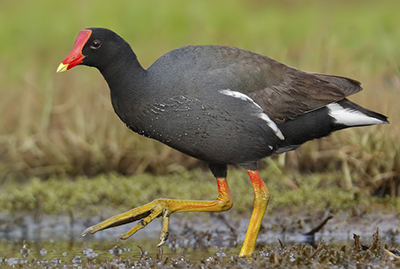
Common gallinule (formerly known as the common moorhen): Listed as state historical in Rhode Island — last seen there in 1970 — a species of concern in Massachusetts, and endangered in Connecticut. They swim like a duck, pushing their head forward, and walk on top of marsh vegetation like the rail they are.
This species is found on all continents, except Australia and Antarctica, wherever there is suitable habitat. In the eastern United States, New England represents the northern extreme of the species’ nesting range.
In Connecticut, this bird was considered a common summer resident in the late 1800s and early 1900s. It was most abundant along coastal areas, where it utilized both brackish and freshwater marshes. Now they rare summer visitors and are only accidental during the winter.
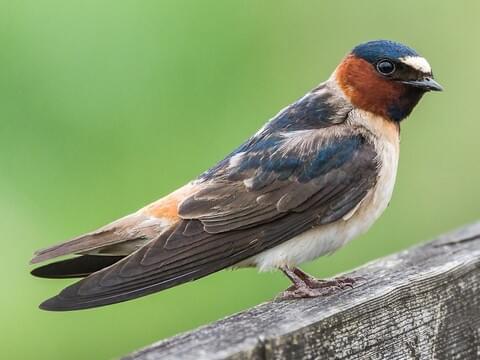
Cliff swallow: Listed as state historical in Rhode Island — last seen there in 1991. As European settlement spread west, this species moved east. In the early part of the 1800s, most area residents couldn’t lay claim to knowing what this bird was. By 1839, however, they had become populous in the western half of Massachusetts and were still moving eastward.
At first strictly cliff dwellers, this species found suitable nesting habitat under the eaves of homes and on the undersides of bridges. Seemingly as soon as they arrived, they were forced out by the introduced house sparrow, a species from Europe and Asia, which won the completion with the swallows for nesting sites.
The house sparrow was introduced into Brooklyn, N.Y., in 1851. By 1900, it had spread to the Rocky Mountains.
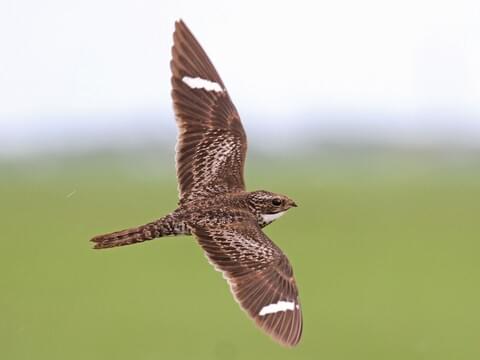
Common nighthawk: Listed as a species of concern in Rhode Island. On summer evenings, keep an eye and an ear out for the males’ dramatic “booming” display flight. Flying at a height slightly above the treetops, they abruptly dive for the ground. As they peel out of his dive — sometimes just feet from the ground — they flex their wings downward, and the air rushing across their wingtips makes a deep booming or whooshing sound, as if a race car has just passed by. The dives may be directed at females, territorial intruders, and even people.
Historically primarily ground nesters, this species thrived in Massachusetts during the farming era. As early as the 1860s they could be found nesting on gravel roofs in cities, areas that provided ample supplies of aerial insects for early evening capture.
Generations of Boston Red Sox fans have no doubt seen this bird flying over Fenway Park during night games, whether they realized it or not. The aggregation of flying insects attracted to the bright stadium lights provide an irresistible lure for hungry nighthawks.
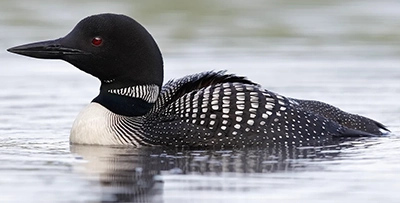
Common loon: Listed as a species of concern in Massachusetts. Thanks to accelerated management efforts that include monitoring and floating nest rafts, the species’ breeding population in the Bay State has increased from one recorded pair in 1975 and 11 pairs in 1992. Lead poisoning, induced by the ingestion of fishing sinkers lost by anglers, appears to be the foremost cause of adult loon mortality on New England lakes.
These birds eat minnows being used as bait, and may swallow the hook and sinker, or ingest the sinkers from the lake bottom when swallowing small stones to aid their digestion. When swallowed, the lead sinker causes the birds to ingest a toxic level of lead that causes the breakdown of red blood cells and kidney failure.
Additional threats to this species are pesticides, shoreline development, growing numbers of recreational boaters, and flooding of nests due to human control of water levels in nesting areas.
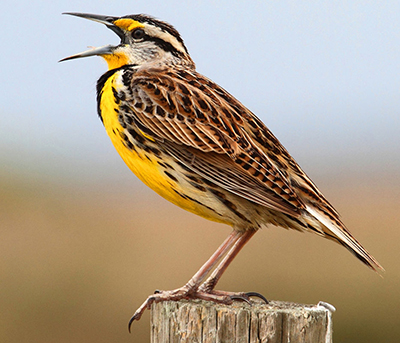
Eastern meadowlark: Listed as a species of concern in Massachusetts. This bird is a ground-nesting passerine of grasslands, pastures, and hayfields. The species breeds throughout the eastern United States, Canada’s Maritime Provinces, the desert Southwest, and nearly continuously south to Panama.
They are thinly distributed across Massachusetts, and specific breeding sites have become increasingly scarce. They are largely restricted to large grasslands provided by municipal or military airfields, agriculture, or wildlife management areas.
The decline of the species in Massachusetts is attributed to loss of suitable nesting habitat due to landscape conversion — suburban sprawl, succession, and incompatible agricultural practices. Agriculturally, the main threat to breeding is the mowing of hayfields before the nesting cycle is complete. This results in near complete egg/nestling mortality, some adult mortality, and an overall decrease in species reproductive success.
Mowing should be delayed until August to ensure fledgling survival. On conservation properties with suitable landscapes, large natural grasslands that are mowed on a 3-5 year rotation or managed by controlled burning, when appropriate, should be encouraged.
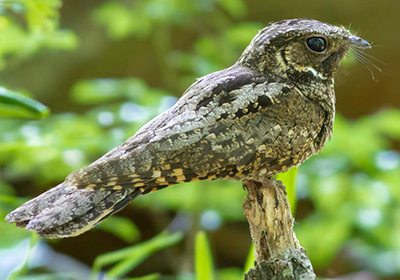
Eastern whip-poor-will: Listed as a species of concern in Massachusetts. This species has historically bred across the entirety of Massachusetts, but beginning in the 1970s, they largely disappeared from the southern Connecticut River valley and Bristol, Berkshire, and Plymouth counties. They are also absent now from much of upper Cape Cod. Currently, there are only six sites in the state that support 20 or more pairs.
There has been a dramatic retraction in distribution and abundance of this species across the state beginning in the 1960s. A combination of factors has likely contributed to this decrease, primary among them habitat loss. Population loss from development is clearly illustrated in Greater Boston and the Springfield area, where they were described as common into the early 20th century but are now absent. It’s unlikely this bird will be able to reclaim its former distribution across Massachusetts.
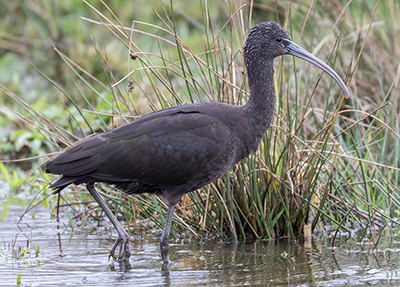
Glossy ibis: Listed as a species of concern in Rhode Island. They frequent almost any wetland environment with shallow water or exposed mud, and also readily feed in farm fields or open areas where soils are moist.
In Ancient Egypt, ibises were revered as sacred birds. They were believed to have a connection to the deity Thoth, the wise scribe and lorekeeper of the Egyptian pantheon. While glossy ibises aren’t literate, they are marvelous travelers.
The first glossy Iibises to be seen in Massachusetts came as a shock to ornithologists in 1850, and were believed to have been assisted by a tropical hurricane. Another sighting took place on Nantucket in 1869, and a flock of 20 or so appeared in Belmont in 1878. But by the 1920s, the species was still essentially considered a straggler in Massachusetts. Throughout the 20th century, though, the bird expanded northward as a breeder. The first Massachusetts nests were found in 1974.
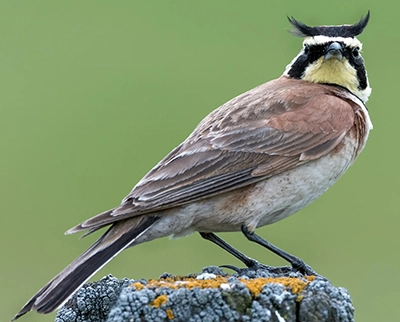
Horned lark: Listed as a species of concern in Rhode Island. They are social birds, sometimes found in huge flocks outside the breeding season. They creep along bare ground searching for seeds and insects. They breed in short grassland, short-stature sage shrubland, desert, and even alpine and arctic tundra.
The squeaky, ascending song of this bird — America’s only true lark — is most often heard when the male takes to the air above a likely nest site, hoping to attract a female to accept him as her mate.
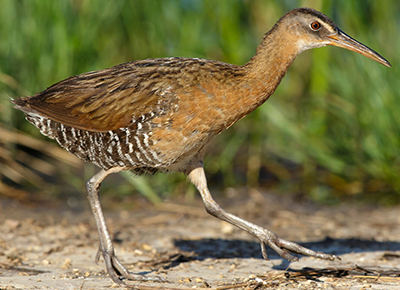
King rail: Listed as a species of concern in Rhode Island, threatened in Massachusetts, and endangered in Connecticut. These birds are known to return to the same nesting area year after year. The nest is in a grass-lined depression on the ground or slightly elevated in the branches of wetland shrubs such as buttonbush. This species is still common across its entire range. However, degradation and loss of freshwater marsh habitats have resulted in a decline of localized populations.
In Connecticut, the first nesting site was reported in the early 1840s along the coast. The species has been considered a rare nester ever since. Massachusetts is at the northern edge of the species’ range, and the bird has most likely always been a rare and local breeder in the state.
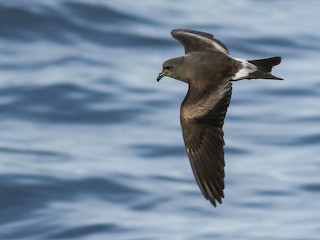
Leach’s storm-petrel: Listed as endangered in Massachusetts, where this species is extremely limited and is experiencing a declining breeding population. The Bay State is the extreme southern terminus of the species’ breeding range.
This species is a widespread seabird primarily confined as a breeder to the Northern Hemisphere in both the Atlantic and Pacific oceans. Atlantic populations breed on scattered islands from Massachusetts north to Labrador, Newfoundland, Iceland, northern Scotland, and Norway. After breeding, most gradually move into the tropical Atlantic Ocean for the winter.
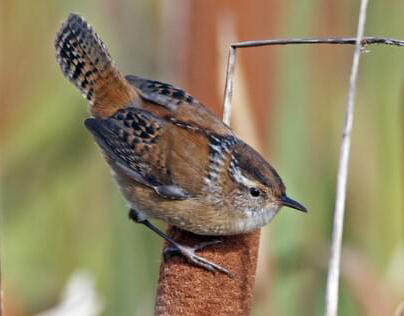
Marsh wren: Listed as a species of concern in Rhode Island. They are common in New England, but their numbers are declining here as is generally the case in the eastern part of their range. Males routinely mate with two or more females and build at least six dummy nests for every female they mate with. They are tiny but fierce, and fight for resources.
Habitat loss is presumed to be the main threat to this species, particularly habitat conversion due to invasive species. Because of this, management objectives should emphasize invasives control. Protecting this species requires preserving large, high-quality marshes with tall, dense vegetation and a substantial buffer of undeveloped upland.
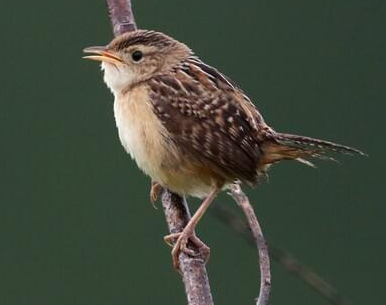
Sedge wren: Listed as endangered in both Massachusetts and Connecticut. This species is a small, secretive passerine bird that inhabits shallow wetlands dominated by short grasses and sedges. They are shy, elusive birds that are difficult to locate.
They are rare breeders in Massachusetts, where threats include loss of open, wet meadow habitat due to hydrologic changes, incompatible agricultural activities, and encroachment by invasive species.
In Connecticut, during the 1800s, this bird was considered an uncommon summer resident, breeding in suitable habitats near the coast and along the Connecticut River valley. A decline in local populations occurred by the early 1900s. The bird has been considered a rare migrant and sporadic nester in the state since the 1960s.
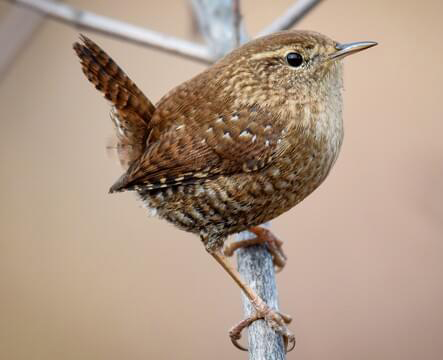
Winter wren: Listed as a species of concern in Rhode Island. This species is a plump round ball with a stubby tail that it usually holds straight up. Its bill is small and thin, in keeping with its diminutive appearance. They use both deciduous and evergreen forests with plenty of downed logs, standing dead trees, larger trees, and understory vegetation. They are often more common in areas near streams.
They hop and scamper through the understory moving more like a mouse than a bird as they investigate upturned roots and decaying logs for food.
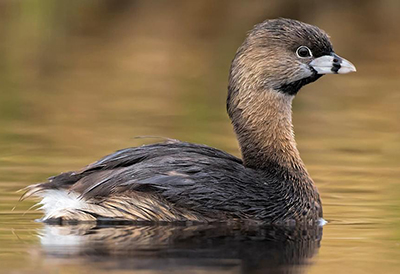
Pied-billed grebe: Listed as endangered in Rhode Island, Massachusetts, and Connecticut. They prefer to nest in marshes, lakes, large ponds, and wetlands that have an abundant supply of cattails and other vegetation that can provide cover and nesting materials. They spend the winter in open lakes and rivers, estuaries, and tidal creeks.
These birds are generally solitary. They hide from intruders by sinking down into the water until only their head is visible. They don’t dive as deeply as loons, usually about 20 feet or less. Dives last for about 30 seconds.
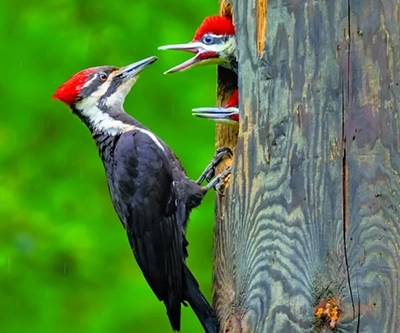
Pileated woodpecker: Listed as a species of concern in Rhode Island. This species is one of the largest, most striking forest birds on the continent. It’s also reclusive, historically preferring to dwell in areas of old growth and heavy timber.
The nest holes these birds make offer shelter to many species including swifts, owls, ducks, bats, and pine martens. If you have dead or dying trees or snags on your property, consider leaving them alone as they may attract this bird, as well as other woodpeckers and nuthatches, to forage, roost, or even nest.
This bird digs rectangular holes in trees to find ants. These excavations can be so broad and deep that they can cause small trees to break in half. A pair stays together on its territory year-round. It will defend the territory in all seasons, but will tolerate new arrivals during the winter.
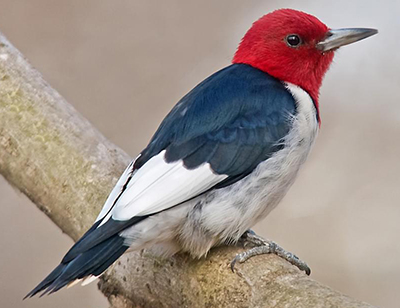
Red-headed woodpecker: Listed as endangered in Connecticut. Its preferred habitats include open deciduous forests, groves of large trees in old fields, and wooded swamps. They feed on ants, wasps, beetles, grasshoppers, centipedes, spiders, berries, small fruits, acorns, and beechnuts. Unlike other woodpeckers, this species will often catch flying insects rather than drill for them.
This species is considered one of the rarest breeding birds in Connecticut. A decline in farming and the associated loss of open woodlots have reduced the amount of suitable habitat needed by these woodpeckers. As with other woodpecker species, competition with starlings for nest cavities has also contributed to their decline.
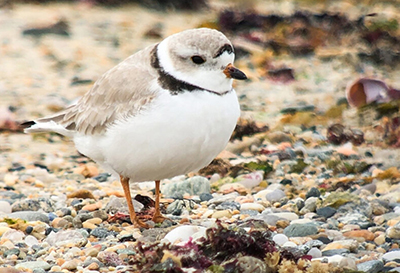
Piping plover: Listed as threatened in Rhode Island, Massachusetts, and Connecticut. They nest on sandy coastal beaches and dunes that are relatively flat and free of vegetation. They often build their nests in a narrow area of land between the high-tide line and the foot of coastal dunes.
During spring and summer, the Atlantic Coast population nests from Newfoundland south to North Carolina. In winter they migrate farther south, from North Carolina to Florida, the Gulf of Mexico, and the Caribbean.
In the late 1800s, unrestricted market hunting for the millinery trade devastated the species’ population on the Atlantic Coast. Not only were the feathers used to adorn women’s hats, but the birds were also used for human consumption. Following the passage of the Migratory Bird Treaty Act in 1918, the species’ population recovered to a 20th-century peak in the 1940s, only to decline again as human development and recreational use greatly intensified in coastal habitats.
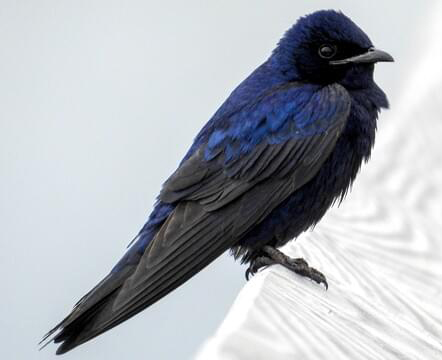
Purple martin: Listed as a species of concern in Connecticut. This bird is known for its skillful aerial exhibitions, tolerance of humans, and pleasant twittering call. Their numbers have declined over much of their range, including New England. Competition from more aggressive, nonnative European starlings and house sparrows for nesting sites, pesticide use, and prolonged weather extremes are among the reasons.
They inhabit both urban and rural areas. They prefer open, grassy areas and forest openings near streams, rivers, marshes, ponds, or lakes. They seek natural cavities, gourds, or manmade apartment houses for nesting that are 12 feet or more above the ground. They will return to the same nest site year after year as long as the habitat conditions meet their needs.
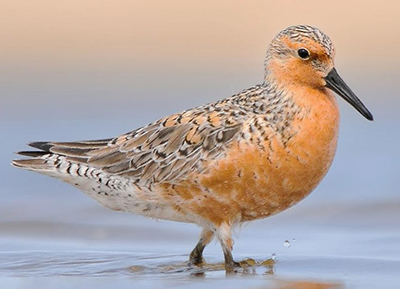
Red knot: Listed as threatened in Massachusetts. This species is an Arctic breeder with nesting areas in northern Canada and Alaska. There are no nesting records of this species in Massachusetts. They use coastal areas in the Bay State as migratory stopover locations for foraging during spring and fall migration as they move between their wintering and breeding grounds.
Although few of these birds are currently found in Massachusetts during spring migration (May-June), high numbers continue to stopover in the state during fall migration (July-September). Major historical migratory stopover locations in Massachusetts includes beaches on outer Cape Cod and mainland beaches along West Cape Cod Bay.
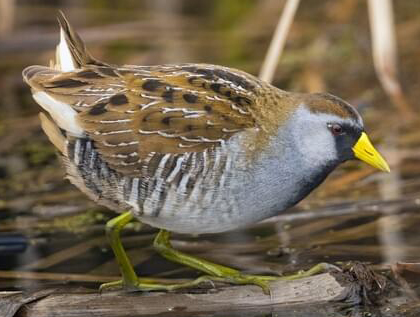
Sora: Listed as a species of concern in Rhode Island. In the spring, this bird can be found in freshwater marshes from the Pacific Northwest all the way to New England. They fly hundreds of miles each spring and fall to wetlands in Central and South America. They walk slowly through shallow wetlands a bit like a chicken that has had too much coffee, nervously flicking their tails.
These rails are the smallest of their ilk in Massachusetts, populating wetlands during both migration and throughout the breeding season.
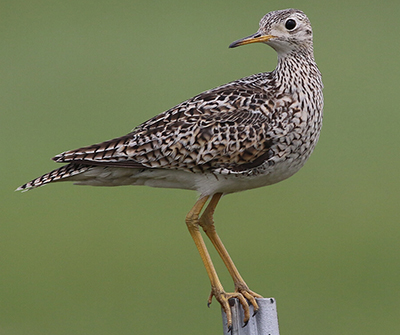
Upland sandpiper: Listed as endangered in Rhode Island, Massachusetts, and Connecticut. This bird inhabits large expanses of open grassy uplands, wet meadows, and pastures. It breeds from Maine to central Canada and Alaska and Maryland to Oklahoma and Colorado. It breeds locally in Massachusetts. It winters in similar habitats in South America, particularly on the pampas of northern Argentina and Uruguay.
They primarily pursue grasshoppers, crickets, weevils, beetles, ants, spiders, snails, and earthworms. They chase the insects rapidly and even leap into the air in pursuit.
The bird is unlike other sandpipers or plovers in that it prefers dry, open, grassy habitats rather than wetlands. It does, however, share a predator response with wetland-loving plovers. When disturbed, they will run a short distance and “freeze” in an attempt to blend into surrounding habitat and confuse a predator.
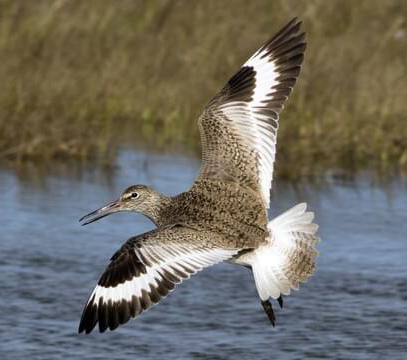
Willet: Listed as a species of concern in Rhode Island. Since this species suffers the misfortune of having tasty eggs and meat, they faced serious challenges from humanity in the not-too-distant past. In fact, the return of the bird as a breeding species to Massachusetts may at one time have seemed like little more than a dream.
Piercing calls and distinctive wing markings make the otherwise subdued species one of the most conspicuous large shorebirds. These long-legged, straight-billed birds feed along beaches, mudflats, and rocky shores.
Although both parents incubate the eggs, only the male spends the night on the nest. Since they find prey using the sensitive tips of their bills, and not just eyesight, they can feed both during the day and at night.
Southern New England’s official birds: Rhode Island red beat out its closest competitors, the osprey and ruby-throated hummingbird, and became the official state bird in 1954. The black-capped chickadee was designated the state bird of Massachusetts in 1941. It’s also the state bird of Maine. The American robin, a migratory songbird, has been Connecticut’s state bird since 1943.
Note: Some of the species listed in each state overlap, and how often the lists are updated varies — the Rhode Island list was last updated in March 2006, Massachusetts last August, and Connecticut in January 2023. For species listed as state historical — essentially extirpated — in Rhode Island, they were included in the endangered category.
which is why we should all support the Audubon societies
Thank you Frank for, once again, an informative and comprehensive article. I do strive to garden responsibly. This comment section is a perfect opportunity, however, to pass along a comforting thought. “Not a single sparrow falls to the ground without your Fathers knowledge” Mt 10:29. With all the heartbreaking evidence presented every single day, it is clear that mankind has failed miserably in its caretaking of the earth and all its inhabitants. It’s just too complicated, and the humans in charge are subjective by nature. We need a Benevolent Dictator. Those of us who take the time to marvel at and be inspired by the natural world around us can be comforted that the God who created such an intricate system is watching and will never let it fail. Even though perplexed and dismayed at the terrible things happening in the world, I take heart in the scripture “My ways are higher than your ways” Isaiah 55:8-9, emphasizing the vast difference between divine wisdom and human understanding. Even if we are impatient and frustrated, we can take courage in seeing how the natural world always strives to recover, get back on track, and continue on its programmed course. Humans, of course, are the monkey wrench in the system.
“Clarkson has identified nine bird species as ‘responsibility birds’ due to their declining populations and the need for focused conservation efforts. Species associated with multiple different habitat types, so by directing conservation efforts towards these nine target species, we’re indirectly also conserving basically entire habitats and all of the closely associated species.”
Wrong! Why? First, the nine ‘responsibility birds’ chosen because of their “declining populations” and thus “need for focused conservation efforts” are among the most common breeding birds in Rhode Island. The recently published Second RI Breeding Bird Atlas documented all the nine responsibility birds from more than 100 of the 165 sample blocks, including the Eastern towhee (160 blocks), barn swallow (162 blocks), common yellowthroat (164 blocks), and red-winged blackbird (165 blocks).
How does one focus conservation efforts on a species, like the red-winged blackbird, that is found literally everywhere!? You don’t. Conservation efforts, as designed by conservation biologists, do not focus on the most common species, they focus on the most uncommon. The endangered, threatened, and concern species that are being highlighted in the Wild New England articles, identified by the region’s Natural Heritage Programs.
For example, the Breeding Bird Atlas documented the black-throated blue warbler from just 16 blocks. Because this bird requires large tracts of unbroken forest (>1000 hectares), the conservation of enough land to support a viable population of black-throated blue warblers will automatically support all other forest species, including scarlet tanager, black-and-white warbler, wood thrush, and more.
A more critical example involves the Canada warbler. On the First Breeding Bird Atlas in the 1980s, this bird was found in 46 blocks, but it declined on the Second Atlas to just 19 blocks. In Rhode Island, the Canada warbler nests in red maple swamps that are surrounded by upland forests. This species has declined as development invades rural areas where the wetland breeding habitat is protected by regulation, but the upland buffer is unprotected except for a narrow strip. Again, as a species needing large tracts of wetland and upland forest, and its demonstrated decline in the state, the Canada warbler is an important focus for conservation efforts.
But the selection process for the nine ‘responsibility birds’ becomes vividly transparent with the inclusion of Eastern towhee and prairie warbler to represent “the early successional scrub-shrub habitat that’s declining throughout the Northeast.” Why is it that the increase of birds associated with early successional habitats (towhee increased from 136 blocks in the first atlas to 160 in the second) is not evidence that Rhode Island has enough scrub-shrub, young forest, or whatever you’re calling early successional habitat this year?
Why? Did I hear someone say, ‘log baby log’?