
Rings of Time: Woonsocket Museum Exhibit Traces History Through a Tree’s Life
April 3, 2025
Share


WOONSOCKET, R.I. — The rings of a tree can tell us many things about that tree: how old it is, whether it survived a drought or a flood, and what type of environmental conditions it lived in.
And a tree can connect us to what was going on in the world in which it lived.
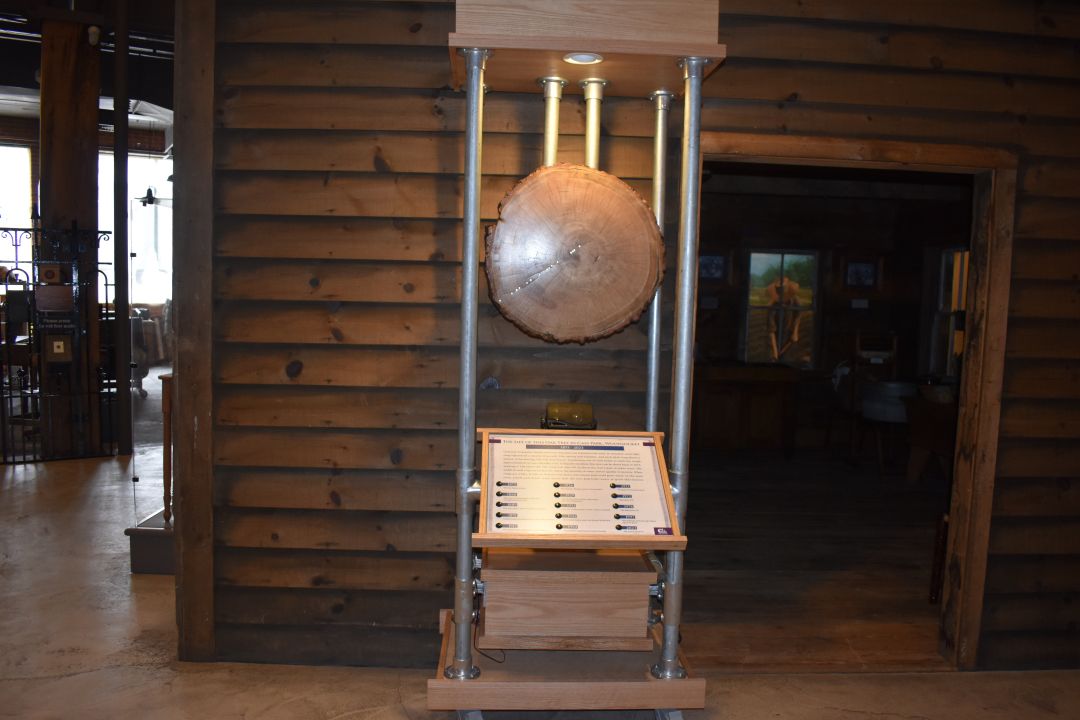
An exhibit in the Museum of Work & Culture, 42 South Main St., brings this idea to life: a “tree cookie,” a slice from a 148-year-old oak tree that was cut down in 2023 in Cass Park.
The interactive exhibit, designed and created by Chuck Bessette, the museum’s facilities manager, links the tree’s development to the events going on around it, connecting the growth of a city to the growth of a tree.
“The museum wanted to tie in the environment and the role it plays in the area, so the tree display brought it all together,” said Béatrice Duchastel de Montrouge, the museum’s director of public programs.
Bessette’s son Jared, a social studies major at Rhode Island College who was interning at the museum when it obtained the tree cookie, did the research that connected the tree’s rings to the events happening in Woonsocket, and the world.
The early years
While our memories are stored in our minds, a tree’s can be found in its rings. Looking at the patterns of a tree’s rings is akin to reading a history book. The rings’ width, color, and pattern indicate whether the tree was thriving or struggling. Thicker rings indicate a good year, in which the tree was able to grow more than in a drier year, which results in thinner rings. Scars mark where a fire might have occurred, or an insect infestation.
Lighter-colored rings represent seasons of growth, such as spring and summer. Darker rings are periods of slower growth, such as fall and winter. Through tree rings we can learn how they adapt to their surroundings over time, revealing their resilience and adaptability.
The tree’s growth begins in 1875, during the presidency of Ulysses S. Grant, while around it, Woonsocket was growing as well. In 1888, it’s incorporated and becomes a city by a close vote of townspeople, 861-765. In 1889, the Alice Mill is built on Fairmount Street, home to the Woonsocket Rubber Co., which becomes the largest rubber mill in the world following its completion.
In 1891 a park system is created in the city. Mayor Daniel Pond establishes multiple parks designed to protect areas of natural beauty and leisure for the city’s mill workers.
During this period, the tree’s thick rings indicate it, too, was growing robustly.
The world around the tree continues to change: in 1917 World War I begins; the stock market crashes in 1925 and ushers in the Great Depression; and Woonsocket textile workers unionize in 1931, seeking better pay and working conditions.
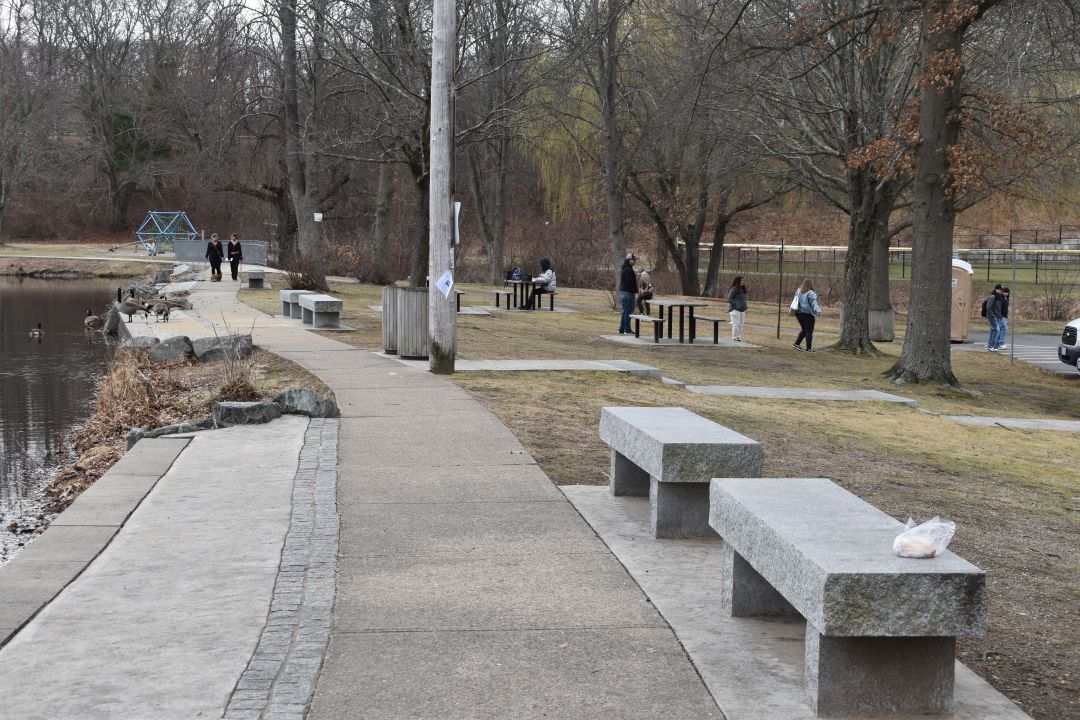
In 1935, the tree’s location becomes Cass Park, one of five work-relief projects in the city.
Mid-life
When the United States enters World War II in 1941, mills across the city ramp up production to help the war effort, with many operating 24 hours a day, providing textiles for uniforms and other war-related materials. The Alice Mill helps produce the inflatable tanks used by World War II’s Ghost Army: the 23rd Headquarters Special Troops, a top-secret unit of about 1,000 men and 82 officers that could simulate two entire military divisions using visual, sonic, and radio deception.
In 1950, Woonsocket’s population hits its peak of just over 50,000 people, the fourth-largest city in Rhode Island at the time. Much of its population is Canadian immigrants who left the farms of Quebec to work in Woonsocket’s mills, giving rise to the city’s strong French-Canadian heritage. At one point, 70% of the city’s residents were French-Canadian, according to the museum.
When Hurricane Connie hits the region on Aug. 11, 1955, followed by Hurricane Diane on Aug. 17, the resulting 20 inches of rain cause a dam on the Blackstone River to break, resulting in flooding that severely damaged parts of the city.
The tree’s rings are thick during this period of time.
On Sept. 9, 1972, volunteers gather in Woonsocket to clean up the polluted Blackstone River as part of Operation ZAP. Ten thousand volunteers spend the day pulling appliances, cars, mattresses, shopping carts, tires, furniture, and even a small bus from the waters and banks of the distressed river.
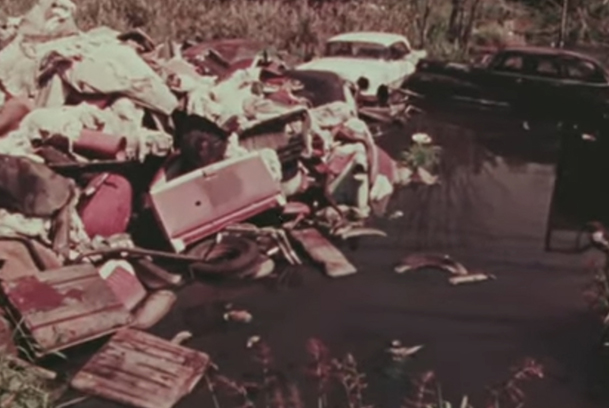
The cleanup effort from Pawtucket to the Massachusetts line results in the collection of 10,000 tons of debris. It’s considered the largest one-day environmental cleanup in U.S. history.
In the years since, the Blackstone River watershed has changed considerably, thanks largely to better stormwater management practices and wastewater treatment facilities that have improved water quality.
The blizzard of 1978 dumps 38 inches of snow over two days, trapping people indoors for days, and the city enters a state of emergency.
End of life
In 1997 the Museum of Work and Culture opens in a former textile mill near downtown.
When the tree is cut down in Cass Park in spring 2023 to make way for a football field, longtime Woonsocket Call reporter Joe Nadeau was there, and came up with the idea to use a section of the tree to illustrate the city’s history, museum director Anne Conway wrote in the winter 2025 edition of The Times, a Rhode Island Historical Society publication.
Nadeau reached out to Conway to see if she would be interested.
“I loved the idea,” Conway said, and called Woonsocket’s director of public works, who agreed to send three slices of the tree to the museum.
That’s where Chuck and Jared Bessette come in. While the section of tree chosen for the exhibit was being preserved to protect against rot, Chuck designed and built the interactive exhibit. He rigged wires through the tree cookie that connect to lights marking specific dates on the tree’s rings. When visitors press a button corresponding to a date, a light on the tree’s rings glows and an AI-generated voice describes the event that took place then.
“We wanted to connect the rings to events everyone in the city would be familiar with, like WWII, the flood of ’55, the blizzard of ’78,” Duchastel de Montrouge said.
Jared did the research that connected the events in time to the tree’s rings, according to Duchastel de Montrouge.
“Both of us were born and raised in Woonsocket, so it was exciting to be able to honor our city’s past and showcase it in a unique way through the life of this oak tree,” Chuck said.
The tree installation is part of the museum’s Flowing Through Time exhibit on the first floor. The museum is currently closed to the public because of water damage but will reopen on May 1. ecoRI News editor Bonnie Phillips will discuss the Blackstone River cleanup and other historic events at a Tuesday Tea Time Talk May 1 at the museum, 42 South Main St. in Woonsocket. For more information and to register, click here.
Interesting article, did I miss mention of the kind of tree?
It’s an oak tree.
I am a Woonsocket resident. I am sad that the tree was sacrificed for a football field. I know this comment won’t be popular, but it is a shame to kill and remove such beauty – 148 year tree. We destroy nature an acre at a time for any given perceived need.