
Bird Sanctuary Burns Down Invasive Plants to Create Native Habitat
March 31, 2025
Share


MIDDLETOWN, R.I. — The recent fires at Norman Bird Sanctuary were set on purpose. The smoke seen drifting from the 76-year-old nonprofit signaled the start of a 10-acre metamorphosis.
During the next two years, a habitat restoration project on the 300-acre sanctuary’s Coastal Field will transform an overrun space once teeming with invasive plants into one of the largest pollinator meadows in Rhode Island.
The property was long used for agriculture, and the recently cleared section was historically a salt hayfield.
“It was a grassland. It was a field,” Joye Whitney, director of horticulture and conservation for the Norman Bird Sanctuary, told ecoRI News during a visit last week. “We’re trying to restore it back to its original history. We want to address the need for better pollination and protection and habitat for different species.”
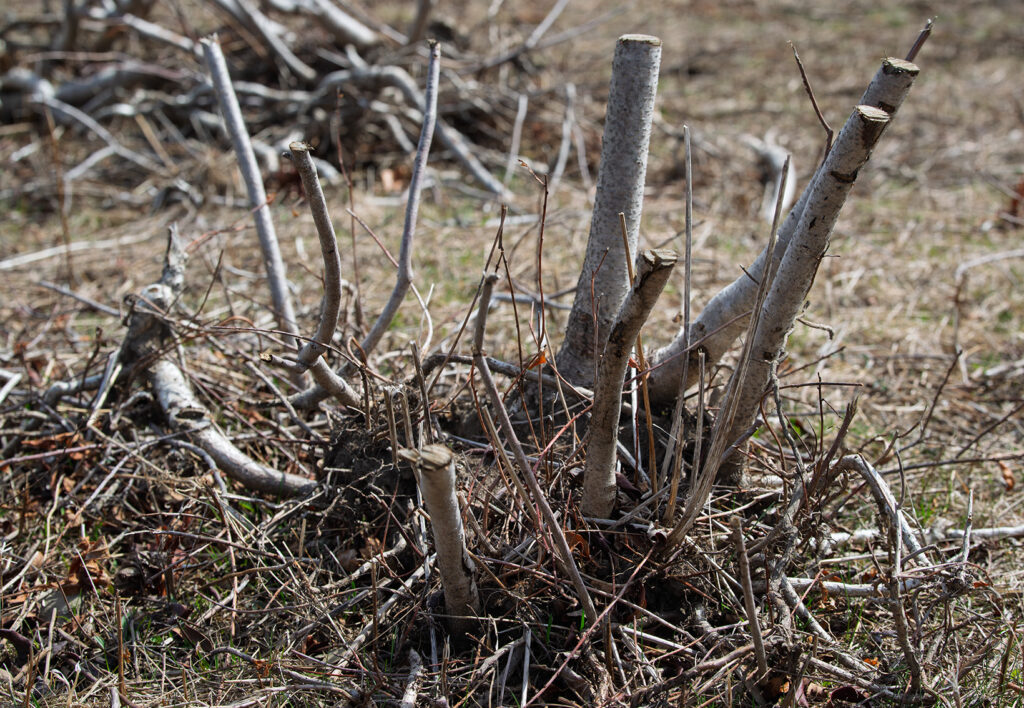
The work began with controlled burns that helped clear multiflora rose, privet, and porcelain berry. What the brush fires didn’t consume, Tom Welch, the sanctuary’s self-titled “Tractor Guy,” took care of. Staff and volunteers still need to pull out tenacious multiflora rose roots.
Invasive species outcompete native plants, making it harder for local wildlife to thrive.
As part of the restoration project, native northern bayberry plants growing on the 10 acres were transplanted to other sections of the sanctuary off Third Beach Road.
“Bayberry is a beneficial native, but not to a grassland field,” Whitney said. “So it’s something that we decided to try to transplant and use out in our forests, but not on a restored a grassland field.”
Vegetation matter — not of the invasive kind — was mulched and spread over the field, to add nutrients and improve soil health.
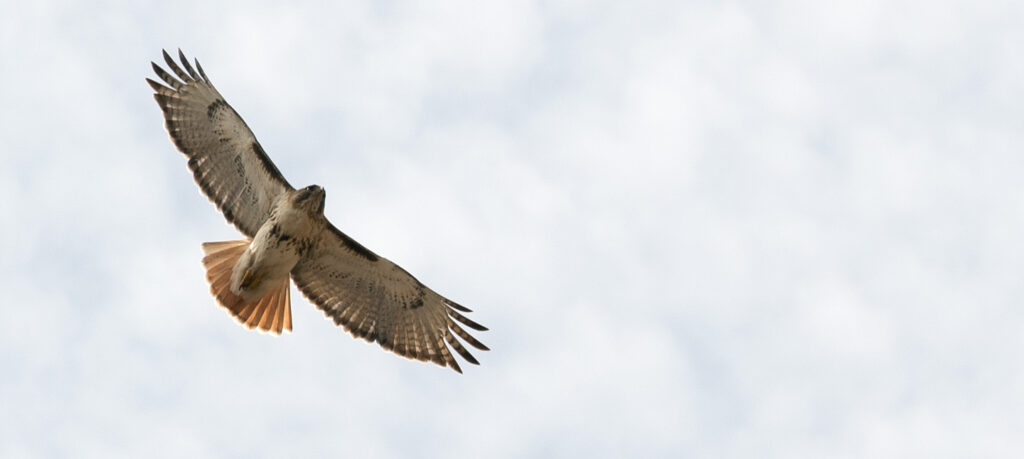
Among the bird species for which Whitney hopes the project provides more habitat is the bobolink.
“I hope this brings back bobolinks. They are a big one for grasslands,” she said. “We do see them on the fields right above us. They look like they’re wearing a backwards tuxedo, and their call is very robotic.”
Those involved with the project, including the Natural Resources Conservation Service and the Cornell Lab of Ornithology, said the meadow is being designed to:
Help pollinators. Pollinator species such as bees, butterflies, other insects, and hummingbirds are essential for a healthy ecosystem. This meadow will provide pollinators with the food, shelter, and structure they need to survive and reproduce.
Support bird populations. Research indicates that the United States has lost some 3 billion birds since 1970. Providing native habitat will help slow this decline and support overwintering and migratory birds.
Control erosion. Native plants have deep root systems that improve soil health and prevent erosion. This new pollinator meadow will improve resiliency along the coastal corridor leading to Aquidneck Island’s most beloved beaches.
Provide educational opportunities. This project will provide multi-generational education by engaging visitors, students, interns, volunteers, and neighbors to witness and take part in conservation.
Improve the community. At the intersection of Third Beach Road, Hanging Rocks Road, and Indian Avenue, the meadow will enhance scenic vistas to and from this beautiful corner of Aquidneck Island. The project will also include stone wall restoration.
Phase 2 of the project is scheduled to begin in early June, when two rounds of a smother crop, buckwheat, is planted, grows for six weeks, and then is cut back before it flowers. A pollinator mix will then be planted, possibly with a seed drill.
“Buckwheat grows quick and it smothers everything else,” Welch said. “So whatever we don’t get picking out the invasives, it’s supposed to smother. It’s the recommended treatment.”
Once the meadow is established, both Welch and Whitney noted it will need to be maintained, which means keeping invasives at bay and deciding when and where to mow.
“You take like a third each year and mow it down, so the insects that overwinter in the pit stalk still have habitat,” Welch said.
Whitney said it’s also about science and data collecting.
“We want to do a lot more science tracking of data,” she said. “We’re working with Salve Regina University this year. We have six interns working with us. We’ll have them starting to make observations in this field before we plant … they’ll be observing this year just to start to track what we’re seeing compared to now.”
The project is being funded in part by the Natural Resources Conservation Service.
We’re trying to set up a native pollinator pathway in our neighborhood, as well. Too bad it’s about 3 miles from there. Every year we have a plant giveaway of natives for our area. Hopefully it’ll catch on !