These Aerial Acrobats Bedazzle During Flying Season
March 31, 2025
Share


Series note: The region’s collection of native species is under threat on several fronts, most notably from humanity’s shortsightedness. Humans aren’t giving the natural world the space it needs and deserves. We’re crowding out nonhuman life, which, in turn, makes nature less productive and us less healthy. Wild New England examines the animals and insects most at risk.
Dragonflies and damselflies, which belong to an order of predatory flying insects called odonata, are brilliantly colored aerial acrobats with intricate patterns of stripes and spots that can be observed in the summer buzzing around fields and hovering over water.
They begin their lives, however, in a much less dramatic fashion, as eggs and then underwater larvae, where they spend most of their lives. The larvae are dull, lacking the bright colors of black, blue, brown, green, red, and yellow of adulthood. But they are voracious predators of other aquatic life.
The amount of time spent as nymphs varies, but generally it’s a one-year cycle. When the time comes, the nymphs crawl out of the water to find a suitable spot to literally hang out. These newly emerged odonates are soft-bodied, pale in color, and can’t fly. As they hang, fluids are pumped through their bodies and wings to harden them before they become aerial hunters.
Until late into the 20th century, there was little data about odonates in Rhode Island. This lack of information was significant, because dragonfly and damselfly abundance and diversity can be used to measure ecosystem health.
“When you have a lot of dragonflies and a lot of different dragonflies, you probably have a healthy aquatic ecosystem,” said Virginia “Ginger” Brown, who has spent most of her long career studying odonates. “If you like birds and fish and frogs and turtles, dragonflies and damselflies are a big part of their diet, so dragonflies and damselflies fit really nicely into the balance of nature and the food web.”
Dragonflies and damselflies also eat mosquitoes.
To better document these interesting insects, an inventory of Rhode Island’s dragonflies and damselflies began in 1998 and continued through 2005. About 70 volunteers sampled some 1,100 sites across the state, documenting 139 different species. The end result of all this work was the Rhode Island Odonata Atlas.
Brown is Rhode Island’s leading odonata expert. The conservation biologist is the author of two books on the subject. Early in her career, she worked for the Cape Cod Museum of Natural History, and during her time there her first book, “Dragonflies and Damselflies of Cape Cod,” was published in 1991. A revised edition was published six years later.
Her work continued in Rhode Island, where she and good friend Nina Briggs began the Rhode Island Odonata Atlas project. That effort resulted in her second book, “Dragonflies and Damselflies of Rhode Island,” which was published in 2021 by the Rhode Island Department of Environmental Management.
The 384-page book features profiles of each species, including habitat characteristics, range, behaviors, dates when they are active locally, and a map indicating where they have been observed. All of the illustrations are by Briggs, a Rhode Island artist and entomologist.
From 2022-2024, Brown and Briggs, with help from the Rhode Island Natural History Survey, conducted Rhode Island Odonata Atlas follow-up research.

There are some 5,500 species of dragonflies and damselflies in North America. Dragonflies are the more common of the two, and both share many of the same physical characteristics and behaviors. Bulging eyes are set to the sides of the head and each contains thousands of honeycomb-shaped lenses that provide excellent vision for hunting.
Their six legs are utilized for catching mostly flying prey or perching on vegetation. Their wings are veined, and the vein pattern varies by species.
Even though dragonflies and damselflies belong to the same order, they don’t interbreed and they can look quite different. Dragonflies are larger and bulkier. They hold their two sets of wings in a horizontal position while resting. Dragonflies also have larger eyes that make up most of their head.
Dragonfly bodies are typically longer than 2 inches. In fact, dragonflies are among the largest insects in the world, and their wings, in proportion to their bodies, are quite large, spanning up to 7 inches in some species. Most dragonflies are powerful fliers, and some can fly up to 30 mph.
The largest species of dragonfly that has been documented in Rhode Island is the swamp darner, which grows to 3-3.3 inches in length.
Damselflies typically hold their wings together above their body when they’re at rest. They are often weak, irregular fliers because they have smaller, more delicate wings and flight muscles than dragonflies.
The threats dragonflies and damselflies face are shared with most of the insects and animals being profiled in this series: development; the climate crisis; the back and forth of drought and flooding; and threats to water quality from lawn chemicals, industrial pollution, littering, and salts and other roadway runoff.
The ringed boghaunter, for example, is listed as endangered in Rhode Island, but there used to be plenty of these dragonflies in the Ocean State. Brown and Briggs spoke about a site in Richmond that once hosted a significant population.
“This was a site where we had hundreds and hundreds of ringed boghaunters 25 years ago. It was a beautiful emerald green sphagnum bog,” Briggs said. “We would walk down when it was productive with boghaunters but we could hear the graveling being done just beyond the edges of the wetland.”
Over time, the mining operation got closer and closer, but when the duo’s work with the Odonata Atlas ended, everything seemed to be OK at the boghaunter-loving bog.
“The people who were doing the graveling were going to stay within the law and not get too close to the wetland and everything was going to be good,” Briggs continued. “So when I went back to see that bog in 2022 as I approached it … there was nothing there. I wondered if I was in the wrong place.”
She wasn’t lost.
“There was still some of the vegetation that I had remembered from 25 years ago around the edge, but it it had completely silted over,” Briggs said. “It is now an upland habitat, and the dominant plant in it, as far as I could tell, is goldenrod.”
They noted the mining and other development in the area wasn’t the sole reason the bog vanished.

“I think that in combination with drought exacerbated it,” Brown said. “We think what may have happened is that the mining around the wetland changed the hydrology enough that it just did not retain water or could not receive water. And that gets at a bigger issue, and that is the issue of regulations protecting wetlands. They’re just not good enough … someone could still meet regulatory buffers and we could still lose the wetland.”
As inhabitants of fast-flowing streams, some odonates are also vulnerable to alterations in steam flow by damming or water diversion projects. The upland borders of these river systems are also crucial to the well-being of odonate populations, as they are critical for feeding, resting, and maturation.
Development of these areas should be discouraged and preservation of the
remaining undeveloped upland bordering the river should be a top priority, according to the Massachusetts Division of Fisheries & Wildlife’s Natural Heritage & Endangered Species Program.
“Insect populations are dropping worldwide, so that is a great concern,” Brown said. “People depend on insects. We all know about their value as pollinators, but even beyond that, the balance of the natural world contributes to the health and well-being of people.”
Insects, even those like dragonflies and damselflies that don’t pollinate, play a vital role in human existence.
To help protect odonates and the many other insects and species that make our lives possible and interesting, Brown and Briggs recommend planting native vegetation at home and eliminating the use of chemicals, particularly insecticides, in your yard.

The following is a look at the dragonflies and damselflies in southern New England listed as a species of concern, threatened or endangered:
Dragonflies
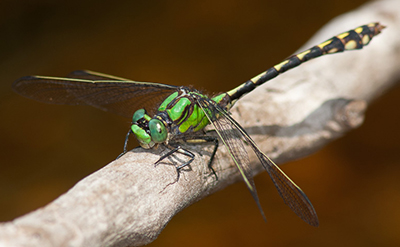
Brook snaketail: Listed as threatened in Rhode Island and as a species of concern in Massachusetts. This dragonfly occurs from Nova Scotia west to Quebec and Michigan, and south to North Carolina, Kentucky, and Iowa. It has been found in all six New England states. Snaketails are characterized by their brilliant green thorax, eyes, and face. Adults range from about 1.7 to 1.8 inches in length. Although both sexes are similar in coloration, the female is larger and has a much reduced “club” at the tip of her abdomen.
Their flight season begins in late May when the adults emerge from streams. This species has a long flight season, with adults having been observed through late August. They prefer cold, forested steams with sunny riffles and well-developed beds of aquatic vegetation.
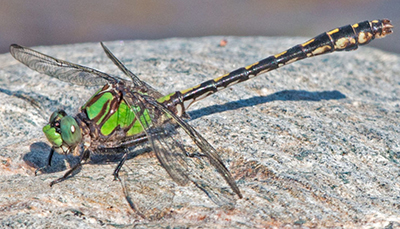
Riffle snaketail: Listed as threatened in Massachusetts. This dragonfly likely breeds from early June through late July. Upon returning to the stream, males can be found perching on rocks in the middle of the water. From these exposed perches, they make swift patrols out over the water, often returning to the same or a nearby rock. During these patrols, the males are primarily searching for mates and driving off any potential competitors. Females spend little time around the breeding habitat, except during the brief time when they are ready to mate and lay eggs.
This species inhabits clear, cold, and rocky streams that are fast-flowing with relatively few pools. The bottom sediment is made up of fine gravel or sand in which the nymphs burrow.
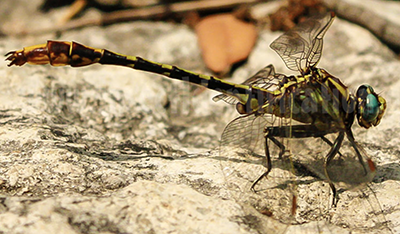
Common sanddragon: Listed as a species of concern in Rhode Island. Four of the nine Ocean State ponds where this dragonfly occurs are high-quality coastal plain ponds.
This dragonfly prefers moving water, and can be found by streams, creeks, and small rivers, flying over and around the water in search of insect prey. It rests on rocks, boulders, logs, or branches. On hot days, it raises its long abdomen into the air to help it cool off.
Females have a slender dark brown abdomen; males have a slight bulge at the tip of their abdomen. Females will cruise along the surface of the moving water alone, occasionally dropping a fertilized egg into it by dipping her long abdomen into the water.
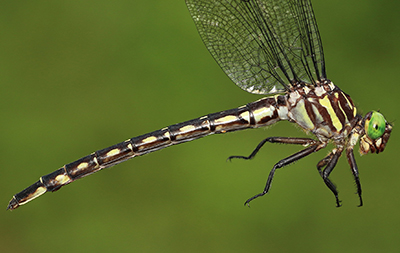
Arrow clubtail: Listed as a species of concern in Rhode Island. It had been listed as threatened in Massachusetts, but was de-listed in 2012. In Rhode Island, it is known from just two rivers in the Blackstone River watershed. It is one of the wariest of dragonflies.
Nymphs inhabit medium to large, swift-flowing, sandy-bottomed rivers and occasionally large, wind-swept lakes. Adults inhabit riparian areas and the surrounding upland.
These dragonflies are elusive and little is known about their life history. The aquatic nymphs spend at least a year maturing, undergoing several molts during this period. Like most clubtails, they are burrowers, and reportedly burrow more deeply into the sandy substrate than any other species. They are voracious predators and feed upon a variety of aquatic life.
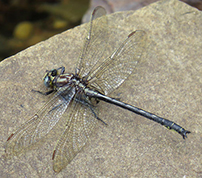
Harpoon clubtail: Listed as endangered in Massachusetts. In New England, this dragonfly is found in Maine, New Hampshire, and Vermont, south through western Massachusetts and into northwestern Connecticut.
This species flies from late spring through early summer. Emergence may take place as early as late April and early May. Adults have been observed in Massachusetts during the months of May and June, though elsewhere they fly into the middle part of July.
It’s not known how long it takes for the nymph of this species to fully develop. However, it takes about a year in similarly sized dragonflies. The final step before becoming a flying adult is emergence. This is the process by which the adults emerge from nymphal skin.
The nymph of this dragonfly crawls up directly onto the bank of its pool habitat or onto exposed rocks or logs to emerge. Upon finding a secure perch, usually less than a few feet above the water’s surface, the adult pushes out of the exoskeleton and stretches its wings. The new adult is soft and vulnerable at this time.
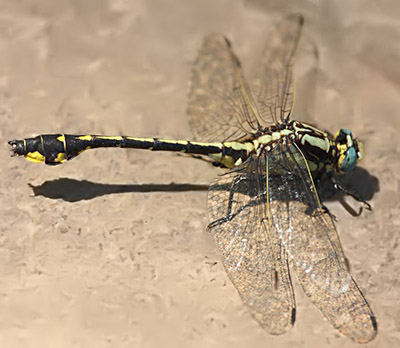
Midland clubtail: Listed as endangered in Massachusetts. This dragonfly has been recorded a handful of times in Massachusetts along the Connecticut River. The species also has been found along the Connecticut River just south of the Massachusetts border in Connecticut. In New England, the species has also been recorded in Maine and New Hampshire.
Emergence generally takes place early in the morning, presumably to reduce exposure to predation. As soon as the freshly emerged adults are dry and the wings have hardened sufficiently, they fly off to seek refuge in the vegetation of adjacent uplands.
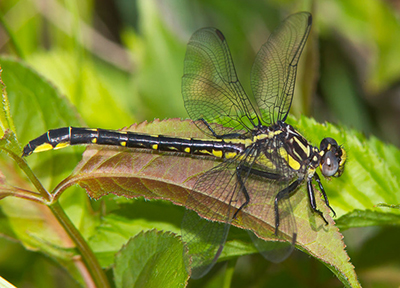
Rapids clubtail: Listed as endangered in Massachusetts. This dragonfly is found from southern Ontario south to Alabama and Georgia, west to Illinois and Wisconsin and north to Maine. It has been recorded in each New England state.
This species is a member of the Gomphidae family, one of the most diverse families of dragonflies in North America with nearly 100 species. Clubtails are unique among the dragonflies in having eyes that are separated from each other. These insects, as their name implies, have a lateral swelling near the end of the abdomen, giving the abdomen a “club-like” appearance.
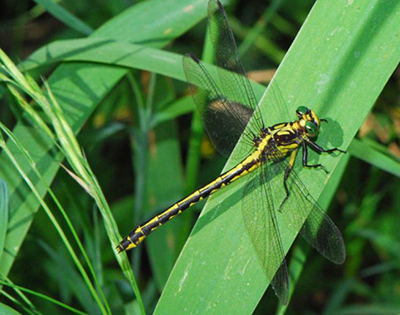
Riverine clubtail: Listed as endangered in Massachusetts. They typically perch on the top surface of leaves high in the tree tops, oriented in a more or less vertical position. They are dark brown to black in coloration with pale yellow to greenish markings on the body and bright green eyes.
Like all dragonflies, this species has a long, slender abdomen comprised of 10 segments, four wings — two forewings and two hindwings — with dense venation, and a large head with huge eyes and powerful, chewing mouth parts.
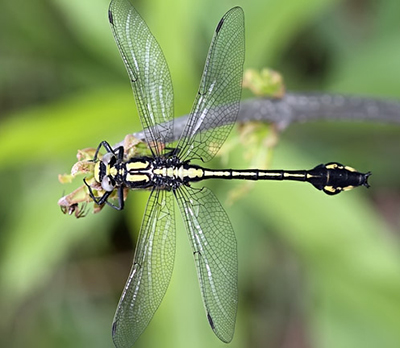
Skillet clubtail: Listed as threatened in Massachusetts. This dragonfly ranges in length from 1.8 to 2.1 inches, with a wingspan averaging 2.5 inches. This species ranges throughout northeastern North America, from Nova Scotia, New Brunswick, Quebec, and Ontario, south to North Carolina, Mississippi, and Iowa. They appear to be scarce throughout their range. In New England, the species has also been recorded in Connecticut, New Hampshire, and Vermont.
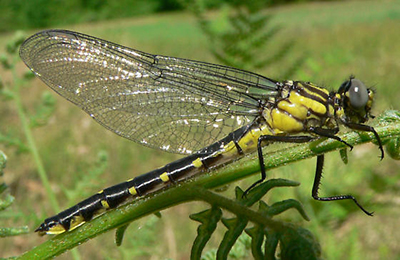
Spine-crowned clubtail: Listed as a species of concern in Massachusetts. In New England, they have been recorded from southwestern Maine, southern New Hampshire, Massachusetts, Connecticut, and Rhode Island, where it can be found in just five municipalities in Providence and Washington counties.
This dragonfly inhabits large streams and rivers. In Massachusetts, they have been found on medium to large rivers with silty and sandy bottoms, including the Connecticut River. Nymphs are aquatic and burrow just under the sediment of the river bottom. The adults inhabit the riparian areas, forested uplands, and fields.
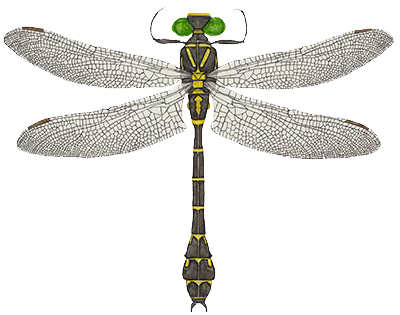
Zebra clubtail: Listed as threatened in Rhode Island. It had been listed as a species of concern in Massachusetts. It ranges from Nova Scotia west to Ontario and Michigan and south to Georgia and Tennessee. This dragonfly has been found in every New England state, though it appears to be absent from the southeast coastal plain.
In Rhode Island, it is widespread in the Pawcatuck River watershed, where it occupies several miles of habitat in four rivers.
The extensive use of rivers by power boats and jet skis is a serious concern, according to the Massachusetts Division of Fisheries & Wildlife’s Natural Heritage & Endangered Species Program, particularly during the mid- to late summer emergence period of this species.
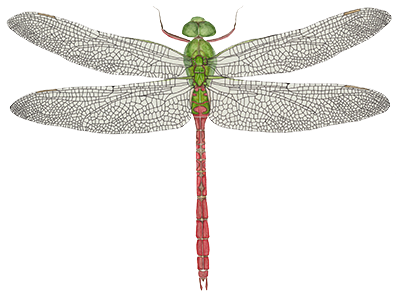
Comet darner: Listed as a species of concern in Rhode Island. In New England, this dragonfly has also been recorded in Massachusetts and Connecticut. Large numbers of individuals have been observed in the migrations of dragonflies along the Atlantic Seaboard in late spring.
Typical habitat is ponds containing floating and emergent vegetation, including coastal plain ponds. Some of the common plants associated with coastal plain ponds include military rush, Plymouth gentian, and grasses.
In Rhode Island, the species hasn’t been found east of Narragansett Bay. Most records are from southern towns, with scattered occurrences in Burrillville and Woonsocket.
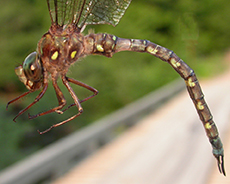
Ocellated darner: Listed as a species of concern in Massachusetts. Most reports to date come from the Green, Deerfield, and Westfield river systems — all tributaries of the Connecticut River.
The late flight season and inconspicuous habits of this dragonfly have likely resulted in populations of the species being overlooked, according to the Massachusetts Division of Fisheries & Wildlife’s Natural Heritage & Endangered Species Program. There are a number of streams and lakes in western Massachusetts that seem to have suitable habitat and further field work will likely reveal additional sites, particularly in Berkshire County.
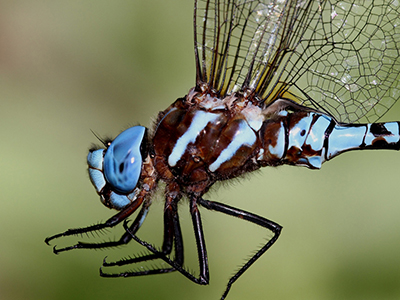
Spatterdock darner: Listed as a species of concern in Rhode Island. In the Ocean State, this dragonfly is found primarily in the northern municipalities of Providence County. Its range extends from southwestern Maine south to Virginia and west to Michigan, Missouri and Ontario. Throughout much of the species’ range, it seems to be scarce and local in occurrence. In New England, this dragonfly has also been recorded in Massachusetts, Connecticut, and southern New Hampshire.
Prior to 1978, there were only two records of this dragonfly in Massachusetts. However, a dramatic increase in the number of records occurred in the 1990s. The preponderance of records are from Barnstable, Middlesex, Hampshire, and Hampden counties.
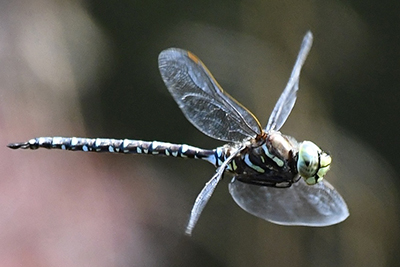
Subarctic darner: Listed as endangered in Massachusetts. It is at the southern extent of its range in the Bay State, and is known from only two sites in the north-central part of the state, both in Ashburnham. It is likely to occur elsewhere in northern Massachusetts, as suitable habitat is present at a number of sites.
Males patrol the breeding site, flying over wetter areas of bogs and fens. When more than one male is present, aggressive interactions are frequent and often end with one male chasing another high over the treetops out of sight.
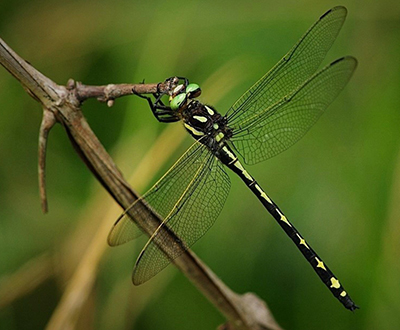
Arrowhead spiketail: Listed as a species of concern in Rhode Island. This is the largest spiketail in the Ocean State. They have blue-green to green eyes and a yellow face.
This species prefers habitats that are slow-moving seeps and small forested brooks. Almost all of the 10 occupied sites in Rhode Island, with the exception of one, are west of Narragansett Bay.
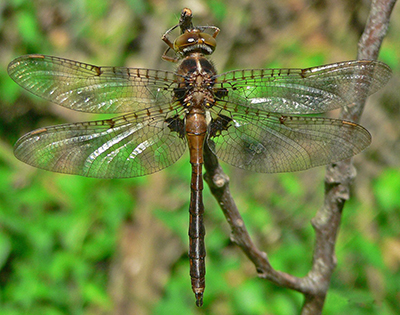
Umber shadowdragon: Listed as a species of concern in Rhode Island. It was first recorded in the Ocean State in 2003. It is currently known from just two waterbodies. It has been recorded as far north as Maine.
Adults fly for only 20-25 minutes as the sun goes down, in frenzied feeding and mating flights. They fly extremely fast just above water, following piers, dams, revetments, and other solid surfaces along shorelines of reservoirs, lakes, and rivers.
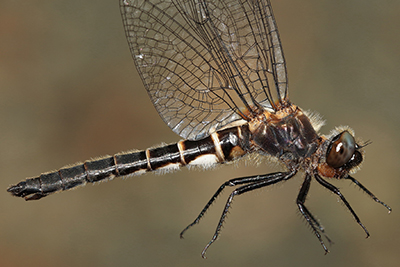
Ebony boghaunter: Listed as endangered in Massachusetts. The species is known from a handful of sphagnum bogs and boggy wetlands in central Massachusetts. At one of the recent sites, a fairly sizable population seems to be present.
It has been found only in widely scattered bogs from Nova Scotia and New Brunswick west to Manitoba, and south to Minnesota, Michigan, Wisconsin, Massachusetts, and New York.
Although it has been suggested that the species isn’t territorial, at one Massachusetts site males were observed exhibiting apparently territorial behavior over soupy sphagnum at a bog/pond interface.
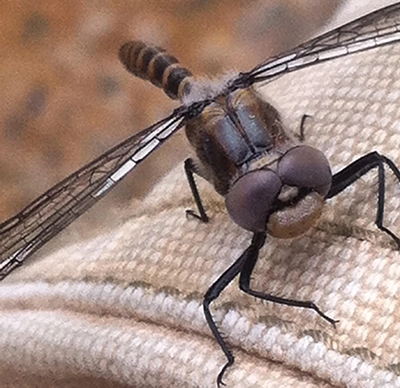
Ringed boghaunter: Listed as endangered in Rhode Island and threatened in Massachusetts. This dragonfly has been recorded in boggy habitats in several municipalities in central and eastern Massachusetts. Populations at most extant sites appear to be quite small.
This species emerges from wetlands in April and early May. Adults leave emergence sites and fly into the woods or surrounding forested swamps. They have been recorded at 30 locations in Rhode Island, mostly in Washington County.
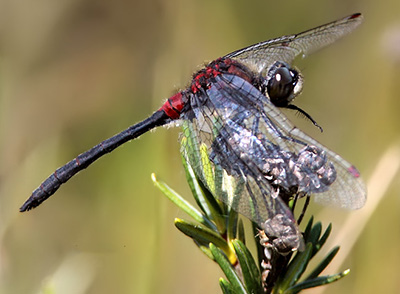
Crimson-ringed whiteface: Listed as threatened in Rhode Island. One of the rarest dragonflies in the state, it can be found at two boggy ponds on protected land in Rhode Island’s northwest corner. One of those ponds is the only site in the state that supports all five of Rhode Island’s whiteface dragonflies.
This species flies early and briefly, from early June through early July.
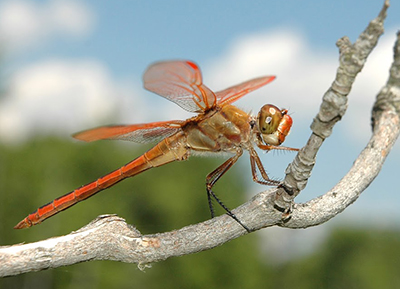
Golden-winged skimmer: Listed as species of concern in Rhode Island. Its presence in the Ocean State wasn’t confirmed until 2004. Males are extremely wary and unapproachable. It can be found from Massachusetts and Rhode Island through Tennessee to Texas and Florida.
Its rarity in the Ocean State is interesting, given the species’ abundance in southeastern Massachusetts.
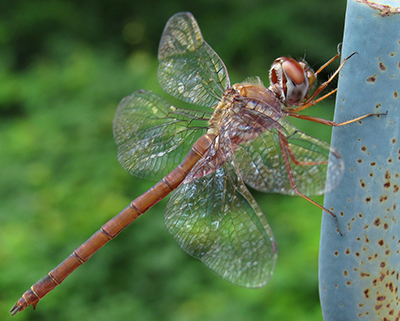
Coppery emerald: Listed as species of concern in Rhode Island and endangered in Massachusetts, which lies at the northern limit of its range. The species is known from only four locations in the Bay State, and hasn’t been recorded at two of these for more than 35 years. It was first reported in Rhode Island in 1999, and is rare east of Narragansett Bay.
This dragonfly typically flies high when not on water.
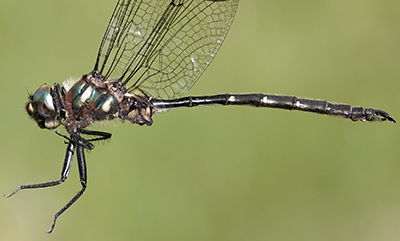
Forcipate emerald: Listed as endangered in Massachusetts. In New England, this species is also found in Maine, New Hampshire, and Vermont. This species flies from early June through early August.
The face is yellow, with the forehead a dark brown with a hint of metallic green. The large eyes, which meet at a seam on the top of the head, are brilliant green in mature adults.
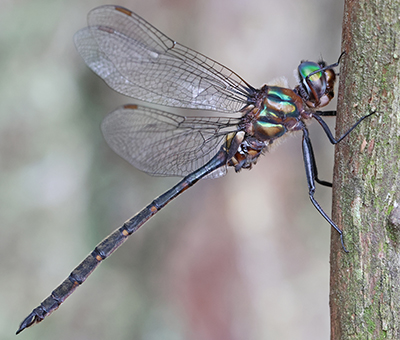
Incurvate emerald: Listed as endangered in Massachusetts. This species inhabits a narrow band along the southeastern Canadian border into Massachusetts, Maine, Michigan, New York, Ohio, Pennsylvania, and Wisconsin.
This dragonfly can be found in fields and forest clearings, which they patrol in search of small aerial insects. When not feeding, they rest hanging vertically from the branches of bushes and trees.
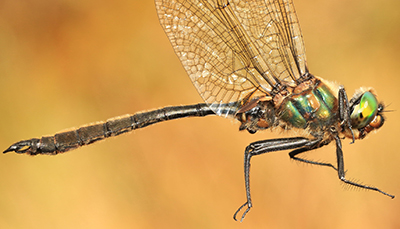
Kennedy’s emerald: Listed as endangered in Massachusetts. This dragonfly is distributed from Manitoba and the Northwest Territories, south to Massachusetts, northern New York, Ohio, Michigan, Wisconsin, and Minnesota.
In the Bay State, this dragonfly has been found inhabiting small streams and red maple swamps. Elsewhere in its range, this species is sometimes associated with streams flowing through open habitats, such as marshes and bogs.
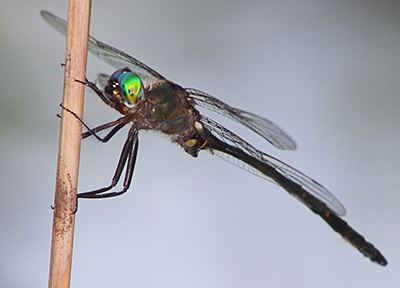
Mocha emerald: Listed as a species of concern in Massachusetts. This dragonfly is distributed throughout the eastern United States from Massachusetts south to Florida and west to Michigan, Iowa, and Texas. In New England, it has also been recorded in Rhode Island and Connecticut.
Although frequently observed foraging in sunlight in fields and along forest edges, this is a dragonfly of shady streams. It is most abundant in late summer.
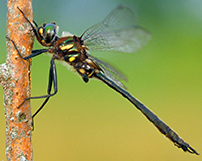
Ski-tipped emerald: Listed as a species of concern in Massachusetts. The species is known from several sites in the western part of the state, and can be quite numerous at some of these sites. In New England, this species is also found in Maine, New Hampshire, and Vermont.
Breeding in Massachusetts probably occurs from mid-July through August, as in other regions where this species occurs. Males patrol up and down the stream along the banks, usually no more than 2 feet above the surface of the water, in search of females.
Damselflies
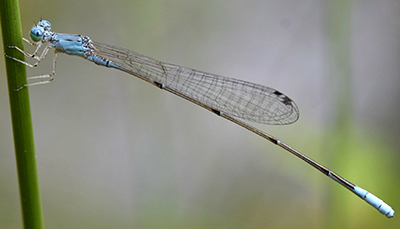
Attenuated bluet: Listed as threatened in Massachusetts. The species is known only from southeastern portions of the state, primarily in Bristol County. Most sites are well-vegetated lakes or ponds.
This damselfly is characterized by having an exceptionally long, slender abdomen. On average, it is the longest pond damsel in the United States. The abdomen, which is composed of 10 segments, is mostly dark brown/black with some blue on the sides and an entirely blue tip.
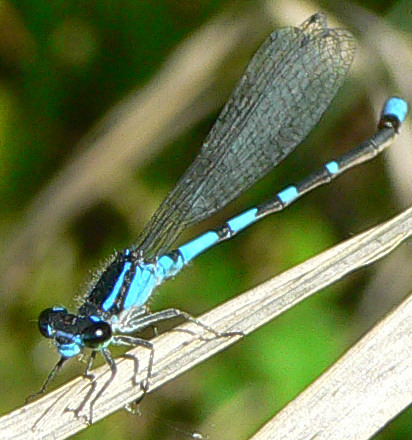
Pine barrens bluet: Listed as a species of concern in Rhode Island and threatened in Massachusetts. The species is known mainly from southeastern portions of the Bay State, primarily Barnstable and Plymouth counties. It also can be found Connecticut, New Hampshire, Maine, New York, and New Jersey.
In Rhode Island, this species is localized and uncommon. Its distribution is limited to areas west of Narragansett Bay, such as Burrillville to the north and South Kingstown along the state’s south coast.
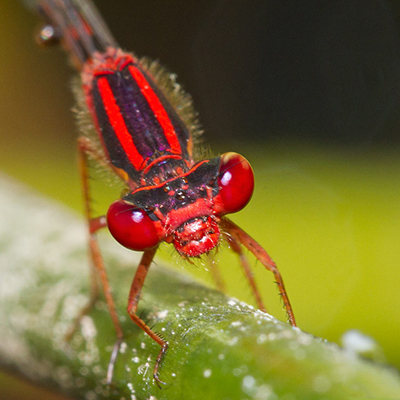
Scarlet bluet: Listed as a species of concern in Rhode Island and threatened in Massachusetts. The species is known mainly from southeastern portions of the Bay State, primarily Barnstable and Plymouth counties. This species has a small range restricted to scattered locations in the northeastern United States from southern Maine to New Jersey.
In Rhode Island, this damselfly is limited to 12 municipalities, all west of Narragansett Bay. This species frequents weedy areas of ponds, perching on floating leaved emergent plants such as fragrant water lily and bayonet rush.
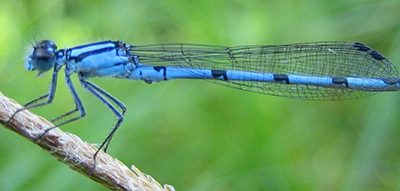
Tule bluet: Listed as a species of concern in Massachusetts. Most Bay State sites are sparsely vegetated lakes or reservoirs, though the species also occurs on the Connecticut River. At some sites, particularly in Berkshire County, large populations have been found.
This damselfly inhabit a variety of wetlands, but seems to be most numerous on large lakes. In addition to still freshwater habitats, they have also been found on sluggish rivers and apparently are fairly tolerant of brackish and saline conditions.
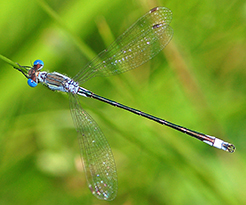
Lyre-tipped spreadwing: Listed as a species of concern in Rhode Island. This species is the rarest spreadwing and one of the rarest odonates in the Ocean State. There are only four known breeding sites in Rhode Island, two of which are on Block Island.
This damselfly may not be tolerant of competition, occurring as a colonizer that eventually dwindles in number and disappears as other species move in.
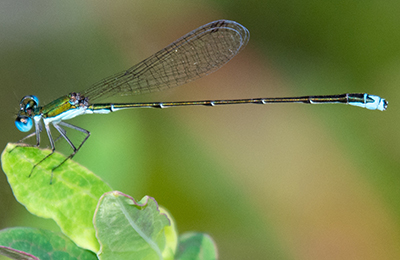
Southern sprite: Listed as threatened in Rhode Island. It was first recorded in the Ocean State in 1998. It occurs annually at one pond and this population is sizable. This pond also supports large populations of four other uncommon damselflies.
This tiny, bright green damselfly is the smallest (less than an inch long) of Rhode Island’s three sprites.
Note: “Dragonflies and Damselflies of Rhode Island” provided much of the information used to highlight species listed in this story. To buy a copy of the book, click here.
Note: Some of the species listed in each state overlap, and how often the lists are updated varies — the Rhode Island list was last updated in March 2006, Massachusetts last August, and Connecticut in January 2023. For species listed as state historical — essentially extirpated — in Rhode Island, they were included in the endangered category.