
North Smithfield Quarry, Long an Aggravation for Nearby Residents, Seeks Zone Change
March 17, 2025
Share


NORTH SMITHFIELD, R.I. — Middle school cafeterias aren’t usually packed on Monday nights.
But it wasn’t students that filled the room the evening of March 3 — they had left hours ago when the last bell rang in the afternoon. Instead, it was dozens and dozens and dozens of town residents, organized, mobilized, and eternally frustrated with a quarry operation that abutters have long alleged is the worst neighbor in town.
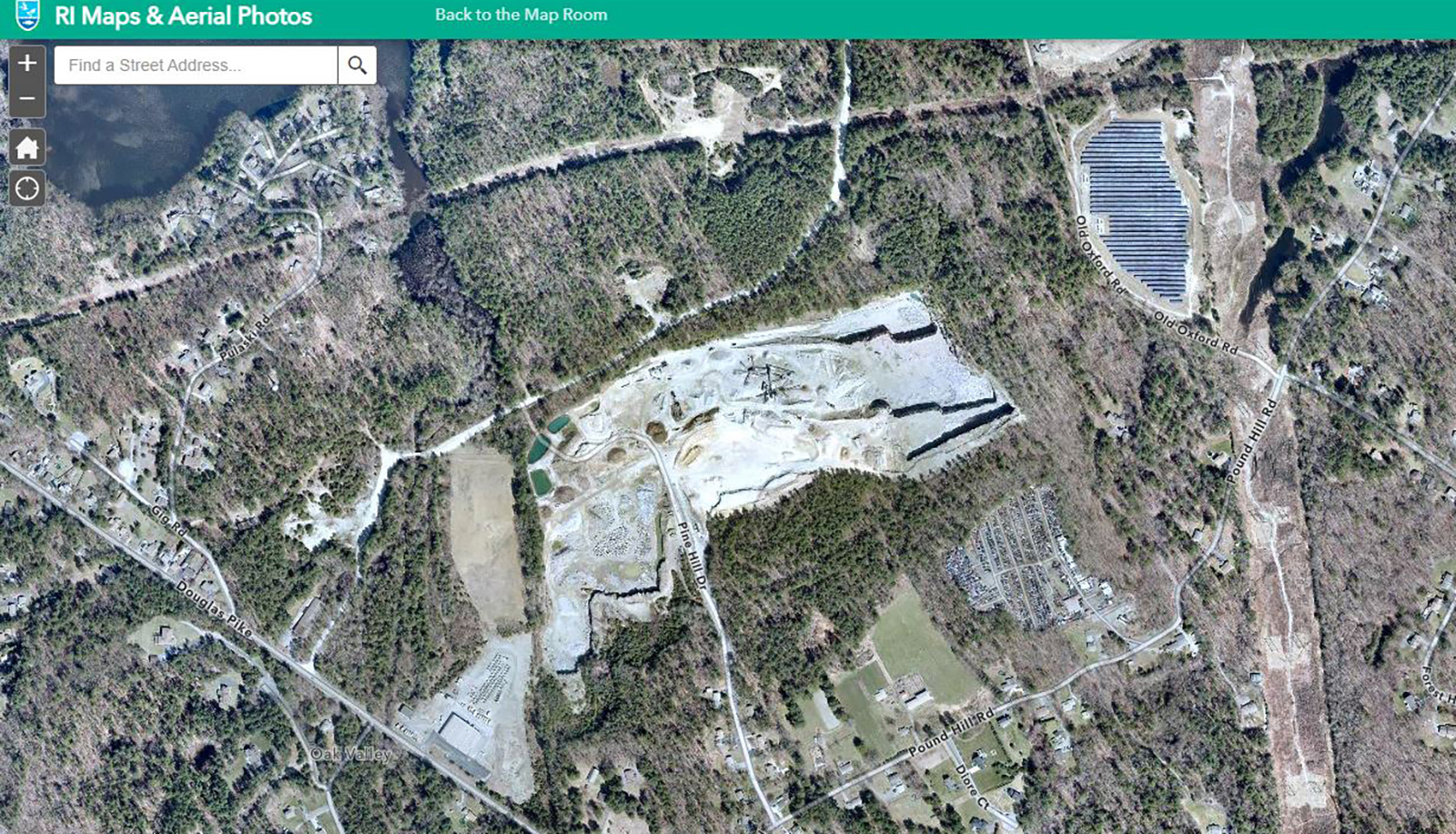
On March 3, the Town Council held its third public meeting on a petition for a zoning change for Material Corp., the company that operates an 88-acre quarry at 1 Pine Hill Road. The quarry has been in town since 1958, when a local family, the Pezzas, bought and opened the property for small quarrying operations.
But over the past 10 years the quarry’s operations have greatly expanded, according to neighbors, with regular disruptive blasting, fugitive dust clouds blowing off the site, and a disregard for stormwater runoff regulations that critics say may endanger two nearby Superfund sites.
Like many other rural towns, North Smithfield doesn’t have infrastructure for public water, so most residents rely on private wells for cooking, drinking, and bathing. The quarry sits on top of the town’s main groundwater aquifer, and many residents are concerned that blasting and other quarrying operations could pollute it.
Material Corp.’s petition for a zoning change is the latest attempt by the quarry to resolve its longstanding issues with the town, which has attempted to regulate the quarry for decades. The land the quarry sits on is zoned rural estate agriculture and is close to residential neighborhoods. The town prohibited quarries in 1979, but the Pezza quarry had grandfathered protections, although some residents contend the quarry lost those protections when it failed to procure a certificate of compliance.
The zoning change would impose an industrial overlay district on top of the quarry’s property, but residents already concerned about the operations are worried the change is just the beginning of their quarry qualms.
“We’re worried about the future,” said Liane Jalette, a North Smithfield resident, in an interview with ecoRI News. “The bottom line is … not only are we worried about here and now, but we’re asking: Will this set a precedent for future overlay districts?”
Jason Richer has lived on property that abuts the quarry with his family since 2012, and has witnessed firsthand some of the environmental violations stemming from quarry operations. He extensively documented, via his YouTube channel, clouds of fugitive dust stemming from the quarry’s dirt piles and blasting, as well as some of the quarry runoff that spreads onto nearby properties.
“They were doing no dust mitigation practices whatsoever, even though they are required to do so by state law,” Richer said. “They can’t have a grain of sand across their property line ever, and they do it daily.”
The March 3 Town Council meeting centered primarily on concerns over the quarry’s blasting operations and the impact on residents. Richard Groll, an industrial seismologist who has been contracted by Material Corp. to monitor its blasting since 2003 and an expert witness who testified in support of the quarry’s petition, told council members the quarry’s blasting operations remained within federal and state regulations.
Groll also assured council members, and residents, that the white cloud that follows any blasting wasn’t fugitive dust, but instead a combination of different gases, half of which are actually water vapor.
“What you’re seeing is the conversion of solid-to-gas in the explosion process,” Groll said. “The fundamental combustion products of explosives are water vapor, carbon dioxide, carbon monoxide, and some nitrous oxide-type gases. When you see the white cloud, what you’re seeing is the reflection of sunlight off water vapor.”
Any particulate matter, he said, would drop to the ground before hitting the quarry’s property line. Groll also said the quarry’s blasting wasn’t making homes in the vicinity of the quarry shake.
But not everyone accepted Groll’s highly specialized explanations. Town Council member David Punchak asserted he had felt a blast on Dec. 30, 2024, “three miles away” from the quarry at his home.
“If my windows didn’t shake, why did my dishes shake?” Punchak asked.
Groll maintained any vibrations felt by residents in their homes come from the air, not from the ground. “You could have felt a blast three miles away, but not from ground vibrations,” he said.
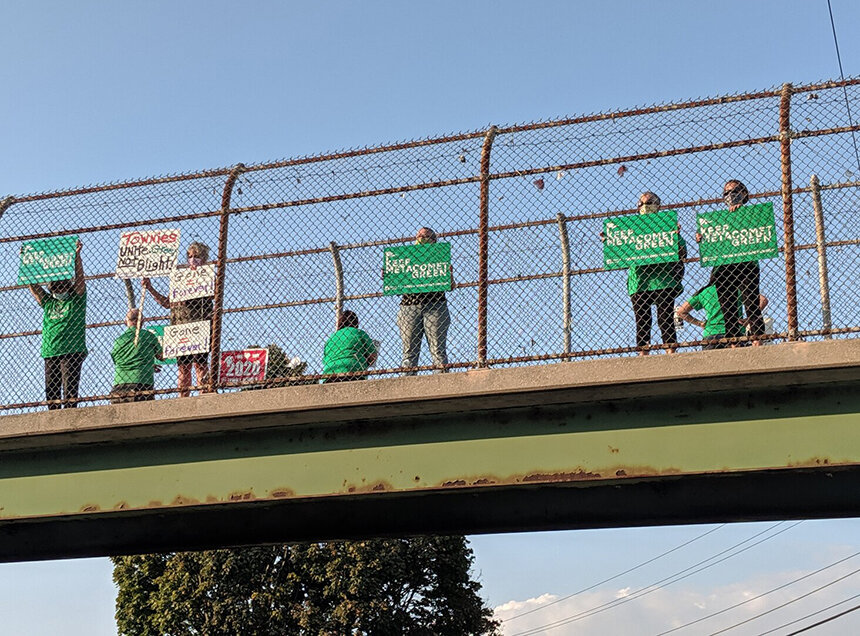
During the public comment portion of the meeting, dozens of residents testified against the quarry’s petition for a zoning change. Longtime residents said the quarry’s operations had intensified only recently.
Muriel Halloran, a Douglas Pike resident who has lived near the quarry since 1971, told the council the blasting, which she said has rattled dozens of nearby homes, had only started within the last 10 years.
“I’ve lived in my home since 1971,” Halloran said. “I don’t remember any blasting [before]. It’s fairly recent.”
The Town Council’s meeting on Material Corp.’s zoning change is scheduled to continue March 17.

If they cannot be a good neighbor they should close the quarry