New Master Plan Addresses Runoff from Roger Williams Park Zoo
July 27, 2026
Share


PROVIDENCE — Lou Perroti, Roger Williams Park Zoo’s director of conservation programs, has spent the past three years working on the zoo’s stormwater master plan, and at last, after many days standing out in the rain and catching stormwater to test it, the plan is finished.
Perroti was one of the many partners working on the master plan, a massive document that sought to test the quality of the park’s water and how the water from storms and rains impacts the zoo’s waterbodies. The master plan, funded through an Environmental Protection Agency Southeast New England Program (SNEP) watershed implementation grant and released this month, serves both as a recommendation on ways improve the long-term quality of the park’s water and a continued promise to keep the park as sustainable as possible.
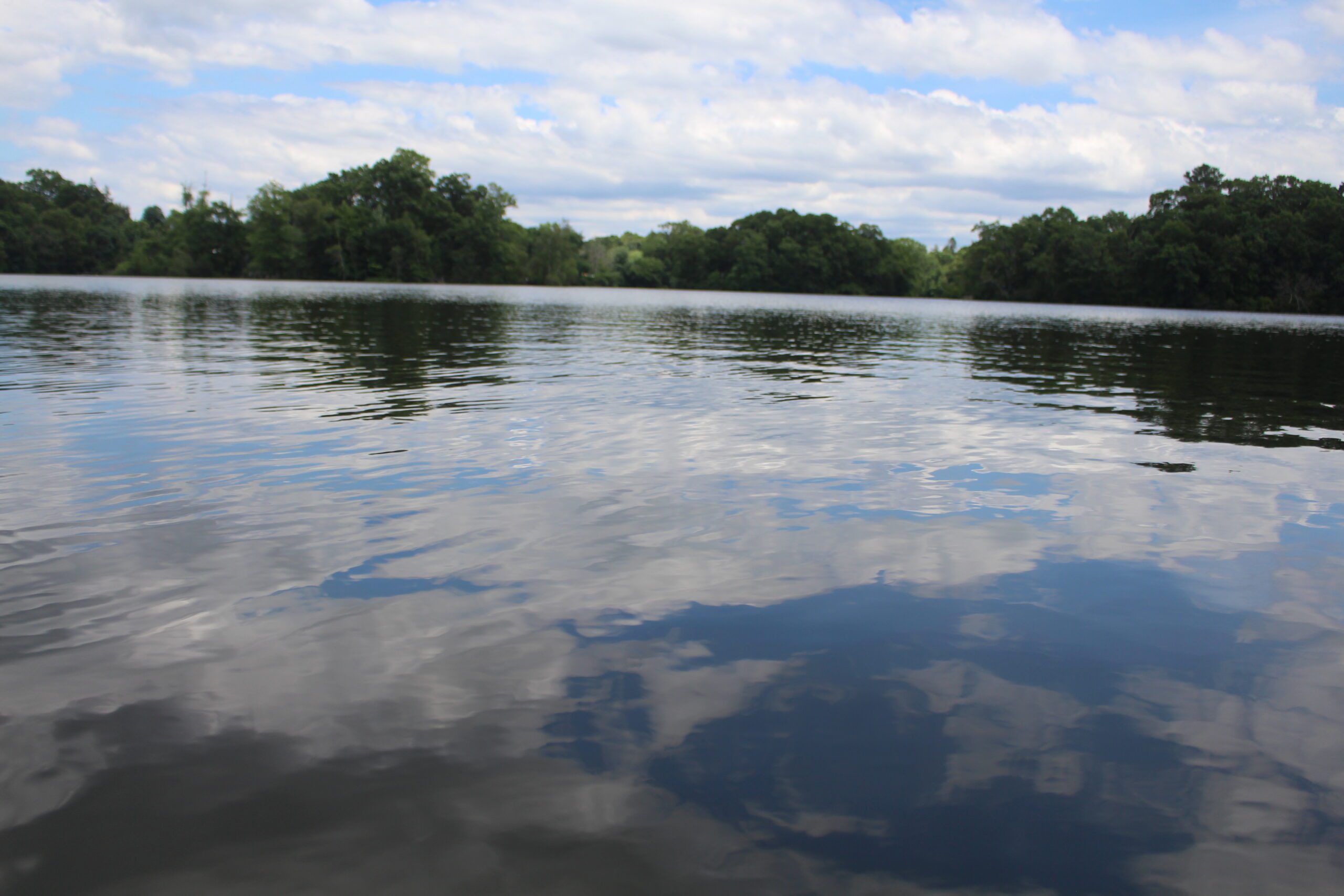
The Roger Williams Park Zoo is adjacent to Polo Lake, which is part of the larger park’s pond complex, consisting of a series of seven interconnected waterbodies including Roosevelt Lake, Willow Lake, Pleasure Lake, Edgewood Lake, Cunliff Lake, and Elm Lake. According to the master plan, these ponds suffer from an abundance of nutrients (specifically phosphorus), suspended sediment, and bacteria, which causes high algae densities and reduces water clarity.
“We want to make sure that we’re being as green as we responsibly can, which led to us participating in this stormwater project. We want to make sure that we’re doing the best we can, and nothing can prove that better than solid data,” Perroti said.
Stormwater runoff, when rain or melted snow runs over impervious surfaces such as roads, parking lots, and rooftops, pollutes local waterways. As stormwater flows over these impervious surfaces instead of seeping into the ground, it collects dirt and other contaminants before eventually being deposited into the local waterways.
The Roger Williams master plan serves as a model of best practices for not only managing stormwater but also navigating the stewardship of the park in a way that is environmentally sustainable. The plan highlights both green infrastructure improvements that could be made to increase the amount of stormwater that permeates the ground, and nonstructural ways to mitigate stormwater, such as improving maintenance practices across the park and increasing stormwater education.
This master plan isn’t the first time that stormwater has been addressed in the park. In 2011 there was a larger Roger Williams Park water quality master plan that was created to deal with the park’s water quality. According to the Horsley Witten group, an environmental consulting firm that worked on both the zoo’s plan and the larger park’s plan, it wasn’t clear in 2011 that the zoo’s water system was connected to the larger park in any way.
“That’s because a portion of the zoo is connected by a closed pipe system to the combined sewer overflow that goes to the Narragansett Bay Commission. So a lot of their stormwater currently is in a closed pipe system that does not discharge to the pond complex,” said Brian Kuchar, the principal landscape architect behind the project. “This project was a vetting exercise, amongst other things, to determine how much, if any, of the zoo is discharging to the pond complex, and there was some visual evidence, and people did acknowledge that there was some level of discharge into the pond complex.”
Since the waterway links between the zoo and the park were established, the Horsley Witten group, in partnership with the city of Providence, Ray Dunetz Landscape Architecture, the Audubon Society of Rhode Island, the Providence Parks Department, and the zoo itself, worked on the zoo’s master plan.
“What really was great [with this project] was the collaboration process and being able to work with other people that may not be technically trained in stormwater planning or watershed planning or stormwater design, but I’m always surprised at how much people understand the problem and sometimes can come up with simple solutions that we as technical people may not always think of,” Kuchar said.
According to Kuchar, the data collecting process was one of the biggest successes of the plan. The Horsley Witten group worked with the Stormwater Innovation Center, a collaborative initiative dedicated to improving stormwater management in Rhode Island, to record and test the water quality of the zoo’s water bodies. Collecting data required the partners to go out in the rain and collect samples and take notes on how the rainfall made its way through the park.
Preparing a stormwater management plan for a zoo is different from preparing one for a park such as Roger Williams Park.
“The zoo is a very unique situation. It’s in an urban park, but it’s different from some of the stormwater runoff issues that happen in traditional urban settings because there is a high concentration of animals. There’s runoff coming from the zoo property parameters that is slightly different than what you would see coming off of somebody’s lawn or off the street,” said Ryan Copp, director of the Stormwater Innovation Center. “All of those have some negative consequences. So it was just a matter of trying to address those and outline [solutions in] capturing some of that runoff, providing recommendations, not only for structural practices that can capture and treat the water, but modifying [the zoo’s] maintenance practices.”
Kopp explained that as part of the research process they learned that the species of carp that reside in the zoo’s waterbodies is invasive. According to Perroti, the carp eats the native aquatic plant species of the area, such as lily pads.
“We’re going to try to get as many of [the carp] out of our wetland as we can, and we’re going to put them in a greater park system for now to see if that improves water quality,” Perroti said. “We have a lot of baseline data of what that wetland looks like, water quality wise, before the removal, and then we’ll be able to monitor after the removal to see how the quality of the water improves. Do we see less algae blooms and cyanobacteria blooms?”
The master plan doesn’t set deadlines for the work. Just like the Roger William Park’s water quality master plan, the recommended improvements will continue to be implemented and the data collected could lead to other improvements later down the line.
“It’s going to take a little time to digest it and hopefully start checking the boxes off little by little to help improve or better what we’re already doing well,” Perroti said.