Hunt for Tadpole Trafficker Leads State to Woodland Massacre and Illegal Seawall
July 23, 2026
Share


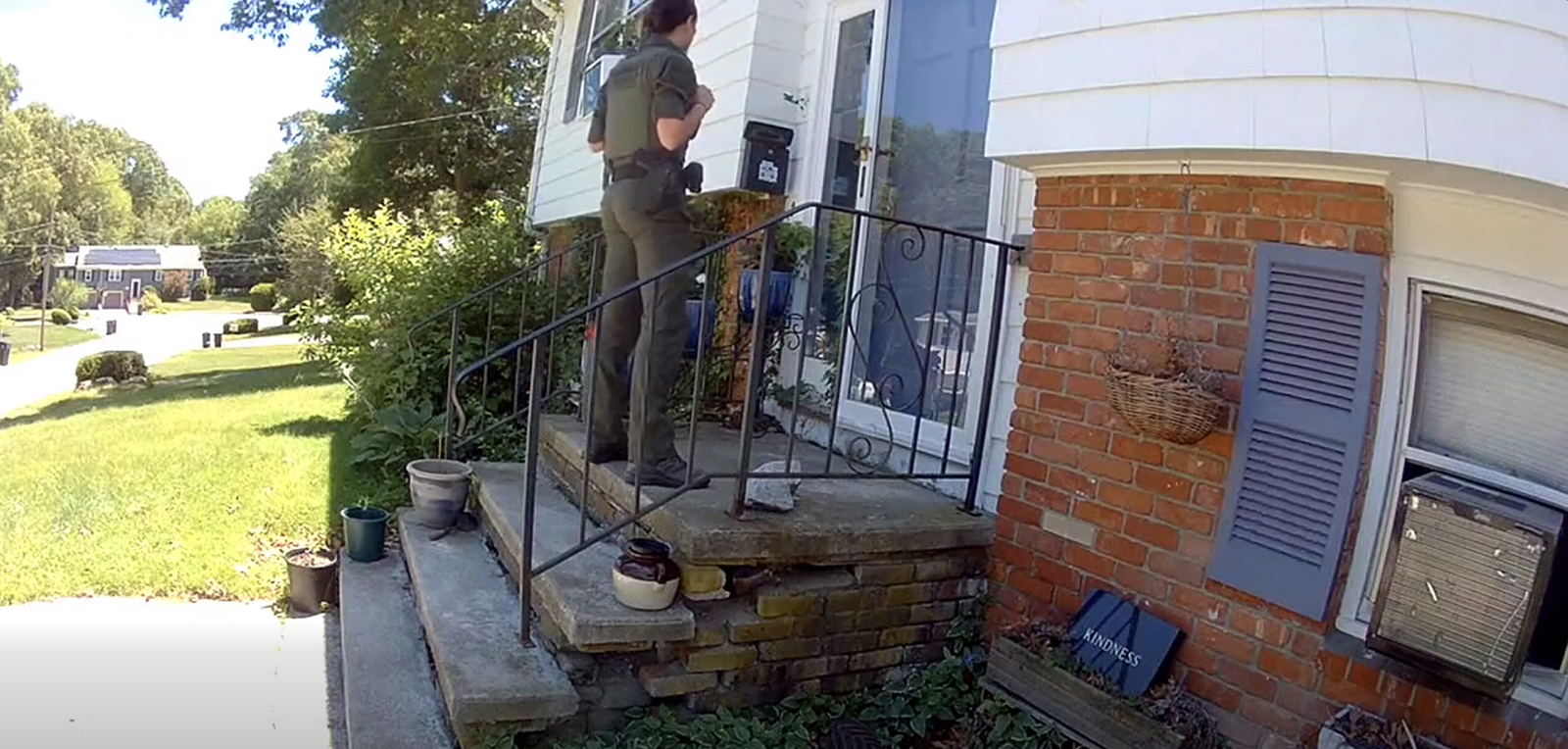
NORTH KINGSTOWN, R.I. — The subject line in the recent email, from a longtime reader, read: “Totally irrational DEM story.” A link to a social media post was included. The post was accompanied by a video of a Rhode Island Department of Environmental Management officer knocking on a shale-blue front door.
The armed officer was looking for baby turtles and tadpoles. Not very far from the front steps on which the environmental police officer stood, a local forest — home to an abundance of wildlife — is being clear-cut to make room for ground-mounted solar arrays.
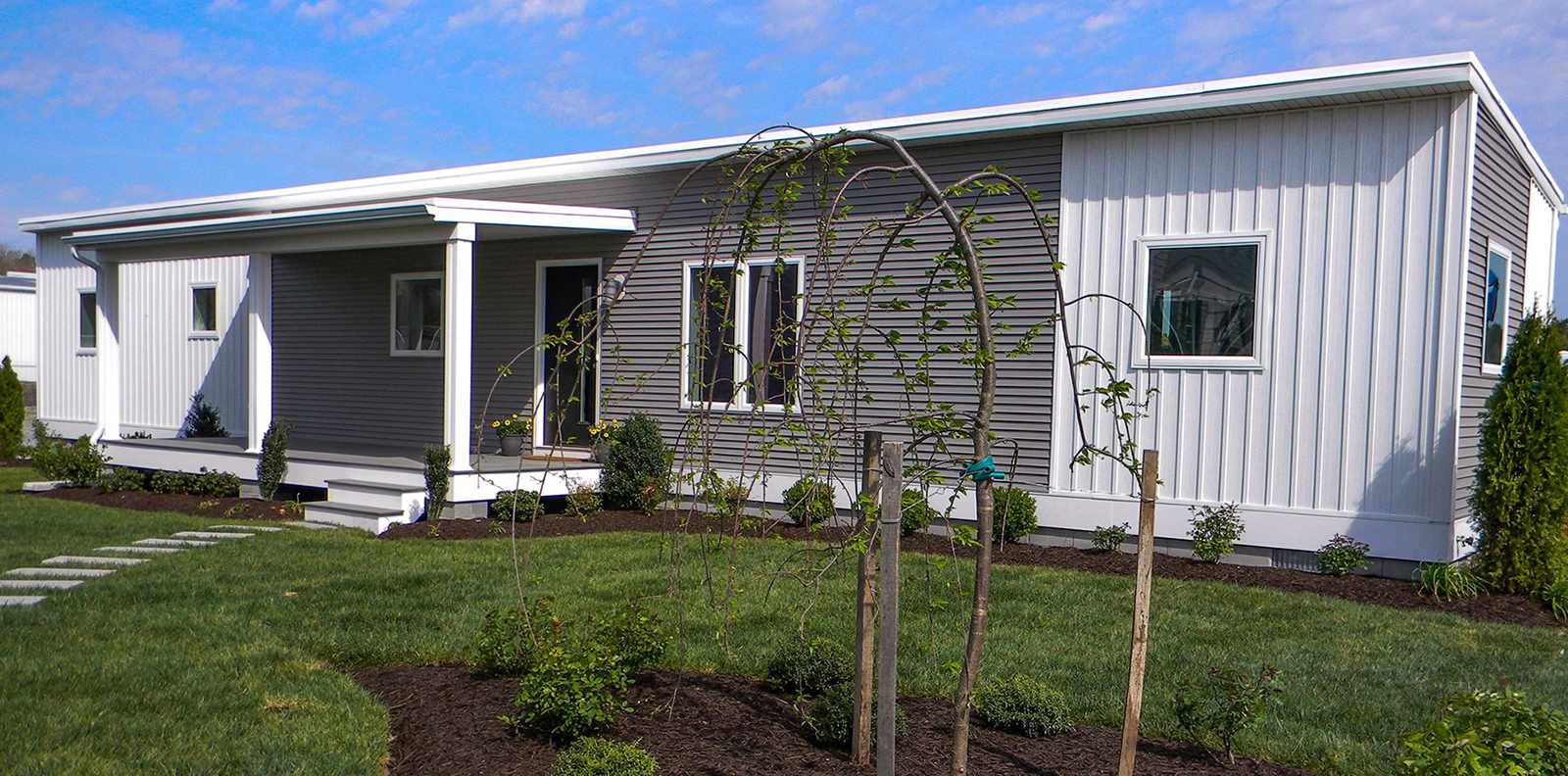
Meanwhile, the town’s ample vacant and underused developed space, such as big-box-store parking lots and most rooftops of all shapes and sizes, remain devoid of solar panels, turtles, and tadpoles. (But, as the photo shows, at least one neighbor of the home recently visited by DEM put their roof to use.)
A handful of small aquatic life taken from a local pond grabs DEM’s immediate attention, but the agency charged with protecting the state’s natural world has allowed three high-profile pollution problems to fester. In fact, DEM and its smaller environmental management partner, the Coastal Resources Management Council, are typically slow to address environmental lawbreaking when it’s committed by businesses or individuals with political pull and/or money. It’s how the Statehouse wants these agencies to operate: favor or fear factor determine response.
Rhode Island doesn’t even put protection in the names of its environmental agencies, because the Ocean’s State’s natural world is solely managed to be hunted, fished, exploited, and run over. Politicians purposely underfund both agencies to keep them inefficient in dealing with entities that can push back.
State power brokers are more interested in placating businesses than enforcing the environmental laws for-profit companies violate. Many of Rhode Island’s environmental regulations are selectively enforced depending on whether you are a woman talking about tadpoles on social media, an immigrant angler, an industry with influence, a wealthy campaign donor, or a lawmaker with a business interest.
The Average Joe — like a 72-year-old Charlestown man arrested for possession of striped bass during the closed season — is hunted down while those with money and/or power are treated with kid gloves, even as this shortsighted and inequitable practice results in the ecosystems where striped bass and tadpoles live being degraded and companies that abide by the rules being punished.
While elderly anglers are arrested and reptile/amphibian fans tracked down, Rhode Island’s environmental managers didn’t notice the construction of a 550-foot-long seawall made of large rocks illegally built in the same town where the alleged wildlife trafficker lives.
After the Charlestown angler was nabbed, DEM quickly issued a press release, noting the senior citizen was “apprehended” by DEM environmental police officers and agents from the National Oceanic and Atmospheric Administration Office for Law Enforcement.
“DEM is working hard to ensure the health and future of the striped bass population, and it is essential that we go after illegal activity to protect this valuable natural resource,” then-director Janet Coit said in 2015.
Apprehending anglers catching too many striped bass using a rod and a reel during the wrong season is worthy of a self-congratulating press release. Dragging massive nets through the water column and industrial fishing gear across the seafloor — resulting in bycatch death that significantly contributes to population declines — is the cost of doing business. The state provides governmental cover, by placing blame for overfishing on the shoulders of out-of-season anglers.
Save The Bay made the news of Quidnessett Country Club’s illegal seawall public. Neither DEM nor CRMC issued a press release, and the agencies seem to have appointed Mr. Bean to run their investigation. Three years later, the seawall, built along the Narragansett Bay shoreline to protect a country club golf course, remains in place.
Picking on the powerless and choosing to slow-walk bigger environmental violations committed by the connected results in: light nonaqueous phase liquids (hydrocarbons) contaminating soil and groundwater; the release of volatile organic compounds, benzene, vinyl chloride, cadmium, and lead into the natural world; quarry waste runoff that pollutes the Big River Management Area by dumping silt into stream beds; and toxic runoff and property fires from an illegally operating scrapyard further impairing an already-stressed Providence River and two heavily-polluted neighborhoods.
The July 13 turtle/tadpole post was published on the Facebook page “Our Town North Kingstown.”
Kimberly Keough, DEM’s chief of public affairs, told me the officer’s initial contact with the individual was based on information received from a concerned resident relating to social media posts indicating the individual was “seeking to buy what appeared to be small red-eared slider turtles, a nonnative species whose release is prohibited under state law.”
She also noted that the sale of small turtles with a carapace length of less than 4 inches is illegal, and that the social media post didn’t reflect the full context of the purpose of the interaction.
“The social media post further indicated that the individual took tadpoles from an undisclosed location, which is also a violation of state regulations,” Keough wrote in an email.
The Facebook poster, on the other hand, wasn’t thrilled with how DEM appears to spend its time. She declined to speak with me about the post and its reaction, but on social media wrote:
“DEM recently came to my house looking for me but I wasn’t home. Saw an armed officer repeatedly knocking on my door and ringing my doorbell. I called them for 3 weeks straight trying to find out why and finally got a callback.
“Now mind you, you cannot make this sh*t up… The female officer that called said there was a post online where a woman had offered me the opportunity to grab a few tadpoles from her pond (I of course jumped at the opportunity because I had been wanting some for a while) and wanted to know if I indeed took some. I told her I took 5 or 6. She then went on a rant about how it was illegal… blah, blah, blah. I mean, do elementary school children not even get the chance to witness the miracle of how frogs are ‘made’ anymore???
“I really couldn’t find the words to respond to her as I stood there with my jaw on the floor. I asked her, ‘aren’t there a million more concerning issues out there happening with bad characters to worry about?’ I mean, how much did that cost taxpayers? When we were kids everyone kept tadpoles, or frogs, snakes, salamanders and turtles. … She told me she was going to enter into the computer that I was illegally transporting frogs.”
The DEM officer spoke with the individual via telephone and during that conversation it was disclosed that tadpoles had been collected and released into the pond on her property and that it was her intention to release turtles into the pond as well, according to Keough.
“The Officer took this opportunity to educate the individual and advised that the possession of native reptiles and amphibians and removal from the wild, or relocation of any reptiles or amphibians (including their nest and eggs) is prohibited by regulation without the proper permit or license,” she wrote. “The primary purpose of the Officer’s response was to address the potential removal and relocation of the small nonnative red-eared slider turtles and tadpoles.”
No animals were confiscated, and the officer issued a warning.
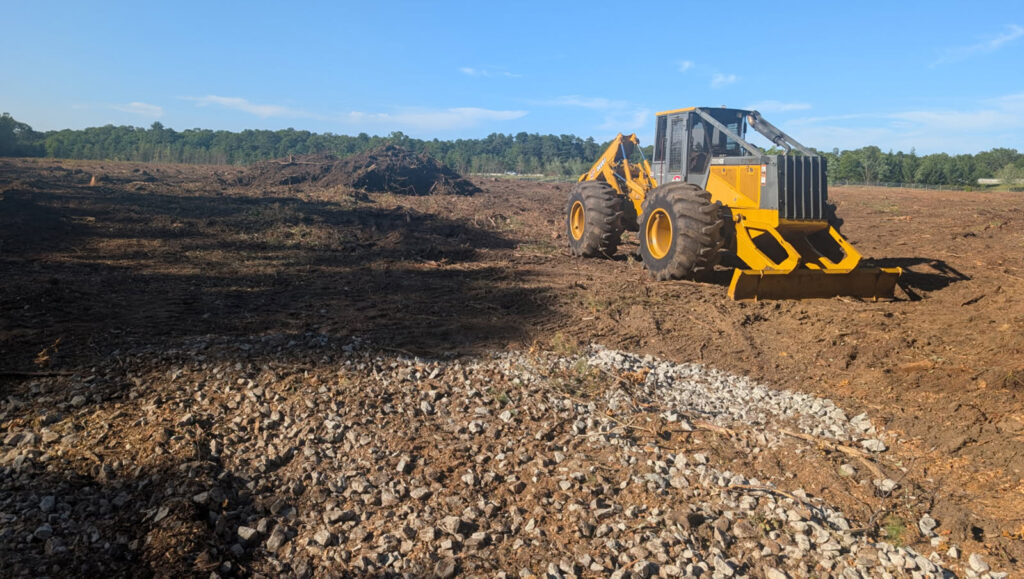
The social media poster also noted a controversial solar project is under way off Route 403. Trees are being bulldozed to make way for ground-mounted solar panels. Besides degrading a woodland ecosystem and a natural carbon sink, the project is also reducing the vegetative buffer that separates homes from Quonset Freeway.
“Anyways, aside from whether that was a right or wrong thing to do, that isn’t the reason for this post,” she continued. “I just drove by the newly destroyed forest off 403 where they are putting in a solar panel field. I recall many seasons of picking wild blueberries with my brothers in that exact spot. I couldn’t help but instantly think of the displaced birds, amphibians, reptiles, mammals, insects, fungi, native plants. Not to mention the habitat loss and change in the land formation for rainwater runoff. Oh, and how many species do you think were actually killed?
“So a few tadpoles and an armed DEM agent is at my door like I’m a murder suspect vs 20+ acres of forest wiped out and destroyed openly allowed and accepted… just weird.”
Sadly, not weird at all. It’s how the Statehouse wants Rhode Island’s natural world managed.
I’m not condoning transferring turtles or tadpoles — or any native or invasive wild animal, plant, or insect — to parts unknown. Nor am I suggesting we ban commercial fishing. The problem is that Rhode Island power brokers don’t appreciate the importance of environmental health, which directly relates to public health, and force state agencies, directly and indirectly, to focus picking on the low-hanging fruit.
This selective enforcement, produced by decades of underfunding environmental enforcement and protecting industry over environment, further deteriorates Rhode Island’s natural world and diminishes biodiversity. It’s not a formula for future success.
Frank Carini can be reached at [email protected]. His opinions don’t reflect those of ecoRI News.