New Transit Blueprint Smashes Through Statehouse Roadblock
July 13, 2026
Share


The recently unveiled report makes too much sense for Rhode Island to adopt, or even consider. State power brokers prefer we travel in the breakdown lane.
The report’s authors, realizing state leadership has long been shortsighted and corporate controlled, wrote their template for the state’s up-and-coming leaders. Hopefully, they take the mantle sooner rather than later.
The 12-page document titled Small State, Big Headaches is a “mobility policy blueprint and challenge to Rhode Island’s next leaders to (finally) make transportation work for everyone.”
The document lays out three first steps: create a culture of honesty, transparency, trust, and professionalism that includes Rhode Islanders in transportation decision-making; prioritize transit improvements that make everyday life more affordable and accessible; and invest in transportation transformations that set up Rhode Island’s economy for long-term success.
Those steps aren’t unaffordable leaps. They also make righteous sense in a rapidly warming world defined by a growing chasm between the wealthy/privileged and the poverty-stricken/voiceless.
At the heart of the sensible blueprint is a series of policy recommendations that address the biggest transit challenges Rhode Island faces:
Transform the Rhode Island Department of Transportation from a troubled agency with a one-size-fits-all approach and lackluster oversight of contractors into a national leader with competitive compensation and in-house teams dedicated to local needs.
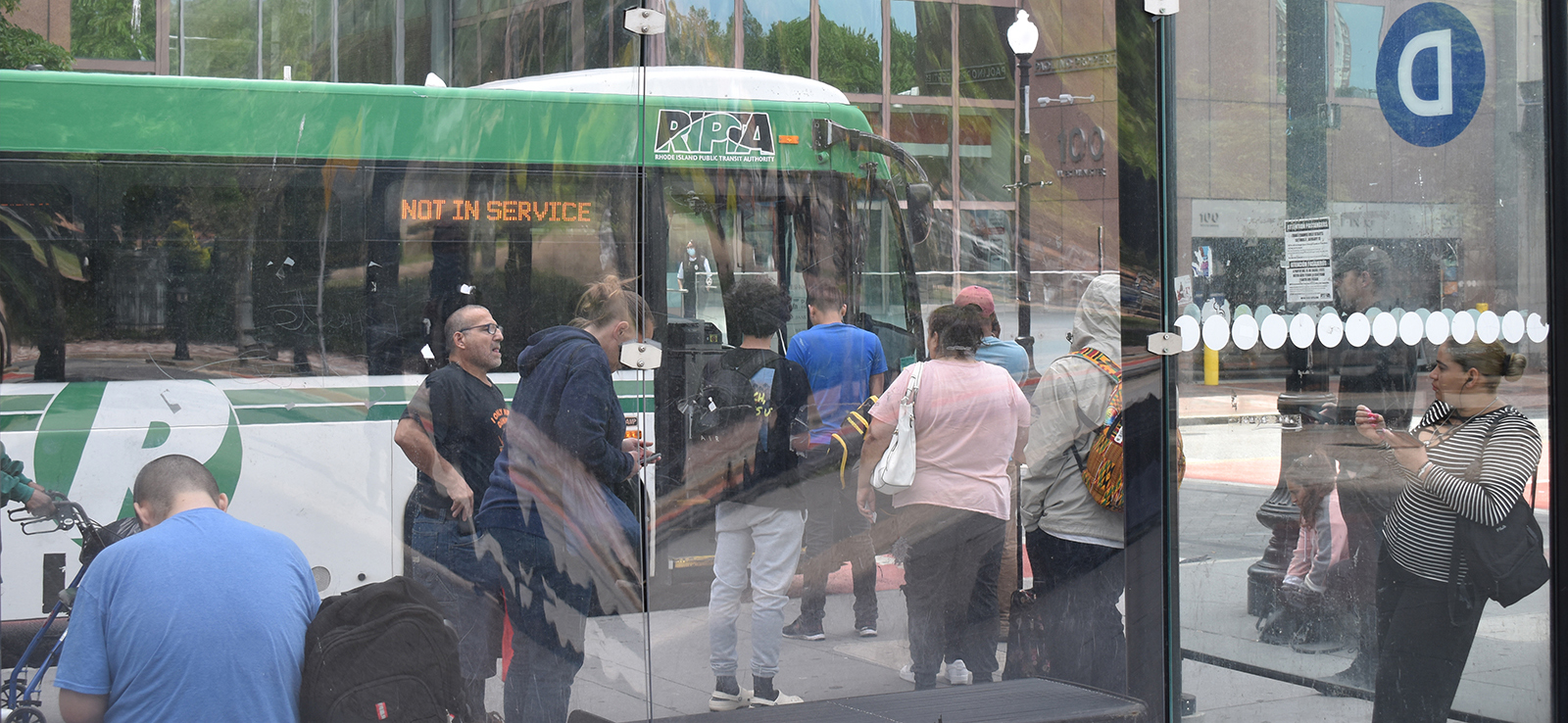
Reverse Rhode Island Public Transit Authority service cuts made in 2022 and 2025, expand RIPTA service to increase frequency and hours of service on existing routes, and provide the funding necessary to implement the state-adopted Transit Master Plan.
Publish a regularly-updated 20-year assessment of the state’s transportation infrastructure needs and funding capacity.
Remove barriers to transit-oriented growth by prioritizing housing construction around rail stations and high-frequency bus corridors, eliminating parking requirements, and transferring rail and ferry governance to RIPTA.
Establish a transparent rubric to determine which transportation projects should be prioritized for funding, ranking projects based on their capacity to grow the state’s long-term revenue base — rather than only considering life-cycle costs — and their ability to meet the emission-reduction requirements of the Act on Climate law.
These recommendations are hardly earth-shattering ideas. The document notes many “involve implementing best practices in the transportation field that have not yet been put into practice in Rhode Island.”
Sadly, Statehouse leadership enjoys driving us into ditches. To wit:
In 2024, U.S. News & World Report ranked Rhode Island last for transportation in the country, when measuring commute times, road quality, bridge quality, and public transit use. A year later, RIPTA was again forced to reduce its overall service hours, by 15% this time, because of systemic underfunding and political apathy.
Greater Providence is served by just 18 public transit vehicles per 100,000 people, compared to 31 in Metro Hartford and 44 in Metro Boston, according to Transportation for America.
Rhode Island also ranks among the lowest in per capita annual state funding for public transit at $19 per person, according to the Washington, D.C.-based nonprofit. Delaware, which also operates a statewide transit system, spends $80 per person more than Rhode Island does. Connecticut spends $68 per capita, while Massachusetts spends $239.
Compared with other states, Rhode Island has historically underinvested in its transportation system. Rhode Island was tied for the fifth-lowest percentage of state expenditures allocated to transportation in the country in 2021, according to the U.S. Department of Transportation.
Rhode Island isn’t on track to meet its goals of reducing cyclist and pedestrian fatalities, according to RIDOT’s Highway Safety Performance Plan. Last year, 34 people lost their lives on Rhode Island’s roads, including five pedestrians and two bicycle riders.
Since 2010, in Providence alone, motor vehicles have hit at least 3,678 pedestrians and cyclists, leading to at least 30 fatalities.
The average cost of car insurance in the Ocean State is $910 annually for minimum coverage and $2,991 per year for full coverage, which are higher than national averages measured by Bankrate.
The blueprint’s other recommendations require new sources of funding, and some require collaboration across multiple levels of government — ideas Rhode Island governors, House speakers, Senate presidents, and the agencies they control typically ignore. Our failing and failed bridges prove it.
Our lame-duck governor doesn’t even want us to keep track of the amount of greenhouse gas emissions being belched from the state’s largest buildings. Gov. Dan McKee vetoed the Building Benchmarking and Reporting Act on June 24.
The bill passed by a 48-15 vote in the House and a 33-5 vote in the Senate. The Senate president and the speaker of the House remain noncommittal on a potential veto override vote, which would require a three-fifths majority in both chambers. Summer vacation is more important than fighting for legislation that passed both chambers by 80%.
Statehouse leadership continues to treat the climate crisis like a hoax and public transit like a leper.
Our neighbor to the north has provided examples of how transportation works better when everyone is included and other transit options beyond cars are considered. (Although the Bay State has notably failed to properly maintain the Massachusetts Bay Transportation Authority.)
For example, a MassDOT engineering directive adopted six years ago requires state traffic engineers to include sidewalks, crosswalks, bus stops, and bicycle facilities as part of upgrades to major roadways.
The “Small State, Big Headaches” plea was authored by 44 organizations and individuals, including the Providence Streets Coalition, the Save RIPTA Coalition, Rhode Island Transit Riders, the Women’s Fund of Rhode Island, Climate Action Rhode Island, Bike Newport, and 10 lawmakers. The blueprint was presented during Grow Smart Rhode Island’s 2026 Power of Place Summit, held June 26 at the Rhode Island School of Design.
Now let’s hope the blueprint winds up in the hands of a future leader(s) who understands the importance of public transit and how it’s related to mitigating the climate crisis.
Note: To watch the video of this year’s Power of Place Summit, click here.
Frank Carini can be reached at [email protected]. His opinions don’t reflect those of ecoRI News.